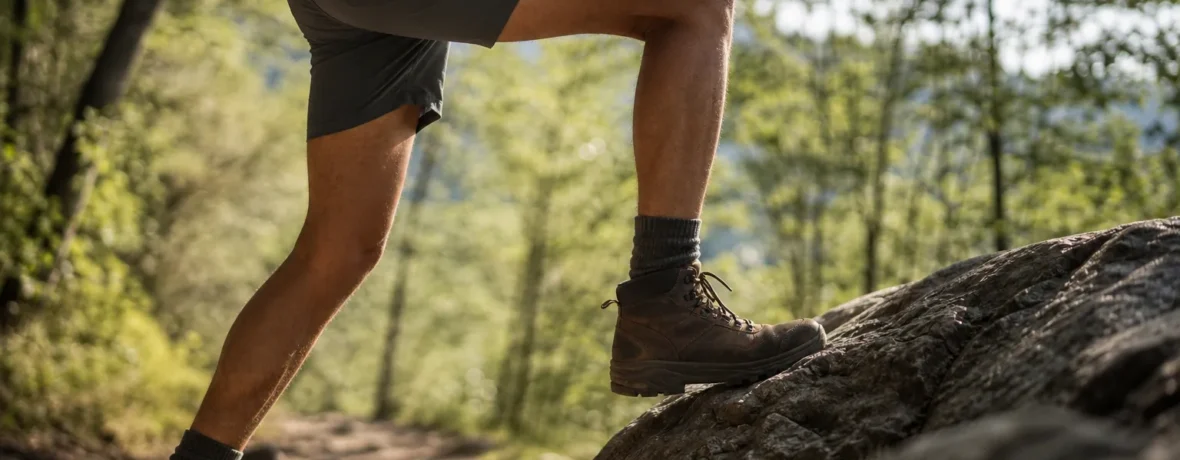
The StairMaster works mostly your glutes, quads, hamstrings, calves, hip flexors, and core. With upright posture and full-foot steps, it hits the big climbing muscles hikers use on steep grades. Leaning heavily on the rails cuts the work and shifts effort away from your legs.
What muscles does the StairMaster work the most?
The StairMaster works your lower body hardest, especially the glutes, quadriceps, hamstrings, and calves.
Think of every step as a tiny uphill climb. Your lead leg drives down and back. Your hip extends. Your knee straightens. Your ankle pushes. That pattern is close to what happens when you grind up a long trail climb, step onto rock ledges, or climb switchbacks with a loaded pack.
The main muscles are:
- Glutes: Your gluteus maximus powers hip extension, which is the “push the step down” action. The NCBI Bookshelf overview of the gluteus maximus describes it as a major hip-extending muscle.
- Quadriceps: These front-thigh muscles straighten your knee as you stand tall on each step.
- Hamstrings: These back-thigh muscles assist with hip extension and knee control. The NCBI Bookshelf hamstring anatomy page describes their role in hip extension and knee flexion.
- Calves: Your gastrocnemius and soleus help with push-off and ankle control. The NCBI Bookshelf gastrocnemius anatomy page notes its role in plantar flexion.
- Hip flexors: These lift your leg for the next step, especially when the machine speed rises.
- Core: Your abs, obliques, and back muscles keep your torso stacked instead of folding over the console.
Does the StairMaster build glutes?
Yes, the StairMaster can build stronger glutes when you step with control, use the full step, and avoid hanging on the rails.
Your glutes work hardest when your hip moves through a useful range. That means no tiny toe taps. Put most of your foot on the step, drive through your heel and midfoot, and let your working leg finish the step before the next one takes over.
To bias the StairMaster toward your glutes:
- Stand tall. Keep ribs over hips and eyes forward.
- Use the full step. Place your whole foot or nearly your whole foot on each stair.
- Push down, not forward. Think “drive the step beneath me.”
- Use light hands. Touch the rails for balance, not bodyweight support.
- Slow down if form breaks. A slower, cleaner step beats frantic rail-hanging.
For hikers, strong glutes matter on climbs, high steps, and descents. They help move you uphill without asking your lower back and knees to do all the dirty work.
Does the StairMaster work your quads and hamstrings?
Yes, the StairMaster works both, but your quads usually feel the burn first.
Your quads straighten the knee as you rise on each step. If you’re new to stair climbing or coming back after time off, the front of your thighs may light up fast. That is normal exercise fatigue, not a badge you need to chase into sloppy movement.
Your hamstrings work behind the scenes. They help extend the hip with the glutes, control the leg as it moves, and add stability around the knee. You may feel them more when you use deeper steps, move slower, or focus on pushing through the heel and midfoot instead of bouncing off your toes.
| Muscle group | What it does on the StairMaster | Trail payoff |
|---|---|---|
| Glutes | Drive hip extension on each step | More power on steep climbs and big rock steps |
| Quads | Straighten and stabilize the knee | Better uphill stepping and descent control |
| Hamstrings | Assist hip extension and knee control | Smoother stride under fatigue |
| Calves | Support push-off and ankle position | Stronger climbing rhythm on grades |
Does the StairMaster work calves?
Yes, the StairMaster works your calves, especially when you push through the ball of the foot at the end of each step.
Your calves help control your ankle and add the final bit of push. But don’t turn the workout into nonstop calf raises. If you stay high on your toes the whole time, your calves may fatigue before your bigger climbing muscles get quality work.
For better balance, keep your foot planted enough that the glutes and quads share the load. Your calves should help. They should not be screaming from step two while your hips coast.
Does the StairMaster work your core?
Yes, the StairMaster works your core for stability, not like a direct ab exercise.
Your core keeps your trunk quiet while your legs move underneath you. That is exactly what hiking asks of you when the trail tilts, your pack shifts, or your foot lands on uneven ground.
You’ll get more core work when you:
- Stand upright instead of leaning into the console.
- Keep your hands light on the rails.
- Avoid twisting your hips side to side.
- Match your breathing to your stepping rhythm.
- Use a speed you can control without bouncing.
If you want stronger abs, still train them directly. Planks, dead bugs, carries, and anti-rotation work fill the gap. The StairMaster is a climbing machine first.
Is the StairMaster good training for hiking?
Yes, the StairMaster is useful hiking training because it builds uphill endurance in the same major muscle groups you use on climbs.
It gives you steady vertical work without needing a mountain, bad-weather backup, or a long drive to the trailhead. That makes it handy for weekday training. Set the pace, climb, sweat, get out.
It also supports aerobic fitness. The CDC adult physical activity guidelines recommend weekly aerobic activity plus muscle-strengthening work, and stair climbing can help with the aerobic side when done at moderate or vigorous effort.
Still, the StairMaster is not a complete hiking plan. It does not fully train downhill braking, foot placement, ankle reactions, pack handling, heat management, or the mental grind of a long trail day. Use it as one tool, not the whole toolbox.
How should you use the StairMaster for hiking muscles?
Use the StairMaster with controlled steps, upright posture, and a mix of steady climbs and short harder efforts.
Here is a simple hiking-focused session:
- Warm up for 5 minutes. Easy pace. Light hands. Smooth steps.
- Climb steady for 10 to 20 minutes. Pick a pace where you can speak in short sentences.
- Add 4 to 8 short surges. Go harder for 30 to 60 seconds, then recover easy for 60 to 90 seconds.
- Finish with 5 easy minutes. Bring your breathing down before you step off.
- Track one thing. Time, level, or how you felt. Don’t chase every number at once.
Start with 15 to 25 minutes if you’re newer to it. Build slowly. A machine workout that leaves you wrecked for three days is not smart hiking prep; it is just a bill your knees and calves have to pay later.
What StairMaster form mistakes reduce muscle work?
The biggest mistake is leaning hard on the rails, which makes the machine easier and steals work from your legs.
Watch for these common form leaks:
- Rail hanging: If your shoulders are shrugged and your elbows are locked, your legs are not doing the full job.
- Tiny steps: Half-steps shorten the range of motion and reduce glute involvement.
- Too much speed: Fast, messy stepping trains fast, messy stepping.
- Toe-only climbing: This can overload the calves and underuse the hips.
- Folded posture: Hunching over the console reduces core demand and can irritate your back.
Fix the setup before you crank the level. Better posture makes the same workout harder in the right places.
When to see a doctor
Stop exercising and seek medical help if you have chest pain, fainting, severe shortness of breath, or symptoms that feel unusual for you.
The Mayo Clinic guidance on exercise and blood pressure advises stopping exercise and seeking immediate medical care for warning signs such as chest discomfort, dizziness, faintness, or irregular heartbeat during activity. If you have heart disease, lung disease, diabetes, a recent injury, or you are returning after a long break, talk with a healthcare professional before pushing hard intervals.
Muscle burn is one thing. Sharp pain, joint pain that changes your stride, swelling, numbness, or symptoms that keep returning are different. Don’t self-diagnose from a workout article.
Related reading
- What Muscles Does Hiking Work?
- Bulgarian Split Squats for Hikers
- What Does the StairMaster Do for Hikers?
- Does the StairMaster Build Glutes?
FAQ
Does the StairMaster tone your legs?
Yes, it can help strengthen and shape your legs when paired with consistent training and enough recovery. Visible “tone” also depends on nutrition, body composition, and total activity.
Is the StairMaster better than a treadmill for hiking?
For uphill muscle endurance, the StairMaster is often more specific than flat treadmill walking. For stride practice, longer aerobic sessions, and pack walking, an incline treadmill can be more trail-like.
How long should hikers use the StairMaster?
Start with 15 to 25 minutes if you are new or coming back after a break. Build toward 30 to 45 minutes for steady aerobic climbing, or use shorter sessions with intervals when time is tight.
Should you use the StairMaster every day?
No, most hikers do better with rest days and variety. Mix StairMaster sessions with strength training, walking, mobility, and actual trail time so your joints and connective tissues can adapt.
Does holding the rails make the StairMaster less effective?
Yes, if you put bodyweight into your hands. Light contact for balance is fine, but leaning or hanging reduces the work your glutes, quads, hamstrings, calves, and core have to do.