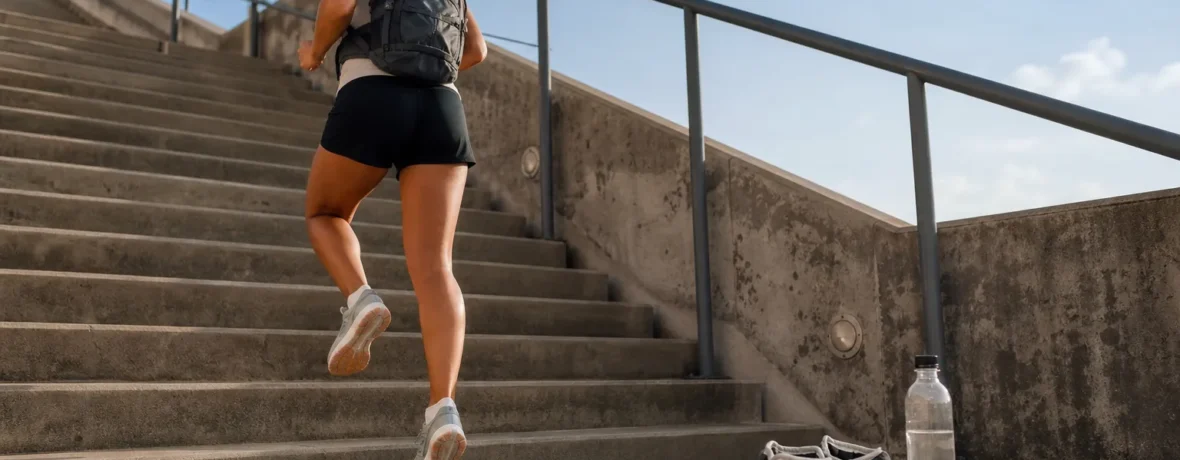
What does the StairMaster do? It trains the uphill engine hikers need: calves, quads, glutes, lungs, and steady pacing. Yes, it helps hiking fitness if you use it 2-3 times per week for 20-45 minutes, keep good posture, and still practice descents, uneven ground, and pack carry outside.
What does the StairMaster do for uphill hiking?
It makes uphill hiking feel less like a surprise attack.
A StairMaster repeats one job: stepping up against gravity. That is the exact grind of switchbacks, stone stairs, canyon exits, lookout towers, and steep forest climbs. The machine loads your legs one step at a time while your heart and lungs work to keep oxygen moving.
For hikers, the biggest payoff is climbing durability. Not just one strong burst. The goal is to keep moving for 30, 60, or 90 minutes without blowing up in the first mile [1.6 km].
The StairMaster helps build:
- Uphill cardio: your ability to climb while breathing hard but under control.
- Step rhythm: steady pacing instead of sprinting the first hill and paying for it later.
- Leg endurance: repeated work for quads, glutes, hamstrings, and calves.
- Mental patience: the boring, useful skill of keeping a sustainable pace.
Think of it as hill training with the weather, daylight, and trailhead drive removed. It is not the whole pie. It is a solid slice.
What is the StairMaster good for in a hiking training plan?
It is good for controlled uphill conditioning when you cannot get to hills often.
The secondary win is consistency. Trails are messy. Weather changes. Work runs late. The StairMaster sits there waiting, and 25 focused minutes can beat a skipped workout.
For general health, the CDC adult physical activity guidelines call for 150 minutes of moderate-intensity aerobic activity per week plus 2 days of muscle-strengthening activity. A StairMaster session can count toward the aerobic bucket when the effort is moderate or vigorous.
For hiking, use it for these jobs:
- Base building: easy to moderate sessions where you can speak in short sentences.
- Climb intervals: harder bursts that mimic steep trail pitches.
- Pack practice: light loaded sessions after you already have good form.
- Winter maintenance: keeping climbing legs alive when trails are icy, muddy, or dark.
One caution: do not confuse “hard” with “useful.” Hanging on the rails, stomping, and racing the machine teaches bad trail habits. You want smooth steps, tall posture, and a pace you can repeat.
Is the StairMaster better than an incline treadmill for hikers?
No; it is better for some uphill work, while the incline treadmill is better for hiking-specific stride practice.
| Tool | Best hiking use | Weak spot |
|---|---|---|
| StairMaster | Steep climbing strength, high heart-rate work, short gym sessions | No downhill training and limited natural stride |
| Incline treadmill | Long uphill hiking pace, trekking-pole practice, smoother walking mechanics | Less step-up force than stairs at the same easy pace |
| Real trail | Foot placement, rocks, roots, descents, weather, pack comfort | Harder to control grade, time, and intensity |
If your hike has endless stairs or a brutal canyon climb, the StairMaster earns its spot. If your goal is a long mountain trail with rolling grades, mix in incline treadmill walking and real trail time.
The Adult Compendium of Physical Activities lists stair-treadmill work as a high-intensity activity in metabolic cost. That does not mean every StairMaster session must be a sufferfest. It means the machine can get demanding fast, especially for newer hikers.
How do you use the StairMaster for hiking without wrecking your knees?
Use clean form, start small, and increase only one variable at a time.
- Warm up for 5 minutes. Start at an easy level. Your first sweat should not arrive in panic mode.
- Stand tall. Keep ribs stacked over hips. Light fingertips on the rails are fine; leaning your body weight into them is not.
- Step through the whole foot. Let your heel touch when the step allows it. Constant toe-stepping can light up calves and Achilles tendons fast.
- Use quiet steps. Loud stomping usually means you are rushing or losing control.
- Keep knees tracking forward. Do not let them collapse inward with each step.
- Add time before speed. Move from 15 to 20 to 25 minutes before chasing higher levels.
- Add pack weight last. Start with no pack. Then try 5-10 lb [2-5 kg] only after several pain-free weeks.
Intensity matters, too. The CDC’s talk test is a simple guide: during moderate effort, you can talk but not sing; during vigorous effort, you can say only a few words before needing breath. Most hiking training should live in the moderate zone, with short harder pieces sprinkled in.
How long should hikers use the StairMaster?
Most hikers do best with 20-45 minutes per session.
Start with the low end if you are new, returning from a break, or already doing leg strength work. Longer is not automatically better. A sloppy 60-minute grind can teach you to lean, shuffle, and hate training.
| Goal | Session | How it should feel |
|---|---|---|
| Beginner uphill base | 15-25 minutes, 2 times per week | Breathing steady, legs working, no joint pain |
| Weekend hiking fitness | 25-40 minutes, 2-3 times per week | Moderate effort with short harder pushes |
| Steep trip prep | 30-45 minutes, 2 times per week | Controlled grind, not an all-out race |
A simple weekly setup works well: one easy StairMaster session, one interval session, one strength day, and one real hike or long walk. If your legs feel flat every time you hit the trail, cut the StairMaster volume before you blame your boots.
What muscles does the StairMaster work for hiking?
It mainly works the glutes, quads, hamstrings, calves, hip flexors, and core.
Your glutes drive the step. Your quads help straighten the knee. Your calves finish each push. Your hamstrings support hip extension. Your core keeps you from folding over the rails like a wet map.
Still, the StairMaster misses key hiking demands:
- Downhill braking: your quads need eccentric strength for descents.
- Side-to-side stability: trails force ankles, hips, and core to manage uneven ground.
- Foot toughness: machines do not prepare skin, toes, and arches the way real miles do.
- Balance under load: a pack changes your center of gravity on rocks and roots.
Pair StairMaster work with step-downs, lunges, calf raises, single-leg balance, and loaded walks. That mix gives you uphill power and downhill control.
When to see a doctor
Get medical guidance if exercise brings chest pain, fainting, severe shortness of breath, irregular heartbeat symptoms, or joint pain that changes how you walk.
If you have heart disease, diabetes, a recent injury, pregnancy-related concerns, or a long break from exercise, ask a clinician how hard you should train before you start intense StairMaster sessions. The Mayo Clinic Health System guide to target heart rate explains how heart rate can help you keep effort in a sensible range.
Heat matters indoors and outside. A hot gym plus hard stair intervals can sneak up on you. The Wilderness Medical Society heat illness guidelines list dizziness, weakness, intense thirst, and fainting among warning signs connected with exertion in heat. Stop training and seek help if symptoms are severe or do not improve with rest and cooling.
Related reading
- Does the StairMaster Build Glutes?
- Is the StairMaster Good Cardio for Hiking Fitness?
- What Muscles Does the StairMaster Work?
- How to Use the StairMaster Properly
FAQ
Does the StairMaster help with hiking?
Yes, it helps most with uphill hiking. It builds climbing cardio and leg endurance, but you still need real trails or downhill strength work for descents, balance, and rough footing.
Can the StairMaster replace hiking?
No, it cannot fully replace hiking. It is a strong indoor climbing tool, but it does not train rocks, roots, mud, downhill braking, weather, or long hours in shoes with a pack.
Should hikers use a weighted pack on the StairMaster?
Yes, but only after you can do unloaded sessions with clean form and no pain. Start with 5-10 lb [2-5 kg], keep the pace moderate, and skip the pack if it makes you lean on the rails.
Is 30 minutes on the StairMaster enough for hiking training?
Yes, 30 minutes can be enough for a focused midweek session. For bigger hikes, combine it with strength training, longer walks, and weekend trail time.
Why does the StairMaster feel harder than hiking?
It often feels harder because the steps never flatten out. On a trail, grade changes give you tiny breaks; on the machine, you keep climbing until you hit stop.
What level should hikers use on the StairMaster?
Use the level that lets you stand tall, avoid rail-hanging, and breathe under control. For most sessions, choose a pace where you can talk in short sentences; save breathless efforts for short intervals.