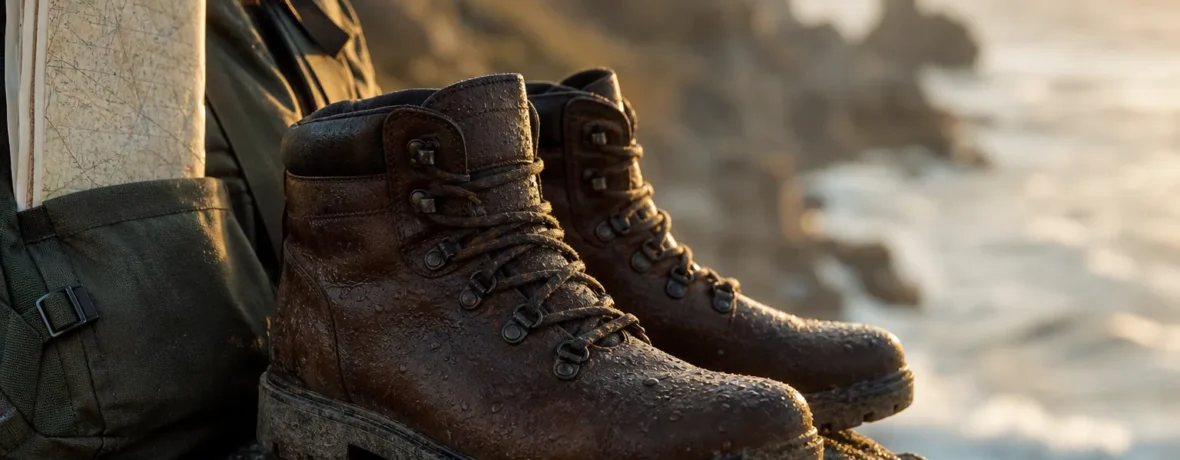
Yes for day hiking, light backpacking, wet commutes, and casual trail use. Expect strong value around the $100-$120 range, comfortable midsoles, and decent waterproofing. Skip them for heavy off-trail abuse, big-load backpacking, or technical alpine terrain.
Are Columbia Hiking Boots Good for Serious Hiking?
Yes, but only up to a point.
Columbia makes approachable hiking footwear. That means you get trail-ready features without paying premium boot money: waterproof membranes, rubber outsoles, cushioned midsoles, ankle-height options, and wide sizes in popular models. The best-known example is the Men’s Newton Ridge Plus II Waterproof Hiking Boot, which Columbia lists at $110 as of November 2026, with a 15.9 oz [451 g] per-shoe weight, 5 mm lugs, Omni-Tech waterproof construction, TechLite cushioning, and an Omni-Grip outsole.
That spec sheet tells you the real story. These boots are light for a mid-height hiker. They are affordable. They are built for hiking, wet/dry trails, and loose rock. But they are not stiff mountain boots, not crampon-compatible boots, and not the pair you’d choose for hauling a 45 lb [20 kg] pack through talus for a week.
For most hikers, that is fine. Maybe even ideal. You do not need a $300 boot for maintained trails, weekend loops, muddy dog walks, campground duty, or shoulder-season day hikes. You need a boot that fits, grips, keeps water out long enough, and doesn’t punish your feet. Columbia often nails that middle lane.
How Durable Are Columbia Hiking Boots?
They are moderately durable, with the best life coming from trail use rather than daily work abuse.
Durability depends on the model, but Columbia’s mainstream hikers usually use a mix of leather, suede, mesh, synthetic panels, EVA-style cushioning, and rubber outsoles. That build is comfortable and light. It also has predictable wear points.
- Upper wear: Mesh and synthetic panels can scuff or fray faster than full-grain leather when scraped on sharp rock.
- Midsole compression: Cushioned foam feels good early, but it can flatten with heavy mileage, heavier hikers, or daily pavement use.
- Outsole wear: Omni-Grip rubber is fine on dirt, gravel, and mixed trail, but aggressive rock and concrete will wear lugs faster.
- Waterproofing loss: The membrane may remain intact while the outer fabric stops beading water, which makes the boot feel wetter and heavier.
- Seam stress: Flex points near the forefoot take the most punishment, especially if the boot is too narrow or too short.
Think of Columbia as a high-value day hiker, not a rebuildable heritage boot. You buy them for comfort, price, and practical performance. You do not buy them because you expect resoling, decades of use, or expedition-level support.
There is also a warranty reality check. Columbia’s footwear one-year limited warranty, updated March 9, 2026, covers defects in materials and workmanship for U.S. end-user customers, but it does not cover normal wear and tear, misuse, improper care, accidents, or natural material breakdown. That matters. A delaminating sole after a few easy hikes may be a warranty issue. Worn lugs after months of rocky trail is normal wear.
Are Columbia Hiking Boots Waterproof?
Many are waterproof, but they are not magic waders.
Columbia uses Omni-Tech on many waterproof boots. On the Newton Ridge Plus II, Columbia describes it as waterproof-breathable, seam-sealed construction designed to shed water while letting excess heat escape. That works best in rain, wet grass, shallow puddles, mud, and damp shoulder-season trail conditions.
Here is where hikers get disappointed: waterproof boots still have an opening at the top. Step into water deeper than the collar and your sock gets soaked. Sweat also builds inside waterproof footwear, especially above 70°F [21°C] or on steep climbs. If your feet sweat hard, a waterproof boot can feel wet from the inside even when no stream crossing leaked through.
Use waterproof Columbia boots when the trail is cold, muddy, or wet. Use non-waterproof shoes when the trail is hot and dry, unless you need the extra protection. Fast-drying mesh can beat waterproofing in summer because once water gets inside a waterproof boot, it stays there longer.
Do Columbia Boots Have Good Traction?
They have good general traction, but not elite wet-rock grip.
Columbia’s Omni-Grip outsole is made for mixed surfaces: dirt, gravel, packed trail, forest duff, loose rock, and wet/dry paths. The Newton Ridge Plus II uses 5 mm lugs, which is enough bite for normal hiking. You can trust that tread on most park trails and rolling terrain.
The limits show up on slick roots, algae-coated rock, wet boardwalks, clay mud, and steep loose descents. That is true for many hiking boots, not just Columbia. Rubber compound, lug spacing, boot stiffness, and your footwork all matter. Columbia’s outsoles tend to feel more “all-around” than specialized. Fine for mixed hiking. Less confidence-inspiring than stickier premium compounds when the trail gets greasy.
If your usual hikes involve wet granite slabs, mossy creek crossings, or steep Appalachian mud, choose carefully. Look for deeper lugs, a secure heel fit, and a boot that does not let your foot slide forward on descents.
Are Columbia Hiking Boots Comfortable Out of the Box?
Most Columbia hikers are comfortable quickly.
This is one of the brand’s strongest points. Columbia boots usually lean soft, cushioned, and easy to wear. The TechLite midsole used in many models is built for lightweight cushioning and impact absorption. That makes them friendly for newer hikers, travelers, and people who hate the long break-in period of stiffer leather boots.
Comfort, though, is not universal. A soft boot can feel great on a 5 mile [8 km] trail and sloppy under a heavy pack. A roomy toe box can feel forgiving on flat ground and imprecise on sidehills. A waterproof liner can feel cozy in March and swampy in July.
Try them on with the socks you hike in. Stand on a ramp if the store has one. Walk downhill. Your toes should not ram the front. Your heel should not lift more than a little. The ankle collar should hold without biting.
How Do Columbia Hiking Boots Compare With Merrell and KEEN?
Columbia usually wins on price, while Merrell and KEEN often bring burlier builds.
| Boot | Listed price as of November 2026 | Best for | Main tradeoff |
|---|---|---|---|
| Columbia Newton Ridge Plus II Waterproof | $110 on Columbia | Budget day hikes, wet trails, casual outdoor wear | Less supportive for heavy loads and rough off-trail use |
| Merrell Moab 3 Mid Waterproof | $175 on REI | Classic day hiking comfort, wider trail use, Vibram outsole fans | Heavier pair weight at 2 lb 2.9 oz [989 g] |
| KEEN Targhee IV Waterproof Hiking Boot | $190 on KEEN | Durability-focused hikers, roomy toe box lovers, rugged day hikes | Heavier per-shoe weight at 20.11 oz [570 g] |
The Columbia value argument is strong. If the Newton Ridge fits your foot, you can get a waterproof mid boot for $65 less than the Merrell listed price and $80 less than the KEEN listed price, based on the official/retailer prices above as of November 2026.
But the price gap buys something. The Merrell Moab 3 Mid Waterproof uses a Vibram TC5+ outsole, molded nylon arch shank, rubber toe and heel caps, and a more established trail-shoe platform. The KEEN Targhee IV goes even harder on durability claims, with KEEN.FUSION construction and a KEEN.RUGGED outsole. Columbia is the better budget buy. Merrell and KEEN are stronger picks if your hiking is frequent, rocky, or harder on footwear.
Who Should Buy Columbia Hiking Boots?
You should buy them if you want comfort and value more than maximum support.
Columbia makes sense for hikers who want a capable boot without turning the purchase into a major investment. They are especially good for:
- Day hikes under 10 miles [16 km]
- Maintained national park and state park trails
- Wet grass, muddy paths, and shoulder-season walking
- Travel when you want one shoe for trail and town
- New hikers building a starter gear kit
- Casual hikers who only get out a few weekends each month
- Budget-conscious buyers who still want a known outdoor brand
They are also a good pick if you hate stiff boots. Columbia’s softer feel can be a relief if heavy leather hikers have always felt like ankle prisons.
Who Should Skip Columbia Hiking Boots?
Skip them if you need high-mileage durability, stiffness, or technical grip.
Look elsewhere if your hikes regularly include:
- Heavy backpacking loads over 35 lb [16 kg]
- Loose talus, scree, and off-trail scrambling
- Snow travel requiring winter-specific traction or insulation
- Long thru-hike mileage
- Wet slab, polished rock, or steep muddy descents
- Work-site use, daily concrete, or abrasive job conditions
That does not mean Columbia boots are bad. It means they are built for a different lane. A budget-friendly, flexible, waterproof hiker is not supposed to perform like a stiff backpacking boot or a technical approach shoe.
How Should Columbia Hiking Boots Fit?
They should feel snug at the heel, roomy at the toes, and secure through the midfoot.
A bad fit will ruin any boot. With Columbia, pay special attention to forefoot width and downhill toe room. Some models come in wide sizes, which is a major plus if your feet swell on longer hikes.
- Try boots on late in the day. Feet swell after walking, heat, and time upright.
- Wear your hiking socks. Thick socks change volume. Thin socks change heel hold.
- Leave toe space. You want enough room that your toes do not hit the front on descents.
- Lock the heel. Lace the ankle hooks firmly enough to reduce heel lift without cutting circulation.
- Test stairs or a ramp. Walk up, down, and sideways. Hot spots show up fast.
- Check flex points. The boot should bend where your foot bends, not crease into your toes.
If you are between sizes, test both. Do not assume your running shoe size is correct. Hiking socks, foot swelling, and downhill pressure change the fit equation.
How Do You Make Columbia Hiking Boots Last Longer?
Clean them, dry them slowly, and refresh the water-repellent finish when water stops beading.
Columbia’s own product care instructions say to clean muddy footwear immediately after use, rinse with clean tap water and a soft brush, remove insoles if possible, and let the shoes dry naturally. Columbia also says not to put shoes in a clothes dryer, on a heater, near open flame, or in direct hot sunlight.
That care advice is not cosmetic fluff. Mud holds grit and natural chemicals that can weaken materials. Heat can damage adhesives, warp foam, and age waterproof membranes. Neglect shortens boot life.
Use this quick checklist after wet or muddy hikes:
- Pull the insoles and loosen the laces.
- Brush off mud before it hardens.
- Rinse with clean water instead of harsh cleaners.
- Air-dry at room temperature.
- Stuff with newspaper if the inside is soaked, then replace the paper as it dampens.
- Reapply a compatible water-repellent spray when water stops beading on the upper.
- Store boots dry, unlaced, and away from heat.
Are Columbia Hiking Boots a Good Value?
Yes, they are one of the better values in entry-level hiking boots.
The value comes from the price-to-feature ratio. For around $110 on a flagship model like the Newton Ridge Plus II as of November 2026, you get a waterproof mid-height hiker with a real outsole, cushioning, metal hardware, and trail styling that works off-trail too. That is a strong package.
The trade is longevity under abuse. If you hike 5 miles [8 km] twice a month on maintained trails, the value looks excellent. If you hike 15 miles [24 km] every weekend with a loaded pack, you may burn through the cushioning and outsole faster than you want. In that case, spending more up front can cost less over time.
Buy Columbia for the right job and you will probably be happy. Ask it to be a premium backpacking boot and you may be annoyed by year two.
What Is the Final Verdict on Columbia Hiking Boots?
Columbia hiking boots are good for budget-minded hikers who stay mostly on established trails.
The sweet spot is clear: day hiking, casual backpacking, wet-weather walking, camping, travel, and general outdoor use. They are comfortable, fairly light, often waterproof, and priced well below many competing mid boots. That is why the brand keeps showing up on trailheads, airport sidewalks, and muddy dog-walking routes.
The limits are just as clear. They are not the toughest boots in the category. They are not the grippiest choice for slick technical terrain. They are not the best match for heavy packs or constant high-mileage hiking.
If your priority is value, start with Columbia. If your priority is maximum durability, step up to a burlier boot from Merrell, KEEN, Salomon, Oboz, Lowa, or another trail-focused brand that fits your foot.
Related reading
- Are Hiking Boots Good for Snow? Insulation, Traction and Limits
- Are Combat Boots Good for Hiking?
- Are Duck Boots Good for Hiking?
- How to Clean Hiking Boots Without Ruining Leather or Membranes
FAQ
Are Columbia hiking boots good for beginners?
Yes, Columbia hiking boots are a strong beginner pick. They are usually comfortable quickly, easy to find, and affordable compared with many premium hiking boots.
How long do Columbia hiking boots last?
They can last multiple seasons for occasional day hikers, but lifespan depends on terrain, body weight, pack weight, care, and mileage. Rocky trails, daily pavement, and poor drying habits will shorten their life.
Are Columbia waterproof boots good in snow?
They are fine for light snow if the model has enough warmth and traction for the conditions. For deep snow, ice, or winter hiking, choose insulated winter boots or use proper traction devices when needed.
Do Columbia hiking boots run true to size?
Many hikers find Columbia boots close to true to size, but fit varies by model and foot shape. Try them with hiking socks and check downhill toe room before committing.
Are Columbia boots better than Merrell?
Columbia is often better on price, while Merrell often has stronger trail-specific construction and outsole options. If both fit well, choose Columbia for casual value and Merrell for more frequent hiking.
Can you backpack in Columbia hiking boots?
Yes, for light backpacking on maintained trails. For heavy packs, rough off-trail travel, or multi-day mountain routes, choose a stiffer and more supportive backpacking boot.