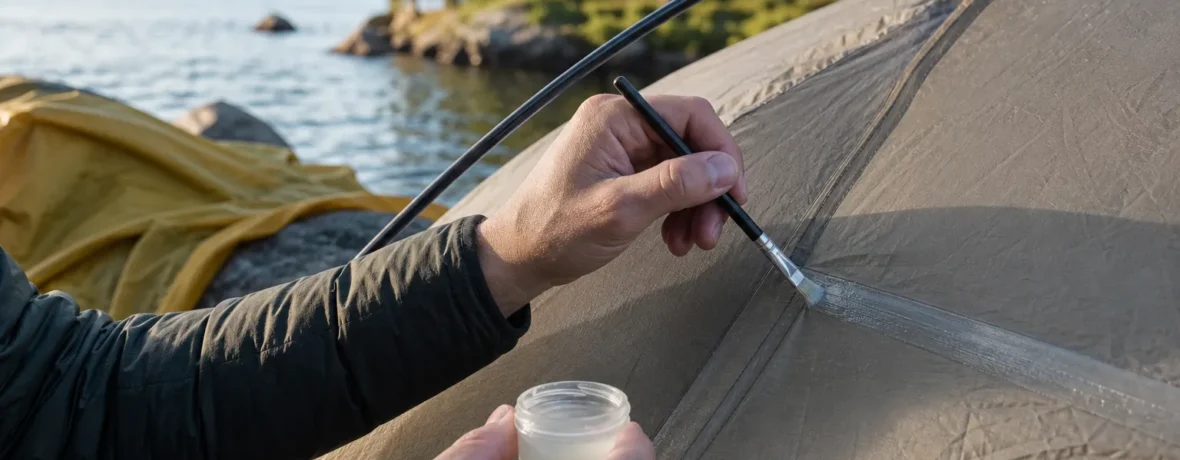
To waterproof a tent, clean it by hand, find the leaks, seal the seams, refresh the rainfly’s water-repellent finish, and restore worn floor coating. Plan on 24 hours of dry time for many sealing jobs, and match the sealant to your tent fabric: silicone for silnylon, urethane for PU-coated tents.
How do you know your tent needs waterproofing?
Your tent needs waterproofing if water soaks into the fabric, drips through seams, or seeps through the floor.
A healthy rainfly beads water. Drops sit on the surface and roll off when you shake the fabric. A tired rainfly goes dark and blotchy in rain because the face fabric is wetting out. That does not always mean the tent is leaking, but it does mean the durable water repellent finish needs help.
Check these warning signs before a trip, not at 2 a.m. in a thunderstorm:
- Water beads poorly or spreads into flat patches on the rainfly.
- Seams drip or feel damp along the stitching.
- Factory seam tape is peeling, cracking, or curling.
- The floor feels sticky, flaky, or smells sour.
- Water pushes through the floor when you kneel on it.
- The fly’s inner coating looks cloudy, powdery, or worn thin.
REI’s tent care guidance says to clean tents by hand with cold water, a non-abrasive sponge, and non-detergent soap, and it notes that many tent sealing products need 24 hours to dry completely. That is a useful planning number when you are trying to fix a shelter before a weekend trip; read the full instructions from REI’s tent care guide.
What do you need to waterproof a tent?
You need cleaner, the right sealant, a water-repellent spray, a sponge, cloths, and enough dry space to pitch or spread out the tent.
Do not grab random hardware-store caulk and hope for the best. Tent fabrics use different coatings, and the wrong product can peel off, stay tacky, or fail in the first storm. If your tent came with a care tag, read it. If not, check the manufacturer’s website and look for the fabric coating: silicone, polyurethane, or PE.
| Part of tent | Common problem | Best fix |
|---|---|---|
| Seams | Drips through stitching | Brush on seam sealer matched to the fabric |
| Rainfly | Wets out instead of beading | Clean, then apply tent-safe water-repellent spray |
| Floor | Seepage, sticky coating, flaking | Remove loose coating and apply new urethane coating if compatible |
| Zippers and vents | Wind-driven rain sneaks in | Inspect storm flaps, pitch angle, and guyline tension |
Gear Aid’s sealant guidance separates products by fabric type, including urethane-coated and silicone-treated materials. If you are not sure which one you have, check the brand’s specs first, then compare with Gear Aid’s sealant selection guide.
How to waterproof a tent step by step
Waterproof the tent in this order: clean it, dry it, test it, seal seams, restore the fly, restore the floor, then test again.
-
Pitch the tent in a clean, shaded spot.
Set it up in a yard, garage, basement, or covered patio. Shade helps because hot sun can make cleaners and coatings dry too fast. If you cannot pitch it, spread the fly and floor flat on a clean tarp.
-
Clean dirt, sap, and grit by hand.
Use cool water, a soft sponge, and a tent-safe cleaner or mild non-detergent soap. Skip the washing machine. Skip household detergent. Both can beat up coatings and leave residue that interferes with new waterproofing.
-
Rinse and let the fabric dry or stay slightly damp as directed.
Seam sealers usually need clean, dry fabric. Some water-repellent sprays work best on damp fabric. Follow the product label rather than guessing.
-
Find the leaks.
Use a hose on a gentle shower setting. Start low and work upward. Look inside for drips, dark spots, and slow seepage. Mark problem areas with painter’s tape or a small removable tag.
-
Seal the seams.
Brush a thin, even coat of seam sealer over the stitching and needle holes. Pay close attention to fly ridgelines, guyout points, pole clips, corners, floor seams, and the bathtub floor perimeter.
-
Refresh the rainfly.
Spray the outside of the clean fly with a tent-safe water-repellent treatment. Wipe away runs and puddles. The goal is an even film, not a glossy shell.
-
Restore the floor coating if it is failing.
If the floor coating is flaking or sticky, remove loose material first. Then apply a thin coat of compatible tent-floor sealant to the coated side. Let it cure flat so it does not glue itself together.
-
Dry completely before packing.
Give coatings the full cure time on the bottle. For many jobs, that means leaving the tent out overnight and through the next day. Packing it early can create tacky spots and weird creases.
-
Retest with water.
Once everything has cured, spray the tent again. If seams hold and the fly beads water, you are ready. If a single seam still weeps, dry it and add a second thin coat.
How do you seal tent seams?
Seal tent seams by cleaning the fabric, applying the correct seam sealer over the stitching, smoothing it thin, and letting it cure fully.
Seams leak because stitching punches holes through waterproof fabric. Factory seam tape covers many of those holes, but tape wears out. Ultralight shelters may arrive unsealed on purpose, especially some silicone-coated models.
Work from the inside when the tent design allows it. That protects the sealant from abrasion and UV exposure. On rainflies, seal the side recommended by the manufacturer. If the old tape is peeling, trim loose sections carefully. Do not yank hard and tear the coating.
Use a small brush, foam applicator, or the applicator built into the tube. Push sealant into the needle holes, then smooth it. A thick bead looks reassuring but often dries poorly and collects dirt. Thin and even wins.
Gear Aid says perimeter seams on seam-taped tents are often not factory sealed and may need sealing, especially around high-stress edges. Its Seam Grip tips are handy if you are working with a urethane-style seam sealer.
How do you waterproof a tent rainfly?
Waterproof a tent rainfly by cleaning it first, sealing leaking seams, then applying a tent-safe water-repellent spray to the outside fabric.
The rainfly has two jobs. The outer face sheds rain. The inner coating blocks water from passing through. When the outer face wets out, the tent feels clammy and heavy, and condensation gets worse. When the inner coating fails, water can pass through the fabric itself.
Start with the simple fix: clean the fly. Mud, sunscreen, smoke, pine pitch, and trail dust all interfere with beading. After cleaning, spray water on the fly. If droplets bead again, you may not need a full treatment.
If water still spreads into the fabric, apply a tent-specific water-repellent treatment to the outside. Keep the sprayer 6 to 8 inches [15 to 20 cm] from the fabric unless the label says otherwise. Cover panels evenly, then wipe away excess liquid from seams, windows, and trim.
Nikwax recommends cleaning tent fabric before waterproofing and applying Tent & Gear SolarProof while the fabric is still damp. See the brand’s equipment care instructions if you are using that product line.
How do you waterproof a tent floor?
Waterproof a tent floor by cleaning it, removing loose failing coating, sealing floor seams, and applying a compatible floor coating to the worn side.
The floor takes more abuse than the fly. Boots grind grit into it. Knees and elbows press water against it. Campsite gravel pokes at it all night. Even a good floor can leak if you pitch in a puddle or skip the footprint on rough ground.
First, identify the problem. If water enters only along the edges, seal the perimeter seam and bathtub corners. If water seeps through broad panels, the coating may be worn. If the coating is sticky or flaky, you need more than spray-on water repellent.
For PU-coated floors, a paint-on urethane coating is the usual repair. Clean the floor, remove loose flakes with a soft brush or cloth, then spread a thin coating across the worn area. Let it cure completely before folding. If the old coating smells foul, stays gummy, and sheds everywhere, replacement may be smarter than repair.
A footprint helps after the repair, but it is not magic. Cut or choose one that is slightly smaller than the tent floor. If the footprint sticks out beyond the tent, it can catch rain and funnel water underneath you.
Can you waterproof an old tent?
Yes, you can waterproof an old tent if the fabric is sound and the coating has not fully broken down.
An older tent with a few weeping seams is a great repair candidate. So is a fly that wets out but has no tears, no severe delamination, and no sticky coating. A careful afternoon can buy more seasons.
But some tents are done. If fabric rips like wet paper, mesh crumbles, poles no longer fit, or the coating has turned to goo across large panels, waterproofing becomes life support. You can patch it for backyard use, but do not trust it above treeline or on a cold, wet trip.
Use this quick call:
- Repair it: isolated seam leaks, small flakes, good poles, strong fabric.
- Use it gently: mild coating wear, older fly, fair-weather camping.
- Replace it: widespread sticky coating, brittle fabric, torn pole sleeves, heavy mildew damage.
Should you waterproof the inside or outside of a tent?
Seal seams on the coated side when possible, treat the outside of the rainfly for water repellency, and restore floor coating on the original coated side.
This is where people get crossed up. A rainfly’s water-repellent finish belongs on the outside because that is where rain lands. Seam sealing often happens on the inside because that is where coatings and seam tape live. Floor coatings usually go on the interior side of the tent floor, depending on the design.
Do not spray generic waterproofing over everything and call it done. You can clog mesh, stain clear windows, gum up zippers, and leave slick patches on the floor. Mask or avoid hardware, mesh panels, vents, and zipper teeth.
How long does tent waterproofing last?
Tent waterproofing can last a season or several years, depending on use, storage, UV exposure, abrasion, and how well the tent was cleaned before treatment.
A backpacking tent used for a dozen nights a year and stored bone-dry in a cool closet may hold its waterproofing for years. A festival tent baked in sun, packed wet, and stored in a hot garage may fail fast. UV light, mildew, body oils, smoke, and dirt all shorten the life of coatings.
Do a hose test before any wet trip that matters. That means shoulder-season hikes, alpine trips, long trail sections, and family camping weekends where a soaked sleeping bag would ruin the whole thing. Ten minutes at home beats a miserable night outside.
What mistakes ruin tent waterproofing?
The biggest mistakes are using the wrong sealant, packing the tent wet, washing it in a machine, and applying thick coatings over dirty fabric.
Avoid these common gear-killers:
- Using detergent: residue can hurt water repellency and coating adhesion.
- Machine washing: agitation can damage coatings, mesh, and seams.
- Applying silicone to PU fabric: it may not bond correctly.
- Applying PU sealant to silicone fabric: same problem, different direction.
- Skipping cure time: tacky sealant can stick to itself when packed.
- Storing damp: mildew and coating breakdown love trapped moisture.
- Pitching in a drainage path: no coating can fix a bad campsite.
Related reading
- How to Set Up a Tent Step by Step (Even Alone)
- How to Clean a Tent (Including Mold and Mildew)
- How to Choose a Tent: Capacity, Seasons and Weight
- What Is a Tent Footprint and Is It Worth It?
FAQ
Can I use Scotchgard on a tent?
Use a tent-specific waterproofing product instead. Some general fabric sprays may not match tent coatings, and they can leave residue on technical fabrics.
Do new tents need seam sealing?
Some new tents do, especially certain ultralight silicone-coated shelters. Many mainstream tents come seam-taped, but high-stress corners and perimeter seams may still benefit from sealing if the manufacturer recommends it.
How long should a tent dry after waterproofing?
Follow the product label, but plan for 24 hours when seam sealing or recoating. Cool, humid weather can stretch drying time, so do not waterproof your tent the night before a stormy trip.
Can I waterproof a tent in the rain?
No, not properly. Seam sealers and coatings need clean fabric and controlled drying time, so work in a garage, covered patio, basement, or dry yard instead.
Why is my tent wet inside if it is waterproof?
Condensation is the usual culprit. Open vents, tension the fly, avoid cooking inside, and keep wet gear away from tent walls so moisture has a way out.
Is a footprint the same as waterproofing?
No, a footprint protects the floor from abrasion and punctures. It helps your waterproofing last longer, but it will not fix leaking seams or a failing floor coating.