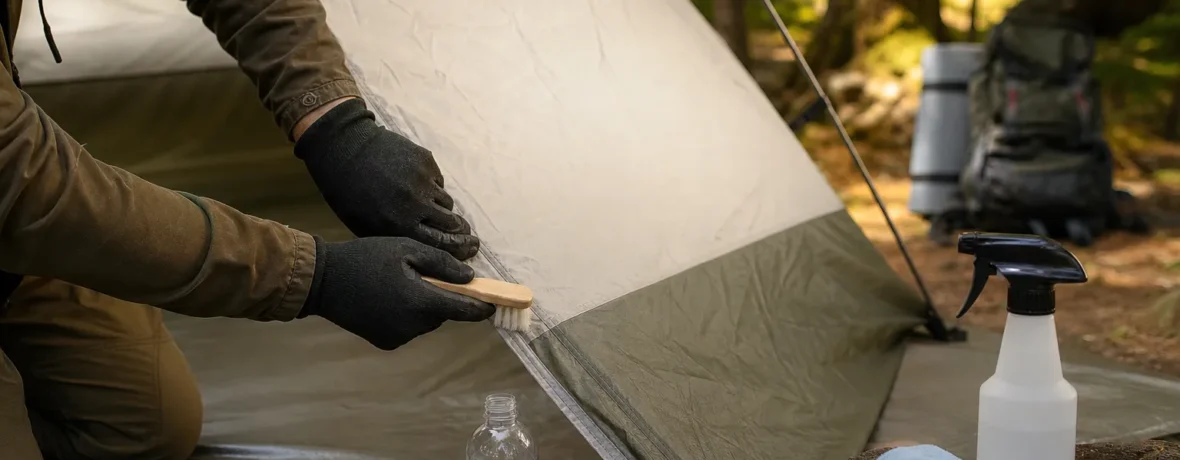
To clean a tent, shake out grit, spot-clean stains, soak the tent by hand in cool to lukewarm water with tent-safe cleaner, rinse until the water runs clear, then dry it fully in shade for 24 to 48 hours before storage. Never machine-wash, machine-dry, bleach, or scrub coated fabric hard.
What do you need to clean a tent?
You need mild tools, cool water, and patience.
A tent is not a hoodie. The fabric is thin. The floor and rainfly often have waterproof coatings. The seams may be taped. Treat it like technical gear, because that is exactly what it is.
- Bathtub, large storage bin, clean trash can, or utility sink
- Cool to lukewarm water, not hot water
- Tent cleaner or technical gear wash
- Mild fragrance-free dish soap for small spots only
- Soft sponge or microfiber cloth
- Soft toothbrush for zippers
- Clean towels
- Clothesline, shower rod, drying rack, or shaded outdoor pitch site
- Nitrile or rubber gloves if you are cleaning mold
- NIOSH-approved N95 respirator and eye protection if the tent is moldy
REI’s tent-cleaning guidance recommends cold to lukewarm water, a nonabrasive sponge, tent cleaner, thorough rinsing, and full drying before storage. It also warns against machine washing and machine drying because washers can stretch or tear fabric, mesh, and seams, while dryers can damage gear with heat. See REI’s tent cleaning instructions for the same basic hand-wash approach.
How to clean a tent step by step?
Clean it by hand, rinse harder than you think, and dry it longer than you want.
- Set up the tent if you can. Pitch it in the yard, garage, or driveway. If you have no space, spread it on a clean tarp. Open every door, vent, and zipper.
- Shake out the inside. Turn the body upside down and dump out sand, leaves, pine needles, food crumbs, and mystery grit. Use a soft brush or handheld vacuum on low power if dirt is trapped in corners.
- Remove poles, stakes, guylines, and footprint. Clean these separately. Grit on poles and stakes can transfer right back onto clean fabric.
- Spot-clean dirty areas first. Use a damp cloth and a tiny amount of mild fragrance-free soap on mud, bird droppings, sunscreen smears, and greasy fingerprints. Do not grind dirt into the coating.
- Fill a tub with cool to lukewarm water. Add tent cleaner or technical wash according to the product label. Do not freestyle the amount. More soap does not mean cleaner fabric; it means more rinsing.
- Turn the tent body inside out. This helps clean the floor, corners, and coated surfaces where body oils, condensation grime, and spilled coffee tend to live.
- Soak the tent and rainfly. Push the fabric under the water by hand. Let it soak only as long as the cleaner label says. Long soaks can be rough on old waterproof coatings.
- Agitate gently. Swish the fabric with your hands. Press water through dirty zones. Skip aggressive scrubbing unless you enjoy buying seam sealer.
- Drain and rinse. Refill with clean water. Swish. Drain again. Repeat until the water is clear and the fabric no longer feels slick.
- Dry in shade. Hang or pitch the tent in a shaded, breezy spot. Flip it during drying so floors, pockets, seams, pole sleeves, and webbing dry completely.
- Check before storage. Press a dry paper towel into seams, corners, and stake loops. If the towel comes away damp, the tent is not ready.
That is the whole rhythm: loosen grit, wash gently, rinse fully, dry completely. No drama. No washing machine.
How to wash a tent without ruining the waterproof coating?
Wash a tent by hand with tent-safe cleaner and avoid heat, bleach, detergents, and hard scrubbing.
The waterproofing on many tents is a coating or treatment, not magic baked into the fabric forever. Strong cleaners can strip water repellency. Hot water can stress coatings. A dryer can wreck fabric, seam tape, mesh, and elastic faster than one bad storm.
| Use this | Avoid this | Why it matters |
|---|---|---|
| Tent cleaner or technical wash | Laundry detergent | Detergent residue can cling to fabric and may interfere with water repellency. |
| Cool to lukewarm water | Hot water | Heat is hard on coatings, seam tape, and delicate mesh. |
| Soft sponge or cloth | Stiff brush or scouring pad | Abrasive scrubbing can damage coated floors and flies. |
| Shade drying | Machine dryer | Dryer heat can damage synthetic tent fabric and seam construction. |
MSR’s support guidance gives the same core advice for heavy-duty cleaning: set up the tent and hand wash with warm water, a sponge, and mild non-detergent soap. It also says not to pack or store a tent wet, damp, or dirty because moisture and grime can lead to mildew and coating problems; see MSR’s tent care guidance.
How do you clean mud, sap, sunscreen, and camp grime?
Treat each stain separately before soaking the full tent.
Mud is easy. Let it dry, brush off the crust, then wipe the residue with water. Wet mud spreads into seams and mesh. Dry mud gives up faster.
Tree sap is trickier. Do not scrape it with a knife. Do not attack it with a stiff brush. Let the sap harden, then spot-clean gently. REI suggests mineral oil or alcohol-based products for pine sap, followed by a thorough rinse. Use the smallest amount that works, keep it on the sap instead of soaking a wide patch of fabric, and rinse the area well.
Sunscreen and bug spray need fast attention. Both can be harsh on synthetic fabrics and coatings when left there for months in a hot gear bin. Wipe the spot with a damp cloth and a tiny drop of mild soap, then rinse with clean water.
Bird droppings deserve the same quick treatment. Scrape off dried material gently with the edge of a spoon or a soft cloth, then spot-clean. Do not leave acidic gunk sitting on the fly all winter.
How to clean a tent with mold?
Clean a moldy tent outside, protect your lungs and eyes, use an enzyme cleaner made for outdoor gear, and dry the tent completely before deciding whether it is salvageable.
Mold and mildew usually show up after one mistake: the tent was packed wet or stored damp. It happens. You got home late. It rained for three days. The stuff sack went into the garage, and the garage won. Now the tent smells like an old basement.
Start outside. Mold spores are not something you want floating around your bathroom or laundry room. The CDC says mold exposure can cause health effects in some people, especially people with allergies, asthma, chronic respiratory disease, or immune suppression. For cleanup, the CDC recommends protecting your mouth, nose, skin, and eyes, including at least a NIOSH-approved N95 respirator for mold cleanup. Read the CDC’s mold cleanup recommendations before handling a heavily moldy tent.
- Dry the tent first if it is wet. Moldy and wet is miserable to handle. Pitch it in shade with airflow until damp fabric becomes workable.
- Brush off loose growth outdoors. Use a soft brush. Stay upwind. Wear gloves, eye protection, and an N95 respirator.
- Spot-clean visible mold. Use cool water and a soft cloth. Do not grind stains deeper into the coating.
- Soak with an enzyme cleaner. Use a gear-safe enzyme cleaner and follow the label exactly. REI recommends enzyme cleaner for tents with mold, mildew, or foul odors, while warning that over-soaking can risk coating breakdown.
- Rinse repeatedly. Any cleaner left behind can attract grime or irritate skin later.
- Dry for 24 to 48 hours. The CDC recommends drying wet items within 24 to 48 hours to help prevent mold growth. For a tent, use that as the minimum mindset: dry every seam, sleeve, pocket, and guyout point.
- Smell-check and inspect. If the tent still smells strongly musty after cleaning and drying, repeat a gear-safe enzyme treatment once or consider retiring it.
Do not use bleach on a backpacking tent unless the tent maker specifically says to do so. Bleach can discolor fabric, damage coatings, weaken fibers, and leave you with a tent that looks cleaner but performs worse. Household mildew removers are often built for tile, grout, vinyl, or hard bathroom surfaces, not ultralight nylon, polyester, mesh, seam tape, and polyurethane coatings.
Can you put a tent in the washing machine?
No, do not put a tent in a washing machine.
A washing machine twists, pulls, creases, and pounds fabric. Top-loaders with agitators are especially rough, but front-loaders are still not the right tool for a tent body or fly. Mesh can snag. Seam tape can lift. Waterproof coatings can crease and peel. Poles, stakes, and guyline hardware can also damage the drum if you make the truly cursed decision to toss everything in together.
Footprints are sometimes tougher than tent bodies, but check the brand’s care instructions before washing one. NEMO says tents should be fully dry before storage and recommends loose storage in a breathable sack rather than long-term compression in a stuff sack; see NEMO’s cleaning, repairing, and storing guidance.
Can you pressure wash a tent?
No, pressure washing is too aggressive for tent fabric and seams.
A pressure washer can force water through seams, lift seam tape, damage mesh, strip coatings, and drive grit deeper into fabric. It might make a filthy car look new. Your tent is not a car.
If you need more cleaning power, use more soak time within the cleaner label’s limit, more gentle hand agitation, and more rinses. For stubborn zipper grit, use a toothbrush and clean water. For caked dirt on stakes, use a separate brush away from the tent fabric.
How do you clean tent zippers, poles, stakes, and guylines?
Clean the hardware separately so grit does not chew up the tent later.
- Zippers: Brush zipper teeth with a soft toothbrush and rinse with clean water. Do not force a gritty zipper. That is how sliders bend and teeth fail.
- Poles: Wipe each section with a damp cloth. Dry the ferrules and shock cord before storage.
- Stakes: Rinse mud off outside, dry them, and store them in their own sack so sharp edges do not poke fabric.
- Guylines: Wipe muddy lines with a damp cloth. Let them dry untangled before packing.
- Footprint: Wash it like dirty rain gear: cool water, gentle cleaner, thorough rinse, full dry.
Do not skip the zippers. Sand works like a tiny file. Clean zipper teeth make doors slide smoothly and reduce the odds of yanking a slider off track at 11 p.m. in mosquito country.
How do you dry a tent after washing?
Dry a tent fully in shade with airflow, then check seams and folds by hand before packing it.
Pitching the tent is the cleanest way to dry it because air reaches the floor, fly, mesh, corners, and vents. If you cannot pitch it, hang it over a shower rod, clothesline, railing, or drying rack. Shift its position several times so wet folds do not stay folded.
Shade is better than harsh sun for long drying sessions. A short burst of sun can help finish stubborn damp spots, but hours of UV exposure are rough on tent fabric. Breezy shade wins.
Use this dry check before storage:
- Touch the floor corners.
- Pinch the seams.
- Check pole sleeves and clips.
- Open pockets and vents.
- Press a paper towel into thick webbing and stake loops.
- Smell the fabric. Musty means moisture or old growth remains.
If one area feels cool and clammy, keep drying. A tent can feel dry on the fly and still hold moisture in seams and webbing.
How should you store a tent so mold and mildew do not come back?
Store it bone-dry, loose, cool, and out of sunlight.
The stuff sack is for the trail, not long-term storage. Compression saves pack space, but months of tight storage can crease coatings and trap any leftover moisture. Once the tent is clean and dry, store it loosely in a large breathable sack, cotton storage bag, mesh bag, or clean pillowcase.
- Store in a cool, dry closet instead of a hot attic.
- Keep it off damp garage floors and basement concrete.
- Store poles partially assembled or loosely bundled if space allows.
- Keep stakes in a separate bag.
- Never store the tent with food crumbs inside.
- Air it out after wet trips as soon as you get home.
If you had to pack a wet tent on trail, unpack it the same day you get home. Not next weekend. Not after work “sometime.” Same day. Your future shelter depends on that one boring chore.
When should you re-waterproof a tent after cleaning?
Re-waterproof it when clean fabric wets out, seam tape peels, or the floor coating becomes sticky, flaky, or leaky.
Cleaning does not automatically mean you need to reapply water repellent. Test first. After the tent is clean and dry, sprinkle water on the rainfly. If water beads and rolls off, the durable water repellent finish is still doing its job. If the fabric darkens quickly and absorbs water, refresh the DWR with a spray-on treatment made for tents.
Check the inside of the fly and floor too. Peeling seam tape, flaking coating, or sticky fabric is a different repair job than surface water repellency. You may need seam sealer, a polyurethane coating refresh, or manufacturer repair help. Clean first, repair second, waterproof last.
When to see a doctor
See a doctor if mold exposure is followed by symptoms that persist, worsen, or affect your breathing.
Do not diagnose yourself from a tent smell. Mold can irritate some people and trigger asthma or allergy symptoms, while others may notice nothing. The CDC says people with asthma, chronic lung disease, mold allergies, or immune suppression face higher risk from mold exposure, and Mayo Clinic lists mold among airborne allergens that can trigger allergy symptoms. For medical guidance, use sources such as the CDC’s mold health information and Mayo Clinic’s allergy symptoms guidance.
Get medical help promptly if you have wheezing, shortness of breath, chest tightness, severe coughing, fever, or symptoms that do not improve after you leave the moldy environment. If you have asthma, COPD, a weakened immune system, or a history of severe allergies, do not be the person scrubbing a moldy tent. Hand that job off or replace the shelter.
Related reading
- How to Waterproof a Tent: Seams, Rainfly and Floor
- How to Clean Hiking Boots Without Ruining Leather or Membranes
- How to Set Up a Tent Step by Step (Even Alone)
- How to Choose a Tent: Capacity, Seasons and Weight
FAQ
What is the best way to clean a tent?
The best way is hand washing with cool to lukewarm water, tent-safe cleaner, a soft sponge, repeated rinsing, and full shade drying. Machine washing, machine drying, bleach, and stiff brushes are the fastest ways to shorten the tent’s life.
Can I use Dawn or dish soap on a tent?
Yes, but only a tiny amount for spot-cleaning dirty areas. For a full wash, use a tent cleaner or technical wash because regular dish soap can leave residue and may be harder to rinse from coated fabric.
Will mold stains come out of a tent?
Sometimes the smell and active growth come out, but stains may remain. If the tent smells clean, dries fully, and the fabric and coatings are still sound, cosmetic staining alone does not always mean the tent is unusable.
Is mildew on a tent dangerous?
It can be a health concern for some people, especially those with asthma, mold allergies, chronic lung disease, or immune suppression. Wear protection when cleaning it, clean outdoors, and avoid sleeping in a tent that still smells moldy.
How often should you clean a tent?
Clean it after muddy, sandy, smoky, salty, or sap-heavy trips, and give it at least one gentle cleaning each season if you use it often. Always dry it fully after every trip, even when it looks clean.
Can I sleep in a tent after cleaning mold?
Yes, if the mold has been cleaned, the tent is fully dry, and no strong musty odor remains. If the smell persists or you react with coughing, wheezing, congestion, or eye irritation, do not sleep in it.