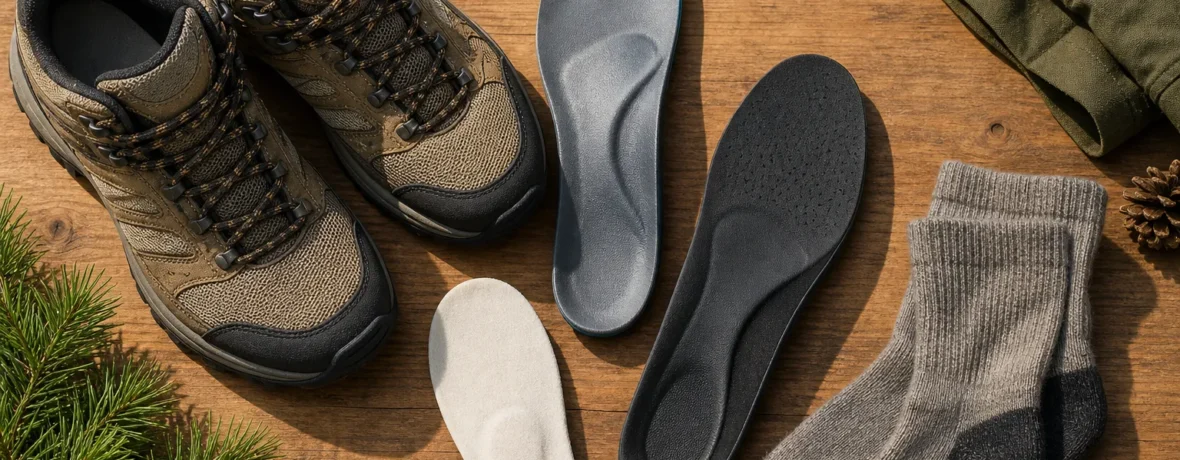
The best hiking shoes for plantar fasciitis are supportive, cushioned, stable under the heel, and stiff enough through the midsole to reduce excess flex. Top overall pick: HOKA Anacapa 2 Low GTX, because it combines thick cushioning, a rocker-like ride, waterproof protection, wide sizing, and trail grip in one shoe.
We may earn a commission when you buy through links on this page.
Quick Picks
| Category | Model | Weight | Key feature |
|---|---|---|---|
| Best overall | HOKA Anacapa 2 Low GTX | 18.27 oz [518 g] per men’s US 9 | Thick cushioning with MetaRocker geometry |
| Best budget | Merrell Moab 3 Waterproof | 16.92 oz [480 g] per shoe | Stable, familiar fit with 5 mm lugs |
| Best arch support | Oboz Bridger Low Waterproof | 17.7 oz [502 g] per shoe | Supportive O FIT insole and deep heel cup |
| Best for wide feet | KEEN Targhee IV Waterproof | 18.7 oz [530 g] per shoe | Roomy forefoot and durable KEEN.FUSION build |
| Best for technical trails | Salomon X Ultra 5 GORE-TEX | 13 oz [369 g] per shoe | Light, stable chassis and secure quick-lace fit |
| Best zero-drop option | Altra Olympus 6 Hike Low GTX | 16.7 oz [473 g] per shoe | Wide toe box with 33 mm stack height |
| Best for rocky trails | La Sportiva Spire GTX | 15.5 oz [440 g] per shoe | Protective build with strong mountain traction |
| Best max cushion | HOKA Kaha 3 Low GTX | 17.10 oz [485 g] per men’s US 9 | High-stack, long-haul cushioning |
What are the best hiking shoes for plantar fasciitis?
The best pick for most hikers is the HOKA Anacapa 2 Low GTX. It gives you thick underfoot cushioning, a stable base, a smooth heel-to-toe roll, and enough structure for day hikes without feeling like a brick.
Plantar fasciitis usually shows up as sharp heel pain, especially with the first steps after rest. The plantar fascia supports the arch and absorbs shock when you walk, so hiking shoes for sore heels need to reduce pounding, control sloppy movement, and avoid hard pressure under the heel. Mayo Clinic recommends supportive shoes with good arch support, thick soles, and plenty of cushioning for plantar fasciitis self-care; MedlinePlus also flags flat feet, high arches, uneven surfaces, poor arch support, and soft soles as factors that can contribute to the problem. Read the plain-language medical guidance from Mayo Clinic on plantar fasciitis treatment and MedlinePlus on plantar fasciitis causes and care.
No shoe cures plantar fasciitis. That is the straight answer. A good hiking shoe can make the trail less irritating, but it will not diagnose you, fix every heel, or replace a clinician. You are looking for the right mix: cushioning, arch support, heel security, torsional stability, and a fit that leaves your toes room without letting your heel slide.
How we chose
We chose these models using published specs, materials, current availability, verified owner feedback, expert reviews, and brand product information as of November 2026. This guide is research-based rather than a wear test.
The shortlist favored hiking shoes that match what sore-heel hikers usually need: thicker midsoles, stable platforms, secure heel counters, removable insoles, real trail outsoles, and enough structure to keep the foot from folding over rocks. Shoes with a paper-thin midsole, very soft floppy foam, narrow toe boxes only, or poor heel hold did not make the cut.
- Cushioning: Enough midsole under the heel to reduce hard impacts on packed dirt, rock, and gravel.
- Support: A stable platform, firm heel hold, and removable insole so you can add orthotics if needed.
- Trail grip: Rubber outsoles and lug patterns that work beyond sidewalks.
- Fit range: Bonus points for wide sizes, roomy toe boxes, and secure lacing.
- Real downsides: Weight, stiffness, narrow fit, zero-drop transition issues, heat, waterproof breathability, and break-in needs all mattered.
Best hiking shoes for plantar fasciitis: product reviews
HOKA Anacapa 2 Low GTX – Best for most hikers
The HOKA Anacapa 2 Low GTX suits hikers who want plush cushioning, a smooth roll, waterproofing, and a stable day-hiking platform without moving into a full-height boot.
- Weight: 18.27 oz [518 g] per men’s US 9
- Drop: 8 mm based on current retailer specs; HOKA catalog stack shows 38 mm heel / 30 mm forefoot
- Upper: Waterproof nubuck leather, recycled mesh, GORE-TEX Invisible Fit
- Outsole: Vibram Megagrip with 5 mm lugs
- Price tier: Premium
This is the easiest recommendation for many plantar-fasciitis hikers because it brings cushioning and rocker geometry together. That smooth roll can reduce the slap-and-flex feeling you get in flatter shoes. The platform is broad enough to feel planted, and the outsole is built for real trail use, not just dog walks on wet pavement.
It also has foot-health credibility: the Anacapa 2 Low GTX appears in the APMA Seal Program footwear listing. That does not mean it will work for every foot. It does mean the shoe has been reviewed through a foot-health lens.
Pros
- Excellent heel cushioning for hard-packed trails
- Smooth rocker feel helps the shoe roll forward
- Waterproof build with solid Vibram traction
- Available in wide sizes for many hikers
Cons
- Heavier than trail-runner-style hiking shoes
- Stacked foam can feel tall if you prefer ground feel
- Waterproof membrane runs warmer in summer
- Not the cheapest option
Skip it if… you want a low, flexible, highly breathable hiking shoe for hot, dry trails.
Merrell Moab 3 Waterproof – Best for budget-minded hikers
The Merrell Moab 3 Waterproof suits hikers who want a stable, traditional hiking shoe with decent cushioning, a supportive feel, and broad availability in regular and wide sizes.
- Weight: 16.92 oz [480 g] per shoe
- Drop: 11.55 mm
- Upper: Pig suede leather and mesh with waterproof membrane
- Outsole: Vibram TC5+ with 5 mm lugs
- Price tier: Budget to mid-range
The Moab 3 is not fancy. That is part of the appeal. It has a familiar hiking-shoe stance: supportive, protective, and not overly soft. For plantar fasciitis, the key benefit is the combination of a stable heel area, an air cushion in the heel, and a removable footbed. If your foot does better with aftermarket insoles, the Moab is easy to work with.
The downside is that it feels more old-school than springy. If your heel wants max cushion, the Anacapa or Kaha will feel kinder. If your foot wants stable structure and good value, the Moab deserves a hard look.
Pros
- Good stability for the money
- Wide sizes are commonly available
- Removable insole works with orthotics
- Durable enough for rocky day hikes
Cons
- Less plush than HOKA or Altra options
- Waterproof version can run warm
- Traditional fit may feel bulky
- Not ideal if you need a strong rocker feel
Skip it if… your heel pain flares in firm shoes and you need maximum cushioning underfoot.
Oboz Bridger Low Waterproof – Best for built-in arch support
The Oboz Bridger Low Waterproof suits hikers who want a firm, supportive shoe with a deep heel cup and a more structured insole than most stock footbeds.
- Weight: 17.7 oz [502 g] per shoe
- Drop: 12 mm
- Upper: Nubuck leather and B-DRY waterproof membrane
- Outsole: Trail Tread HD rubber
- Price tier: Mid-range
Oboz built its reputation on supportive insoles, and the Bridger Low is the shoe to consider if flimsy factory footbeds make your arches angry. Its O FIT insole uses a firm molded shell, heel cup, and arch support. That is useful for hikers who need more guidance under the foot and less collapse through the arch.
This shoe is firmer than the plush picks. Good. Or bad. It depends on your foot. Some plantar-fasciitis hikers hate soft, unstable cushioning and do better with a supportive platform. Others need more foam between heel and ground. The Bridger leans toward support over bounce.
Pros
- One of the better stock insoles in hiking footwear
- Deep heel cup helps rearfoot security
- Protective leather build for rough trails
- Available in wide sizes
Cons
- Firmer ride than max-cushion shoes
- May need break-in time
- Leather waterproof build is warm in heat
- Can feel stiff for fast hiking
Skip it if… you want soft, bouncy cushioning right out of the box.
KEEN Targhee IV Waterproof – Best for wide feet and flat arches
The KEEN Targhee IV Waterproof suits hikers who need more forefoot room, a stable platform, and a durable build that does not pinch the toes.
- Weight: 18.7 oz [530 g] per shoe
- Drop: 12 mm
- Upper: Leather with KEEN.DRY waterproof membrane
- Outsole: KEEN.RUGGED rubber
- Price tier: Mid-range
If you are searching for the best hiking shoes for flat feet, start with fit and stability before chasing huge arch bumps. Flat feet often need a shoe that supports the whole platform, locks the heel, and leaves the toes enough room to spread. The Targhee IV is one of the stronger options for that job because KEEN’s fit tends to give the forefoot more space than many narrow European-style hikers.
The Targhee IV also uses KEEN.FUSION construction, designed to improve durability compared with glued-only builds. That matters if you hike in wet grit, mud, and rough desert gravel. For sore heels, the main draw is not plush foam. It is a stable, roomy chassis that can accept an insole if the stock support is not enough.
Pros
- Roomy forefoot works well for many wide feet
- Stable feel on uneven trail
- Protective toe area
- Durable waterproof construction
Cons
- Not lightweight
- Less cushioned than the HOKA models
- Roomy fit may feel sloppy on narrow heels
- Waterproof leather can feel hot in summer
Skip it if… you have narrow feet and struggle with heel lift in roomy shoes.
Salomon X Ultra 5 GORE-TEX – Best for technical trails
The Salomon X Ultra 5 GORE-TEX suits hikers who want a lighter, more precise shoe for rocky trails, steep descents, and wet conditions.
- Weight: 13 oz [369 g] per shoe
- Drop: Not listed on the current product page
- Upper: Matryx textile with GORE-TEX membrane
- Outsole: All Terrain Contagrip
- Price tier: Premium
This is the nimble pick. The X Ultra 5 has a molded chassis, Active Support wings, Salomon’s quick-lace system, and a snug trail feel. If your plantar fasciitis gets worse when your foot slides around inside the shoe, that locked-in fit can help. The lighter weight also saves energy over long days.
But Salomon fit is not for everyone. The shoe feels more performance-oriented than plush. Hikers with wide forefeet, bunions, or sensitive heel pain may prefer KEEN, Altra, HOKA, or a wide-size Moab. If you move fast and need control on rocky ground, this is the sharpest tool here.
Pros
- Lightest shoe in this guide
- Secure fit for steep terrain
- Good lateral stability
- Strong wet/dry trail traction
Cons
- Narrower performance fit will not suit every foot
- Less under-heel cushion than max-stack options
- Quicklace system is not everyone’s favorite
- Waterproof membrane reduces breathability
Skip it if… you need a wide toe box or soft cushioning above all else.
Altra Olympus 6 Hike Low GTX – Best for toe room and zero drop
The Altra Olympus 6 Hike Low GTX suits hikers who already like zero-drop shoes and want a wide toe box with high-stack cushioning.
- Weight: 16.7 oz [473 g] per shoe
- Drop: 0 mm
- Stack height: 33 mm
- Upper: Leather with GORE-TEX Invisible Fit
- Outsole: Vibram Megagrip
- Price tier: Premium
The Olympus 6 Hike Low GTX gives you the classic Altra recipe: foot-shaped forefoot, zero-drop platform, and a thick midsole. If narrow toe boxes aggravate your stride, this shoe can feel like relief. Your toes can spread instead of being squeezed into a point.
Now the warning. Zero drop is not automatically good for plantar fasciitis. A 0 mm shoe can place more demand on your calves and Achilles tendon, especially if you are coming from 10-12 mm drop hiking shoes. If you are already adapted to zero drop, this is a strong hiking option. If you are not, transition slowly on short walks before taking it into the backcountry.
Pros
- Roomy toe box supports natural toe splay
- High cushioning for hard trails
- Vibram Megagrip outsole
- Good option for hikers already adapted to zero drop
Cons
- Zero drop can irritate calves, Achilles, or fascia if rushed
- Neutral support may not be enough for severe overpronation
- High stack can feel less precise on uneven rocks
- Waterproof build is warm
Skip it if… you currently wear high-drop shoes and need something for a hard hike next weekend.
La Sportiva Spire GTX – Best for rocky trails
The La Sportiva Spire GTX suits hikers who want a protective, mountain-ready low shoe with grippy traction and a more precise fit.
- Weight: 15.5 oz [440 g] per shoe
- Drop: Not listed on the current product page
- Upper: Abrasion-resistant mesh with GORE-TEX Surround
- Outsole: Vibram XS Trek with Impact Brake System
- Price tier: Premium
The Spire GTX is less about cloud-soft comfort and more about protection, traction, and mountain control. That can be exactly what some sore-foot hikers need. If your heel pain gets worse when a shoe twists, folds, or lets your foot drift on uneven stone, the Spire’s more technical build is a plus.
The fit is the catch. La Sportiva often works best for medium to narrower feet. If you have a wide forefoot or flat foot that spreads under load, try before committing. The Spire is a strong rocky-trail shoe, not the plushest plantar-fasciitis comfort shoe.
Pros
- Excellent protection on rocky terrain
- Strong traction and braking grip
- Stable, precise feel
- Good waterproof/breathability design for a GTX shoe
Cons
- Fit may be too narrow for wide feet
- Less plush than HOKA and Altra options
- Premium price tier
- Can feel overbuilt for mellow trails
Skip it if… you need a roomy, soft shoe for easy dirt paths and casual walking.
HOKA Kaha 3 Low GTX – Best for maximum cushioning
The HOKA Kaha 3 Low GTX suits hikers who want a cushier, more substantial shoe for long day hikes, wet trails, and loaded walking.
- Weight: 17.10 oz [485 g] per men’s US 9
- Stack height: 41 mm heel / 33 mm forefoot in men’s US 9
- Drop: 8 mm based on stack specs
- Upper: Waterproof nubuck leather with GORE-TEX Invisible Fit
- Outsole: Vibram Megagrip with 4 mm lugs
- Price tier: Premium
The Kaha 3 Low GTX is the big-cushion choice. It has more stack than the Anacapa 2 Low GTX, a dual-density midsole, a cushioned sockliner, and a protective upper. If your heel likes foam but your hikes still demand waterproofing and trail grip, this is the HOKA to compare against the Anacapa.
Why not make it the top pick? Weight and bulk. The Kaha feels more substantial, and the lower lugs are not as aggressive as some technical hikers. For many day hikers with plantar fasciitis, the Anacapa hits a cleaner balance. For those who want the plushest low-cut option here, the Kaha makes sense.
Pros
- High-stack cushioning under the heel
- Stable dual-density midsole
- Waterproof leather build
- Good choice for long, damp day hikes
Cons
- Bulky compared with lighter hiking shoes
- Premium price tier
- 4 mm lugs are not the deepest here
- May feel too warm for hot desert hikes
Skip it if… you want the lightest shoe possible or hike mostly in hot, dry weather.
What should you look for in hiking shoes for plantar fasciitis?
Look for cushion, support, heel hold, a removable insole, and controlled flex. The shoe should bend at the toes, not fold in the middle.
How much cushioning do you need?
You need enough cushioning to soften heel strike without making the shoe wobbly. Thick foam helps on hard-packed trails, but very soft foam can feel unstable when you carry a pack or step on angled rock.
| Trail use | Best feel | Good models |
|---|---|---|
| Easy day hikes | Cushioned and smooth | HOKA Anacapa 2, Merrell Moab 3 |
| Rocky trails | Firm support and protection | La Sportiva Spire, Salomon X Ultra 5 |
| Long wet hikes | Max cushion and waterproofing | HOKA Kaha 3, Altra Olympus 6 Hike |
| Wide or flat feet | Roomy platform with insole options | KEEN Targhee IV, Oboz Bridger Low |
Is arch support always better?
No. The right arch support feels supportive, not like a hard golf ball under your foot.
Mayo Clinic and MedlinePlus both point to supportive shoes, cushioning, and arch support as common conservative care steps. But every foot is different. Some hikers need a firm arch. Some need a lower, broader support. Some need a medical orthotic. A removable stock insole is useful because it lets you tune the shoe without replacing the whole pair.
Should plantar fasciitis hikers wear waterproof shoes?
Wear waterproof shoes when wet feet are the bigger problem. Skip waterproofing when heat and sweat are the bigger problem.
GORE-TEX, KEEN.DRY, B-DRY, and similar membranes help in rain, mud, wet grass, and shoulder-season hiking. They also trap more heat than non-waterproof mesh. Hot, sweaty feet swell. Swelling changes fit. Fit changes heel hold. If you hike in the Southwest or in summer humidity, a breathable non-waterproof version may feel better, if available.
What heel-to-toe drop works best?
Most hikers with plantar fasciitis should be cautious with sudden drop changes. A moderate or higher drop can feel easier if your calves and Achilles are tight.
Zero-drop shoes can work beautifully for hikers who are adapted to them. They can also punish you if you switch overnight from a 12 mm hiking shoe to a 0 mm hiking shoe. If you choose Altra, build up slowly: short neighborhood walks first, then easy trails, then longer hikes.
How should the shoe fit?
Your heel should stay locked, your arch should feel supported, and your toes should have room to spread on descents. Painful pressure is not “break-in.” It is a warning.
- Try shoes late in the day, when your feet are slightly swollen.
- Wear the hiking socks you actually use.
- Stand on an incline or stairs to check toe bump on descents.
- Walk fast and slow to test heel slip.
- Remove the stock insole if you plan to use orthotics.
- Check flex: the shoe should bend near the ball of the foot, not collapse under the arch.
- Do one short local walk before committing to a long trail day.
What are the best hiking boots for plantar fasciitis if you need ankle coverage?
The best hiking boots for plantar fasciitis are mid-cut versions of supportive, cushioned hiking shoes that already fit your foot well.
If you need ankle coverage, look at mid versions of the HOKA Anacapa 2, Merrell Moab 3, KEEN Targhee IV, Oboz Bridger, and HOKA Kaha 3. Do not assume a boot automatically gives more plantar fascia support. The midsole, heel counter, insole, and fit still do the heavy lifting. A boot mainly adds ankle coverage, debris protection, and a more secure upper for loose terrain or heavier packs.
When to see a doctor
See a doctor or qualified clinician if heel pain does not improve after home care, if it changes your gait, or if you have swelling, numbness, night pain, or pain after an injury.
MedlinePlus advises contacting a provider if heel pain does not improve after 2 to 3 weeks of home treatment. Mayo Clinic also describes care options such as physical therapy, night splints, orthotics, and other treatments when symptoms persist. You can also review MedlinePlus guidance on heel pain and when to seek care.
Do not use this buyer’s guide as a diagnosis. Plantar fasciitis is common, but heel pain can come from other issues too. A clinician can check your foot, calf flexibility, gait, training load, and footwear before you spend premium money on another pair of shoes.
Final comparison table
| Model | Best use | Support feel | Main downside |
|---|---|---|---|
| HOKA Anacapa 2 Low GTX | Best overall day hiker | Cushioned, smooth, stable | Warm and not ultralight |
| Merrell Moab 3 Waterproof | Budget-friendly support | Traditional, stable | Not very plush |
| Oboz Bridger Low Waterproof | Built-in arch support | Firm, structured | May need break-in |
| KEEN Targhee IV Waterproof | Wide feet and flat feet | Roomy, stable | Can feel bulky |
| Salomon X Ultra 5 GORE-TEX | Technical trails | Precise, secure | Narrower fit |
| Altra Olympus 6 Hike Low GTX | Toe room and zero drop | Wide, cushioned, neutral | Zero-drop transition risk |
| La Sportiva Spire GTX | Rocky terrain | Protective, firm | Not ideal for wide feet |
| HOKA Kaha 3 Low GTX | Max cushion | Plush, substantial | Bulky and premium priced |
Related reading
- Hiking With Plantar Fasciitis
- Hiking Shoes vs Hiking Boots: Which Should You Buy?
- Are Trail Running Shoes Good for Hiking? Pros, Cons and When to Switch
- Hiking Shoes vs Walking Shoes: Key Differences
FAQ
Can hiking shoes help plantar fasciitis?
Yes, the right hiking shoes can reduce irritation by adding cushioning, arch support, heel stability, and better shock absorption. They do not cure plantar fasciitis, and persistent heel pain deserves medical guidance.
Are HOKA hiking shoes good for plantar fasciitis?
Yes, HOKA hiking shoes can be good for some hikers with plantar fasciitis because they use thick cushioning and rocker-style geometry. The Anacapa 2 Low GTX is the best balance for most hikers, while the Kaha 3 Low GTX is the max-cushion option.
Are zero-drop hiking shoes good for plantar fasciitis?
Sometimes, but only if your body is adapted to zero drop. If you are coming from higher-drop shoes, switch slowly because zero-drop footwear can increase demand on the calves and Achilles.
Should I use custom orthotics in hiking shoes?
Use custom orthotics if a clinician prescribed them or if they reliably reduce your symptoms. Choose hiking shoes with removable insoles and enough internal volume so the orthotic does not make the shoe tight.
Are hiking boots better than hiking shoes for plantar fasciitis?
Not automatically. Boots add ankle coverage and upper support, but plantar fascia comfort comes mostly from the midsole, arch support, heel hold, and fit.
How stiff should hiking shoes be for plantar fasciitis?
They should be stiff through the middle and flexible near the toes. If the shoe folds under the arch or twists like a towel, it is usually too floppy for sore-heel hiking.
What should I avoid in hiking shoes if I have plantar fasciitis?
Avoid flat, unsupportive shoes, worn-out midsoles, sloppy heel fit, and shoes that bend sharply under the arch. Also avoid making a sudden switch to minimalist or zero-drop footwear before a long hike.