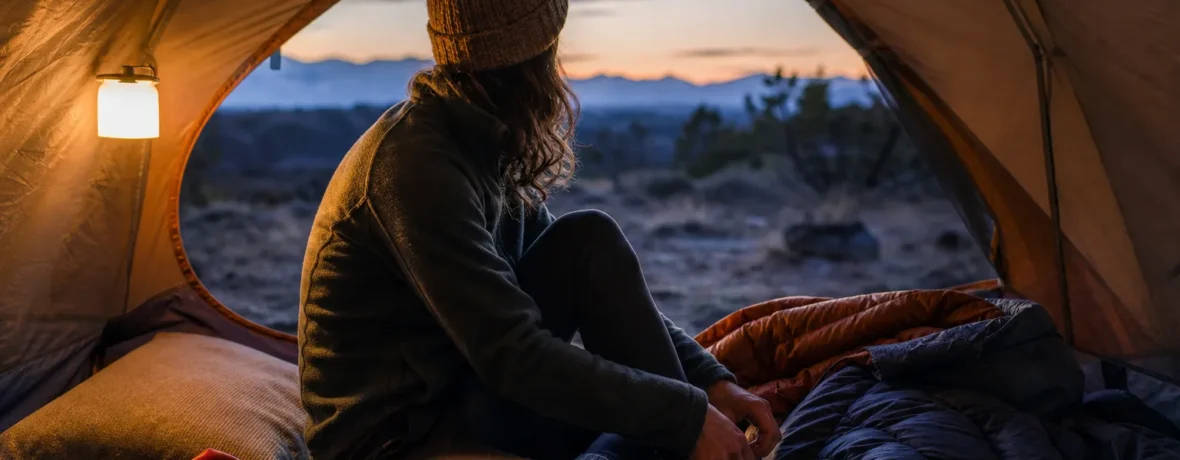
To stay warm in a tent, start with a sheltered campsite, a sleeping pad rated R-4 or higher for freezing conditions, and a sleeping bag rated 10°F [6°C] colder than the forecast low. Change into dry base layers, eat before bed, vent condensation, and keep fuel-burning heaters outside.
How to stay warm in a tent step by step?
Build warmth from the ground up.
A cold night in a tent is usually not one big failure. It is five small leaks: cold ground, damp clothing, weak campsite choice, thin sleep gear, and trapped condensation. Fix those in order and you sleep warmer without hauling a cabin’s worth of gear.
- Check the real overnight low. Use the forecast low for the exact area, then plan for a drop of 10°F [6°C] in valleys, basins, and exposed alpine camps.
- Pick a protected site. Camp behind trees, boulders, or terrain breaks. Avoid dry creek beds, valley bottoms, and open ridges where cold air pools or wind strips heat.
- Insulate under your whole body. Your sleeping bag compresses beneath you. The pad does the work there. Use one warm pad or stack a foam pad under an inflatable.
- Change before bed. Put on dry socks, dry base layers, and a dry hat. Even slightly sweaty hiking clothes chill you fast once you stop moving.
- Eat and drink. Have a calorie-dense snack and enough water so your body has fuel to make heat. Don’t go to sleep hungry and shivering.
- Pre-warm your bag. Fill a leakproof bottle with hot water, tighten it hard, dry the outside, and place it near your core or between your thighs in a sock.
- Vent the tent. Crack the vents or door top. Dry air feels colder at first, but it keeps frost and condensation from soaking your insulation.
- Seal drafts, not air exchange. Stake the fly low on the windward side, but leave vents open enough for moisture to escape.
- Protect tomorrow’s clothes. Keep next-day socks, gloves, and base layers in a dry bag or inside your sleeping bag footbox if they are not wet.
- Act early if you cannot warm up. Add layers, eat, move briefly, or wake your partner. Do not tough out steady shivering.
How to keep a tent warm without trapping condensation?
Vent the tent and warm your sleep system, not the air.
A backpacking tent is a wind shield, bug barrier, and weather shell. It is not a heated room. Your breath adds moisture all night, and that moisture lands on cold tent fabric as droplets or frost. When it falls onto your bag, your insulation loses loft and you get colder.
The better move is controlled airflow. Open roof vents. Leave a small gap at the top of the door if the weather allows it. Pitch the fly tight so it does not sag onto the inner tent. Keep wet socks, gloves, and rainwear out of the sleeping area when possible.
Use your tent to block wind and blowing snow. Use your pad, bag, quilt, clothing, and food to make heat where it matters: around you.
What gear keeps you warmest in a tent?
Your sleeping pad is the first piece to upgrade.
Many campers blame the sleeping bag when the real thief is the ground. Soil, rock, snow, and frozen duff pull heat away all night. A lofty bag on a thin pad still sleeps cold because the insulation under your hips, shoulders, and heels is crushed flat.
| Gear choice | Best use | Cold-night tip |
|---|---|---|
| Closed-cell foam pad | Budget trips, backup insulation, snow camps | Place it under an inflatable pad to add warmth and puncture protection. |
| Insulated inflatable pad | Backpacking and side sleeping | Choose R-4 or higher for freezing nights; go warmer for snow camping. |
| Mummy sleeping bag | Cold, windy, shoulder-season trips | Use the draft collar and hood; leave only your nose and mouth outside. |
| Backpacking quilt | Lower weight and flexible layering | Attach it tightly to the pad so drafts do not sneak in at your hips. |
For sleeping bags, treat the printed temperature rating as a starting point, not a promise. Cold sleepers should choose a bag rated 10°F [6°C] to 20°F [11°C] below the expected low. If the forecast says 25°F [-4°C], a 15°F [-9°C] bag gives you a much better margin than a 30°F [-1°C] bag.
What should you wear to sleep in a tent when it is cold?
Wear dry, loose layers that do not crush circulation.
Start with a dry base layer. Merino wool or synthetic fabric works well because it manages sweat better than cotton. Add fleece pants or a light insulated jacket if your bag has room. Wear clean, dry socks that are not tight at the ankle. Add a beanie or balaclava, because an open sleeping bag hood leaks heat fast.
Skip cotton. Once cotton gets damp, it hangs onto moisture and steals warmth. Also skip the “wear everything” strategy if it makes your bag tight. A stuffed sleeping bag has less air space for insulation to loft. Loose and dry beats bulky and compressed.
- Dry base layer top and bottom
- Warm sleep socks, kept separate from hiking socks
- Beanie, hood, or balaclava
- Light fleece or puffy jacket if needed
- Glove liners for very cold hands
- No wet hiking shirt, wet sports bra, or damp socks in the bag
Can you use a heater in a tent safely?
Skip fuel-burning heaters inside normal backpacking tents.
Stoves, lanterns, charcoal, propane heaters, and other fuel-burning devices can create carbon monoxide, a gas you cannot see or smell. The U.S. Consumer Product Safety Commission warns against using portable heaters or lanterns while sleeping in enclosed spaces such as tents, campers, and vehicles; read its portable heaters and camping equipment guidance before you bring any heat source near camp.
Cooking inside the tent is also a fire and carbon monoxide risk. If conditions force sheltered cooking, use a properly vented vestibule with extreme care, keep the stove away from fabric, and never sleep with a stove or heater running.
Safer heat options are simple: a hot water bottle, chemical hand warmers used according to the package, a warmer pad, a warmer bag, and dry layers. For car camping with access to shore power, an electric blanket or low-wattage electric pad can work only if the campground allows it and the cord stays dry and undamaged.
How do you stop getting cold from the ground?
Add insulation under every pressure point.
Your hips and shoulders compress insulation hardest, so they feel the cold first. If you wake at 2 a.m. with a cold back, add a foam pad, folded sit pad, empty pack, or spare clothing under the chilled area. Even a rain jacket under your torso can help in a pinch, though foam works better.
On snow, stomp a tent platform, let it firm up, then pitch. Put a closed-cell foam pad under your inflatable pad. Keep the pad fully under your shoulders, hips, knees, and feet. If your feet slide off the pad, stuff your pack under the footbox or place spare clothing there.
What should you eat and drink before sleeping in cold weather?
Eat enough food and drink enough water before you crawl in.
Your body needs fuel to stay warm. A dense snack before bed helps: nut butter, cheese, trail mix, chocolate, olive-oil-heavy dinner, or a bar you can chew in the cold. Hot drinks help morale and warm your hands, but the calories matter more than the steam.
Do not ignore hydration just because it is cold. Dehydration makes you feel worse and can make the night harder. Keep a bottle within reach so you do not have to leave the tent whenever you wake thirsty. In freezing conditions, store bottles upside down because ice forms first at the top.
What campsite choices make a tent warmer?
Choose shelter from wind and avoid cold-air traps.
Cold air flows downhill and settles in low spots. A meadow bottom can feel much colder than a bench 50 feet [15 m] higher. Ridges bring wind. The sweet spot is often a flat bench, inside tree cover, away from water, and not directly under dead branches.
Use the landscape before you use more gear. A three-season tent pitched in a smart site can feel warmer than a burlier tent pitched in a wind tunnel.
- Camp on durable, legal surfaces.
- Use trees, rocks, or terrain to block wind.
- Avoid valley bottoms when the sky is clear and calm.
- Stay away from lake edges and creek bottoms on cold nights.
- Pitch the narrow end of the tent toward the wind.
- Stake the fly tight so fabric does not flap or touch the inner wall.
How do you manage wind chill around camp?
Block wind before it reaches your body.
Wind chill affects exposed skin and speeds heat loss when you are outside your bag. NOAA explains that lower wind chill increases the risk of frostbite and hypothermia in its wind chill overview. Inside a zipped tent, wind chill is reduced, but drafts and flapping fabric still pull warmth from your sleep system.
Before bed, tighten guylines and orient the lowest, strongest side of the tent into the wind. Use natural windbreaks. Keep your head away from the windward wall if the tent fabric is pushing inward. If gusts are hammering the broad side, re-pitch before you are exhausted and cold.
When to see a doctor
Get medical help fast if cold symptoms affect thinking, speech, coordination, or skin color.
Hypothermia can become an emergency. Mayo Clinic describes hypothermia as a body temperature below 95°F [35°C] and lists warning signs such as shivering, slurred speech, slow breathing, confusion, and drowsiness in its hypothermia first aid guidance. The CDC also lists shivering, exhaustion, confusion, fumbling hands, memory loss, slurred speech, and drowsiness as signs in its hypothermia warning guidance.
Call emergency services if someone is confused, very drowsy, stops shivering while still cold, cannot walk normally, has slurred speech, or has cold, numb, waxy, gray, white, or blue skin. Move the person out of wind and wet clothing, handle them gently, and warm the core while you wait for help. Do not rub frozen skin or place direct high heat on numb tissue.
What is the cold-night tent checklist?
Pack the items that protect warmth, dryness, and sleep.
A good checklist keeps you from solving the same problem at midnight with numb fingers. Lay this out before dark, not after your headlamp batteries are dying.
- Sleeping pad rated for the expected cold
- Foam pad or sit pad for backup ground insulation
- Sleeping bag or quilt with a real temperature buffer
- Dry base layers reserved for sleeping
- Dry socks, hat, and glove liners
- Hot water bottle with a secure lid
- High-calorie bedtime snack
- Ventable tent or tarp pitch
- Dry bag for sleep clothes
- Headlamp within reach
- Extra stakes and guylines for wind
- Emergency communication plan for remote trips
Related reading
- How to Waterproof a Tent: Seams, Rainfly and Floor
- How to Set Up a Tent Step by Step (Even Alone)
- How to Clean a Tent (Including Mold and Mildew)
- How to Choose a Tent: Capacity, Seasons and Weight
FAQ
Quick answers for cold nights in camp.
Is it warmer to sleep with clothes on in a sleeping bag?
Yes, if the clothes are dry and not too tight. Dry base layers, socks, and a hat usually add warmth, but overstuffing the bag can compress insulation and create cold spots.
Should you cover your face inside a sleeping bag?
No, keep your mouth and nose outside the bag. Breathing into the bag adds moisture, and damp insulation sleeps colder by morning.
Does a smaller tent stay warmer?
Yes, a smaller tent can feel warmer because there is less air space and less fabric catching wind. The difference is limited, though; your pad and bag still matter more than tent size.
Are two sleeping pads warmer than one?
Yes, stacking pads adds insulation. Put a closed-cell foam pad under an insulated inflatable pad for a reliable cold-ground setup.
Why am I cold even with a good sleeping bag?
The most common causes are a sleeping pad that is not warm enough, damp clothing, hunger, wind exposure, or condensation wetting the bag. Fix the ground insulation first, then check for drafts, moisture, and tight layers.
What temperature is too cold for tent camping?
There is no single cutoff for everyone. If your pad, bag, clothing, shelter, and skills do not match the forecast low and wind, it is too cold for that setup.