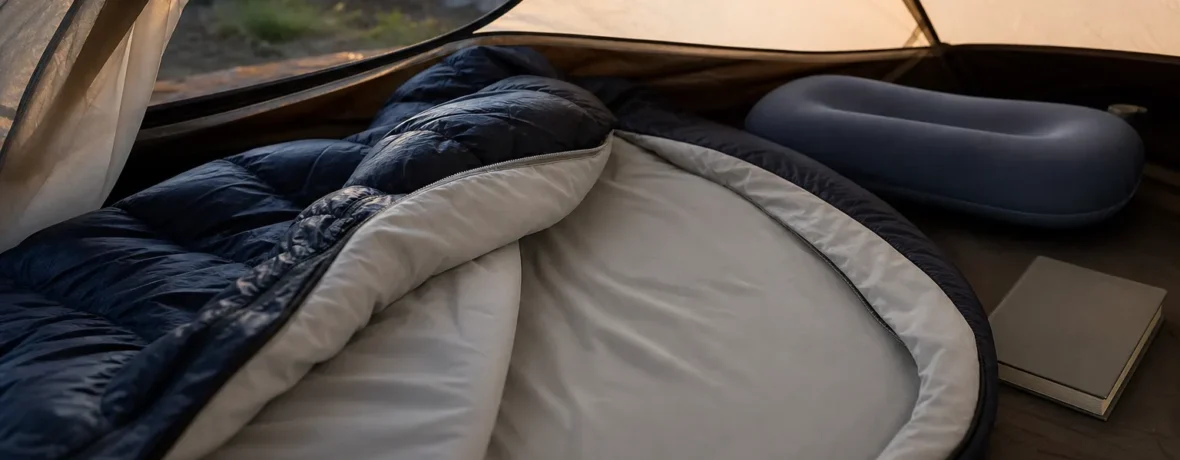
A sleeping bag liner is a removable fabric sack that goes inside your sleeping bag or works alone in warm weather. You need one if you want cleaner gear, softer fabric, or a small warmth boost; skip it if every ounce matters and your sleep clothes already protect your bag.
What is a sleeping bag liner and what does it do?
It’s a washable barrier between you and your sleeping bag.
A sleeping bag liner works like a fitted sheet for trail sleep. You slide into the liner, then into your bag or quilt. Instead of grinding sweat, sunscreen, dirt, and body oils into the bag’s inner fabric, you dirty the liner. Then you wash the liner at home, which is much easier than washing a down bag.
That matters because sleeping bags are not casual laundry. REI recommends using a liner, clean sleep clothes, and drying out your bag when damp to prevent dirt buildup; REI also notes that washing a sleeping bag causes wear and can reduce loft over time. See REI’s sleeping bag care guidance.
A liner can also change the feel of your sleep system. Slick nylon can feel clammy against bare skin. A soft liner can feel more like bedding. On hot nights, you may use the liner alone. In huts, cabins, hostels, or borrowed bags, it gives you a personal sleep layer.
Do sleeping bag liners actually add warmth?
Yes, but not as much as marketing copy can make you hope.
A liner can add a small warmth boost by trapping a little more still air around your body. The catch: there is no universal liner temperature test like the ISO/EN testing used for many sleeping bags. As of November 2026, Sea to Summit says there is no standardized protocol for measuring the warmth added by a liner, and that a thermal liner might realistically add 7–10°F [4–6°C] when paired with a high-performance sleeping bag and a well-insulated pad; see its liner temperature-rating explanation.
That is useful. It is not magic. A liner will not turn a light summer bag into a deep winter setup. If the forecast says 25°F [-4°C] and your bag is comfortable for you only to 40°F [4°C], a liner is the wrong fix. Bring a warmer bag, warmer quilt, better pad, more dry layers, or a combination of those.
Your sleeping pad also matters. The ground steals heat fast. If your pad is underbuilt for the temperature, a liner inside your bag will not solve the heat loss underneath you.
What is the best sleeping bag liner for backpacking?
The right one is the lightest liner that solves your actual problem.
For backpacking, start with your reason for carrying it. Hygiene? Comfort? Warm-weather sleeping? Cold-weather backup? Then pick fabric and shape. A 3 oz [85 g] silk or ultralight synthetic liner feels very different in your pack than a plush fleece liner that can weigh several times more.
| Material | Best use | Tradeoff |
|---|---|---|
| Silk or silk-blend | Low weight, small packed size, smooth feel | Usually pricier and more delicate |
| Synthetic knit | Durability, easy washing, balanced cost | Can feel less luxurious than silk |
| Thermal synthetic | Extra warmth in shoulder-season trips | Bulkier and not a true bag upgrade |
| Fleece | Car camping, cabins, cold basecamps | Too bulky for most long backpacking trips |
Shape matters too. A mummy liner fits mummy bags and saves fabric weight. A rectangular liner gives you more room to sprawl and works well in travel settings. If you use a quilt, a wider liner can feel less restrictive.
For most hikers, the sweet spot is a mummy-shaped silk-blend or synthetic liner that packs small, washes easily, and does not turn midnight bathroom breaks into a wrestling match.
When do you need a sleeping bag liner?
You need one when cleanliness, comfort, or flexible warm-weather sleep beats the extra weight.
Pack one for:
- Long trips: Body oils and trail grime build up fast over multiple nights.
- Down bags: Keeping oil away from down helps preserve loft between proper washes.
- Shared lodging: Huts, hostels, bunkrooms, and rental gear feel better with your own barrier.
- Warm summer nights: A liner alone can be enough when a bag feels too hot.
- Cold sleepers: A thermal liner can add a small buffer, especially with a warm pad.
- Scratchy or clammy bag interiors: A liner changes the feel immediately.
Western Mountaineering says using a liner is one of the best ways to keep a bag clean and extend the time between washes, especially on extended trips and thru-hikes; see its sleeping bag FAQ.
When should you skip a sleeping bag liner?
Skip it when it does not solve a real problem.
If you already sleep in clean base layers, socks, and a beanie, those clothes act like a removable liner for your body. On a short overnight trip, that may be enough. If you are counting ounces on a high-mileage route, a liner that weighs 5 oz [142 g] has to earn its place.
Also skip a liner if you toss and turn and hate being wrapped up. Some hikers feel trapped by narrow mummy liners. Others slide the liner down around their knees by 2 a.m. If that sounds like you, choose a roomier shape or use dedicated sleep clothes instead.
Do not buy a liner to cover a bad temperature match. REI explains that ISO and EN sleeping bag ratings help compare bags, but your comfort also depends on your metabolism, pad, clothes, shelter, and conditions; see REI’s sleeping bag temperature ratings guide. A liner is a fine-tuning tool, not a rescue plan.
How do you use and care for a sleeping bag liner?
Use it like a sheet, then wash it before grime becomes permanent.
- Match the shape to your sleep system. Use a mummy liner in a mummy bag, a wider liner with quilts, and a rectangular liner for cabins or travel.
- Keep it dry in your pack. Store it with your sleep clothes or inside a waterproof stuff sack if rain is likely.
- Change into cleaner sleep layers. The liner helps, but muddy hiking pants still make a mess.
- Step in before entering the bag. Smooth the liner around your feet so it does not twist.
- Vent when needed. If you overheat, unzip the bag or pull the liner down to your waist.
- Air it out each morning. Shake out grit and let moisture flash off before packing.
- Wash according to the tag. Silk, wool blends, fleece, and synthetics can have different care needs.
Do not overthink it. The whole point is simple: the liner takes the abuse so your sleeping bag does not.
Related reading
- How to Choose a Sleeping Bag: Temperature Ratings, Fill and Shape
- How to Wash a Sleeping Bag at Home Without Damaging It
- How to Wash a Down Sleeping Bag and Restore the Loft
- How to Attach a Sleeping Bag to a Backpack
FAQ
Can a sleeping bag liner replace a sleeping bag?
Yes, but only in warm conditions. A liner can work as a light cover on hot summer nights, in cabins, or in hostels, but it is not insulation for cold ground or chilly mountain air.
How much warmth does a sleeping bag liner add?
Expect a small boost, often single digits in °F for lightweight liners. Thermal liners can add more in the right setup, but there is no standardized test across all brands, so treat any number as an estimate.
Is silk or synthetic better for a sleeping bag liner?
Silk is better for low weight and a tiny packed size. Synthetic is often better for durability, easier washing, and lower cost.
Should a liner go inside a quilt?
Yes, if you want cleaner sleep layers or a softer feel. Choose a roomy liner, because narrow mummy liners can fight the open, flexible feel that makes quilts comfortable.
Are sleeping bag liners worth it for thru-hiking?
They can be worth it on thru-hikes because they reduce how much body oil and dirt reach your bag. If your base layers already do that job and you are strict about pack weight, you may not need one.