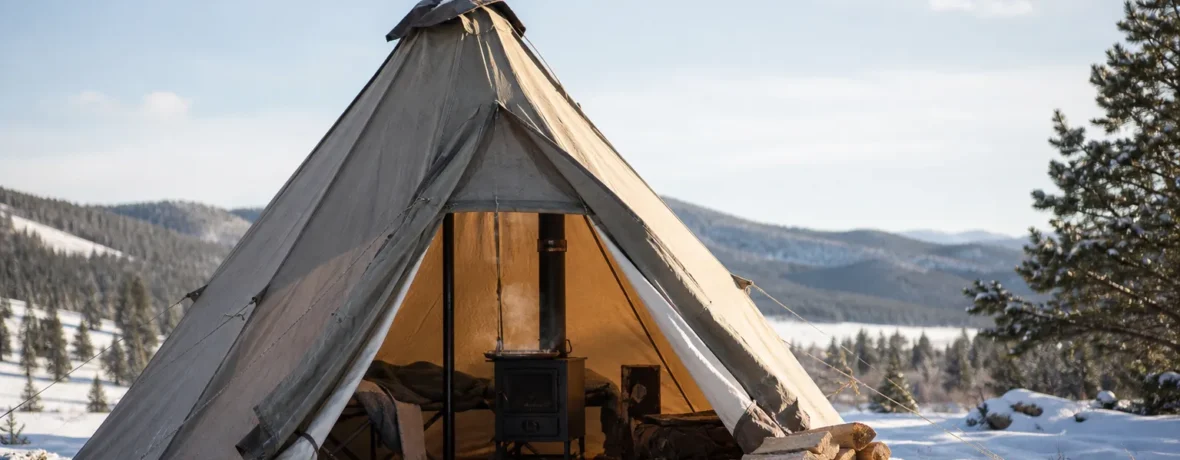
A hot tent is a winter shelter built to run a wood stove inside: a fire-resistant stove jack routes the chimney pipe through the wall or roof, and vents keep air moving. Yes, it can make subfreezing nights livable, but only if the tent, stove, chimney, spark control, and ventilation are matched and watched.
What is a hot tent, exactly?
A hot tent is a tent designed for safe stove use, not a regular tent with a hole cut in it.
The key feature is the stove jack: a heat-resistant panel made to accept a chimney pipe. Most hot tents also have high and low vents, tie-outs for snowy wind, and enough floor space to keep sleeping bags, pads, packs, and puffy jackets away from the stove body.
Hot tents range from traditional canvas wall tents to pyramid-style shelters made from silnylon, silpoly, or polyester-cotton blends. Some have full floors. Some are floorless. Some are big enough for cots and camp chairs. Others are compact shelters where one person can sleep, dry socks, and melt snow without feeling like a frozen burrito.
The stove is usually a small wood-burning unit with a pipe that exits the tent. Titanium models pack smaller and weigh less. Steel stoves are tougher and hold heat longer. Neither one runs itself. You feed the fire, manage the draft, clear snow around the shelter, and shut things down before sleep unless the setup and conditions allow safe, active monitoring.
How does hot tent camping work?
Hot tent camping works by turning a winter shelter into a heated basecamp while still venting smoke and carbon monoxide outside.
The stove sits on bare ground, a fireproof mat, or a heat-safe base depending on the tent design. A chimney pipe rises from the stove, passes through the stove jack, and sends smoke above the shelter. Fresh air enters through vents and door gaps. Warm air gathers near the peak, while the lower edges stay cooler.
That sounds cozy because it is. It is also hands-on. Wood stoves burn hot, then fade fast. A small backpacking stove may need feeding every 20 to 40 minutes when you want steady heat. Once the fire dies, the tent cools quickly. You still need a real winter sleep system rated for the conditions. The stove is comfort, drying power, and morale. It is not your only safety net.
Is a hot tent warmer than a normal tent?
Yes, while the stove is burning.
A normal winter tent blocks wind and traps a little body heat. A hot tent can become warm enough to sit up, cook carefully, strip wet layers, and dry gloves. That changes the whole rhythm of a cold camp. Instead of diving into your sleeping bag at 5 p.m., you can manage gear, drink something hot, and keep fingers working.
But the warmth is temporary. Most portable tent stoves do not burn all night without attention. When the fire goes out, thin tent fabric loses heat fast. Canvas holds warmth better than ultralight fabric, but it is heavier, bulkier, and slower to dry. Pick your tradeoff before you buy.
| Setup | Best for | Main tradeoff |
|---|---|---|
| Canvas wall tent with steel stove | Truck camping, hunting camps, long winter basecamps | Heavy and bulky |
| Pyramid hot tent with titanium stove | Backcountry ski tours, snowshoe trips, pulk travel | Less heat retention |
| Floorless tipi-style shelter | Snow camping with flexible pitching options | Spindrift, mud, and ground moisture management |
| Regular tent with no stove jack | Standard backpacking and camping | Not safe for a wood stove |
Can you put a stove in any tent?
No, you should only use a stove in a tent designed for that stove use.
A standard backpacking tent can melt, ignite, trap dangerous gases, and fail around a hot pipe. Cutting a DIY hole through the fly does not make it a hot tent. The stove jack, chimney height, clearances, fabric, ventilation, guyline layout, and footprint all matter.
Carbon monoxide is the invisible risk. The CDC describes carbon monoxide as a colorless, odorless gas that can cause sudden illness and death. The Consumer Product Safety Commission warns against unsafe use of fuel-burning camping equipment in tents. A chimney lowers the risk by venting smoke and combustion gases, but it does not erase the need for airflow, a good pitch, and constant attention.
What gear do you need for a hot tent setup?
You need a compatible tent, stove, chimney system, and winter camp tools.
Do not shop for the tent and stove as separate mysteries. Match the stove jack diameter, pipe size, chimney height, and floor plan before you head out. A stove that is too large can overheat the shelter. A stove that is too small may burn through wood without warming the living space.
- Hot tent with a proper stove jack
- Wood stove sized for the shelter
- Chimney pipe, damper, and spark arrestor
- Fireproof mat or heat-safe base if required by the stove maker
- Heat-resistant gloves
- Small saw or hatchet where legal and appropriate
- Carbon monoxide alarm rated for battery use in cold conditions
- Winter-rated sleeping bag or quilt
- Insulated sleeping pad with winter-level R-value
- Snow stakes, deadman anchors, or long guylines
- Repair tape, spare cord, and a way to manage sparks
Wood matters too. Dry hardwood burns longer than punky, wet branches. In many winter camps, you will spend more time processing fuel than you expect. If you are above treeline or in a protected area, wood collection may be limited or banned. Follow the local land manager’s rules, and use established sites when required.
How do you set up a hot tent safely?
Set it up with clearance, airflow, and fire control as the priorities.
Practice at home first. Cold hands, wind, darkness, and blowing snow are terrible teachers. Your first real pitch should not happen at 9 p.m. in a storm.
- Pick a durable, legal campsite away from low branches, heavy snow-loaded limbs, and obvious avalanche terrain.
- Pack or level the snow platform, then let it firm up before pitching.
- Orient the door and vents so wind does not blast smoke back into the shelter.
- Stake and guy out the tent tight enough to keep fabric off the stove and pipe.
- Assemble the stove outside the tent first, then place it inside only after checking clearances.
- Run the chimney straight through the stove jack, with all pipe sections fully seated.
- Open vents before lighting the stove.
- Start with a small fire, then watch how the fabric, pipe, and draft behave.
- Keep water, snow, or a fire-extinguishing option within arm’s reach.
- Let the stove burn down before leaving the tent or going to sleep.
Follow Leave No Trace fire guidance, too. The National Park Service’s Leave No Trace principles include minimizing campfire impacts, using established fire areas where fires are allowed, and putting fires out completely. A tent stove is not a free pass to scorch soil, cut live wood, or dump ash beside a campsite.
What are the biggest hot tent safety risks?
The main risks are carbon monoxide, fire, burns, poor ventilation, and bad campsite choice.
Most problems start small: a glove placed too close to the stove, a chimney pipe that separates, a blocked spark arrestor, a vent closed to “hold more heat,” or a stove left burning while everyone sleeps. Winter makes mistakes sharper. Cold metal sticks to damp skin. Snow can bury vents. Wind can shift direction and push smoke back down the pipe.
- Keep all fabric, bedding, and clothing away from the stove.
- Run high and low ventilation, even when it is bitter cold.
- Use a carbon monoxide alarm, and keep it inside the sleeping area.
- Do not burn trash, treated wood, or unknown materials.
- Clean the spark arrestor before it clogs with soot.
- Never leave a live stove unattended.
- Keep exits clear in case you need to get out fast.
Fire restrictions can apply to wood stoves, campfires, charcoal, and other flame sources. The U.S. Forest Service explains that fire restrictions vary by area and condition, so check the current order for the exact forest, park, or district before lighting anything.
When to see a doctor
Get medical help right away if carbon monoxide exposure or serious burn injury is possible.
Leave the tent, get to fresh air, and seek emergency care if someone has headache, dizziness, weakness, nausea, confusion, chest pain, shortness of breath, fainting, or symptoms that improve outside and return inside. Do not try to “sleep it off.” Carbon monoxide can be life-threatening, and symptoms can be easy to misread in cold, tired campers.
For burns, seek medical care for deep burns, burns on the face or hands, burns that wrap around a limb, large blistering areas, or any burn paired with breathing trouble or smoke exposure. Keep the advice simple in the field: stop the exposure, cool the area with clean water when possible, protect it, and get help.
Who should use a hot tent?
A hot tent is best for winter campers who are ready to manage fire as part of the trip.
It shines on cold-weather basecamps, snowshoe overnights, backcountry ski approaches with pulks, late-season hunting camps, and shoulder-season trips where wet gear needs drying. It is less ideal for fast ultralight backpacking, dry desert trips, alpine routes with no fuel, or any place where wood fires are restricted.
If you want warmth without stove chores, a warmer sleeping bag and pad may be smarter. If you want a livable winter camp where you can dry layers, melt snow, and spend long dark evenings out of the wind, a hot tent earns its space in the sled or pack.
Related reading
- How to Waterproof a Tent: Seams, Rainfly and Floor
- How to Set Up a Tent Step by Step (Even Alone)
- How to Clean a Tent (Including Mold and Mildew)
- How to Choose a Tent: Capacity, Seasons and Weight
FAQ
Can you sleep in a hot tent with the stove going?
You can, but it adds risk and requires constant caution. Many campers let the stove burn down before sleeping, then rely on a winter-rated bag and pad through the night.
Do hot tents have floors?
Some do, and some do not. Floorless hot tents handle snow, mud, and stove placement well, while floored models feel cleaner but need stronger heat protection around the stove.
Can a hot tent stove melt snow for water?
Yes, a tent stove can melt snow, and that is one of its best winter camp jobs. Use a stable pot, keep it away from the tent wall, and never count on stove heat as your only water plan.
Is a hot tent good for backpacking?
Yes, if the route, group size, and fuel supply justify the weight. For solo high-mileage trips, the tent, stove, chimney, saw, and winter gear can become too much.
What is the best fuel for a hot tent stove?
Dry, dead wood is the standard fuel for a wood-burning hot tent stove. Use only what is legal to collect, avoid live trees, and follow local fire restrictions every time.
Is a hot tent safe in high wind?
Only if the shelter is built for it, pitched well, and the stove drafts safely. Strong gusts can stress the tent, shift fabric, affect chimney draw, and raise fire risk, so be ready to shut the stove down.