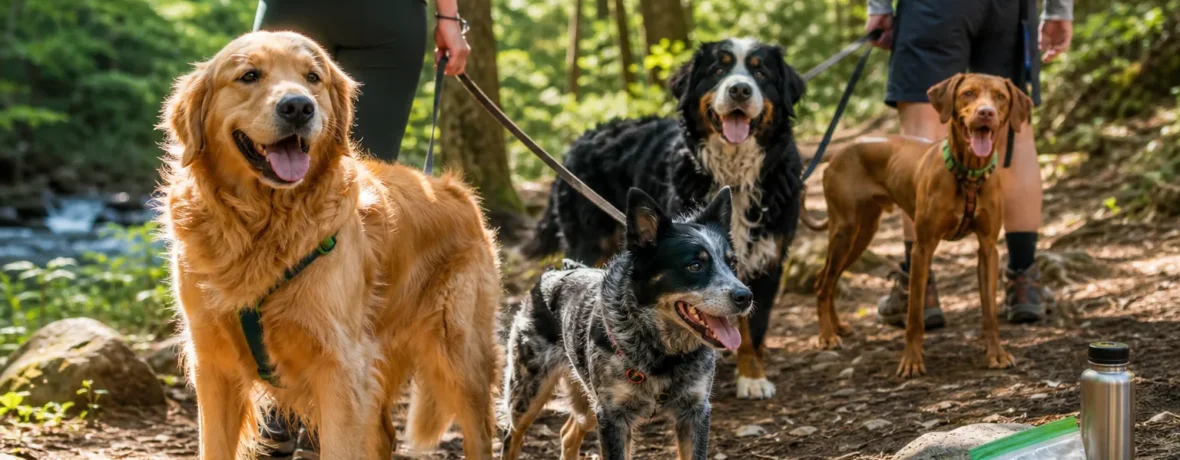
The best dog breeds for hiking are medium-to-large, athletic, biddable dogs with sound joints, good heat or cold tolerance, and steady trail manners. Top picks include Labrador Retrievers, Australian Shepherds, Border Collies, Vizslas, German Shorthaired Pointers, Siberian Huskies, Bernese Mountain Dogs, Rhodesian Ridgebacks, and well-conditioned mixed breeds.
What are the best dog breeds for hiking?
The best dog breeds for hiking are built for endurance, trainable around distractions, and comfortable recovering after a long day outside. Breed helps, but the individual dog matters more than the label on the adoption paperwork.
A good hiking dog does not need to be the fastest dog at the trailhead. You want a dog that can hold a steady pace, listen when a marmot darts across the path, settle at breaks, handle changing footing, and finish the hike with enough gas left to eat dinner and sleep well.
Here are strong trail candidates, plus where they shine and where you need to be honest.
| Breed | Best trail fit | Watch-outs |
|---|---|---|
| Labrador Retriever | Water crossings, mellow day hikes, family trails | Can overheat; loves mud, water, and snacks |
| Australian Shepherd | Long trails, technical routes, active owners | Needs training and brain work, not just mileage |
| Border Collie | High-mileage hikers who like precision obedience | Too much trail chaos can make them wired |
| Vizsla | Fast-paced dry trails and big aerobic days | Short coat means poor cold tolerance |
| Siberian Husky | Snow, cold weather, winter hiking | High prey drive; heat is a real limiter |
| Bernese Mountain Dog | Cool-weather forest and mountain trails | Not a hot-weather or ultralight-speed dog |
Which dog breeds make the best hiking partners?
The best hiking partner is the dog whose body, temperament, and training match your real trail life. Pick for terrain first, then climate, then energy level.
1. Labrador Retriever
The Labrador Retriever is one of the safest all-around picks for hikers who want a friendly, adaptable trail dog. Labs are usually strong, social, and eager to work with you instead of against you.
They’re especially good for hikers who mix forest trails, lake days, campground weekends, and moderate mountain routes. Their water-loving streak can be useful on hot days, but do not treat a creek as a full safety plan. Labs can still overheat, especially black Labs in full sun.
Best for: day hikes, family hikes, swimming spots, moderate backpacking, and hikers who want a steady companion instead of a nervous rocket.
2. Australian Shepherd
The Australian Shepherd is a sharp, athletic choice for hikers who train as much as they walk. This breed likes having a job, and “stay close, pass politely, wait at the junction” can all become jobs.
An Aussie can be brilliant on technical terrain because the breed is agile and tuned in to movement. That same intensity can become a problem if you let the dog invent its own work, such as herding kids, bikes, or other dogs on the trail.
Best for: active hikers, off-season training, long day hikes, and people who enjoy obedience work.
3. Border Collie
The Border Collie is a trail machine in the right hands. Not casual hands. The breed is famous for focus, stamina, and responsiveness, which can make it superb on demanding hikes.
The catch is mental speed. A bored Border Collie will find patterns, motion, and problems you did not ask it to solve. If your hikes include crowds, mountain bikes, horses, or noisy trailheads, invest early in calm behavior and recall work.
Best for: experienced dog handlers, high-mileage hikers, and people who want a training partner, not a couch ornament.
4. Vizsla
The Vizsla is a lean, short-coated endurance dog that fits hikers who move quickly. Think dry ridgelines, rolling singletrack, and steady aerobic days.
This breed tends to bond tightly with its people. That is great for staying connected on trail, but it also means many Vizslas dislike being left alone after the hike is over. Their thin coat is not made for icy wind or long rests in snow, so pack insulation for shoulder-season trips.
Best for: runners, fast hikers, desert mornings, and cool-to-warm but not brutal weather.
5. German Shorthaired Pointer
The German Shorthaired Pointer is built for long, active days. If your idea of a good weekend includes miles before lunch and another outing before dinner, this breed can keep up.
GSPs are energetic, birdy, and often enthusiastic to the point of comedy. That hunting background means recall and leash skills are non-negotiable near wildlife. A GSP that locks onto scent can forget your whole plan in two seconds.
Best for: big open trails, athletic owners, trail running, and hikers who will train recall for real.
6. Siberian Husky
The Siberian Husky is a cold-weather hiking specialist. The American Kennel Club’s hiking breed guidance points to active breeds such as Siberian Huskies, Australian Shepherds, German Shorthaired Pointers, and Vizslas as strong trail candidates.
Huskies thrive when the air is cold and the trail is firm. They were developed for endurance work in harsh winter climates, and you can see that heritage in their stride. But they are not ideal for hot, humid summer hikes, and many have a serious prey drive.
Best for: snowshoe trails, winter hikes, cold regions, and owners who respect leash rules.
7. Alaskan Malamute
The Alaskan Malamute is strong, powerful, and happiest when the weather is cold. This is not a delicate dog. It is a hauling, pulling, winter-loving breed.
Malamutes can be fantastic on snowy forest roads and cold mountain paths, but their size and coat make heat management a major issue. They also need strong leash handling and calm socialization around dogs they do not know.
Best for: winter hikers, cold mountain towns, and people who want strength more than speed.
8. Bernese Mountain Dog
The Bernese Mountain Dog is a cool-weather mountain companion, not a desert grinder. Berners bring strength, steadiness, and that big-dog calm many hikers love.
They are better suited to moderate mileage than relentless speed. Their heavy coat and large body make summer heat risky, so save the bigger outings for cool mornings, fall color, and snowy days.
Best for: mellow mountain hikes, forest trails, cool climates, and hikers who value temperament over pace.
9. Rhodesian Ridgeback
The Rhodesian Ridgeback is a strong, short-coated hiker for warm, dry conditions. This breed has power and endurance, plus a more independent streak than many retrievers or herding dogs.
Ridgebacks need steady handling. They can be reserved with strangers and serious around wildlife, so socialization and leash manners should start early. For the right owner, they make rugged, clean-coated trail partners.
Best for: warm climates, open trails, strong handlers, and hikers who like a confident dog.
10. Standard Poodle
The Standard Poodle is an underrated hiking dog. Athletic, smart, and trainable, a fit Standard Poodle can handle far more trail than the haircut jokes suggest.
The coat takes work. Dirt, burrs, snowballs, and wet underbrush can turn into a grooming project fast. Keep the coat practical, maintain the feet, and you get a bright trail dog with good stamina.
Best for: allergy-sensitive households, active families, mixed terrain, and hikers who do not mind grooming.
11. Golden Retriever
The Golden Retriever is a cheerful, people-focused trail dog for moderate adventures. Goldens tend to be cooperative, social, and eager to stay near the group.
Their coat collects trail souvenirs. Burrs, foxtails, mud, and ice can hide in feathering around the legs, ears, and tail. Check them after every hike, especially during seed season.
Best for: friendly day hikes, families, lakeside trails, and hikers who want an easygoing companion.
12. German Shepherd Dog
The German Shepherd Dog can be a powerful hiking partner when bred and conditioned well. This breed often brings stamina, trainability, and a natural interest in staying aware of its surroundings.
Joint health matters here. Do not push young dogs on long descents, heavy packs, or repetitive hard surfaces. A fit adult shepherd can be excellent; an under-conditioned one can struggle fast.
Best for: trained handlers, varied terrain, cool mornings, and hikers who like structured work.
13. Belgian Malinois
The Belgian Malinois is only for hikers who truly want a working dog. This breed has drive, speed, intensity, and stamina to spare.
For casual trail users, that can be too much dog. A Malinois needs training, impulse control, and purposeful work every day, not just one weekend hike. In the right home, it is an elite outdoor partner.
Best for: advanced handlers, fast hikers, technical obedience, and people with daily training time.
14. Jack Russell Terrier
The Jack Russell Terrier proves a hiking dog does not have to be big. This compact breed can be tough, athletic, and fearless on trail.
Small legs still work harder in deep snow, talus, and tall brush. Terriers also tend to have strong prey drive. Keep them secure near cliffs, snakes, marmots, squirrels, and anything else that moves.
Best for: shorter hikers who move fast, scrambly day hikes, and people who like bold little dogs.
15. Mixed Breed
A mixed breed can be the best hiking dog you ever meet. Look for structure, temperament, and recovery, not a fancy label.
Many shelters and rescues can help you find an adult dog with known energy, manners, and size. An adult dog also gives you a clearer picture of build, coat, personality, and trail potential than an 8-week-old puppy can.
Best for: practical hikers, adopters, and anyone who wants the right dog instead of the trendiest dog.
How do you choose the right hiking dog for your trails?
Choose the dog that fits your most common hike, not your dreamiest once-a-year route. Your Tuesday trail matters more than your fantasy summit photo.
Use this simple filter before you fall in love with a breed:
- Start with climate. Thick-coated northern breeds suit cold trails. Short-coated pointers and hounds handle mild dry weather better, with shade and water.
- Match the terrain. Big dogs may struggle on ladders, talus, and tight scrambles. Tiny dogs may work too hard in snow, sand, and boulder fields.
- Check drive level. Herding and hunting breeds need training around movement, scent, and wildlife.
- Think past the trailhead. A dog that hikes 10 miles [16 km] still has to live calmly in your home.
- Ask a vet before increasing mileage. Puppies, seniors, overweight dogs, and short-nosed breeds need extra caution.
- Watch recovery. A good hiking dog should eat, drink, rest, and move normally after the outing.
What makes a dog good for hiking?
A good hiking dog has stamina, sound movement, trainability, and emotional steadiness. Legs matter, but manners save the day.
The trail throws distractions at dogs nonstop: runners, horses, kids, food smells, wildlife, cliffs, creek noise, thunder, and strange dogs on narrow tread. A dog with perfect cardio but poor impulse control is not trail-ready.
Look for these traits:
- Reliable leash manners: no dragging you downhill or lunging at passing dogs.
- Recall or check-in habit: even if you hike on leash, attention matters.
- Neutral trail behavior: calm around hikers, bikes, dogs, and wildlife.
- Durable feet: pads that can build toughness with gradual conditioning.
- Weather tolerance: coat and body type that match your region.
- Off switch: the ability to rest during breaks and after the hike.
What dog breeds are not good for long hikes?
Short-nosed, very heavy, very tiny, very young, senior, or poorly conditioned dogs are usually poor fits for long hikes. Some can enjoy short nature walks, but that is not the same as mountain mileage.
Be careful with brachycephalic breeds such as Bulldogs, French Bulldogs, and Pugs. Their airway structure can make hard exercise and heat more dangerous. Also be cautious with giant breeds on long steep descents, toy breeds in harsh terrain, and any dog with known orthopedic or heart problems.
That does not mean these dogs never belong outside. It means the hike should fit the dog. A shaded 1-mile [1.6 km] creekside stroll can be perfect. A hot 9-mile [14.5 km] climb with no water can be a bad idea.
How far can a dog hike in one day?
A healthy, conditioned adult dog may handle several miles in a day, but the safe distance depends on age, breed, terrain, heat, humidity, pace, and training history. Build mileage gradually.
Do not take a couch-conditioned dog straight to a 12-mile [19 km] mountain route. Start with short hikes, add distance slowly, and watch the next day. Stiffness, limping, reluctance to rise, cracked pads, or unusual fatigue means you asked for too much.
Puppies need special care because growing joints are not ready for long forced mileage. Senior dogs may still love trails but need shorter routes, softer surfaces, and more recovery time.
What gear does a hiking dog need?
A hiking dog needs water, food, leash control, identification, paw protection, waste bags, and a plan for injury or overheating. Keep it simple, but do not wing it.
The National Park Service advises hikers to keep pets leashed where pets are allowed and to confirm pet access before choosing a route; many national park pet rules include a leash no longer than 6 ft [1.8 m], as of November 2026, so check the specific park page before you go via the NPS hiking with pets guidance.
- Fixed leash, not a long retractable leash on narrow trails
- Well-fitted harness or collar with ID tags
- Water bowl and more water than you expect to use
- High-value treats for recall and calm passing
- Poop bags plus a way to carry full bags out
- Tick remover or fine-tipped tweezers
- Dog first-aid basics and your vet’s phone number
- Booties or paw wax for sharp rock, snow, ice, or hot ground
- Insulating layer for short-coated dogs in cold weather
- Cooling plan for warm-weather hikes: shade, water, early start, short route
How do you train a dog for hiking?
Train trail skills before you need them. A tired dog on a narrow ridge is the wrong place to teach manners.
- Build leash basics at home. Your dog should walk without constant pulling before you add rocks, squirrels, and other hikers.
- Practice “leave it.” Use it for food scraps, snakes, scat, dead animals, and mystery trail trash.
- Teach trail passing. Step aside, shorten the leash, reward calm, and let others pass without drama.
- Add distance slowly. Increase time on trail in small jumps, then watch recovery for 24 hours.
- Condition paws. Dirt paths, gravel, rock, and snow all stress feet differently.
- Rehearse breaks. Your dog should be able to lie down, drink, and settle while hikers pass.
- Train recall in safe places. Even leashed dogs benefit from attention and check-ins.
When to see a doctor
See a doctor if you develop a rash or fever after a tick bite, and call a veterinarian promptly if your dog shows concerning symptoms after a hike. Do not guess your way through heat illness, severe lameness, collapse, or tick-related symptoms.
The CDC’s tick bite guidance says to seek medical care if a rash or fever appears within several days to weeks after removing a tick. The CDC also recommends checking pets daily for ticks and removing ticks you find; review its tick prevention guidance for pets before heavy tick-season hikes.
For dogs in warm weather, the American Veterinary Medical Association advises avoiding hikes during the hottest parts of the day, taking frequent breaks, and bringing water for you and your pet; seek emergency veterinary care for signs such as excessive panting, drooling, unsteadiness, abnormal gum or tongue color, or collapse, according to the AVMA warm-weather pet safety guidance.
Related reading
- Dog Hiking Gear Checklist
- How Far Can a Dog Hike in a Day?
- Best Dog Hiking Gear
- Deer Tick vs Dog Tick: How to Tell
FAQ
What is the best dog breed for hiking off leash?
The best off-leash hiking dog is not a breed; it is a trained dog with reliable recall, low wildlife chase drive, and calm trail manners. Border Collies, Labs, Aussies, and poodles can do well, but only where off-leash dogs are legal and safe.
Are small dogs good for hiking?
Yes, some small dogs are excellent hikers. Fit terriers and other sturdy small breeds can cover surprising ground, but they may need help in deep snow, rough talus, fast creek crossings, and very cold weather.
Are Huskies good hiking dogs?
Yes, Huskies are excellent cold-weather hiking dogs. They are poor choices for hot, humid summer hikes and often need leash management because many have strong prey drive.
What age can a dog start hiking?
Dogs can start with short, gentle trail walks when they are young, but long hikes should wait until your vet says their body is ready. Growth plates, breed size, and joint health all affect timing.
Should my dog carry a backpack?
A fit adult dog can carry a light, well-balanced pack after conditioning, but not every dog should. Skip packs for puppies, seniors, injured dogs, overheated dogs, and dogs with back or joint concerns.
What is the best rescue dog for hiking?
The best rescue dog for hiking is a healthy adult with moderate-to-high energy, sound movement, stable nerves, and good recovery after exercise. Ask the shelter or foster family for a dog that has already shown comfort on walks, around people, and around other dogs.