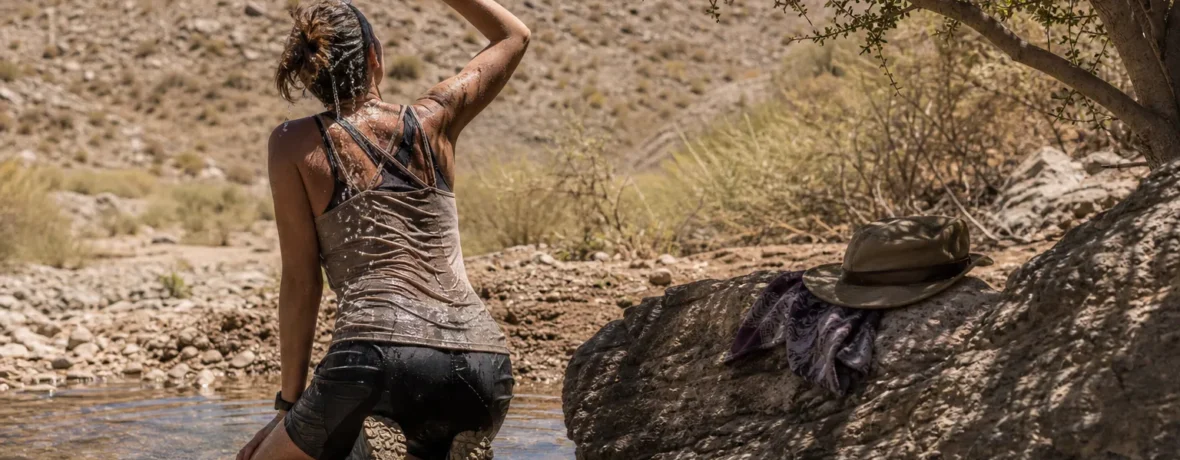
To cool down fast on a hot hike, stop moving, get into shade, loosen or remove extra layers, wet your skin, fan air across your body, and sip fluids if you can swallow normally. If confusion, collapse, fainting, or heat stroke signs appear, call 911 and cool aggressively.
How to cool down fast on a hot hike?
Stop hiking first, then attack heat from four angles: shade, water, airflow, and rest.
Do not “push to the next viewpoint.” Do not wait for the trail to get easier. Heat trouble usually gets worse while you bargain with it. The faster you stop the heat load, the easier it is to turn things around.
- Stop in the safest shade you can reach in 1 minute. A tree, boulder shadow, canyon wall, tarp, umbrella, or the shady side of a large rock beats standing in full sun.
- Drop your pack. Your back is a huge heat trap. Set the pack down and sit or lie where you will not slide, fall, or block the trail.
- Loosen clothing. Open cuffs, vents, collars, waist belts, hip belts, chest straps, and anything tight. Remove rain shells and wind shells unless they are protecting you from a real hazard.
- Wet the skin. Pour water on your head, neck, shirt, forearms, and legs. If water is limited, focus on the neck, armpits, groin area over clothing, and wrists.
- Fan hard for 2 to 5 minutes. Use a hat, sit pad, map, foam pad, or shirt. Wet skin plus moving air pulls heat away faster than sitting still.
- Sip, don’t chug. If you are alert and not nauseated, take small steady sips. Add salty snacks or an electrolyte drink if you have been sweating heavily.
- Stay stopped until symptoms improve. Give yourself real time. A 3-minute pause is not a recovery plan when your body is overheated.
The CDC describes heat-related illnesses as a range that includes heat cramps, heat exhaustion, heat syncope, rhabdomyolysis, and heat stroke. On trail, you do not need a perfect label before you act. You need rapid cooling, shade, rest, and a low threshold for emergency help.
What is the fastest way to cool your body down outside?
The fastest practical field method is cold water on skin plus airflow.
Full-body cold water immersion is the preferred rapid cooling method for exertional heat stroke when trained responders can do it safely, according to the Wilderness Medical Society heat illness guidelines. Most hikers do not have a medical tub on a ridgeline. So you improvise.
| Cooling method | Best use on trail | Watch-outs |
|---|---|---|
| Wet skin + fan | Fast cooling during rest breaks, heat exhaustion signs, or overheating | Needs water and airflow; works less well in very humid air |
| Creek soak | Cooling feet, legs, arms, shirt, hat, and bandana | Check footing, current, depth, and water quality; avoid unsafe crossings |
| Cold packs or wrapped ice | Neck, armpits, groin area over clothing | Rare on hikes; protect skin from direct ice burns |
| Shade only | Useful first move when water is scarce | Slower than active cooling; add fanning if possible |
If you are near a safe creek, use it. Soak a shirt, hat, buff, or bandana. Sit with feet in the water if the bank is stable. Splash your forearms and legs. Wet your hair. Then get back to shade and fan.
Skip risky moves. Do not climb down loose rock for water. Do not jump into unknown pools. Do not lie in a fast creek when dizzy. Cooling only helps if you stay alive to enjoy it.
Should you pour water on yourself or drink it?
Do both if you have enough water, but if heat illness is building, skin cooling deserves priority.
Drinking water helps replace fluid, but it does not cool you as fast as getting water onto your skin and moving air across it. Sweat cools you when it evaporates. You can copy that process by soaking your shirt, neck gaiter, hat, and arms.
That said, do not dump your only quart [0.95 L] of water on your head at mile 2 of a desert hike with 6 miles [9.7 km] left. Think like a field problem-solver. Use a few ounces on high-value zones, sip steadily, and make a conservative exit plan.
- If water is plentiful: wet shirt, hair, hat, neck, arms, and legs; keep fanning.
- If water is limited: wet a bandana and place it on the neck; sip small amounts; rest in shade longer.
- If someone is confused or cannot drink safely: do not force fluids; call 911 and focus on cooling.
Mayo Clinic’s heat exhaustion first aid guidance recommends rest in a cool place, loosening clothing, cool water or sports drinks if the person can drink, and cooling measures such as cool wet cloths or a cool shower when available.
What should you do if someone has heat exhaustion on trail?
Stop the hike, cool the person, replace fluids if safe, and watch closely for worsening signs.
Heat exhaustion can show up as heavy sweating, weakness, dizziness, headache, nausea, cramps, fast pulse, clammy skin, or feeling faint. The person may still be thinking clearly. That can trick a group into moving on too soon.
- Move them out of sun. Use shade, an emergency blanket as a sun tarp, a trekking umbrella, or the shaded side of terrain.
- Get the pack off. Remove the load and loosen tight clothing.
- Cool with water. Wet clothing, place wet cloths on skin, and fan. If near safe water, soak clothing or lower legs.
- Give small sips. Use water or an electrolyte drink only if the person is awake, alert, not vomiting, and able to swallow normally.
- Feed salt with food if tolerated. Pretzels, crackers, trail mix, jerky, or salted nuts can help replace sodium lost through sweat.
- Stop the objective. Turn around, shorten the loop, wait for cooler temperatures, or call for help. The summit does not get a vote.
- Escalate if symptoms do not improve. If the person worsens, becomes confused, faints, cannot drink, or looks seriously ill, seek emergency medical help.
MedlinePlus, from the National Library of Medicine, lists heat emergency first aid steps that include moving the person to a cooler place, removing excess clothing, applying cool wet cloths, and calling emergency services for severe signs such as decreased alertness, seizures, or loss of consciousness.
What is the difference between heat exhaustion and heat stroke?
Heat stroke is the emergency: altered mental status, collapse, or severe overheating means call 911 and cool immediately.
On a hike, the line between heat exhaustion and heat stroke can blur. You probably do not have a rectal thermometer, medical training, or a controlled aid station. Treat red flags seriously.
| Condition | Common signs | Trail response |
|---|---|---|
| Heat cramps | Painful muscle cramps, heavy sweating, thirst | Stop, shade, fluids, salty food if tolerated, gentle rest |
| Heat exhaustion | Dizziness, nausea, headache, weakness, clammy skin, fast pulse | Stop the hike, cool actively, sip fluids if safe, monitor closely |
| Heat stroke | Confusion, strange behavior, collapse, fainting, seizure, loss of consciousness | Call 911, cool aggressively, do not delay evacuation planning |
The CDC states that heat stroke can cause permanent disability or death without emergency treatment. That is the line. If a hiker is acting drunk, irrational, combative, unusually quiet, unable to walk straight, or unable to answer basic questions, treat it as an emergency.
Start cooling while someone calls 911 or activates a satellite messenger SOS. Remove excess clothing. Wet the person. Fan them. If you can safely immerse most of the body in cold water while keeping the airway protected, do so, but do not create a drowning or fall hazard. If immersion is not safe, keep pouring water and fanning.
How can you prevent overheating before the hike starts?
Start cooler, hike earlier, carry enough fluid, and plan shade before you need it.
Most heat problems are built before the first symptom. A late start, dark clothes, no shade, hard pace, alcohol the night before, and a dry bottle can stack the deck fast.
- Start before sunrise when heat is expected. Plan to be off exposed trail before the hottest part of the day.
- Choose shade over bragging rights. Forested trails, canyon shade, lake routes, and shorter loops beat exposed ridgelines during extreme heat.
- Wear loose, light-colored clothing. Long sleeves can be cooler than bare skin when they block sun and allow airflow.
- Use a wide-brim hat or hiking umbrella. Shade that moves with you is powerful.
- Drink before you feel wrecked. Take steady sips from the start, not one huge chug after you are already dizzy.
- Bring salty food. Heavy sweating costs water and salt. Pair fluids with real food.
- Slow down on climbs. Uphill effort creates body heat fast. Use shorter steps and longer pauses.
- Turn around early. Heat does not care how close you are to the top.
Pay attention to humidity. In dry heat, sweat evaporates fast, sometimes so fast you do not notice how much fluid you are losing. In humid heat, sweat sits on your skin and cooling slows down. Both can beat you up.
What gear helps you cool down quickly?
The best cooling gear is simple: shade, water access, breathable clothing, and something to fan with.
You do not need a gimmick. You need reliable pieces that work when the trail turns into an oven.
- Wide-brim hat: shades face, ears, and neck better than a small cap.
- Lightweight sun hoodie: protects skin while allowing airflow; choose a loose fit.
- Bandana or neck gaiter: soak it, wring it lightly, and rotate it between neck, head, and wrists.
- Trekking umbrella: excellent on exposed desert, alpine, and burn-scar trails when wind allows.
- Extra water capacity: soft flasks or collapsible bottles let you carry more on hot sections.
- Electrolyte drink or salty snacks: useful when sweat is heavy and the day is long.
- Foam sit pad: gives you a clean place to sit in shade and works as a fan.
- Satellite messenger: valuable when hiking remote hot terrain without cell service.
A cotton shirt can be useful in dry heat if you wet it and want evaporative cooling. In cool or windy conditions, wet cotton can chill you fast, so match the trick to the weather. On a scorching exposed trail, a wet cotton bandana can feel like trail magic.
When to see a doctor
Get medical help right away for confusion, fainting, seizure, collapse, worsening symptoms, or symptoms that do not improve with cooling and rest.
Call 911 for suspected heat stroke. Do not wait to see if the person “walks it off.” Confusion, loss of consciousness, seizure, severe weakness, or inability to drink safely are emergency signs.
Seek medical care after a heat illness if symptoms were severe, lasted after cooling, involved fainting, or included dark urine, severe muscle pain, or unusual weakness. The CDC includes rhabdomyolysis among heat-related illnesses; this condition can follow heat stress and hard exertion and needs medical evaluation.
If you have heart disease, kidney disease, diabetes, take medications that affect heat tolerance, or have had a previous heat illness, talk with a clinician before hard hiking in hot weather. No trail plan beats medical advice tailored to your body.
What should your trail group do while one person cools down?
Assign jobs so the group helps instead of hovering.
Heat incidents get messy when six people ask the same question and nobody does the useful work. Pick calm, direct tasks.
- One person leads care: watches symptoms, talks to the hiker, and decides when to escalate.
- One person creates shade: umbrella, tarp, emergency blanket, or body shade.
- One person manages water: wet cloths, refill from safe sources, track what is left.
- One person handles communication: checks cell service, map location, coordinates, and emergency options.
- One person watches the rest of the group: heat trouble can hit more than one hiker.
Do not split the group casually in extreme heat. If someone must hike out for help, send two capable people with water, navigation, and a clear plan. Leave enough supplies with the overheated hiker.
How do you restart hiking after cooling down?
Restart only if symptoms are gone, thinking is normal, and the safest route is to exit.
The goal is not to resume the original plan. The goal is to get everyone out safely. If dizziness, nausea, headache, cramps, or weakness return as soon as the hiker stands, stop again and consider emergency help.
- Stand slowly. Watch for dizziness or wobbling.
- Walk in shade first if possible. Test the body before committing to exposed terrain.
- Cut pace in half. Use short steps and scheduled shade breaks.
- Keep cooling while moving. Wet the hat or bandana, use an umbrella, and sip steadily.
- Choose the shortest safe exit. Skip summits, side trips, and exposed viewpoints.
If the person had confusion, fainting, collapse, or any heat stroke red flag, do not restart hiking as if it were a normal bonk. That is emergency territory.
Related reading
- How to Rehydrate Fast After a Hike
- How to Wash a Down Jacket in a Washing Machine
- What Is a Down Jacket? Fill Power, Baffles and Warmth
- How to Wash a Down Sleeping Bag and Restore the Loft
FAQ
What cools you down the fastest on a hike?
Wet skin plus strong airflow cools you fastest in most hiking situations. Stop in shade, soak your shirt or neck cloth, and fan hard for several minutes.
Where should you put cold water to cool down fast?
Put cold water on your neck, head, armpits, wrists, forearms, and legs. If water is limited, wet a bandana and keep it on your neck while you rest in shade.
Is it bad to pour water on your head when overheated?
No, pouring water on your head can help when you are overheated. Just avoid using all your drinking water if you still have miles of hot trail ahead and no reliable refill.
Can you get heat exhaustion even if you are drinking water?
Yes, you can still get heat exhaustion while drinking water. Hard effort, sun exposure, humidity, poor airflow, inadequate salt intake, and medical factors can overwhelm your cooling system.
Should you keep hiking with heat cramps?
No, stop and treat heat cramps as an early warning. Rest in shade, cool down, sip fluids, eat salty food if tolerated, and restart only if symptoms fully settle.
When is overheating on a hike an emergency?
Overheating is an emergency when there is confusion, fainting, collapse, seizure, loss of consciousness, or inability to drink safely. Call 911, cool the person immediately, and do not delay action while waiting for symptoms to pass.