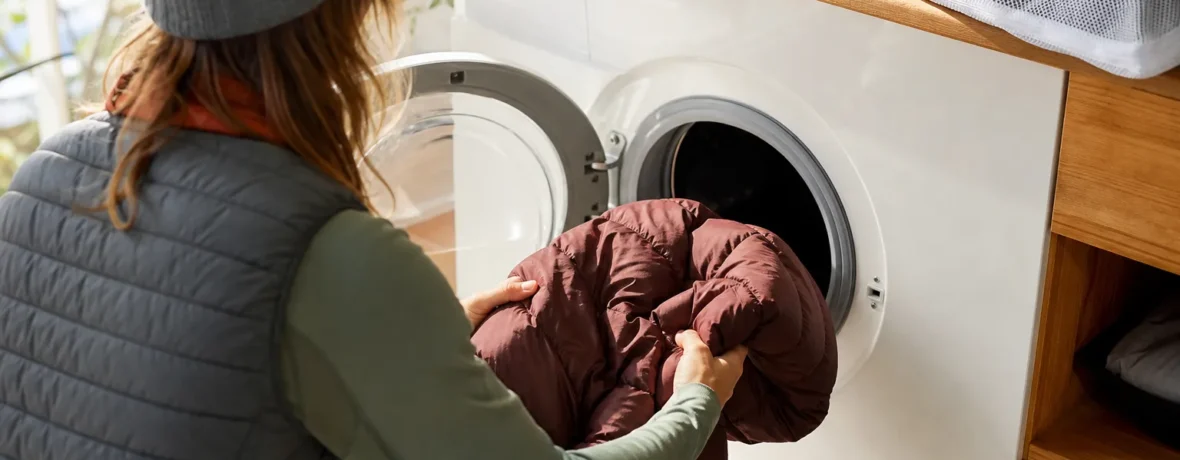
Yes—you can wash a down jacket in a washing machine if the care label allows it. Use a large front-loader or a top-loader without a center agitator, down-specific wash, cold or lukewarm water, gentle cycle, extra rinse, and low-heat drying with 2–3 clean tennis balls or wool dryer balls.
How do you wash a down jacket without ruining it?
Use gentle washing, the right cleaner, and a long, patient dry cycle.
Down is tough when you treat it right. The mistake is treating it like a cotton hoodie. Regular laundry detergent can leave residue and reduce loft, and high heat can damage the shell fabric, seam tape, or trim. The jacket may come out looking sad and flat after washing. That is normal. The loft comes back during drying.
Before you start, read the sewn-in care label. If the label says machine wash and tumble dry, you are good to go. If it says dry clean only, has leather trim, fur trim, fragile decoration, or a damaged shell with feathers leaking everywhere, pause and contact the brand or a gear-repair shop.
Several outdoor brands give the same basic advice: wash with a down-specific cleaner, use a front-loading washer when possible, rinse well, and dry fully on low heat. Patagonia’s down-care guidance recommends down soap, a front-load washer, and low-heat drying, while Marmot’s laundering instructions call for gentle washing and low-heat drying with 2–3 tennis balls or rolled socks.
What do you need before washing a down jacket?
You need down wash, a suitable washer, a dryer, and dryer balls.
Gather everything first. A wet down jacket is heavy, slippery, and annoying to move around. You do not want to discover mid-wash that your dryer runs scorching hot or that your only detergent is scented laundry soap.
- Down-specific cleaner, such as Nikwax Down Wash.Direct or Gear Aid Revivex Down Cleaner
- Large front-loading washer, or a top-loading washer with no center agitator
- Dryer with a reliable low-heat setting
- 2–3 clean tennis balls, wool dryer balls, or thick rolled socks
- Soft brush or old toothbrush for collar and cuff grime
- Clean towel for moving the wet jacket
- Repair tape for small shell tears before washing
Skip bleach, fabric softener, stain sticks with heavy fragrance, and standard detergent unless the manufacturer specifically allows it. Down cleaners are made to remove body oil and dirt without leaving the kind of residue that glues feathers together.
| Item | Use it? | Why it matters |
|---|---|---|
| Down wash | Yes | Cleans feathers while protecting loft |
| Regular detergent | No | Can leave residue and flatten insulation |
| Fabric softener | No | Coats fabrics and can interfere with water repellency |
| Bleach | No | Can damage shell fabric and stitching |
How to wash a down jacket in a washing machine?
Wash it gently, rinse it thoroughly, and never twist or wring it.
Here is the clean, safe method for most hiking puffies, belay jackets, and down parkas.
- Check the care label. Look for machine-wash and tumble-dry symbols. Follow the label over any general advice.
- Inspect the shell. Patch holes before washing. A tiny tear can become a feather fountain once the jacket tumbles.
- Empty every pocket. Lip balm, snacks, permits, and headlamp batteries do not improve a wash cycle.
- Close zippers and fasteners. Zip the main zipper, close pocket zippers, fasten hook-and-loop cuffs, and loosen drawcords.
- Spot clean greasy areas. Dab down wash on the collar, chin guard, cuffs, and pocket edges. Use a soft brush. Do not scrub like you are cleaning a frying pan.
- Load the jacket by itself. One jacket needs room to move. A packed washer will not rinse well.
- Add down wash. Use the amount on the cleaner bottle. More soap does not mean cleaner down. It means more rinsing.
- Choose a gentle cycle. Use cold or lukewarm water, typically 85–105°F [29–41°C] if your machine shows temperature. Avoid hot water unless the care label allows it.
- Run an extra rinse. Soap residue is the enemy of loft. If the jacket still feels slick or sudsy, rinse again.
- Run an extra spin. A second spin removes water and shortens dryer time. Use a low or normal spin that the jacket can handle.
- Lift it carefully. Wet down is heavy. Support the whole jacket from underneath instead of yanking it by the shoulders.
If your washer has a center agitator, do not use it for a delicate down piece. The agitator can stress baffles, seams, and ultralight shell fabric. A laundromat front-loader is usually the safer choice for bulky parkas and sleeping bags.
How to wash down jacket stains before the machine cycle?
Treat oily spots before washing, but keep it gentle.
The collar and cuffs take the worst beating. Sunscreen, sweat, beard oil, trail dust, and campfire smoke build up right where the jacket touches skin. Put a small amount of down cleaner directly on those zones, add a little water, and work it in with your fingers or a soft toothbrush.
Let the cleaner sit for 10–15 minutes. Then wash the jacket normally. Do not use aggressive stain removers unless the care label approves them. A harsh spot treatment can leave a pale mark on dark shell fabric or strip the durable water repellent finish.
What washing machine setting should you use for a down jacket?
Use a gentle cycle with cold or lukewarm water and an extra rinse.
The safest machine is a large front-loader. It lets the jacket roll through water without getting wrapped around an agitator. A high-efficiency top-loader without a center post can also work if the drum is large enough and the jacket moves freely.
Use these settings for most down jackets:
- Cycle: gentle, delicate, or wool
- Water temperature: cold or lukewarm
- Spin: medium or low, then one extra spin
- Rinse: extra rinse or a second rinse cycle
- Load size: one jacket at a time
Nikwax’s down-wash advice also points to a key rule: rinse, spin, then spin again before drying. Less water in the jacket means less time in the dryer and fewer stubborn clumps.
Can you use regular detergent on a down jacket?
No, not if you want the jacket to loft well after washing.
Regular detergent is built for everyday laundry, not delicate feathers inside ultralight nylon. It can strip natural oils from down and leave residue that makes clusters stick together. That means less puff, less warmth, and more time spent breaking up clumps.
If you are stuck in a small town before a cold trip and cannot find down wash, the safer move is to spot clean the worst areas with water and wait. A dirty but lofty jacket is usually better than a clean, residue-loaded jacket that will not puff back up.
How to dry down jacket safely after washing?
Dry it on low heat until every baffle is fully dry and fluffy.
This is where most people panic. The jacket leaves the washer looking flat, lumpy, and wrong. Do not stuff it. Do not hang it in a damp closet. Do not assume it is ruined. Down clumps when wet, and it separates as it dries.
Use this drying method:
- Move the wet jacket to the dryer carefully. Support it with both hands or a towel.
- Add 2–3 clean tennis balls or wool dryer balls. They thump the baffles and help separate wet down clusters.
- Set the dryer to low heat. If the dryer runs hot, use air-only cycles between low-heat cycles.
- Check every 20–30 minutes. Pull the jacket out, shake it, and gently massage any hard clumps.
- Keep going until it is completely dry. Many lightweight jackets need 2–3 hours. Thick parkas can take longer.
- Inspect each baffle. Feel for cool, dense, damp spots. If you find any, put it back in the dryer.
Gear Aid’s down-jacket wash method recommends drying the garment by itself so it has room to tumble freely, with tennis balls or dryer balls to break up clumps. That space matters. A jacket crammed in with towels will dry unevenly and stay lumpy.
Can you air dry a down jacket?
Yes, but it is slower and requires more handling.
Air drying is safer than using a too-hot dryer, but it can take 48 hours or longer in a cool or humid room. Lay the jacket flat on a clean drying rack or towel in a warm, dry place. Keep it out of direct high heat.
Flip it often. Break up clumps with your fingers. Shake it gently from different angles. The risk with air drying is not the lack of a dryer; it is leaving damp down packed together long enough for mildew to start. If you air dry, stay on it.
Why is my down jacket clumpy after washing?
It is usually still wet inside the baffles.
Clumps are normal after the wash cycle and during early drying. Down clusters hold water deep inside the jacket. The shell may feel dry while the insulation is still damp. Keep drying on low and keep breaking the clumps apart by hand.
If the jacket is fully dry and still flat, the likely causes are soap residue, not enough tumbling, or old down that has lost resilience. Run another rinse cycle with no cleaner, spin it well, then dry again with balls. Be patient. The last 20 percent of drying often brings back most of the puff.
How often should you wash a down jacket?
Wash it when it is dirty, oily, smoky, or losing loft.
For a hiking jacket, that may mean once per season. For a daily winter jacket, it may mean two or three times during heavy use. If the collar is shiny, the cuffs are grimy, the jacket smells like smoke, or rain no longer beads on the fabric, it is ready.
Do not wash down after every weekend trip unless it needs it. Each wash creates wear on fabric, zippers, stitching, and DWR. Between washes, air the jacket out, wipe mud with a damp cloth, and store it uncompressed.
How do you restore water repellency after washing?
Clean first, then refresh the DWR if water no longer beads.
Most down jackets have a durable water repellent finish on the outer fabric. Washing can revive some of that finish by removing dirt and body oil. If water still soaks into the face fabric after cleaning, use a down-safe spray-on or wash-in DWR treatment approved by the jacket brand.
Spray-on treatments are handy because you can focus on shoulders, hood, cuffs, and the front zipper area. Those zones get the most rain, pack-strap abrasion, and hand grime. Always apply DWR to a clean jacket and follow the treatment label for drying.
What mistakes should you avoid when washing a down jacket?
Avoid heat, residue, rough agitation, and storage while damp.
Most down disasters come from rushing. You rush the wash, skip the rinse, crank the dryer, or pack the jacket before the down is dry. Slow is smooth here. Smooth is warm.
- Do not use bleach or fabric softener.
- Do not use hot water unless the care label allows it.
- Do not wring or twist a wet down jacket.
- Do not dry on high heat.
- Do not store the jacket damp.
- Do not store it long-term in a stuff sack.
- Do not wash a torn jacket before patching the shell.
- Do not assume clumps mean the jacket is ruined.
After the jacket is clean and bone dry, hang it in a closet or store it loosely in a breathable bag. Compression is fine in a pack during a trip. It is not fine for months in a gear bin.
Related reading
- What Is a Down Jacket? Fill Power, Baffles and Warmth
- How to Wash a Rain Jacket and Keep It Waterproof
- How to Wash a Down Sleeping Bag and Restore the Loft
- How to Patch a Down Jacket on the Trail and at Home
FAQ
Can I wash a down jacket in a top-loading washing machine?
Yes, if it does not have a center agitator. A top-loader with a center post can twist and stress the baffles, especially on ultralight jackets, so a front-loader is the safer choice.
Can I put a down jacket in the dryer?
Yes, if the care label allows tumble drying. Use low heat, add 2–3 tennis balls or wool dryer balls, and keep drying until the insulation is fully dry and puffy.
Why does my down jacket smell after washing?
It is likely still damp inside. Put it back in the dryer on low heat and keep checking the baffles; damp down can hold odor and should not be stored.
Can I dry clean a down jacket?
Usually no. Many outdoor brands discourage dry cleaning because chemicals can be harsh on down and technical fabrics, but the care label is the final call.
How do I know when my down jacket is completely dry?
Every baffle should feel light, warm, and evenly puffy. If you feel cool, dense, or marble-like clumps, keep drying on low and massage those spots apart.
Should I wash my down jacket inside out?
You can, but it is not required for most jackets. Closing zippers, fastening hook-and-loop tabs, spot cleaning dirty areas, and rinsing well matter more than inside-out washing.