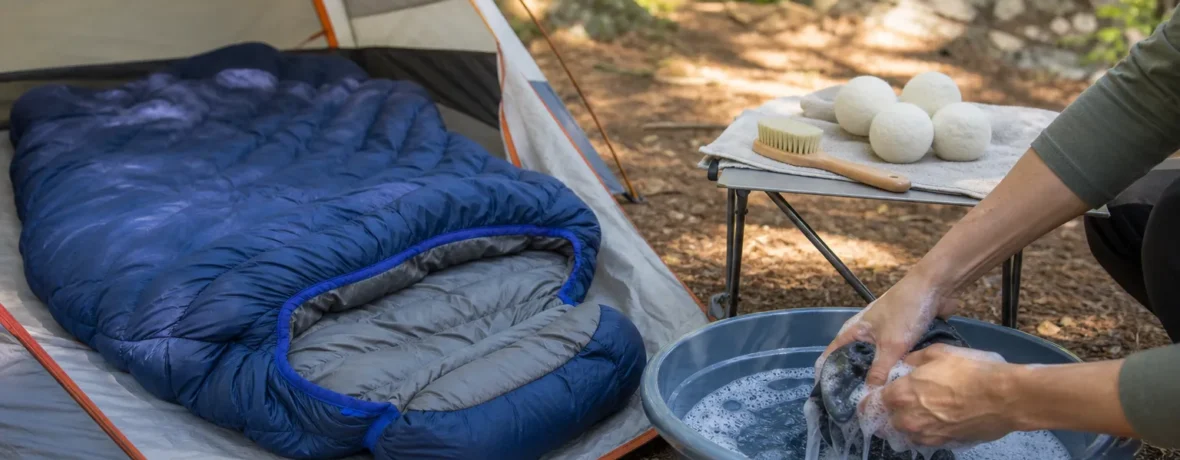
Use a front-loading washer or bathtub, down-specific cleaner, warm or cool water, gentle agitation, two rinses, and a low-heat dryer for 2-6+ hours with clean tennis or dryer balls. Yes, you can wash it—if the care label allows it.
When should you wash a down sleeping bag?
Wash it when grime, body oils, odor, or flat spots start stealing loft.
Down works because thousands of tiny clusters trap warm air. Sweat, sunscreen, dirt, campfire residue, and skin oils make those clusters stick together. Once that happens, the bag feels thinner, colder, and slower to puff up after you pull it from the stuff sack.
You do not need to wash a down bag after every trip. Frequent full washes add wear to the shell fabric, baffles, stitching, and water-repellent finish. Use spot cleaning first when the hood, collar, footbox, or zipper area is the only dirty zone. REI also recommends spot cleaning as the first move before a full wash in its sleeping bag cleaning guide.
- Wash the full bag when the liner looks dark or greasy.
- Wash it when the bag smells even after airing out.
- Wash it when down clumps stay flat after a long dry shake.
- Wash it before long-term storage if it has a season’s worth of sweat and trail dirt in it.
- Do not wash it just because one mud smear hit the shell. Spot clean that.
What do you need before washing a down sleeping bag?
You need room, patience, and a cleaner made for down.
The washer matters. A large front-loading washer gives the bag space to move and rinse. A top-loading machine with a center agitator can twist the bag, strain seams, and damage baffles. If your home washer is small, use a laundromat machine instead.
The soap matters even more. Regular laundry detergent can leave residue that hurts loft and water repellency. Use a down-specific wash. Nikwax says its Down Wash instructions call for 5 fl oz [150 ml] for one sleeping bag in a front-loading machine, plus warm or cold water, slow spin, and extra rinse when possible.
- Large front-loading washer or clean bathtub
- Large dryer with low heat or air-only setting
- Down-specific cleaner
- Clean tennis balls or wool dryer balls
- Clean towel for blotting or moving the bag
- Several hours of drying time
- Care label or maker’s care page
Skip bleach, fabric softener, stain removers with harsh solvents, and dry cleaning. Those are bad news for down clusters and technical shell fabrics.
How to wash a down sleeping bag step by step?
Wash it gently, rinse it thoroughly, and support the full wet bag every time you move it.
Wet down is heavy. If you grab one end and let the rest dangle, the weight can pull on internal baffles and stitching. Treat the bag like a soaked loaf of bread: awkward, fragile, and worth saving.
- Read the care label. If the label conflicts with general advice, follow the label. Some brands use specific fabrics, coatings, zipper designs, or down treatments.
- Close hook-and-loop tabs and loosen drawcords. Unzip the bag fully or mostly, unless the maker says otherwise, so the zipper slider does not snag under load.
- Spot clean greasy zones first. Use a small amount of down wash on the hood, collar, and footbox. Gently scrub the shell with a soft brush or cloth, then wipe with clean water.
- Load one bag only. Do not cram two sleeping bags into one washer. The bag needs space to roll, rinse, and shed soap.
- Add down wash. Use the dose on the cleaner bottle. For Nikwax Down Wash, the published dose for one sleeping bag is 5 fl oz [150 ml].
- Choose warm or cold water and a gentle cycle. Use slow spin if the machine allows it. A delicate cycle protects fabric and stitching.
- Run an extra rinse. Soap left in the fill can keep down from lofting. If the bag feels slick, spongy, or sudsy, rinse again.
- Run an extra spin. This removes water before drying. Do not wring the bag by hand.
- Lift the whole bag from underneath. Gather it in your arms or slide it into a laundry basket. Do not yank it from one corner.
How do you hand wash a down sleeping bag in a bathtub?
Use a bathtub only if you cannot use a large front-loading washer.
Hand washing works, but it is slow, wet, and hard on your back. The upside: you control every movement. The downside: rinsing takes patience, and a soaked bag can be surprisingly difficult to move without stressing seams.
- Clean the tub first. Rinse away soap scum, hair, cleaning products, and grit.
- Fill the tub with enough cool or warm water to cover the bag.
- Add down wash, then swish the water by hand before adding the bag.
- Lay the bag in the tub and press it down slowly until it wets through.
- Gently knead dirty areas. Do not twist, scrub hard, or wring.
- Let it soak for 15-60 minutes, following the cleaner’s directions and the bag’s care label.
- Drain the tub. Press water out with flat hands.
- Refill with clean water, press and release the bag, then drain again.
- Repeat rinsing until the water runs clear and no slick soap feel remains.
- Press out water, gather the whole bag from below, and move it to the dryer.
Sea to Summit’s down and synthetic sleeping bag washing guide also stresses using a down-specific soap and checking the bag’s own care instructions before you start.
Can you put a down sleeping bag in the dryer?
Yes, and the dryer is usually the best way to restore loft.
Use a large dryer on low heat or air-only. Heat that is too high can melt or damage lightweight shell fabrics. Therm-a-Rest’s care advice warns that low heat is crucial and recommends a large industrial dryer after washing a bag.
Drying is the step where people get impatient. Do not. A bag that feels dry on the outside can still hold damp clumps inside the baffles. Store it like that and you invite mildew, odor, and permanent funk.
- Place the bag loosely in a large dryer. It must tumble, not wedge itself against the drum.
- Start on low heat. If the dryer runs hot, switch to air-only.
- Check every 20-30 minutes. Pull the bag out, feel for hot spots, and redistribute it.
- Add 2-4 clean tennis balls or wool dryer balls once the bag is partly dry. They help break up down clumps.
- Massage clumps by hand between cycles. Pinch and tease them apart through the shell. Be gentle.
- Keep drying until the bag is fully lofty and no cold, damp lumps remain.
- Lay it out overnight before storage. This final airing gives hidden moisture one more chance to leave.
Plan on 2-6+ hours from wash to dry, depending on the bag size, fill weight, washer spin speed, and dryer. Big winter bags take longer than slim summer quilts. Feathered Friends gives the same 2-6+ hour total window in its down gear washing guide.
How do you restore loft after washing?
Dry it completely, break up clumps, then store it loose.
Loft comes back when clean down clusters separate and trap air again. If the bag still looks flat after washing, it is usually not dry enough. Keep going. Down can hide moisture deep in the baffles long after the shell feels dry.
- Use dryer balls late in the drying process.
- Pause the dryer and hand-break clumps through the fabric.
- Shake the bag gently from different ends once it is mostly dry.
- Lay it flat overnight in a dry room.
- Store it in a large breathable storage sack, not a tight stuff sack.
Compression sacks are for trail travel, not closet life. Long-term compression crushes insulation and slows rebound. A big cotton or mesh sack is better. Hanging the bag also works if you have clean, dry space.
| Method | Best for | Watch out for |
|---|---|---|
| Front-loading washer | Most dirty down bags | Use down wash, extra rinse, and no agitator |
| Bathtub wash | No laundromat access | Hard rinsing, heavy wet bag, long handling time |
| Professional cleaning | Expensive bags, severe grime, nervous owners | Choose a service that knows down gear |
How do you wash down sleeping bag without ruining it?
The safe method is gentle washing, complete rinsing, low-heat drying, and no shortcuts.
If you searched “how to wash down sleeping bag” after finding a limp, smelly bag in the gear bin, the biggest danger is not water. It is the wrong machine, the wrong soap, harsh heat, or storing the bag before it is bone dry.
- Do not use a top-loader with a center agitator.
- Do not use regular detergent unless the bag maker allows it.
- Do not dry clean down.
- Do not use bleach or fabric softener.
- Do not wring the bag.
- Do not hang a dripping wet bag from one end.
- Do not store it compressed after washing.
For hydrophobic down, use a cleaner that supports water-repellent down treatments. Therm-a-Rest says its treated down bags should be washed with a down-specific wash designed to maintain water-repellent qualities in its sleeping bag care instructions.
Should you reapply DWR after washing a down bag?
Reapply DWR only when the shell wets out instead of beading water.
DWR stands for durable water repellent. It is the finish that helps light moisture bead on the shell fabric. It does not make the bag waterproof, and it does not replace a tent, bivy, or dry bag in wet weather.
After several washes, the shell may absorb droplets faster. If clean water darkens the fabric and spreads instead of beading, a technical DWR treatment can help the shell resist light condensation again. Follow the treatment maker’s instructions and the sleeping bag maker’s care guidance. Do not guess the dose.
If the down itself is hydrophobic, use products made for down gear. Random spray treatments can clog fabrics, leave residue, or reduce breathability.
How do you keep a down sleeping bag clean on the trail?
Keep dirt and body oils out so you wash the bag less often.
The best wash is the one you can avoid. Small habits in camp protect loft and save you a long laundry day later.
- Sleep in clean base layers and socks.
- Use a sleeping bag liner on longer trips.
- Wipe sunscreen, bug spray, and sweat from your neck and face before bed.
- Keep cooking clothes out of the bag when possible.
- Air the bag in the morning if condensation hit the footbox.
- Use a waterproof pack liner or dry bag in wet conditions.
- Shake out grit before stuffing the bag.
- Store it loose and dry at home.
Never pack the bag wet for more time than the hike out demands. Once home, pull it out right away. Dry it fully before it goes into storage.
Related reading
- How to Wash a Sleeping Bag at Home Without Damaging It
- How to Choose a Sleeping Bag: Temperature Ratings, Fill and Shape
- How to Wash a Down Jacket in a Washing Machine
- How to Attach a Sleeping Bag to a Backpack
FAQ
Short answers to the common cleanup questions.
Can I wash a down sleeping bag in a regular washing machine?
Yes, if it is a front-loading machine with enough room for the bag to move. Avoid top-loading machines with center agitators because they can twist, snag, or tear the bag.
What soap should I use for a down sleeping bag?
Use a down-specific cleaner. Standard detergent can leave residue that reduces loft, while bleach and fabric softener can damage performance fabrics and down.
How long does a down sleeping bag take to dry?
Expect 2-6+ hours from washing through drying. The bag is not done until every baffle feels dry, warm, and clump-free.
Why is my down sleeping bag still clumpy after drying?
It is probably still damp inside the baffles. Keep drying on low heat or air-only, add dryer balls, and gently break the clumps apart by hand between cycles.
Can I air dry a down sleeping bag?
Yes, but it takes longer and requires careful support. Lay it flat in a dry, ventilated place and break up clumps often; do not hang a soaking wet bag from one end.
How often should I wash my down sleeping bag?
Wash it when it is visibly dirty, smells bad, or has lost loft from oils and grime. For light dirt on the hood or footbox, spot clean instead of washing the whole bag.