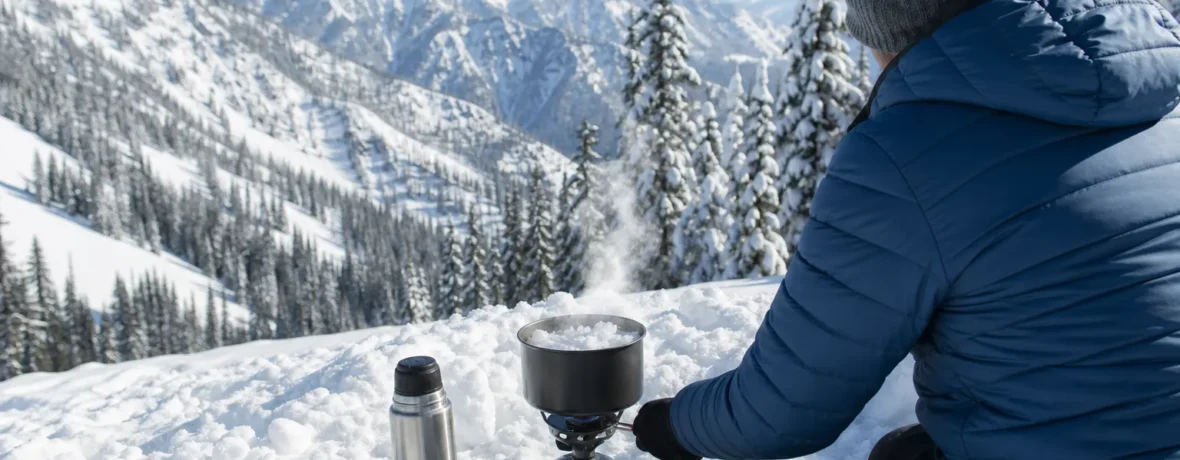
Yes, but only after you melt it and treat it like backcountry water. Fresh, clean-looking snow can still carry germs, dirt, or chemicals. Melt it first, bring clear water to a rolling boil for 1 minute, or 3 minutes above 6,500 ft [1,981 m].
Can you drink snow safely?
Yes, if you melt it and make the water safe before drinking.
Snow is frozen precipitation, not magic bottled water. It can pick up animal waste, windblown grit, camp smoke residue, road salt, fuel drips, and whatever is sitting on your gloves or pot. The CDC’s backcountry water guidance says clear water can still be unsafe, and if you’re not sure it’s safe, you should boil it or use another method to remove germs.
For hikers, the best answer is simple: don’t eat snow for hydration unless you have no other choice. Use it as a water source. Melt it. Treat it. Then drink it.
The fast field rule:
- White, fresh snow from an untouched area is your best starting point.
- Gray, yellow, pink, crusty, oily, dirty, or roadside snow is a hard no.
- Melted snow should be treated like stream or lake water.
- Boiling is the strongest all-around option for germs.
Is eating snow bad for you?
Eating a few bites of clean snow is usually not a crisis, but it is a poor hydration plan.
Your body has to spend heat to melt that snow. That is exactly the wrong trade when you’re already cold, sweaty, underfed, or standing in wind. You get a tiny amount of water and pay for it with body heat. Bad deal.
There’s another problem: volume. Snow is mostly air. The National Weather Service explains that the old 10:1 rule, meaning 10 in [25 cm] of snow to 1 in [2.5 cm] of water, is only a rough rule and can be way off; snow-to-liquid ratios can run 8:1 or lower to 20:1 or higher depending on conditions. So a mouthful of fluffy powder gives you very little liquid water.
Eating snow can also numb your mouth, make you feel colder, and discourage you from drinking enough. If you’re thirsty on a winter hike, stop and make water before you’re behind.
Does eating snow dehydrate you?
No, snow does not chemically dehydrate you, but relying on it can leave you under-hydrated.
The problem is practicality. You need to eat a lot of snow to get a small amount of water, and chewing icy powder is slow, cold, and unpleasant. Most hikers quit long before they’ve taken in enough fluid.
Cold weather also hides thirst. You may sweat under layers, lose water through breathing dry air, and skip drinking because your bottle is half-frozen or buried in your pack. MedlinePlus lists adult dehydration symptoms such as thirst, dry mouth, less urination, dark urine, tiredness, and dizziness on its dehydration health page.
Better move: carry liquid water inside your pack or jacket, start with hot water in an insulated bottle, and melt snow during breaks before your bottles run dry.
How do you melt snow for drinking water?
Melt snow slowly with a little starter water in the pot.
Never pack a dry pot full of snow and blast the stove. Snow insulates itself, scorches near the pot bottom, and can leave a funky taste. Worse, you can warp lightweight cookware if the pot overheats before enough liquid forms.
- Collect clean snow from an untouched area away from trails, tents, roads, latrines, and cooking spots.
- Add 1 in [2.5 cm] of liquid water to your pot if you have it. This “starter water” helps heat move through the snow.
- Add snow by handfuls, not by stuffing the pot tight.
- Stir as it melts, then add more snow.
- Once you have liquid water, bring it to a rolling boil.
- Boil clear water for 1 minute, or 3 minutes above 6,500 ft [1,981 m], following CDC guidance.
- Let it cool before drinking or pouring into a bottle.
If fuel is tight, melt enough for the next leg of hiking, not just one sip. Stopping every 10 minutes to make a mouthful of water burns time and stove gas.
Do you need to boil snow before drinking it?
Yes, boiling melted snow is the safest simple treatment for most hikers.
The CDC says boiling kills viruses, bacteria, and parasites, including Giardia and Cryptosporidium. For clear water, use a rolling boil for 1 minute; above 6,500 ft [1,981 m], boil for 3 minutes.
Filters and chemicals can work, but snowmelt brings some quirks. Filters can freeze and crack. Chemical drops and tablets work slower in cold water. UV treatment needs clear water, charged batteries, and no floating bits blocking the light. Boiling is fuel-heavy, but it is dependable.
| Treatment method | Best use | Winter drawback |
|---|---|---|
| Boiling | Killing viruses, bacteria, and parasites | Uses stove fuel and time |
| Filter | Removing many parasites and some bacteria | Can freeze; many filters do not remove viruses |
| Chemical disinfectant | Backup treatment for clear water | Cold water slows treatment; some chemicals work poorly on parasites |
| UV purifier | Clear, melted snow in small batches | Needs batteries and clear water |
What snow should you never drink?
Skip snow that looks, smells, or sits near contamination.
Boiling can kill germs, but it will not remove every chemical hazard. The CDC warns that water contaminated with harmful chemicals, toxins, or radioactive materials cannot be made safe by boiling or disinfecting. That matters in winter travel because snow is a collector. It catches exhaust, soot, road spray, leaked fuel, and trash residue.
Do not use snow from:
- Road shoulders, parking lots, plowed piles, or bridge edges
- Around cabins, outhouses, privies, and high-use campsites
- Near animal tracks, scat, blood, or carcasses
- Under trees loaded with bird droppings or heavy debris
- Colored patches, including yellow, gray, brown, oily, or pink snow
- Areas below avalanche debris if soil, vegetation, or fuel may be mixed in
Go for fresh upper layers in open, untouched terrain. Scrape away the top crust if wind has been moving debris. If the only snow around is dirty or roadside snow, look for another water source or ration what you have while you move to safety.
Can drinking snow cause hypothermia?
Drinking treated snowmelt will not cause hypothermia by itself, but eating snow and getting chilled can raise your risk.
Hypothermia happens when your body loses heat faster than it can make heat. Mayo Clinic defines it as a body temperature below 95°F [35°C] and says exhaustion or dehydration can increase risk on its hypothermia first aid page.
Cold water in your stomach is not ideal, but it beats not drinking at all. Warm drinks are better if you can make them. A hot bottle inside a jacket also doubles as a small heat source and morale boost.
Watch your system, not just your thirst:
- Are you shivering hard?
- Are your hands getting clumsy?
- Are you making sloppy decisions?
- Are you too tired to stop and melt water?
- Are your lips, fingers, or toes numb?
The Wilderness Medical Society frostbite guideline points to hydration, core warmth, nutrition, skin protection, and minimizing cold exposure as key frostbite prevention measures. Translation for the trail: drink, eat, layer up, and don’t stand around freezing while pretending you’re fine.
When to see a doctor
Get medical help fast for signs of hypothermia, severe dehydration, or illness after drinking untreated snowmelt.
Call 911 or your local emergency number if someone has confusion, slurred speech, extreme drowsiness, loss of coordination, slow or shallow breathing, loss of consciousness, or suspected hypothermia. The CDC lists shivering, exhaustion, confusion, fumbling hands, memory loss, slurred speech, and drowsiness as signs of hypothermia and says to seek immediate medical attention.
Get urgent care if vomiting or diarrhea follows untreated water and the person cannot keep fluids down, feels faint, becomes confused, has rapid breathing or heartbeat, or stops urinating. Do not try to diagnose the cause in the field. Keep the person warm, stop the hike if needed, and get help.
Related reading
- Is Creek Water Safe to Drink?
- Are Hiking Boots Good for Snow? Insulation, Traction and Limits
- How to Filter Rainwater to Drink Safely
- Winter Hiking Training: Snow, Traction and Cold-Weather Conditioning
FAQ
Can you drink freshly fallen snow?
Yes, but melt and treat it first. Fresh snow is cleaner than old roadside slush, but it can still contain germs or windblown contaminants.
Is boiled snow safe to drink?
Yes, if the snow was not chemically contaminated. Bring clear melted snow to a rolling boil for 1 minute, or 3 minutes above 6,500 ft [1,981 m].
Can I use a water filter on melted snow?
Yes, but protect the filter from freezing. A frozen filter can be damaged, and many backpacking filters do not remove viruses, so boiling is the stronger winter option.
Why does melted snow taste flat?
Snowmelt can taste flat because it has low mineral content and little dissolved air after boiling. A pinch of electrolyte mix, tea, or soup powder can make it easier to drink.
How much snow makes one bottle of water?
It varies sharply by snow density. A rough 10:1 snow-to-water ratio means 10 in [25 cm] of snow depth equals 1 in [2.5 cm] of liquid water, but real snow can be denser or much fluffier.