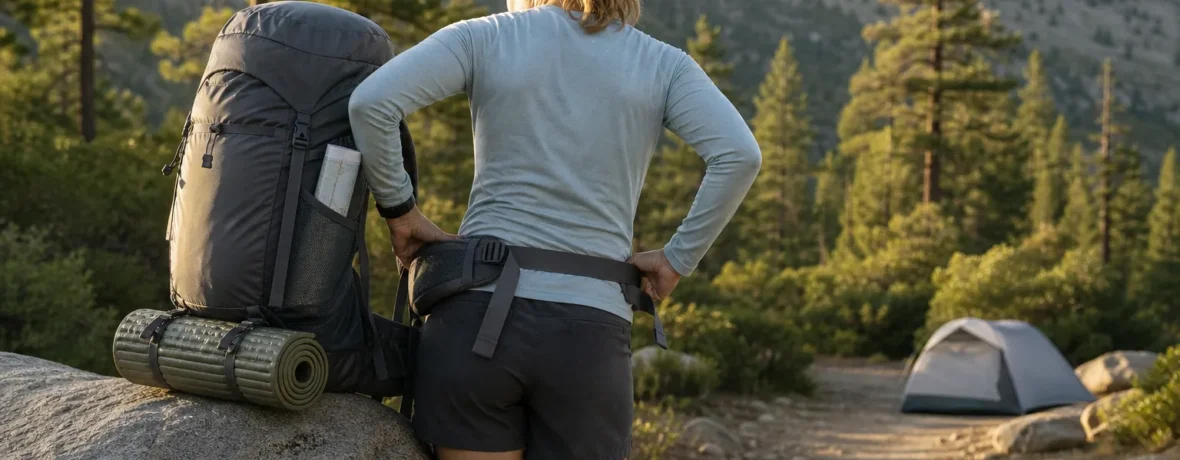
How to start backpacking: pick a 1-night trip, hike 3-7 miles [5-11 km] to camp, keep your loaded pack under 25-30% of your body weight, check permits and weather, carry the Ten Essentials, and go with a simple route you could still finish if tired, wet, or slow.
How do you start backpacking step by step?
Start with one night, one trail, and one realistic goal: come home safe and wanting to go again.
Your first backpacking trip is not the time to prove grit. It is the time to learn how your pack rides, how long camp chores take, how your sleep system feels, and how much food you actually eat after hiking. Keep the plan boring on purpose. Boring is good. Boring means fewer surprises.
- Choose a nearby overnight route with reliable water, legal campsites, and an easy bail-out option.
- Check land manager rules for permits, food storage, campfires, dogs, group size, parking, and seasonal closures.
- Borrow or rent bulky gear before buying: backpack, tent, sleeping bag, sleeping pad, stove, and bear canister if required.
- Do one loaded training hike before the trip. Use the shoes, socks, pack, and trekking poles you plan to carry.
- Pack only what you need for one night, then remove duplicate “just in case” items that do the same job.
- Send your route, trailhead, campsite area, vehicle description, and return time to someone who will act if you are late.
- Start early, hike slower than you think you should, and make camp with daylight left.
If you want the shortest version of backpacking tips for beginners, it is this: shrink the trip until it feels almost too easy. You can add miles, elevation, bad weather, big views, and remote country later.
Where should you go for your first overnight backpacking trip?
Go somewhere close to home with moderate mileage, modest elevation gain, and simple logistics.
A good first route is not the most dramatic route in the state. It is the one that lets you practice backpacking without stacking problems. Look for a trail that starts within a few hours of home, climbs less than 1,500 feet [457 m], has a marked campsite or obvious legal camping zone, and includes dependable water you can filter.
For most new backpackers, 3-7 miles [5-11 km] each way is plenty. If the trail is steep, rocky, muddy, sandy, hot, or high elevation, choose the lower end. A 5-mile [8 km] backpacking day feels different from a 5-mile day hike because you are carrying shelter, sleep gear, food, and water.
Before you commit, read the official land manager page. Some wilderness areas require overnight permits. Some require bear canisters. Some ban campfires. Some have seasonal road closures or trailhead quotas. For example, Yosemite wilderness permits are required year-round for overnight stays in Yosemite Wilderness, as of November 2026, according to the official Yosemite Wilderness Permits page on Recreation.gov. Your destination may be easier or stricter. Check it.
- Best first-trip terrain: forest trails, lakes, low ridges, river valleys, and maintained backcountry camps.
- Skip for trip one: exposed scrambles, long waterless stretches, snow travel, off-trail routes, desert heat, and big river crossings.
- Green flag: you can turn around and still reach your car before dark.
- Red flag: the route only works if everything goes perfectly.
What gear do you really need for backpacking?
You need gear that keeps you warm, dry, hydrated, fed, found, and able to handle small problems.
The National Park Service lists the Ten Essentials as basic items hikers should carry, including map, compass, warm clothing, extra food and water, light, fire-starting supplies, first aid and repair kit, signaling tools, rain gear, and a knife; see the NPS outdoor gear checklist. For backpacking, add overnight shelter and sleep gear.
Do not start by chasing the lightest possible kit. Ultralight gear can be excellent, but first you need to understand what you use, what you hate, and what keeps you comfortable enough to sleep. Sleep matters. A miserable night turns tomorrow’s easy hike into a slog.
| System | Beginner-friendly choice | Watch out for |
|---|---|---|
| Shelter | Freestanding or semi-freestanding 2-person tent | Tiny 1-person tents that feel like a coffin in rain |
| Sleep | Sleeping bag rated below forecast low, insulated pad | Uninsulated air pads in cold ground conditions |
| Pack | 50-65 liter pack that fits your torso and hips | Huge packs that invite overpacking |
| Cooking | Canister stove, lighter, pot, spoon, mug or bowl | Complicated meals that burn fuel and patience |
Pack these core items for a typical 1-night trip:
- Backpack with rain cover or pack liner
- Tent, tarp, or hammock system suitable for the site
- Sleeping bag or quilt
- Sleeping pad with enough insulation for the forecast
- Stove, fuel, lighter, pot, spoon, and simple food
- Water bottles or reservoir plus water filter, purifier, or treatment tablets
- Headlamp and spare power
- Map, compass, and offline map on your phone
- First aid kit, blister care, repair tape, and any personal medications
- Rain jacket, warm layer, extra socks, hat, and gloves if temperatures may drop
- Trowel, toilet paper, hand sanitizer, and a sealable trash bag
- Food storage required for the area: bear canister, bear bag system, or provided locker
How heavy should your backpack be for a first trip?
Keep your loaded pack under 25-30% of your body weight if you can.
That includes food and water. For a 160-pound [73 kg] hiker, that target is 40-48 pounds [18-22 kg], and lighter will usually feel better. If you are smaller, newer to hiking, recovering fitness, or hiking steep terrain, aim below that range. Your knees will vote early.
The fastest way to cut weight is not buying a titanium spoon. It is carrying less duplicate gear, less clothing, and less fear. One warm layer, one rain shell, one extra pair of socks, one sleep shirt if conditions call for it. You do not need a full outfit for every mood.
Water is heavy: 1 liter weighs 2.2 pounds [1 kg]. Carry enough between reliable sources, not every drop for the whole trip unless the route demands it. Food is easier. For one night, simple is king: tortillas, nut butter, hard cheese, salami, instant potatoes, ramen, oatmeal, bars, nuts, dried fruit, or a freeze-dried meal. Pack food you already know you like.
What should you wear backpacking overnight?
Wear layers that dry fast, prevent chafing, and match the coldest expected conditions.
Cotton can feel fine at the trailhead and awful once it is wet. Choose synthetic or wool layers for your shirt, base layer, socks, and insulation. Your hiking clothes will get sweaty. Your camp clothes should stay dry.
- Feet: broken-in trail runners or hiking boots, plus wool or synthetic socks.
- Legs: hiking pants, shorts, or leggings that do not rub under a hip belt.
- Torso: sun hoodie or hiking shirt, light fleece or puffy jacket, rain shell.
- Sleep: dry base layer or clean shirt, dry socks, warm hat when nights are cold.
- Hands and head: gloves and beanie if temperatures may drop below comfort.
Bring one extra pair of socks. Change into dry socks at camp. Clip damp socks to your pack the next day if the weather is dry. Little rituals like that keep morale high.
How do you plan food and water for backpacking?
Plan water first, then food that cooks fast and creates little trash.
Mark every reliable water source before you leave home. Do not assume a thin blue line on a map is flowing. Seasonal creeks disappear. Springs clog. Lakes can sit far below steep banks. Check recent trail reports when available, then carry treatment for all backcountry water unless the official land manager says otherwise.
For food, build a small menu instead of throwing snacks into a bag at midnight. Pack breakfast, lunch, dinner, snacks, and one extra no-cook item. Your first dinner should be almost impossible to ruin. Boil water. Stir. Eat. Done.
- Breakfast: oatmeal, granola, breakfast bars, instant coffee, tea, or cocoa.
- Lunch: tortillas with tuna packets, cheese, salami, hummus powder, or nut butter.
- Dinner: ramen, couscous, instant rice, instant potatoes, or a packaged backpacking meal.
- Snacks: trail mix, jerky, dried fruit, candy, crackers, bars, and salty chips.
- Emergency extra: one dense snack you will not eat unless you need it.
Repackage food at home to reduce trash, but keep cooking instructions if you need them. Put all scented items together: food, trash, toothpaste, sunscreen, lip balm, wipes, and cookware. At camp, store them by the local rule, not by wishful thinking.
How do you set up camp on your first backpacking trip?
Set up camp while you still have daylight, energy, and dry hands.
When you reach camp, do not drop everything in a yard sale explosion. First, put on a warm layer before you get chilled. Then pick a durable tent spot: established campsite, bare mineral soil, gravel, sand, dry grass, or another hardened surface where camping is allowed. Avoid fragile meadows, muddy edges, and spots too close to water.
The Leave No Trace Seven Principles are the best simple framework for low-impact camping: plan ahead, camp on durable surfaces, pack out waste, leave what you find, minimize fire impacts, respect wildlife, and be considerate of others.
- Pitch the tent before cooking.
- Stake it well, even if the air is calm.
- Put sleep gear inside and let your bag loft.
- Filter water for dinner and morning.
- Cook away from your sleeping area where local guidance recommends it.
- Store scented items before dark.
- Put headlamp, rain jacket, and bathroom kit where you can find them at 2 a.m.
Before bed, tighten guylines if wind or rain may arrive. Put shoes under the vestibule or in a spot where they will not fill with rain, dew, or curious teeth. If you use trekking poles, keep them within reach. Nighttime is easier when everything has a home.
How do you stay safe while backpacking?
Stay safe by preventing small problems from becoming trip-ending problems.
Most first-trip issues are ordinary: blisters, cold hands, not eating enough, getting behind schedule, losing the trail at a junction, or finding out the “easy” campsite is full. Slow down. Fix problems early.
- Stop as soon as you feel a hot spot on your foot. Tape it before it becomes a blister.
- Eat before you feel drained. Snack during breaks, not only at camp.
- Drink steadily and treat water before you are desperate.
- Check your map at every junction, creek crossing, and major bend.
- Turn around if weather, pace, injury, or water changes the plan.
- Keep rain gear easy to reach, not buried at the bottom of your pack.
Ticks deserve attention in much of the U.S. The CDC recommends EPA-registered insect repellents, tick checks after being outdoors, and checking clothing, gear, and pets; read the CDC guidance on preventing tick bites. In tick country, treat prevention as part of your camp routine, not a chore for later.
Cold can also creep up on new backpackers. A sweaty climb, wet shirt, wind, and sunset can make mild temperatures feel sharp. Mayo Clinic says hypothermia can become life-threatening when body temperature falls below 95°F [35°C], and exhaustion or dehydration can increase risk; see Mayo Clinic hypothermia first aid. Your move: change out of wet layers, eat, drink, block wind, and get into dry insulation early.
When to see a doctor
Seek medical help quickly for severe symptoms, worsening symptoms, or anything that feels beyond basic trail first aid.
Call emergency services if someone may have hypothermia, has confusion, slurred speech, loss of consciousness, slow or shallow breathing, a weak pulse, or cannot be rewarmed safely. Do not try to “walk it off” when thinking, coordination, or breathing changes.
After a trip, contact a healthcare professional if you develop fever, expanding rash, severe headache, joint pain, infection signs around a wound, persistent vomiting, chest pain, trouble breathing, or symptoms after a tick bite. Do not diagnose yourself on the trail. Your job outside is to reduce risk, recognize warning signs, and get help when the problem is bigger than your kit.
What are the biggest beginner backpacking mistakes?
The biggest mistake is planning a trip that leaves no room for being new.
New backpackers often overpack, start too late, choose too many miles, forget that camp chores take time, and bring food that needs too much cooking. Another classic: wearing brand-new boots for the first time with a loaded pack. Your feet will file a complaint.
- Too much mileage: choose a shorter route and enjoy camp.
- Too much pack weight: remove duplicates and luxury items that do not earn their place.
- Too little warmth: nights feel colder when you stop moving.
- No permit check: rules can change by trailhead, season, and land agency.
- No rain plan: pack liner first, rain jacket near the top.
- No turnaround time: decide before the trip when you will stop pushing forward.
The fix is simple. Treat your first overnight like a shakedown. You are testing systems: feet, pack fit, shelter, stove, sleep, food, navigation, and attitude. Take notes when you get home. What did you use? What stayed buried? What did you wish you had at 9 p.m.? That list is more valuable than another gear video.
Related reading
- Where Does the Appalachian Trail Start and End?
- How to Start Camping: A Beginner's Guide
- How to Start Hiking: A Beginner's Plan for the First 10 Hikes
- What Is Backpacking? Backpacking vs Hiking vs Camping
FAQ
Can I go backpacking alone as a beginner?
Yes, but going with an experienced partner is safer for your first overnight. If you go solo, pick a popular, well-marked route, leave a detailed trip plan with someone reliable, and carry a communication device appropriate for the area.
How many miles should a beginner backpacker hike in a day?
Plan 3-7 miles [5-11 km] per day for your first overnight. Choose less mileage if the trail has steep climbs, heat, altitude, rough footing, or long water carries.
Do I need a permit to go backpacking?
Sometimes. Permits depend on the land manager, trailhead, season, campsite system, group size, and wilderness rules, so check the official site for your exact destination before you go.
What size backpack do I need for one night?
Most beginners do well with a 50-65 liter pack for a 1-night trip. If your gear is bulky or you must carry a bear canister, the higher end gives you more room without strapping everything outside.
What is the easiest backpacking meal for a first trip?
The easiest dinner is a boil-water meal: ramen, instant potatoes, couscous, instant rice, or a packaged backpacking meal. Pick something you have eaten before so camp dinner is comfort, not an experiment.