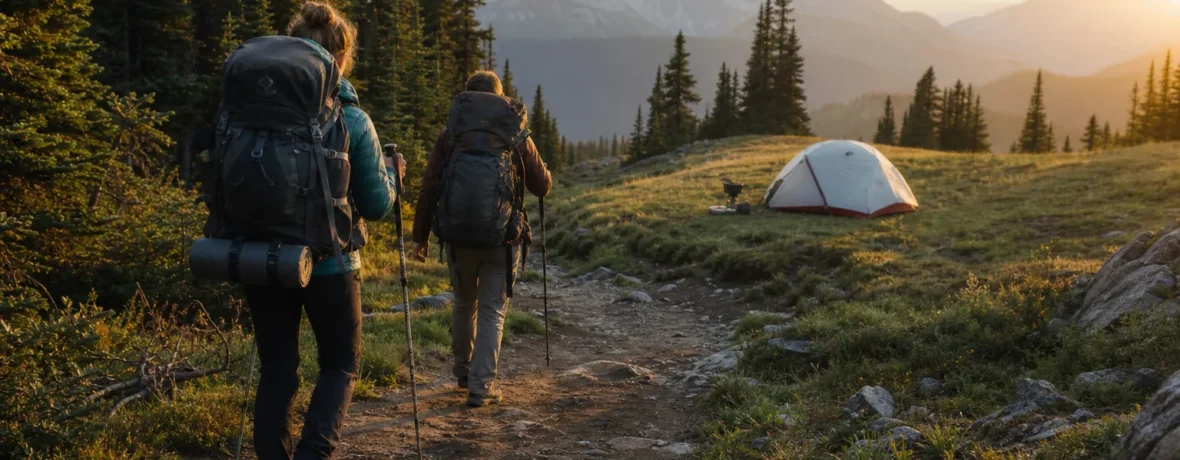
What is backpacking? Backpacking is an overnight or multi-day trip where you hike while carrying your shelter, sleep system, food, water treatment, clothing, and safety gear in a backpack. A beginner-friendly trip is usually 1 night and 3–7 miles [5–11 km] per day, with camp reached on foot.
What is backpacking in simple terms?
Backpacking is hiking with everything you need to sleep outside.
You walk a trail, reach a campsite, spend the night, then hike out or keep moving to the next camp. That one difference—sleeping out there—changes the whole game. Your pack gets heavier. Your planning matters more. You think beyond snacks and a water bottle because you’re carrying a tiny home on your back.
For most people, backpacking means backcountry travel: no car beside your tent, no cooler, no picnic table, no quick run to the store. You bring the essentials, use them well, and leave the place clean. The Leave No Trace Seven Principles are the best baseline for reducing your impact: plan ahead, camp on durable surfaces, pack out trash, respect wildlife, and keep fire impacts low.
What does backpacking mean?
Backpacking means traveling on foot while carrying overnight gear in a pack.
The word can mean different things in different settings. In the hiking world, backpacking usually means wilderness or trail travel with camping gear. In travel writing, “backpacking” can mean budget travel through cities or countries with a large pack. On ihikefar.com, the trail meaning is the one that matters: dirt, elevation, weather, food bags, water filters, sore calves, and a tent or shelter waiting at the end of the day.
A backpacking trip can be simple: drive to a trailhead, hike 4 miles [6.4 km], camp, wake up, and hike back. It can also be a 5-day loop, a section of the Appalachian Trail, or a long push across desert, forest, alpine basins, and muddy switchbacks.
What is the difference between backpacking, hiking, and camping?
The difference is what you carry and where you sleep.
Hiking is walking on trails for recreation, usually during the day. Camping is sleeping outdoors, often near a vehicle or developed campground. Backpacking combines both: you hike to your camp while carrying the gear that makes that camp possible.
| Activity | What you do | Typical gear | Best first trip |
|---|---|---|---|
| Hiking | Walk a trail and return the same day | Daypack, water, layers, snacks, navigation | 2–6 miles [3–10 km] |
| Camping | Sleep outdoors, often near your car | Tent, sleeping bag, stove, cooler, camp chairs | 1 night at a campground |
| Backpacking | Hike to camp carrying overnight gear | Backpack, shelter, sleep system, food, water treatment | 1 night, 3–7 miles [5–11 km] per day |
Is backpacking harder than hiking?
Yes, backpacking is harder than day hiking because you carry more weight and manage more risk.
A day hiker can turn around, reach the car, and eat dinner in town. A backpacker still has to set up shelter, filter water, cook, stay warm, store food, and sleep outside. A 5-mile [8 km] trail feels different with a loaded pack. Climbs bite harder. Downhills work your knees. Small mistakes—wet socks, poor campsite choice, not enough food—feel bigger after dark.
That said, backpacking does not need to be extreme. Your first trip should feel almost too easy on paper. Pick modest mileage, predictable weather, a marked trail, and a legal campsite near water. Save the huge elevation gain and 15-mile [24 km] days for later.
What gear do you need for backpacking?
You need shelter, sleep gear, food, water treatment, clothing, navigation, and safety basics.
Start with function, not shiny gear. Your kit should keep you warm, dry, fed, hydrated, and found. The National Park Service recommends packing core safety items and making a trip plan; as of November 2026, its trip-planning guidance also tells visitors to get required permits, read regulations, and share plans with a trusted contact.
- Backpack: usually 50–65 liters for overnight and weekend trips.
- Shelter: tent, tarp, hammock system, or bivy suited to the weather.
- Sleep system: sleeping bag or quilt, sleeping pad, and dry sleep clothes.
- Kitchen: stove, fuel, lighter, pot, spoon, food bag, and cleanup kit.
- Water: bottles or reservoir plus a filter, purifier, or chemical treatment.
- Clothing: rain shell, warm layer, extra socks, hat, and gloves when needed.
- Navigation: map, compass, downloaded offline map, and power bank.
- Safety: headlamp, first-aid kit, fire starter, repair tape, knife, whistle, and sun protection.
Keep pack weight sensible. Many new backpackers carry comfort items they never use, then suffer for miles. Pack what solves real problems. Leave the cast-iron pan at home.
How do you plan your first backpacking trip?
Plan your first backpacking trip around low mileage, legal camping, reliable water, and an easy exit.
Good first trips are boring in the right ways. You want a clear trail, stable forecast, simple logistics, and enough daylight to make mistakes without panic. Do not build your first route around bragging rights.
- Choose a 1-night route. Aim for 3–7 miles [5–11 km] per day and modest elevation gain.
- Confirm camping rules. Check the official land manager site for permits, campsite restrictions, bear canister rules, fire rules, and seasonal closures.
- Check water sources. A blue line on a map is not a guarantee. Look for recent official trail updates when possible.
- Study the weather. Pack for nighttime lows, wind, and rain, not just the sunny trailhead forecast.
- Build a meal plan. Bring dinner, breakfast, trail snacks, and one extra no-cook meal.
- Tell someone your plan. Share trailhead, route, campsite, vehicle info, and return time.
- Start early. Give yourself enough daylight to hike, find camp, filter water, and cook before dark.
Where can you go backpacking?
You can backpack on public lands that allow overnight backcountry camping.
Common options include national parks, national forests, state parks, wilderness areas, Bureau of Land Management lands, and long-distance trails. The rules change by location. One forest may allow dispersed camping with few restrictions. A nearby national park may require designated sites and advance permits. Desert parks may require packing out human waste. Bear country may require approved food storage.
Do not guess. Check the official page for the exact trail or management area before you go. If the site says permits are required, get one. If campfires are banned, skip the fire. If a trail is closed, pick another trail.
Is backpacking safe for beginners?
Yes, backpacking can be safe for beginners when the route, weather, gear, and group match your skill level.
The trouble usually starts when a beginner trip is planned like an expert trip. Too many miles. Too much heat. Not enough water. New boots. No headlamp. No backup layer. No idea where legal camps are. Fix those issues before you leave home.
Beginners should test key gear before the trip. Set up the tent in a yard or living room. Use the stove outside. Load the pack and walk around the neighborhood. Try filtering water before your hands are cold and mosquitoes are chewing your ankles.
When to see a doctor
Seek medical help right away for severe heat illness symptoms, worsening altitude symptoms, infected blisters, chest pain, confusion, fainting, or trouble breathing.
Heat, altitude, and foot problems can turn a backpacking trip ugly fast. The CDC heat illness guidance says heat stroke is a medical emergency. The CDC also advises that symptoms worsening at rest at high elevation should be treated seriously and may require descent; review its high-altitude travel guidance before trips above your normal elevation. For blisters, the Mayo Clinic blister first-aid guidance says to seek care if a blister looks infected, with signs such as increasing pain, pus, warmth, or spreading skin color changes.
Do not try to tough out serious symptoms miles from help. Turn around early, rest in shade when needed, descend when altitude symptoms worsen, and call emergency services when the situation is beyond basic first aid.
What should you pack for a beginner backpacking trip?
Pack the lightest complete kit you can use safely in the expected conditions.
Here’s a practical beginner checklist for a 1-night, 3-season trip in mild weather:
- Backpack with hip belt
- Tent or shelter with stakes
- Sleeping bag or quilt rated for the forecast low
- Sleeping pad
- Rain jacket
- Warm fleece or puffy jacket
- Base layer for sleeping
- Extra socks
- Stove, fuel, lighter, pot, and spoon
- Food plus one extra no-cook meal
- Water bottles or reservoir
- Water filter or treatment
- Map, compass, and offline phone map
- Headlamp with fresh batteries or charge
- First-aid kit and personal medications
- Toilet kit, trowel where allowed, hand sanitizer, and trash bag
- Sun hat, sunglasses, and sunscreen
- Bear canister or approved food storage where required
If you are hiking with a partner, split shared gear. One person carries the tent body; the other carries poles and stakes. One carries the stove; the other carries the fuel. Simple. Fair. Lighter for both.
Related reading
- How to Start Backpacking: First Overnight Trip Guide
- Backpacking Checklist: What to Bring on Your First Trip
- What Is Base Weight in Backpacking?
- How to Train for Backpacking With a Loaded Pack
FAQ
Is backpacking the same as hiking?
No, backpacking is not the same as hiking. Hiking is usually a day activity, while backpacking includes at least one overnight stay and requires carrying camping gear.
Is backpacking the same as camping?
No, backpacking is not the same as camping. Camping focuses on sleeping outdoors; backpacking adds the hiking approach, so your campsite is reached on foot with gear in your pack.
How many miles should a beginner backpacker hike?
A beginner backpacker should usually plan 3–7 miles [5–11 km] per day for a first overnight trip. Choose the lower end if the route has steep climbs, heat, rough footing, or a heavier pack.
Do you need a permit to go backpacking?
Sometimes, yes. Permits depend on the land manager, trail, season, campsite system, group size, and local rules, so check the official park, forest, or recreation site before every trip.
Can you backpack alone?
Yes, you can backpack alone if you have the skills, gear, and judgment for the route. For a first trip, going with a capable partner is safer and usually more fun.
What is the best season for first-time backpacking?
The best season is mild, stable weather with manageable nights and open trails. In many U.S. regions, late spring, summer, or early fall works best, but local snowpack, heat, bugs, fire restrictions, and storms matter more than the calendar.