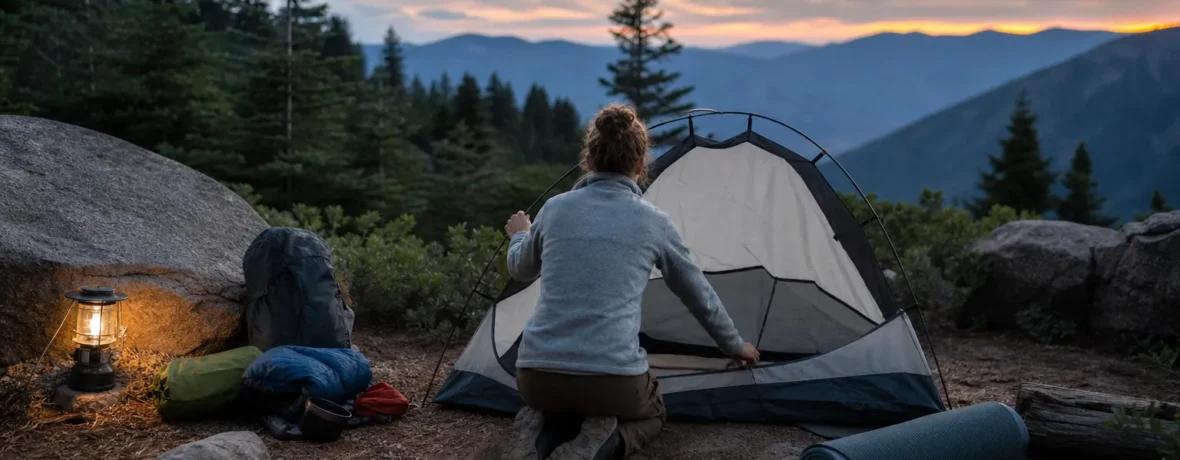
To start camping, begin with one reserved campground night within 2 hours of home, pack the ten core items, cook a no-fuss dinner, and sleep in a tent rated for the expected weather. Start with car camping, not backcountry camping, unless you already hike with loaded gear.
How do you start camping for the first time?
Start small, close, and predictable.
Your first trip is not the time to prove anything. Pick a developed campground with toilets, drinking water, marked sites, and a legal place to park. Stay one night. Choose mild weather. Bring food you already know how to cook. If the trip goes sideways, you can pack up and drive home without turning a rough night into a rescue story.
Here is the simplest first-camp plan:
- Choose a campground within 100 miles [161 km]. Short drives leave more daylight for setup.
- Reserve a site before you go. Many federal campgrounds use Recreation.gov, while state, county, and private campgrounds use their own systems.
- Check the official campground page. Look for water availability, fire rules, quiet hours, pet rules, food storage rules, and vehicle limits.
- Pack for the coldest overnight temperature. A sunny 70°F [21°C] afternoon can still turn into a 42°F [6°C] night.
- Arrive at least 2 hours before sunset. Pitching a tent in the dark is possible. It is also a fine way to lose stakes, tempers, and dinner.
- Cook something easy. Think pasta, burritos, soup, sandwiches, or pre-made rice bowls.
- Keep food sealed. Store all food, trash, cookware, and scented items as the campground requires.
- Leave the site cleaner than you found it. Pack out trash, micro-trash, food scraps, and damaged gear.
The National Park Service advises campers to match the trip to the group’s fitness, experience, destination, weather, and food-storage requirements before leaving home. Use that as your planning filter, not a heroic fantasy version of yourself: NPS camping safety before the trip.
What camping tips matter most for beginners?
The best beginner move is to remove friction before dark.
Set up camp while you can still see. Put your headlamp in the same pocket every time. Keep a dry layer for sleeping only. Do not scatter gear across the picnic table like a yard sale. A tidy camp is faster, safer, and easier to break down in the morning.
- Practice pitching your tent at home. Do it once in daylight before the trip. Count the stakes and poles.
- Use a sleeping pad, not just a sleeping bag. The ground steals heat fast. A pad adds insulation and comfort.
- Bring a headlamp for each person. Phone flashlights drain batteries and are awkward when both hands are busy.
- Pack one extra warm layer. A fleece or puffy jacket can save a cold evening.
- Bring more water than you think you need. Even when drinking water is listed, spigots can be seasonal or shut off.
- Keep cotton out of your sleep system. Cotton holds moisture. Use wool or synthetic base layers for bed.
- Put tomorrow’s clothes in the sleeping bag footbox. They will be warmer in the morning.
- Use clear bins. One bin for kitchen gear, one for dry food, one for camp tools. No rummaging.
The first time someone asks how to go camping, the honest answer is this: book a simple site, bring shelter, sleep insulation, light, water, food, warm clothing, and a way to keep animals out of your dinner. Everything else is refinement.
What kind of camping should a beginner choose?
Choose car camping for your first trip.
Car camping means you drive to or near your campsite and keep extra gear in the vehicle. That safety margin helps. You can bring a real cooler, a larger tent, spare blankets, and a backup meal. Backpacking, bikepacking, paddling trips, and dispersed camping ask more from your planning, fitness, gear, and judgment.
| Camping type | Best for beginners? | What to expect |
|---|---|---|
| Developed car campground | Yes | Marked sites, parking nearby, toilets, rules, neighbors, easier bailout |
| Walk-in campground | Maybe | Short carry from parking, quieter sites, lighter packing needed |
| Dispersed camping | Not first choice | No services, more self-reliance, site-finding skills, stricter land rules |
| Backcountry camping | Later | Loaded hiking, permits in many areas, water treatment, stronger navigation skills |
If you want quiet, choose a smaller campground, a weekday, or a shoulder-season date. If you want convenience, pick a campground with potable water, flush toilets, and a camp store within driving distance. No shame in easy. Easy builds skill.
Where should you camp your first night?
Camp where the rules are clear and help is reachable.
Look for a developed campground in a national park, national forest, state park, county park, or reputable private campground. Read the official listing, not just a map pin. You need to know what is actually provided at your site.
Check these details before you book:
- Is the campground open on your travel dates?
- Are reservations required or are sites first-come, first-served?
- Is drinking water available during your stay?
- Are fires allowed, restricted, or banned?
- Are bear boxes, lockers, or special food-storage rules required?
- How many tents and vehicles fit on one site?
- Are pets allowed?
- What time is check-in, check-out, and quiet hours?
As of November 2026, Recreation.gov states that recreation use fees, permit fees, reservation fees, change fees, cancellation fees, and refund rules vary by location and activity; it also states that a camping reservation canceled the day before arrival incurs a $10 cancellation fee and forfeits the first night’s fee, not exceeding the total paid. Check the listing before you book: Recreation.gov reservation policies.
What gear do you need to start camping?
You need shelter, warmth, light, water, food, and basic safety gear.
Do not buy a garage full of equipment before your first trip. Borrow, rent, or use what you already own when it is safe to do so. Spend money first on the items that protect sleep and weather comfort: tent, sleeping pad, sleeping bag, and rain protection.
Beginner camping gear checklist
- Tent with poles, stakes, guylines, and rainfly
- Groundsheet or tent footprint if your tent requires one
- Sleeping bag rated below the expected overnight low
- Sleeping pad
- Pillow or stuff sack filled with soft clothing
- Headlamp plus spare batteries or a charged power bank
- Water bottles or water jug
- Cooler with ice or ice packs
- Stove, fuel, lighter, and matches in a waterproof bag
- Pot, pan, mug, bowl, utensils, knife, cutting board
- Biodegradable soap, sponge, small towel, trash bags
- Warm layer, rain jacket, sleep clothes, spare socks
- First-aid kit
- Map or downloaded offline map
- Camp chairs
- Toiletries, toilet paper, hand sanitizer
A beginner tent should be easy to pitch, tall enough to sit in, and sized one person larger than the number of sleepers if you want comfort. Two people in a two-person tent works, but it is tight. Two people in a three-person tent get space for pads and a little gear.
How do you set up a campsite?
Put the tent on flat, durable ground and keep the kitchen separate.
Start with the ground. Avoid low spots where water pools. Look up for dead branches. Keep the tent off fragile plants. If the site has a tent pad, use it. If not, choose compacted soil, gravel, sand, or another durable surface.
- Park and unload only what you need first. Tent, pad, sleeping bag, headlamp, and warm layer come out before the camp kitchen.
- Pitch the tent. Stake it fully, even in calm weather. Wind likes to arrive while you are brushing your teeth.
- Attach the rainfly. Use it unless the weather is bone-dry and you know how the tent vents.
- Set up sleep gear. Inflate pads early so you can fix leaks before bedtime.
- Build the kitchen zone. Use the picnic table or a camp table. Keep food sealed unless you are cooking.
- Store scented items. Food, trash, toothpaste, sunscreen, lip balm, and cookware all count.
- Place lights before dark. Keep one headlamp in the tent and one by the kitchen.
The National Park Service says food and liquid containers should not be left unattended in campgrounds, and food-storage rules vary by location, especially in bear country. Follow the campground’s posted directions, not a generic internet habit: NPS cooking and food storage in camp.
What should you eat on your first camping trip?
Eat food that is easy to cook, clean, and store.
Your first camp dinner should not require six pans, raw chicken, and delicate timing. Keep it simple. You are learning the stove, the light, the wind, the cleanup routine, and the bear-safe or critter-safe storage rules all at once.
Easy first-trip meals
- Dinner: pasta with jarred sauce, chili, ramen with vegetables, burritos, boxed mac and cheese, soup with bread
- Breakfast: instant oatmeal, bagels, hard-boiled eggs, yogurt, granola, coffee, tea
- Lunch: sandwiches, wraps, cheese, crackers, fruit, nut butter, hummus
- Snacks: trail mix, bars, jerky, apples, pretzels, chocolate
Plan one no-cook backup meal. If your stove fails, rain rolls in, or you arrive late, you can still eat. Pack all trash out or place it in the campground’s proper receptacle. Tiny scraps count. Orange peels, sunflower shells, and spilled rice are not decorations.
How do you stay warm and dry while camping?
Stay dry first, then trap warmth.
Cold camping usually starts with moisture: damp socks, wet cuffs, condensation inside the tent, sweat-soaked base layers, or a sleeping bag pressed against the tent wall. Manage moisture and the night gets easier.
- Change into dry sleep clothes before bed.
- Vent the tent to reduce condensation, even when it is cold.
- Keep wet shoes outside the sleeping area but under cover.
- Use a sleeping pad with enough insulation for the season.
- Wear a beanie if your head gets cold.
- Do not breathe into your sleeping bag for warmth; it adds moisture.
- Keep tomorrow’s socks dry in a sealed bag.
If rain is likely, pack a rain jacket, extra socks, and a small tarp for a kitchen shelter only where it is allowed. Never cook inside a tent. Stoves produce fumes, flame, and spills. A vestibule may feel sheltered, but it is still a risky place to run fire.
How do you camp without annoying other campers?
Be quiet, clean, and contained.
Campgrounds are shared spaces. Your music, headlights, dog, fire smoke, and late-night dishwashing all reach someone else’s site. Good camp etiquette is not fancy. It is basic awareness.
- Respect posted quiet hours.
- Keep voices low after dark.
- Do not cut through occupied campsites.
- Control pets and clean up waste.
- Use existing fire rings only where fires are allowed.
- Buy local firewood near the campground when required or recommended.
- Put trash in approved bins or pack it out.
- Leave natural objects where you found them.
For low-impact habits, use the seven Leave No Trace principles: plan ahead and prepare, travel and camp on durable surfaces, dispose of waste properly, leave what you find, minimize campfire impacts, respect wildlife, and be considerate of others. The NPS version also gives a clear distance guideline for protecting water: camp at least 200 feet [61 m] from lakes and streams where that rule applies: NPS Leave No Trace Seven Principles.
How do you handle bugs, ticks, and wildlife?
Prevent problems before they get close.
For bugs, use long sleeves, long pants, and repellent that matches the insects in your area. For ticks, avoid brushing through tall grass and leaf litter when you can, check your body after time outside, and check pets and gear too. The CDC recommends EPA-registered repellents and says clothing and gear can be treated with products containing 0.5% permethrin when used as directed: CDC tick bite prevention.
Wildlife safety starts with food. Animals do not need to be large to wreck camp. Mice, raccoons, jays, squirrels, bears, and coyotes all learn fast when people feed them by accident. Never leave food unattended. Never feed wildlife. Store scented items the way the campground requires: vehicle, locker, bear canister, or other approved method.
If you see a wild animal, give it space. Do not move closer for photos. If an animal changes its behavior because of you, you are too close.
When to see a doctor
Get medical help right away for serious symptoms, worsening symptoms, or any condition you cannot safely manage in camp.
Call 911 or local emergency services if someone may have hypothermia, has trouble breathing, loses consciousness, has chest pain, shows confusion that does not quickly resolve, has a severe allergic reaction, has a deep or uncontrolled bleeding wound, or cannot walk out safely. Mayo Clinic says suspected hypothermia is an emergency and lists signs such as shivering, slurred speech, shallow breathing, clumsiness, drowsiness, confusion, and loss of consciousness: Mayo Clinic hypothermia first aid.
After a tick bite, follow CDC removal guidance and watch for rash, fever, or flu-like symptoms in the following days and weeks. Do not diagnose yourself from a photo. If you feel unwell after a bite, contact a healthcare professional and tell them where and when you were camping.
What is a smart first camping itinerary?
Keep the schedule boring on purpose.
A packed itinerary sounds fun at home and feels messy at camp. Give yourself time to learn. One short hike, one simple dinner, one fire if allowed, and one slow breakfast is plenty.
Sample one-night beginner plan
- 10:00 a.m.: Final weather check, ice the cooler, fill water jugs, download maps.
- 12:00 p.m.: Leave home after lunch so you do not arrive hungry.
- 2:00 p.m.: Check in, find the site, read posted rules.
- 2:30 p.m.: Pitch tent and set up sleep gear.
- 4:00 p.m.: Take a short walk or hike under 3 miles [4.8 km].
- 6:00 p.m.: Cook dinner before full dark.
- 7:30 p.m.: Clean dishes, store food, pack trash.
- 10:00 p.m.: Quiet hours mindset: low voices, low lights.
- 7:00 a.m.: Breakfast, dry tent if possible, pack slowly.
- 10:00 a.m.: Final site sweep for stakes, wrappers, food scraps, and gear.
What mistakes should new campers avoid?
Most beginner mistakes come from arriving late, packing wrong, or ignoring rules.
The big ones are easy to dodge once you know them:
- Arriving after dark. This makes every task harder.
- Skipping the test pitch. Missing poles at home are annoying. Missing poles at camp end the trip.
- Bringing untested meals. Camp is not the place for complicated cooking experiments.
- Leaving food out. This risks wildlife problems and campground fines where rules are enforced.
- Depending on cell service. Download maps and reservation details before you leave.
- Underestimating nighttime cold. Pack for the low, not the afternoon high.
- Overpacking loose gear. Use bins and bags so camp does not become chaos.
- Burning trash. Pack it out or use approved receptacles.
The goal is not perfection. The goal is a safe first night that teaches you what to adjust next time. After that, you can add longer trips, rougher sites, colder weather, and backcountry skills one layer at a time.
Related reading
- How to Plan a Camping Trip
- Where Does the Appalachian Trail Start and End?
- Dispersed Camping in Colorado: Best Areas and Rules
- How to Start Hiking: A Beginner's Plan for the First 10 Hikes
FAQ
Can I go camping with no experience?
Yes, if you start with a developed campground and mild weather. Choose one night close to home, read the official rules, and bring basic gear for shelter, warmth, light, water, food, and safety.
How much water should I bring camping?
Bring enough for drinking, cooking, handwashing, and dishwashing. If the campground lists potable water, still carry a backup jug because spigots can be seasonal, broken, or farther from your site than expected.
Is tent camping safe for beginners?
Yes, tent camping is safe for beginners when you choose a legal campsite, check weather, store food correctly, and avoid risky heat sources inside the tent. Never run a stove, grill, or fuel-burning heater in an enclosed shelter.
What should I wear to sleep while camping?
Wear dry base layers, dry socks, and a warm hat if needed. Wool or synthetic layers work better than cotton because they manage moisture and help you stay warmer overnight.
Do I need a campfire?
No, you do not need a campfire to camp well. Many trips are easier with a stove, warm clothing, and a headlamp, especially during fire restrictions or windy weather.
What is the easiest meal for first-time camping?
The easiest meal is one you can cook in one pot or eat without cooking. Pasta, chili, soup, burritos, sandwiches, and oatmeal are reliable because they use simple ingredients and create fewer dishes.