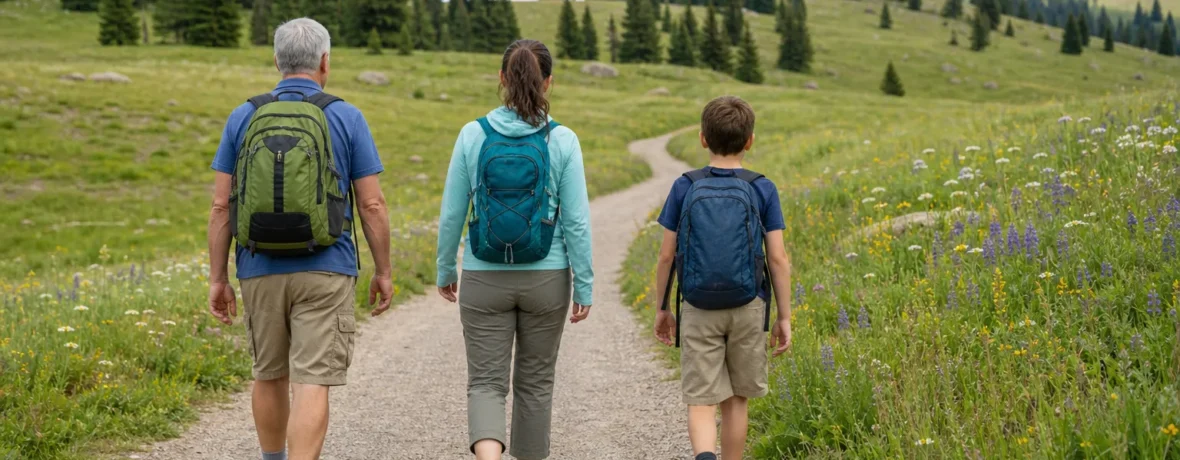
To start hiking, begin with 10 short day hikes over 6 to 10 weeks: 1 to 2 miles [1.6 to 3.2 km] first, then build to 5 to 6 miles [8 to 9.7 km]. Choose marked trails, carry water, wear grippy shoes, and turn around before you feel spent.
How do you start hiking if you have never hiked before?
Start smaller than your ego wants.
Your first hike should feel almost too easy on paper. Pick a marked trail close to home, with modest elevation, reliable cell service if possible, and a clear parking area. Skip the dramatic summit. Skip the remote canyon. Skip the trail with seven creek crossings and a comment thread full of “route finding was spicy.”
A good first target is 1 to 2 miles [1.6 to 3.2 km] on a maintained loop or out-and-back trail. If you walk around your neighborhood now, you can probably handle that. Hiking adds dirt, rocks, roots, heat, wind, mud, bugs, and hills. That is why the first few hikes are about learning the rhythm, not proving toughness.
Use this simple rule: finish your first three hikes with energy left. You should be able to get back to the car, change shoes, and still want lunch. That is success.
Before you leave, do three things:
- Read the official trail page or land manager notice for current closures, hazards, pets, and parking rules.
- Download or print a map. Do not depend on a live signal.
- Tell someone your trail name, start time, and expected return time.
How to get into hiking without buying a pile of gear?
Use what you already own, then upgrade only what annoys you.
You do not need a showroom wall of equipment for your first 10 hikes. You need comfortable movement, enough water, sun protection, basic safety items, and a way to stay found. The National Park Service lists the 10 Essentials for outdoor trips, and that list is a smart backbone for even short day hikes.
For early hikes, think in layers. A synthetic T-shirt or lightweight wool shirt beats cotton when you sweat. A fleece or puffy jacket handles cool starts. A rain shell or wind shell keeps a breezy ridge from becoming miserable. If the forecast looks messy, choose an easier trail rather than pretending your jacket makes you invincible.
| Item | Good beginner choice | When to upgrade |
|---|---|---|
| Footwear | Trail runners or athletic shoes with grip | When your feet slide, ache, or get soaked often |
| Pack | Small daypack you already own | When straps rub or it bounces on hills |
| Clothing | Synthetic or wool layers | When cotton stays wet and chills you |
| Navigation | Downloaded map plus paper backup | When you hike longer or less-marked trails |
Pack this beginner day-hike checklist:
- Water bottle or hydration reservoir
- Snacks with salt and carbohydrates
- Map, downloaded route, or printed trail map
- Small first-aid kit
- Headlamp or small flashlight
- Sun hat, sunglasses, and sunscreen
- Rain shell or extra warm layer
- Whistle
- Fully charged phone
- Trash bag or zip bag for wrappers
What is the best 10-hike plan for hiking for beginners?
Build distance, hills, and complexity one notch at a time.
This plan works because it gives you repetition without boredom. You learn how your shoes fit, how much water you drink, how your knees feel downhill, and how your mood changes when the trail gets steeper. Keep at least one rest day between hikes at first. If a hike feels hard, repeat that level before moving on.
- Hike 1: 1 mile [1.6 km], flat loop. Practice packing, parking, following signs, and turning your phone to low-power mode.
- Hike 2: 1.5 miles [2.4 km], gentle dirt path. Notice hot spots on your feet before they become blisters.
- Hike 3: 2 miles [3.2 km], easy out-and-back. Turn around at the halfway point even if you feel great.
- Hike 4: 2.5 miles [4 km], mild hills. Shorten your stride on climbs and keep your breathing steady.
- Hike 5: 3 miles [4.8 km], mixed surface. Try rocks, roots, packed dirt, and short steps downhill.
- Hike 6: 3.5 miles [5.6 km], one longer climb. Take planned breaks before you need them.
- Hike 7: 4 miles [6.4 km], new trail system. Practice checking junctions against your map.
- Hike 8: 4.5 miles [7.2 km], earlier start. Learn how temperature and light change your pace.
- Hike 9: 5 miles [8 km], moderate elevation. Pack an extra layer and more food than you think you need.
- Hike 10: 5 to 6 miles [8 to 9.7 km], favorite style. Choose forest, desert, beach, mountain foothill, or lake trail and enjoy the fact that you now have a system.
Track four things after each hike: distance, time, weather, and what you would change. Those notes beat memory. They also tell you what to buy next, if anything.
How do you choose your first hiking trail?
Pick the trail that removes the most problems.
For the first month, choose popular, maintained trails with clear signage. A busy trail is not a failure. It gives you simple navigation, other people nearby, and a better chance that recent trail conditions are posted online.
Use these filters when choosing:
- Distance: Start under 3 miles [4.8 km].
- Elevation gain: Keep early hikes gentle, especially if you are not used to hills.
- Surface: Packed dirt is easier than loose rock, sand, snow, or mud.
- Route type: Loops are fun, but out-and-backs make turnaround decisions easier.
- Exposure: Shade matters in hot weather; open ridges feel colder and windier.
- Water crossings: Avoid them until you know the area and current conditions.
Check the official land manager page first. National parks, state parks, national forests, city parks, and county open spaces may have different pet rules, seasonal closures, parking systems, fire restrictions, and permit requirements. Use social apps for recent photos and comments, but let the official page win when the two disagree.
What should you wear on a first hike?
Wear clothes that move, dry fast, and match the weather.
Shoes matter most. For easy trails, a pair of trail runners or athletic shoes with good tread is usually enough. Heavy boots can help on rough ground or when carrying weight, but they are not mandatory for short day hikes. The wrong boot can punish you faster than the wrong T-shirt.
Skip new footwear on a longer trail. Wear it around town first. If you feel rubbing on your heel, toes, arch, or ankle, fix it before dirt is involved.
A simple clothing setup:
- Synthetic or wool shirt
- Flexible shorts or pants
- Wool or synthetic socks
- Light fleece, sun hoodie, or insulating layer
- Rain shell or wind shell when weather could shift
- Hat for sun, warmth, or both
Mayo Clinic’s blister first-aid guidance focuses on protecting the area and reducing friction. On trail, the practical move is simple: stop as soon as you feel a hot spot, dry the skin if needed, and cover it before it turns into a painful bubble.
How fast should a beginner hike?
Hike at a pace where you can talk in short sentences.
Speed is a lousy goal at the start. Control is better. Many new hikers charge the first climb, spike their heart rate, and spend the next mile bargaining with their lungs. Shorten your stride instead. On hills, take smaller steps than you think you need. Keep your feet under you. Use steady pressure, not drama.
Try this pacing pattern:
- Start slower than normal for the first 10 minutes.
- Settle into a rhythm you can hold without stopping every few minutes.
- Take a short snack or water break before you feel drained.
- Turn around at your planned point, not at your absolute limit.
- Slow down on descents; downhill is where tired legs get sloppy.
If you use trekking poles, keep them short enough that your elbows bend naturally. They can help with balance, especially on descents, but they will not fix poor pacing. Your best tool is still the quiet little decision to slow down early.
How much water and food should you bring?
Bring more than you expect to use.
Water needs change with heat, humidity, altitude, shade, pace, body size, and sweat rate. For short beginner hikes, carry enough that you can drink before you are thirsty and still have some left when you return. The CDC advises people exercising in heat to drink more water than usual and not wait for thirst; its heat guidance for outdoor activity also says to stop activity and get to a cool place if you feel faint or weak.
Food is simpler. Bring snacks you will actually eat: trail mix, pretzels, granola bars, dried fruit, tortillas, cheese sticks, jerky, or a peanut butter sandwich. On hikes longer than 2 hours, snack before your mood crashes. Hunger on trail often shows up as irritation first.
For hot hikes, start early, choose shade, and lower your goal. If the forecast looks harsh, change the route. The mountain, canyon, or ridge will still be there after the weather stops trying to cook you.
What safety habits should every new hiker learn?
Make boring safety habits automatic.
The best trail safety is not heroic. It is ordinary stuff done every time. Check the weather. Read signs. Carry a light. Know your turnaround point. Keep your phone charged. Stay on the trail when the route is marked. Do not split the group unless you have a clear plan.
Learn these habits during your first 10 hikes:
- Use a turnaround time. If you said you would turn around at 11:00 a.m., turn around then.
- Look back often. Trails look different in reverse.
- Mark junctions mentally. Pause at intersections and confirm the return route.
- Respect wildlife. Give animals space and never feed them.
- Protect yourself from ticks. The CDC recommends walking in the center of trails, using repellents correctly, and checking your body after being outdoors in its tick bite prevention guidance.
- Pack out trash. Wrappers, peels, tissues, and food scraps all leave with you.
If you get off route, stop moving. Check your map. Walk back to the last known point if it is safe and obvious. Wandering faster is how small mistakes grow teeth.
When to see a doctor
Get medical help when symptoms are severe, worsening, or unusual for you.
Hiking can reveal issues you do not notice during daily errands: chest discomfort, unusual shortness of breath, dizziness, joint pain, allergic reactions, heat illness symptoms, or a wound that looks worse over time. Do not diagnose yourself on the trail. Stop, get safe, and seek medical care when your body is sending signals that feel beyond normal effort.
After a hike, contact a healthcare professional if you develop a spreading rash, fever, severe headache, increasing redness around a bite or wound, persistent swelling, or pain that changes how you walk. For heat-related symptoms, the CDC advises immediate medical care when symptoms of heat-related illness are present during hot-weather activity.
If you have a heart condition, breathing condition, diabetes, pregnancy-related concerns, a recent surgery, or another medical issue that affects exercise, ask a clinician what limits make sense before increasing distance, heat exposure, or elevation. Keep the advice specific to you.
What should you do after each hike?
Recover, clean up, and make one adjustment.
Post-hike habits turn random outings into progress. Change out of damp socks. Drink water. Eat a real meal. Check for ticks, especially after grassy, brushy, or wooded trails. Air out your shoes and pack. Restock snacks and first-aid items before the next trip, not five minutes before leaving.
Then ask three blunt questions:
- What felt good?
- What rubbed, hurt, leaked, bounced, or annoyed me?
- What is one thing to change next time?
Keep the answer small. Different socks. Earlier start. Shorter climb. More snacks. Better map. One change per hike builds skill faster than buying five new things and guessing which one helped.
Related reading
- Where Does the Appalachian Trail Start and End?
- How to Start Camping: A Beginner's Guide
- How to Start Backpacking: First Overnight Trip Guide
- How to Start Rucking: Weight, Distance and Progression
FAQ
Here are the quick answers new hikers usually need first.
Can I start hiking if I am out of shape?
Yes, if you start with short, easy trails and build slowly. Choose 1 mile [1.6 km] on gentle ground, rest when needed, and repeat that distance until it feels controlled.
Is hiking alone safe for beginners?
It can be, but your first few hikes are safer with another person. If you go solo, pick a popular trail, share your plan, stay on marked routes, and turn around early.
Do I need hiking boots for my first hike?
No, not for most easy beginner trails. Grippy athletic shoes or trail runners work well on maintained paths, but boots may help on rough terrain, mud, snow, or when carrying a heavier pack.
How many miles should a beginner hike?
Start with 1 to 2 miles [1.6 to 3.2 km]. After three comfortable hikes, increase by 0.5 to 1 mile [0.8 to 1.6 km] at a time.
What is the biggest beginner hiking mistake?
The biggest mistake is doing too much too soon. A trail that looks short can feel hard when it has heat, elevation, loose footing, or poor shade, so finish with energy left.
How often should I hike as a beginner?
One hike per week is enough to build skill without rushing. If your feet, knees, and energy feel good, add a second short walk or easy trail day between longer hikes.