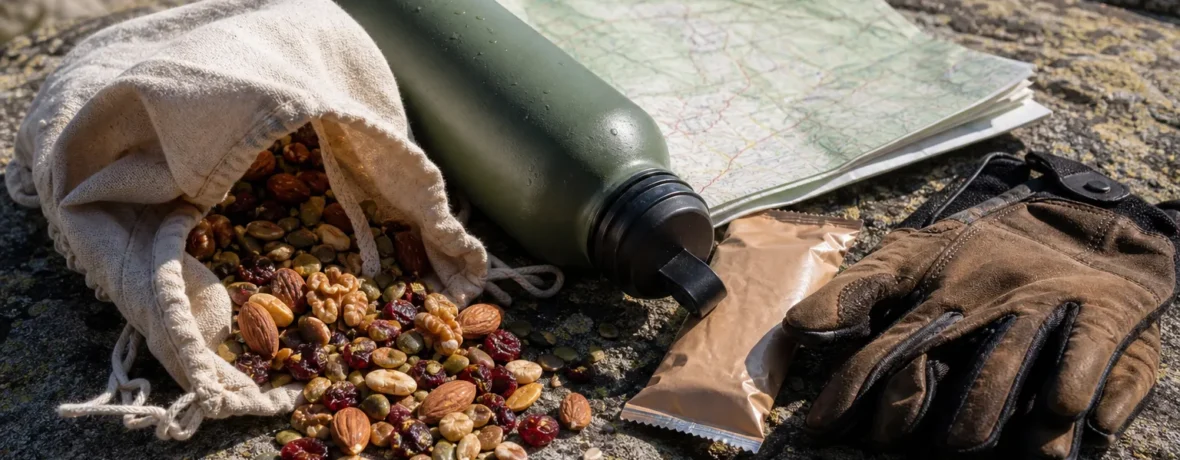
It is called trail mix because it is a portable snack mix built for eating on trails: nuts, dried fruit, seeds, and sweets that survive in a pack and deliver quick calories without cooking. Merriam-Webster lists the first known use of “trail mix” in 1976, but the idea is much older. (merriam-webster.com)
Why is it called trail mix?
It is called trail mix because the name says exactly what the food is for: the trail.
That may sound too plain to be satisfying, but plain is the point. Trail mix is not named for a chef, a town, a brand, or a secret old recipe. It is named for use. You carry it while hiking because it is dry, tough, compact, fast to eat, and easy to share without stopping for a stove or digging out a lunch kit.
My take: “trail mix” is one of the most honest names in outdoor food. If it works in a sweaty hipbelt pocket, handles a few hours in a warm pack, and gives you salt, fat, carbs, and crunch while you’re still moving, it has earned the name. If it melts into paste, turns to dust, or needs a spoon, it has not.
Who invented trail mix?
No single person gets a clean, proven credit for inventing trail mix.
People have carried mixtures of dried fruit, nuts, seeds, grains, and preserved foods for centuries because those foods travel well. Modern American “trail mix,” as a named snack, shows up later in dictionaries. Merriam-Webster dates the first known use of the term to 1976, in the same meaning we use now: a snack mixture eaten especially by hikers. (merriam-webster.com)
So the sensible answer is this: hikers did not invent the idea of mixing durable, high-energy foods, but American outdoor culture helped give that mix its modern name. The term stuck because it was short, useful, and impossible to misunderstand.
What does gorp stand for?
“Gorp” probably does not stand for anything with certainty.
You’ve heard the campfire answer: “good old raisins and peanuts.” You may have also heard “granola, oats, raisins, and peanuts.” Nice stories. Handy stories. But likely backronyms. Merriam-Webster lists the origin of “gorp” as unknown and gives 1962 as its first known use as the snack term. (merriam-webster.com)
Language writer Michael Quinion, at World Wide Words, also treats the acronym story as spurious and points to older uses of “gorp” as a verb meaning to eat greedily. That does not prove the snack word came from the verb. It does prove that the tidy acronym story is too tidy. (worldwidewords.org)
Here’s the trail-side verdict: call it gorp if you like the old-school flavor. Just don’t pretend the acronym is settled history.
What was trail mix originally made of?
The classic American version was built around raisins and peanuts.
That pairing makes sense. Raisins bring quick sugar and chew. Peanuts bring fat, protein, salt if roasted and salted, and a price that does not scare off a whole scout troop. From there, hikers added what they had: chocolate pieces, sunflower seeds, almonds, cashews, dried cranberries, pretzels, coconut flakes, cereal, or granola clusters.
| Term | What it usually means | Best use |
|---|---|---|
| Trail mix | Nuts, dried fruit, seeds, sweets, or salty add-ins | Hiking, backpacking, road trips |
| Gorp | Old-school hiker term for trail mix | Camp talk, scouting, classic hiking culture |
| Snack mix | Crackers, cereal, pretzels, chips, seasonings | Parties, lunches, car snacks |
| Granola | Oats, sweetener, oil, nuts, dried fruit | Breakfast, yogurt, bars, some trail blends |
Why does trail mix work so well on hikes?
Trail mix works because it solves the hiker’s snack problem with almost no fuss.
You need food that can ride in a pack, survive being crushed, and give you energy without cooking. Trail mix does that better than most snacks. It also lets you eat in small hits: a handful at a viewpoint, a few bites before a climb, another pinch while you wait for the slowest hiker to catch up.
The best trail mix has balance. Too much candy and you get a sugar bomb. Too many dry nuts and you need water after every bite. Too much dried fruit and the bag turns sticky. Good trail mix hits the middle.
- Fat: nuts, seeds, coconut chips.
- Carbs: raisins, dried cherries, pretzels, cereal, chocolate pieces.
- Salt: salted nuts, pretzels, sesame sticks.
- Texture: crunchy, chewy, crisp, and a little sweet.
How do you make trail mix for hiking?
Start with a simple ratio, then adjust for heat, distance, and taste.
- Pick a nut or seed base. Use peanuts, almonds, cashews, walnuts, sunflower seeds, or pumpkin seeds.
- Add dried fruit. Raisins are the classic. Dried cranberries, apricots, cherries, mango, or dates all work if they are cut small enough to eat by the handful.
- Add salt and crunch. Pretzels, sesame sticks, roasted chickpeas, or salted nuts keep the mix from tasting flat after 5 miles [8 km].
- Add sweets with judgment. Chocolate is great in cool weather. In hot weather, use candy shells, yogurt-free chips, or skip meltable pieces.
- Pack it in small bags. One giant bag gets sweaty hands, crumbs, and campsite chaos. Smaller portions are easier to ration and share.
What should you put in trail mix?
Put in ingredients that still taste good when warm, jostled, and eaten with dusty fingers.
That is the standard. Not novelty. Not pantry clean-out. Trail mix should be good after riding in your pack for hours. The perfect blend for a cool 3-mile [5 km] stroll may be wrong for a hot 14-mile [23 km] ridge hike.
- For hot hikes: peanuts, almonds, raisins, pretzels, pumpkin seeds, dried pineapple.
- For cold hikes: walnuts, cashews, dark chocolate pieces, dried cherries, coconut.
- For salty cravings: salted nuts, pretzels, sesame sticks, corn nuts.
- For less sugar: unsweetened dried fruit, roasted nuts, seeds, cacao nibs.
- For kids: smaller pieces, familiar flavors, and less crumbly ingredients.
If you care about exact nutrition, use the label on your specific mix. Packaged trail mixes vary hard by brand and recipe, and the USDA FoodData Central is useful for comparing ingredients and standard food entries.
Is trail mix the same thing as gorp?
In everyday hiking talk, yes, trail mix and gorp usually mean the same snack.
The difference is tone. “Trail mix” is the clear, modern, grocery-store term. “Gorp” is older, outdoorsier, and a little more insider. The Washington Trails Association calls trail mix an American term and points to gorp as long-running hiker slang. (wta.org)
Use either. But if you’re writing a gear list for new hikers, write “trail mix.” Nobody should need a glossary to pack lunch.
Related reading
- Why Are They Called the Smoky Mountains?
- Why National Parks Matter
- Why Do People Climb Mountains?
- Why People Stack Rocks and Why It's a Problem
FAQ
Why is it called trail mix and not hiking mix?
Because “trail” is broader and cleaner than “hiking.” You can eat it while hiking, backpacking, trail running, paddling, or sitting at a trailhead with your boots off.
Is gorp older than trail mix?
As a dictionary term, yes. Merriam-Webster gives “gorp” a first known snack use in 1962 and “trail mix” in 1976, though people mixed portable trail foods long before both terms appeared in print.
Does gorp really mean good old raisins and peanuts?
Probably not. “Good old raisins and peanuts” is a popular backronym, but major dictionary sources list the origin of “gorp” as unknown.
What is the most classic trail mix?
The most classic version is peanuts and raisins, often with chocolate pieces added. That combination gives you salty, sweet, fatty, chewy, and crunchy in one handful.
Is trail mix good for backpacking?
Yes, if you choose ingredients that won’t melt, leak, or crush into powder. Pack it in small portions, and match the mix to the weather and the miles you plan to hike.