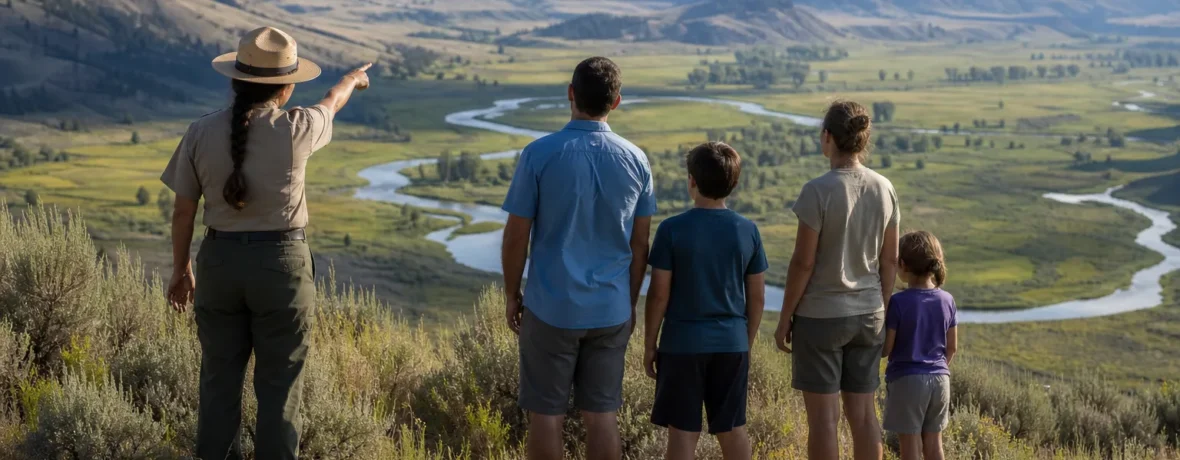
Why are national parks important? Yes, they matter because they protect more than 85 million acres [34.4 million ha] of public land, preserve natural and cultural history, support gateway towns, and give you access to places that should not be sold off, fenced off, or forgotten.
Why are national parks important?
National parks are important because they protect what private profit would often use up.
That is the blunt answer. A national park is a public promise: this canyon, wetland, battlefield, old-growth forest, desert basin, seashore, cave, trail, or ancestral place will not be treated like a short-term commodity. It will be managed for you, for the next hiker, and for people who are not born yet.
The National Park Service mission says it preserves natural and cultural resources “unimpaired” for enjoyment, education, and inspiration. That word matters. Unimpaired. Not polished into a theme park. Not stripped for one generation’s cash. Not loved to death without limits. The agency’s mission is rooted in the 1916 Organic Act, which you can read in the National Park Service mission statement.
As of November 2026, the National Park System includes 434 areas across the United States and its territories, including 64 places with the formal “National Park” title, according to the National Park Service FAQ and its current park list. That system is not just postcard country. It includes national monuments, historic sites, battlefields, recreation areas, scenic trails, seashores, lakeshores, and preserves.
That breadth is the point. America is not one view from one overlook. It is a messy, beautiful, painful, resilient landscape. National parks help us face the whole thing.
What would happen if we did not have national parks?
Without national parks, many irreplaceable places would be more vulnerable to extraction, subdivision, neglect, and cultural erasure.
Some people talk about parks as if they are luxuries. Nice to have. Good for vacation photos. That view is too small.
Without strong public protection, high-value landscapes tend to get carved into the most profitable pieces. River corridors become development corridors. Quiet valleys become roads and lots. Rare habitat becomes an inconvenience. Historic places become plaques in parking lots, if they survive at all.
National parks are not perfect shields. They face crowding, climate stress, underfunding, invasive species, wildfire risk, damaged trails, and political fights. Still, they create a legal and moral line in the dirt. Past this line, the public interest has weight.
That line matters every time you lace up your boots and step onto a trail you did not have to buy access to. It matters when a kid in Ohio can see dunes, when a family in Arizona can stand under volcanic rock spires, when a veteran can visit a battlefield, when a tribal history is treated as part of the national story rather than pushed aside.
Could all of that exist without national parks? Some of it, yes. All of it, at this scale, held in public trust? No.
How do national parks protect wildlife and wild places?
National parks protect wildlife by keeping habitat connected, limiting destructive uses, and managing land for long-term ecological health.
A park boundary is not magic. Elk, bears, condors, salamanders, bison, bats, desert tortoises, and migratory birds do not read maps. Water flows past signs. Smoke crosses roads. Climate pressure does not stop at an entrance station.
But protected cores still matter. They give species room to feed, breed, den, migrate, and recover. They keep wetlands from being drained just because the land is flat. They keep alpine plants from being trampled into dust by careless shortcutting. They keep old forests standing long enough to become something more complex than board-feet.
For hikers, this is where the romance of parks meets the responsibility of parks. You want the meadow, the summit, the canyon, the bear track in mud, the sound of wind through whitebark pine. Fine. Then you also have to accept closures, permits, shuttle systems, fire bans, and stay-on-trail signs when a place needs breathing room.
That is not bureaucracy for its own sake. That is stewardship.
| What parks protect | Why it matters on the ground | What you see as a hiker |
|---|---|---|
| Wildlife habitat | Animals need secure space for feeding, nesting, migration, and cover. | Tracks, calls, safe viewing chances, and living ecosystems. |
| Water and landscapes | Rivers, wetlands, glaciers, dunes, caves, and forests shape whole regions. | Clean creeks, intact views, stable trails, and fewer scarred slopes. |
| Cultural places | Historic and Indigenous places hold memory that should not be erased. | Ruins, structures, signs, ranger talks, and a fuller story. |
How do national parks help local communities?
National parks help local communities by drawing visitors who spend money in nearby towns.
This is the part even park skeptics should take seriously. Parks are not just scenery. They are economic engines for rural counties, small towns, guides, diners, motels, gear shops, shuttle drivers, campgrounds, grocery stores, and seasonal workers.
The National Park Service reported 323,014,305 recreation visits in calendar year 2025, with 13,016,577 overnight stays, according to its visitor use data. Those are not abstract numbers. They are trailhead breakfasts, gas stops, socks bought after a blister, rain jackets bought after a bad forecast, and motel rooms booked after a long day.
The most recent NPS visitor spending report available from the agency says 2024 park visitors spent $29 billion in nearby gateway communities, supporting $56.3 billion in national economic output and 340,100 jobs. Those figures come from the NPS economic contributions data.
Money is not the highest reason parks matter. If it were, every fragile place would be asked to justify itself like a shopping center. But the economic argument is real, and it matters in towns where the park is not a backdrop. It is payroll.
Are national parks only for tourists?
No, national parks are public lands for residents, students, hikers, historians, families, scientists, and future generations.
The tourist lens shrinks parks. It turns them into a checklist: Half Dome, Old Faithful, Angels Landing, Delicate Arch, Cadillac Mountain sunrise. Snap the photo. Buy the magnet. Move on.
That is one way to visit. It is not the best way.
National parks work best when you treat them less like attractions and more like shared inheritance. You do not need a grand road trip to belong in that inheritance. You can walk a short interpretive loop, volunteer on a trail crew, read a wayside sign, attend a ranger program, take your kids to a historic site, or sit quietly beside a river for twenty minutes.
You also do not need to chase the famous parks. The crowded icons get the attention, but the broader system carries much of the weight. National historic sites, monuments, battlefields, and recreation areas often tell sharper stories with fewer crowds and easier access.
Here is the opinion that should not be controversial: a park visit does not count more because it is extreme. You do not have to suffer, summit, or post. You have to pay attention.
How can you help protect national parks when you visit?
You protect national parks by making your visit smaller in impact and larger in respect.
That sounds simple because it is. The hard part is doing it when the parking lot is full, the overlook is crowded, the weather turns ugly, and your plan falls apart.
Use this trail-tested approach:
- Check the official park page before you go. Conditions, access, timed entry, road work, fire rules, and trail closures change. Use the park’s NPS.gov page, not a stale social post.
- Pick a backup hike. If your first-choice trail is packed or closed, do not force it. A quieter route often gives you the better day anyway.
- Stay on durable surfaces. Cutting switchbacks and widening trails damages the exact ground you came to enjoy.
- Give wildlife distance. A close animal photo is not worth a stressed animal, a ranger response, or a hospital trip.
- Pack out trash and food scraps. Orange peels, nut shells, and crumbs are still waste.
- Spend money locally with care. Eat in town, tip guides, respect residents, and do not treat gateway communities like your personal staging area.
- Speak up for funding and staffing. Trails, toilets, rescues, science, interpretation, and maintenance do not happen by vibes.
The National Park Service promotes the Leave No Trace Seven Principles as a practical framework for reducing damage. Follow them. Not because you are being graded, but because everyone behind you inherits your choices.
So, why do national parks matter?
National parks matter because they ask us to be less selfish with beauty.
That is the column in one sentence. Parks are a restraint. A gift, yes, but also a restraint. They tell a country built on speed, ownership, and consumption that some places should not be rushed, owned by the few, or consumed down to nothing.
They also remind you that public land is not an abstraction. It is dust on your calves. It is a cold railing at a memorial. It is a raven riding canyon air. It is a boardwalk over fragile ground. It is a ranger explaining a story you were never taught in school. It is the rare American space where the default answer is still: yes, you may enter.
That access comes with tension. More visitors can mean more strain. More attention can mean more pressure. More love can mean more damage. The answer is not to lock the gates or pretend every use is harmless. The answer is mature access: better planning, better funding, honest limits, and visitors who understand that freedom outdoors is tied to restraint.
National parks are not perfect. They never have been. But they are one of the clearest public statements this country has made: some places belong to everyone, and everyone has a duty to keep them whole.
That is why they matter. Not just for your next hike. For the next hundred years of hikers you will never meet.
Related reading
- Underrated National Parks Worth Your Time
- How National Parks Began
- Are National Parks Too Crowded?
- Should National Parks Charge More?
FAQ
Why are national parks important in simple terms?
National parks are important because they protect land, wildlife, history, and public access. They keep special places from being lost to short-term development or neglect.
How many national parks are there in the United States?
As of November 2026, the National Park Service lists 64 official national parks within a broader system of 434 areas. The broader system includes monuments, historic sites, battlefields, recreation areas, seashores, trails, and other protected units.
Do national parks help the economy?
Yes. NPS data shows 2024 visitors spent $29 billion in gateway communities, supporting $56.3 billion in national economic output and 340,100 jobs.
Are national parks mainly about nature?
No. Many parks protect wildlife and scenery, but the system also preserves cultural places, historic buildings, battlefields, trails, and stories that shape the country’s memory.
What is the biggest threat to national parks?
There is no single threat. Crowding, climate pressure, habitat damage, underfunding, invasive species, deferred maintenance, and careless visitor behavior all put pressure on parks.
What can one hiker do to help national parks?
One hiker can reduce impact by planning ahead, staying on trail, packing out trash, respecting closures, giving wildlife space, and supporting park funding. Small choices add up when millions of people make them.