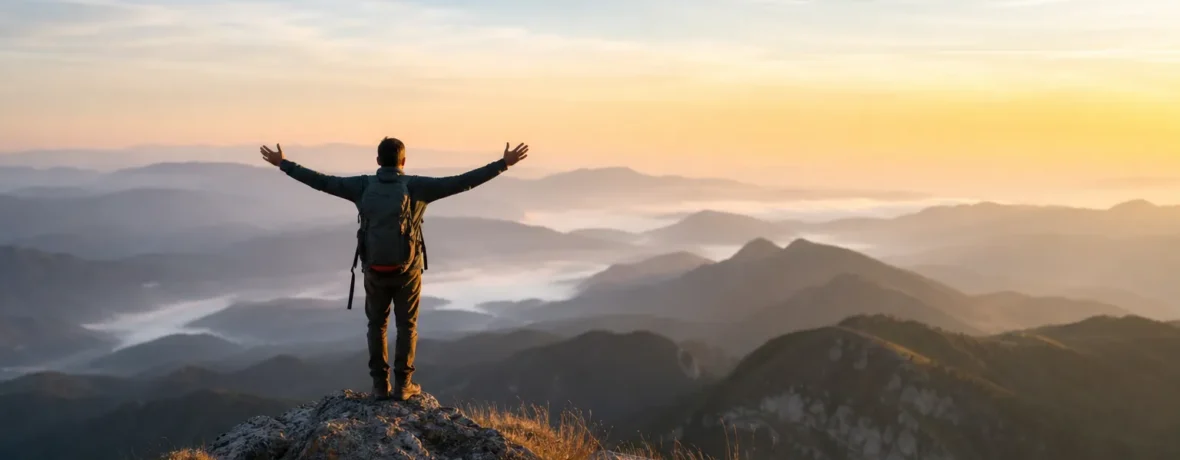
Why do people hike? Most hikers go because a trail gives them three things at once: movement, quiet, and a clear goal. In 1 to 6 hours, you can work your legs, reset your head, spend time with people you like, or be alone without needing much more than shoes, water, and a plan.
Why do people hike instead of just walking?
People hike because hiking adds terrain, scenery, and purpose to a walk.
A neighborhood walk is useful. A treadmill has its place. But hiking changes the deal. You climb. You descend. You step over roots, cross gravel, pause at overlooks, and feel the weather shift on your face. That variety keeps your brain awake and your body engaged.
Hikers often talk about the same pull: the trail makes effort feel less like exercise and more like going somewhere. A 3-mile [4.8-km] loop with 600 feet [183 m] of gain can feel more memorable than 3 miles [4.8 km] on pavement because the trail gives you little problems to solve the whole way.
There is also a clean start and finish. Trailhead. Summit. Lake. Waterfall. Loop complete. That structure scratches a very human itch: pick a target, move toward it, reach it, come home tired in a good way.
What do hikers get out of hiking?
Hikers get fitness, stress relief, time outside, connection, confidence, and a break from screens.
If you ask hikers why they keep going back, the answers usually land in a few buckets. Some want stronger legs and lungs. Some want a quiet place to think. Some want a low-cost Saturday plan. Some want miles with a friend where the conversation comes easier because nobody has to stare across a table.
Here is the simple version:
| Reason hikers go | What it feels like on trail | What you may take home |
|---|---|---|
| Fitness | Climbing, sweating, breathing harder | Stronger legs, better endurance, steadier balance |
| Stress relief | Quieter surroundings, fewer interruptions | A calmer head and looser shoulders |
| Adventure | New views, changing terrain, small unknowns | Stories, confidence, curiosity |
| Connection | Shared miles with friends, family, or a group | Better conversations and a stronger bond |
Is hiking good for your body?
Yes, hiking can be good for your body when you match the trail to your fitness and build up gradually.
Hiking is walking with extra texture. The climbs work your glutes, calves, quads, and lungs. The descents ask more from your knees and stabilizing muscles. Uneven ground trains balance in a way flat sidewalks do not.
The CDC adult physical activity guidelines say adults need 150 minutes of moderate-intensity physical activity each week, as of November 2026. A couple of moderate hikes can cover a big slice of that target, especially if you are moving briskly enough that you can talk but not sing.
The health benefits are not limited to big mountain days. The Mayo Clinic notes that regular brisk walking can support heart health, endurance, bones, muscles, mood, memory, sleep, and physical function. Hiking builds on that by adding grade, surface changes, and often a longer outing.
Start smaller than your ego wants. A 2-mile [3.2-km] trail with 300 feet [91 m] of elevation gain is plenty for a first outing if you have been inactive. The best hike is not the one that crushes you. It is the one that makes you want another hike next week.
Is hiking good for your mind?
Yes, hiking can support mental well-being, especially because it combines movement, nature, and time away from constant input.
Hikers often say the first 20 minutes are noisy inside their head. Then the rhythm takes over. Step, breath, rock, bird, switchback. The mental tabs start closing.
The NIH Emotional Wellness Toolkit lists regular exercise and walking as ways to help manage stress and support emotional health. Hiking is not therapy, and it is not a cure for anxiety, depression, grief, burnout, or trauma. But it can be a sturdy habit that gives your nervous system a quieter place to land.
There is also the attention shift. On a trail, you look farther than a laptop screen. You listen for water, wind, or people coming around a bend. You notice footing. That kind of attention is active but not frantic. For many hikers, that is the magic.
Why do people hike alone?
People hike alone because solitude makes the day simpler and more personal.
Solo hiking lets you choose the pace, the breaks, the route, and the turnaround point. Nobody complains that you are too fast. Nobody pushes you when you want to sit on a log and eat trail mix for 12 minutes. You get to hear your own thoughts without performing for anyone.
That said, solo hiking asks for more responsibility. Leave your plan with someone. Check the forecast. Carry the basics. Turn around early if the trail, weather, daylight, or your body starts sending warnings.
A solo day does not need to be remote or heroic. A marked 2- to 5-mile [3.2- to 8-km] loop with cell service and steady foot traffic can still give you quiet without stacking the odds against you.
Why do people hike with groups?
People hike with groups because shared effort builds quick connection.
Conversation feels different on a trail. You are side by side, not locked into eye contact. Silences are normal. A hard climb gives everyone the same small problem, and reaching the viewpoint together feels earned.
Group hikes also lower the barrier for beginners. Someone may know the route. Someone may have an extra water filter. Someone may explain why cotton socks are a bad idea after the first muddy mile. You learn faster around people who already know the small trail habits.
Before joining a group hike, check:
- The distance in miles and kilometers
- The elevation gain in feet and meters
- The expected pace
- Whether dogs are allowed
- What gear you are expected to carry
- The turnaround time and expected finish time
How do you start hiking if you’re new?
Start with an easy, popular trail close to home and make the first hike almost too manageable.
New hikers get into trouble when they copy someone else’s highlight reel. Do not start with a huge summit because it looked good online. Build the habit first. Bigger trails will still be there.
- Pick a short trail. Aim for 1 to 3 miles [1.6 to 4.8 km] with modest elevation gain for your first hike.
- Check the route. Know if it is a loop, out-and-back, or point-to-point before you leave the trailhead.
- Look at the weather. Wind, heat, cold, lightning, and rain matter more when you are exposed.
- Carry water and snacks. Even short hikes feel better when you are not thirsty or running on fumes.
- Wear decent footwear. You do not need expensive boots for every trail, but you do need shoes with traction.
- Tell someone your plan. Share the trail name, start time, and expected return.
- Turn around with pride. Quitting early because conditions changed is good judgment, not failure.
What should you bring on a hike?
Bring enough to handle thirst, weather, darkness, navigation, and small injuries.
For a short local hike, your kit can be simple. For longer, colder, hotter, or more remote hikes, carry more margin. The point is not to pack for a disaster movie. The point is to avoid turning a small mistake into a long, miserable afternoon.
- Water
- Snacks with salt and calories
- Map, downloaded route, or GPS app
- Sun protection: hat, sunglasses, sunscreen
- Extra layer or rain shell
- Headlamp or small flashlight
- Basic first-aid items
- Phone with charged battery
- Trash bag for your own litter
When to see a doctor
See a doctor before hiking harder trails if you have a chronic condition, have been inactive, or get concerning symptoms during activity.
The CDC recommends starting slowly and says people with chronic conditions may want to talk with a health care provider about the right types and amounts of physical activity. This is especially smart if you have heart disease, lung disease, diabetes, severe joint pain, balance problems, or a recent surgery or injury.
Stop hiking and seek urgent medical help if you have chest pain or pressure, pain spreading to the jaw, neck, back, shoulder, or arm, fainting, severe shortness of breath, confusion, or blue lips or nails. The CDC lists chest discomfort, shortness of breath, nausea, light-headedness, unusual tiredness, and upper-body pain among possible heart attack symptoms.
For heat illness, dehydration, altitude symptoms, allergic reactions, or injuries, do not try to “tough it out” when symptoms are getting worse. Turn around, get help, and let a medical professional make the call.
Related reading
- Why Do People Climb Mountains?
- Why People Stack Rocks and Why It's a Problem
- Why Do People Walk the Camino?
- How Many People Have Climbed Everest?
FAQ
Why do people like hiking so much?
People like hiking because it gives them movement, scenery, and a mental reset in one simple activity. You do not need a team, a court, or a complicated skill set to start.
Why is hiking better than walking?
Hiking is not always better than walking, but it usually adds terrain, elevation, views, and a stronger sense of adventure. Walking is easier to do daily; hiking often feels more memorable.
Do people hike for mental health?
Yes, many people hike to reduce stress, clear their head, or get space from screens and noise. Hiking should not replace professional mental health care, but it can support a healthier routine.
Is hiking a good way to get fit?
Yes, hiking can build endurance, leg strength, and balance when you do it consistently. Start with short trails and increase distance or elevation slowly.
Why do some people hike alone?
Some people hike alone because they want quiet, freedom, and control over the pace. Solo hikers should choose suitable trails, tell someone their plan, and turn back early when conditions change.
What is the main reason people hike?
The main reason is usually a mix of exercise and escape. Hikers want to move their bodies, see something real, and come back feeling clearer than when they started.