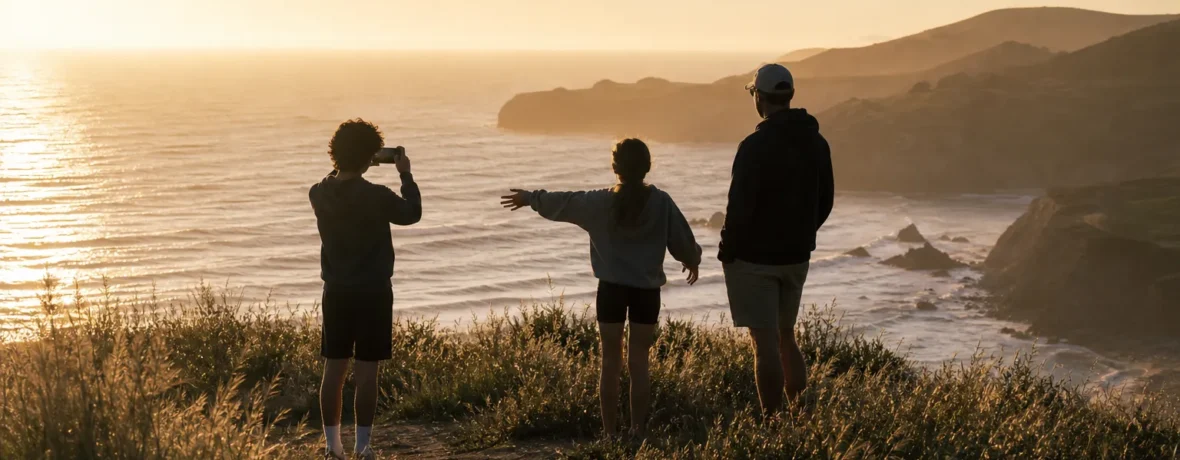
Hiking with teenagers works best when you give them real control: choose a trail under 5 miles [8 km] for the first few outings, let them help set the pace, feed them before moods drop, and build in a purpose beyond “getting outside.” Yes, teens will hike—if the trip respects them.
Teenagers are not oversized little kids. They can carry more, think faster, complain sharper, and spot fake enthusiasm from 200 yards [183 m] away. If the hike feels like a lecture with boots, you lose them. If it feels like a mission, a hangout, a challenge, or a break from adults talking at them, you have a chance.
The goal is not to force a lifelong trail identity in one Saturday. The goal is to create enough good trail memories that they say yes next time.
How do you make hiking with teenagers fun?
Give them ownership, not a forced nature lesson.
Teen engagement starts before anyone laces up. If you pick the trail, pack the snacks, set the pace, control the photos, and deliver mini-sermons on gratitude, your teen is just cargo with opinions. Flip that. Give them decisions that actually matter.
- Offer three trail choices. Not twelve. Three. Give the mileage, drive time, scenery, and difficulty. Let them choose.
- Let them control one part of the day. Music for the drive, snack selection, photo stops, lunch spot, or route tracking.
- Set a clear finish line. “We’re hiking to the overlook, eating lunch, then heading back” lands better than “we’ll see how far we get.”
- Invite a friend when it makes sense. A teen who drags on family walks may turn into a different person with a peer beside them.
- Build in a reward that is not cheesy. Burgers, coffee drinks, tacos, ice cream, a gear-store stop, or quiet time at home all count.
Fun also means dropping the pressure to be amazed. Some teens will not gasp at a waterfall. Fine. They still noticed it. Let the trail work quietly.
What is the best hiking distance for teenagers?
Start with 2 to 5 miles [3.2 to 8 km], then increase only after the first hike ends well.
A fit teenager may be physically able to hike farther, but engagement is not only fitness. It is sleep, mood, weather, footwear, hunger, social energy, and whether they wanted to come in the first place. Your first win is a teen who gets back to the car with something left in the tank.
| Teen hiking situation | Good starting distance | Best trail style | Why it works |
|---|---|---|---|
| Reluctant beginner | 1 to 3 miles [1.6 to 4.8 km] | Loop, overlook, creek, boardwalk | Fast payoff, low commitment |
| Active but new to trails | 3 to 5 miles [4.8 to 8 km] | Rolling terrain with a destination | Feels like a real outing without dragging |
| Sporty and motivated | 5 to 8 miles [8 to 12.9 km] | Summit, lake, ridge, or waterfall | Challenge plus a clear reward |
| Experienced teen hiker | 8+ miles [12.9+ km] | Varied terrain with bail-out options | Room to push while staying flexible |
Elevation gain changes everything. A 3-mile [4.8 km] climb can feel harder than a flat 6-mile [9.7 km] river walk. Heat, mud, altitude, and rocky footing also raise the effort. When choosing, look at distance, elevation gain, trail surface, shade, water access, and the drive home.
How do you motivate a teenager who does not want to hike?
Do not sell the hike as medicine.
Teens can hear the hidden message behind “fresh air will be good for you.” It sounds like correction. Try a cleaner pitch: “I want to do this trail Saturday. Come with me, pick the lunch stop, and we’ll keep it under 3 miles [4.8 km].”
Give them a real out sometimes. If every invitation is mandatory, hiking becomes another chore. A teen who can decline one trip is more likely to trust the next invite.
Use motivation that fits their personality:
- The social teen: Invite a friend or choose a busy scenic trail with a lively overlook.
- The competitive teen: Track elevation gain, time a hill climb, or let them lead the final stretch.
- The creative teen: Give them the camera, let them film clips, or make the hike a photo challenge.
- The stressed teen: Pick a quiet route and do not fill every silence.
- The food-driven teen: Pack better trail food. Not emergency crumbs. Actual good food.
Skip guilt. Skip speeches. A short, good hike beats a long hike that ends with slammed doors.
What should teenagers carry on a day hike?
They should carry their own water, food, layers, and basic safety items.
A teen with a pack is not just helping you. They are learning trail responsibility. Keep the load reasonable, but do not make them helpless. The National Park Service Ten Essentials are a strong framework for day hikes, especially when weather, terrain, or cell service can change the plan.
For most teen day hikes, pack this:
- Water in bottles or a hydration reservoir
- Salty snacks plus one food item they actually like
- Rain shell or wind layer
- Warm layer in cooler seasons or higher elevations
- Sun protection: hat, sunglasses, sunscreen
- Small first-aid kit
- Headlamp or small flashlight
- Map, downloaded offline map, or GPS app with battery power
- Whistle
- Personal medication, if they use any
- Trash bag or zip-top bag for wrappers
Footwear matters more than the label. Trail runners, hiking shoes, or boots can all work if they fit, have tread, and do not rub. New boots on a teen’s first hike are risky. Break them in on walks near home before asking for miles.
How can phones help instead of ruin the hike?
Use the phone as a tool, not the enemy.
A phone can distract, yes. It can also track distance, identify peaks, take photos, save maps, check radar before the hike, and give a teen a sense of control. The trick is setting phone expectations before the trailhead.
Try this: “Use it for photos, maps, and music with one earbud if the trail is safe for it. Keep enough battery for the way back.” That is more workable than a blanket ban.
Good phone jobs for teens include:
- Taking the “before” and “summit” photos
- Tracking mileage and elevation
- Watching the map at junctions
- Checking the time for snack breaks
- Making a short video recap after the hike
One caution: do not let a screen replace awareness. At road crossings, stream crossings, cliff edges, steep descents, and wildlife encounters, phones go away. Say it plainly. No drama needed.
How do you handle complaining on the trail?
Respond to the need under the complaint first.
“This is stupid” can mean hungry, tired, hot, embarrassed, bored, sore, or mad that they had no choice. If you argue with the sentence, you miss the problem. Run through the basics before you react.
- Hungry? Stop and feed them before the mood drops further.
- Thirsty? Take a water break in shade.
- Too hot or cold? Adjust layers, pace, or route.
- Sore feet? Check socks, laces, hot spots, and shoe fit.
- Bored? Give them a job: lead, navigate, choose the next break point.
- Angry? Walk quietly for 10 minutes. Not every mood needs fixing out loud.
Do not mock them for struggling. Adults complain on trails too; they just call it “assessing conditions.” If the teen is safe but sour, keep your tone steady and shorten the goal. “Let’s get to that bend, snack, and decide” works better than “stop being negative.”
What trail rules should teenagers know?
Teach the rules as trail skills, not manners lectures.
Teens usually respond better to competence than scolding. Trail etiquette is part of knowing what you are doing. The National Park Service summary of Leave No Trace covers the core habits: plan ahead, stay on durable surfaces, pack out trash, leave natural objects, reduce fire impact, respect wildlife, and consider other visitors.
For teenagers, keep it direct:
- Stay on the trail unless the route clearly allows otherwise.
- Pack out every wrapper, fruit peel, tissue, and bottle cap.
- Step aside for uphill hikers when the trail is narrow.
- Keep music private with earbuds where allowed, not a speaker.
- Never throw rocks from overlooks or cliffs.
- Give wildlife space. Photos from a distance are enough.
- Do not carve names, stack rocks, or take artifacts.
If you want a teen to care, connect the rule to a real consequence. Orange peels do not belong on the ground because they change the place for animals and for the next hiker. Loud music is not a personality crime; it just takes the trail away from everyone else.
How do you keep teenagers safe without hovering?
Set firm boundaries, then give them room inside those boundaries.
Teens hate being micromanaged, but they still need structure outdoors. Say the non-negotiables before the hike starts. Then back off when they are meeting them.
Use clear trail agreements:
- No one passes a signed junction without regrouping.
- The lead hiker stops anywhere the trail becomes unclear.
- The group waits at water crossings, road crossings, and exposed overlooks.
- Everyone carries water and a layer, even on short trails.
- If someone says “stop,” the group stops.
- If weather turns, the plan changes without debate.
Give one teen the lead and another the sweep if you have multiple teens. Rotate roles. Leadership keeps them alert, and it gives restless energy somewhere useful to go.
For ticks, the CDC recommends preventing tick bites with EPA-registered repellents, treated clothing or gear, staying aware in brushy areas, and checking your body after time outdoors. Build tick checks into the post-hike routine, especially during warm seasons and in grassy or wooded terrain.
When to see a doctor
Get medical help fast for severe symptoms, worsening symptoms, or injuries that do not improve.
Hiking can bring heat illness, sprains, allergic reactions, dehydration, and tick bites into the picture. This guide cannot diagnose your teen. When symptoms are serious, unusual, or getting worse, choose medical care over waiting it out.
For heat, the CDC heat illness guidance treats heat stroke as a medical emergency. Warning signs can include confusion, loss of consciousness, very high body temperature, or hot skin. Move the person out of heat, cool them, and call emergency services if severe symptoms appear.
For ankle twists and similar injuries, Mayo Clinic sprain first aid says to seek emergency help if the injured person cannot bear weight, has severe pain, or has numbness in the area. Contact a healthcare professional if a sprain does not improve after two or three days.
For heat planning in remote terrain, the Wilderness Medical Society heat illness guidelines are written for wilderness and outdoor settings. For families, the practical takeaway is simple: prevent overheating early, change plans when conditions are unsafe, and do not push a teen through serious heat symptoms.
How do you make the next hike easier?
End the current hike before everyone is cooked.
The final mile [1.6 km] teaches the strongest lesson. If the day ends with yelling, blisters, thirst, and a silent drive home, that becomes the memory. If it ends with food, dry socks, and a teen saying “that wasn’t terrible,” you have a win.
After the hike, keep the debrief short:
- What part was best?
- What part was annoying?
- Was the distance too short, right, or too long?
- What snack should come next time?
- Would you rather do a summit, creek, forest, beach, or waterfall trail?
Then use the answers. If they hated the steep climb, do not choose a steeper climb next weekend to “build character.” If they loved the creek, find another water trail. Engagement grows when teens see that their feedback changes the plan.
Also, let the hike breathe. You do not need to schedule another one immediately. A good trail day can sit in the background for a while and make the next invitation easier.
Related reading
- A Walk in the Woods: Bill Bryson's AT Story vs Reality
- Kids' Hiking Boots: How to Size and When to Buy
- Mountain Porters: The People Who Carry Expeditions
- Teaching Leave No Trace to Kids
FAQ
What age is best to start hiking with teenagers?
Any teen age can work if the hike matches their interest and fitness. A 13-year-old beginner may need a short scenic loop, while a 17-year-old athlete may enjoy a longer route with elevation and a clear destination.
Should I let my teenager bring a friend hiking?
Yes, if you can supervise safely and the friend is prepared. A friend can turn hiking from a family obligation into a social outing, but you still need enough food, water, gear, and space in the plan for everyone.
How much water should a teenager bring on a hike?
Bring enough for the trail length, heat, elevation, and your teen’s needs. For short, mild hikes, one bottle may be enough; for hot, exposed, or longer hikes, carry more and plan refill options only where safe treated water is available.
What if my teenager refuses to hike?
Do not turn every refusal into a battle. Offer limited choices, keep the first hike short, pair it with food or a friend, and let them skip some outings so the invitation does not always feel like a command.
Are earbuds okay while hiking?
One earbud at low volume can be fine on simple trails where awareness is easy. Earbuds should come out near roads, junctions, cliffs, stream crossings, wildlife, bikes, horses, and any place where hearing matters for safety.
How do I keep hiking from feeling like punishment?
Let your teen help choose the trail, pace, snacks, and goal. Keep lectures off the trail, end before exhaustion takes over, and make the day feel like shared time rather than forced self-improvement.