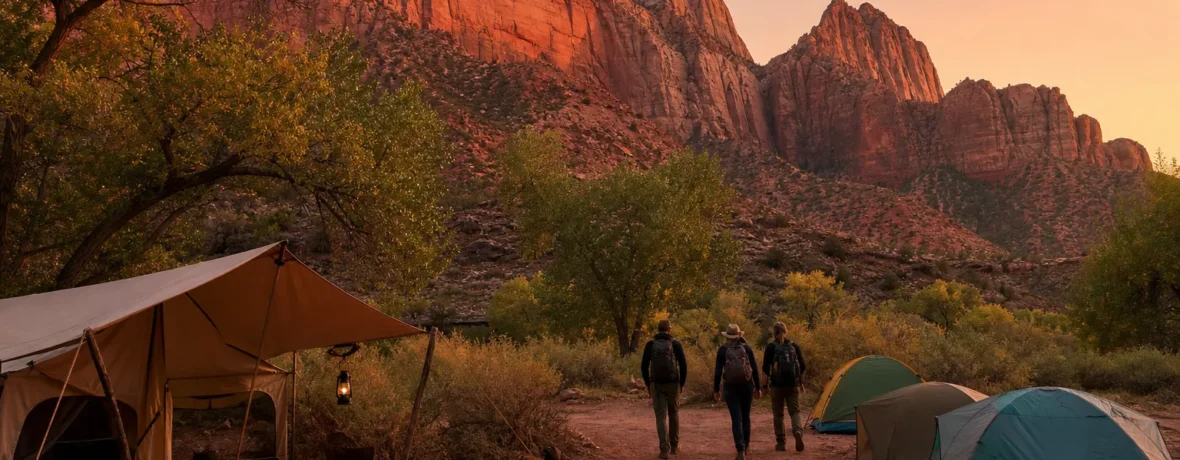
The best answer to where to stay in Zion National Park is Zion Lodge for canyon access, Watchman or South Campground for camping near the shuttle, and Springdale for the easiest hotel base outside the gate. Zion has 1 in-park lodge and 3 in-park campgrounds; most visitors should book months ahead.
Where should you stay in Zion National Park for the first time?
Stay in Zion Canyon or Springdale if this is your first Zion trip.
That keeps the logistics simple. You can wake up close to the South Entrance, walk or shuttle to the visitor center, and spend your energy on trails instead of windshield time. Zion rewards early starts. If you want Angels Landing, The Narrows, Emerald Pools, Riverside Walk, or Scout Lookout, being near the main canyon is the cleanest move.
Inside the park, your choices are narrow: Zion Lodge or an in-park campground. Outside the park, Springdale sits right at the South Entrance and works like Zion’s trail-town basecamp. It has hotels, restaurants, outfitters, grocery stops, and the Springdale shuttle during shuttle season.
| Best base | Best for | Tradeoff |
|---|---|---|
| Zion Lodge | Fastest access to Zion Canyon trails | Limited rooms; books early |
| Watchman or South Campground | Camping near the visitor center | Hot, exposed sites in summer |
| Springdale | Hotels, food, outfitters, easy shuttle access | Higher demand and higher rates in peak seasons |
| East Zion, Kanab, Hurricane, or St. George | More lodging options, road trips, quieter nights | More driving to reach Zion Canyon |
Can you stay inside Zion National Park?
Yes, but options inside Zion are limited to Zion Lodge and three park campgrounds.
Zion Lodge is the only lodging inside Zion National Park. As of November 2026, the National Park Service lists 76 hotel rooms, 6 suites, and 40 historic cabins at the lodge. It sits in Zion Canyon, north of Canyon Junction, with shuttle access and nearby trailheads.
The big perk is location. You are already in the canyon when day visitors are still parking, waiting, or riding in from town. For hikers, that matters. The lodge is close to Emerald Pools, The Grotto Trail, and Sand Bench Trail, and shuttle stop access puts the rest of the canyon within reach.
The catch is availability. There is only one lodge. If you want a room during spring, fall, holidays, or any Angels Landing/Narrows dream window, book as early as your plan allows.
Zion Lodge also has the only food service inside the park boundary, according to NPS. That does not mean you should show up without snacks. Zion hiking days stretch long, and canyon heat can turn a casual afternoon into a grind. Carry more food and water than you think you’ll need.
Where to stay near Zion National Park if the lodge is full?
Springdale is the best place to stay near Zion National Park when Zion Lodge is full.
Springdale hugs the South Entrance, so you still get a low-friction Zion trip. Many visitors can leave the car parked at their hotel, ride the town shuttle to the pedestrian entrance, walk into the park, and connect to the Zion Canyon shuttle. That is exactly the kind of simple system you want before a long hike.
Stay in Springdale if you want:
- Quick access to the Zion Canyon Visitor Center
- Restaurants after a long trail day
- Gear rentals for The Narrows
- A hotel room instead of a campsite
- Less driving during peak shuttle season
If Springdale is packed or pricey, widen the circle. Rockville sits just west of Springdale and feels quieter. Hurricane and La Verkin give you more budget-style choices and work well if you have a car. St. George has the most services and a broader hotel spread, but it puts you farther from the canyon. Kanab is better if your trip mixes Zion’s east side with Bryce Canyon, Coral Pink Sand Dunes, or Grand Staircase-Escalante.
Is Springdale the best town to stay in for Zion?
Yes, Springdale is the best town for most Zion hikers.
It wins because it solves the two biggest Zion headaches: parking and timing. During busy periods, the main canyon runs on shuttles, and parking at the visitor center can fill early. A Springdale stay lets you move with less stress. Wake up. Eat. Walk or shuttle. Start hiking.
Springdale is especially strong for these itineraries:
- Angels Landing or Scout Lookout: You want the earliest practical start and a smooth ride to The Grotto.
- The Narrows bottom-up: You may need rental shoes, socks, a walking stick, and shuttle access to Temple of Sinawava.
- Short family hikes: Riverside Walk, Pa’rus Trail, and Lower Emerald Pools are easier when you are not adding long drives.
- Car-light travel: Springdale gives you food, lodging, outfitters, and park access in one compact strip.
The downside is demand. Springdale is popular because it works. If you are traveling in March through May or September through October, don’t treat lodging as an afterthought.
What are the best campgrounds in Zion National Park?
Watchman Campground is the best all-around campground for Zion Canyon access.
As of November 2026, NPS lists three campgrounds in Zion National Park: Watchman, South, and Lava Point. Reservations are required for park campgrounds, and NPS says sites are full almost every night from mid-March through late November.
Watchman Campground sits by the South Entrance near the Zion Canyon Visitor Center. It is open year-round, and Recreation.gov lists Watchman reservations up to 6 months in advance, as of November 2026. This is the campground to chase if you want the best mix of canyon access, shuttle access, and Springdale convenience.
South Campground is also near the South Entrance. As of November 2026, Recreation.gov lists South Campground as seasonal, with reservations available up to 14 days before arrival. It’s a smart backup if you are flexible and can pounce when the booking window opens.
Lava Point Campground sits high on Kolob Terrace Road, far from the South Entrance corridor. It is a cooler, quieter, more remote choice, not the best base for first-time Zion Canyon hikers. As of November 2026, Recreation.gov describes Lava Point as roughly 1 hour and 20 minutes from the South Entrance. Pick it for solitude, not convenience.
Zion’s main campgrounds are desert campgrounds. NPS warns that summer daytime temperatures in the South Entrance area often exceed 95°F [35°C]. Shade is limited. A campsite can look dreamy at sunset and feel like an oven by lunch.
Do you need reservations, permits, or shuttle tickets to stay in Zion?
You need reservations for lodging and campgrounds, but not for general park entry or the shuttle.
As of November 2026, NPS says you do not need a ticket, permit, or reservation to enter Zion National Park or ride the Zion shuttle. You do need to pay the park entrance fee or use a valid pass. As of November 2026, NPS lists standard entrance passes at $20 to $35.
Do not mix that up with hike-specific permits. Angels Landing is the big one. As of November 2026, NPS requires a permit for the chains section from Scout Lookout to Angels Landing. You can still hike to Scout Lookout without continuing onto the chains section, but the final exposed ridge requires the permit.
Backpacking is different too. As of November 2026, NPS requires wilderness permits for overnight backpacking trips in Zion. If your “lodging” plan is a backcountry campsite, build your trip around that permit process first.
How do you choose the right Zion base for your hiking plan?
Choose your lodging by trail access first, then comfort, then price.
Here is the simple way to narrow it down:
- Pick your must-do hike. Angels Landing, The Narrows, Emerald Pools, Observation Point, and Kolob Canyons do not all start from the same place.
- Check the season. Shuttle season, summer heat, winter road conditions, and monsoon storms can change how a base feels.
- Decide how early you want to start. If the answer is “before everyone else,” stay inside the park or in Springdale.
- Match your sleep style. Zion Lodge for comfort inside the canyon, campground for low-cost proximity, Springdale for convenience, Kanab or St. George for broader trip planning.
- Book the hard part first. Lodge rooms, Watchman sites, South Campground openings, and Angels Landing permits can shape the whole trip.
- Recheck official conditions before you drive. Trails, roads, campgrounds, and shuttle schedules can change. Use the official Zion current conditions page before departure.
Where should you stay for The Narrows, Angels Landing, and other classic hikes?
Stay in Zion Canyon or Springdale for The Narrows, Angels Landing, Scout Lookout, Riverside Walk, and Emerald Pools.
Those hikes are tied to the main canyon shuttle system. The closer you sleep to that system, the better your day starts. Zion Lodge gives you the inside-the-canyon advantage. Watchman, South, and Springdale give you fast access to the visitor center, where the canyon shuttle begins.
For The Narrows, Springdale has another advantage: outfitters. Cold water, slippery rock, and long hours in the Virgin River make footwear and insulation choices matter. Staying in town makes it easier to pick up and return rental gear.
For Angels Landing, your real lodging goal is calm timing. You need to reach The Grotto, hike to Scout Lookout, and have the correct permit if you plan to continue onto the chains. A close base cuts out avoidable friction.
For Observation Point, check current trail access before booking around it. Long-term rockfall closures have changed access from Zion Canyon, and NPS current conditions should guide your plan.
What should you pack for a Zion hotel or campground stay?
Pack for heat, sun, shuttle logistics, and sudden weather.
Your lodging choice changes your comfort level at night, but the hiking kit stays serious. Zion is canyon country. The sun reflects off pale rock, shade can vanish, and storms upstream can affect narrow canyons even when the sky above you looks innocent.
- Daypack with room for water, layers, snacks, and a headlamp
- Sun hoodie or long-sleeve shirt rated for sun protection
- Wide-brim hat and sunglasses
- Sturdy hiking shoes with grip
- Extra socks, especially for water hikes
- Refillable water bottles or hydration reservoir
- Electrolyte packets for hot days
- Small first-aid kit
- Rain shell during monsoon season and shoulder seasons
- Printed or saved reservation details
- Entrance pass, photo ID, and permit confirmations if needed
Campers should add shade, a cooler plan, and a sleep setup that can handle warm nights. Hotel hikers should still pack like the day might run longer than planned.
Related reading
- Where to Stay in Yosemite for Hikers
- Where to Stay in Glacier National Park
- What to Do in Zion National Park: Hikes by Difficulty
- Las Vegas to Zion: Distance, Drive and Day-Trip Plan
FAQ
What is the best place to stay in Zion National Park?
Zion Lodge is the best place to stay inside the park. It puts you in Zion Canyon with direct shuttle and trail access, but rooms are limited and should be booked early.
Is it better to stay in Zion or Springdale?
Stay in Zion if you can get Zion Lodge or a campground reservation and want maximum trail access. Stay in Springdale if you want more lodging choices, restaurants, outfitters, and easy access to the South Entrance.
How many days should you stay in Zion?
Stay 2 to 3 full days for a strong first trip. That gives you time for one big hike, several shorter canyon hikes, and weather or shuttle delays without making the trip feel rushed.
Can you sleep in your car in Zion National Park?
No, not wherever you want. Overnight stays must be in approved lodging, campgrounds, or permitted wilderness sites, so reserve a legal campsite or room before you arrive.
Where should you stay for The Narrows?
Stay at Zion Lodge, Watchman Campground, South Campground, or in Springdale. These bases give you the simplest access to the Zion Canyon shuttle and make it easier to handle early starts and gear rentals.
What is the cheapest area to stay near Zion?
Hurricane, La Verkin, and St. George often have more budget-friendly lodging than Springdale. You will usually trade lower nightly cost for a longer drive to the Zion Canyon shuttle and South Entrance.