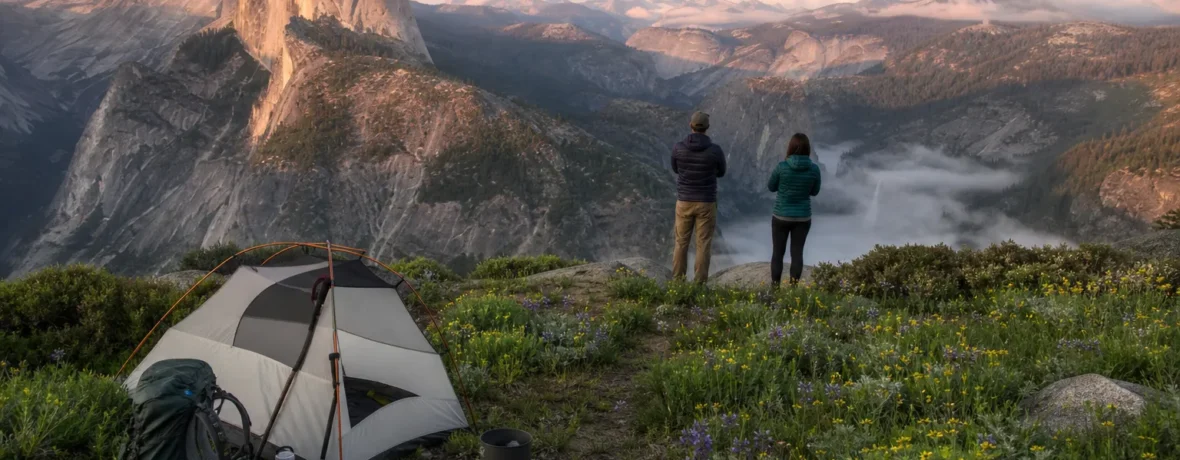
Choose Yosemite Valley for first-time hikers, Tuolumne Meadows for high-country trails, Wawona for Mariposa Grove and quieter south-side days, and El Portal when in-park rooms are gone. Book lodging 366 days ahead or campgrounds at their release windows.
Where should hikers stay in Yosemite National Park?
Most hikers should start with Yosemite Valley.
Yosemite is huge, and the wrong base can turn your “quick trail morning” into a long drive before you even tighten your laces. If your hiking wish list includes the Mist Trail, Yosemite Falls, Mirror Lake, Half Dome, Four Mile Trail, or the Valley Loop, stay in Yosemite Valley if you can.
The Valley puts you close to the densest cluster of famous trailheads, shuttle stops, food, ranger information, and post-hike showers or beds. It is also the hardest place to book. That is the trade.
For hikers, the best Yosemite base depends on your main trails:
| Best base | Best for | Trade-off |
|---|---|---|
| Yosemite Valley | Mist Trail, Yosemite Falls, Mirror Lake, Valley Loop, Half Dome starts | Most competitive lodging and camping |
| Tuolumne Meadows | High-country hikes, granite domes, alpine lakes, quieter summer trailheads | Seasonal access and far from Valley trails |
| Wawona | Mariposa Grove, south-side hikes, slower evenings | Longer drive to classic Valley trailheads |
| El Portal, Mariposa, Oakhurst, Fish Camp, Groveland | Late bookings, more lodging variety, road-trip flexibility | Daily entrance drives |
Where to stay in Yosemite National Park for classic Valley hikes?
Stay in Yosemite Valley if your trip is built around the big-name trails.
The Valley is the practical choice for hikers who want to wake up close to granite walls and start early. That early start matters. Trails like Yosemite Falls and the Mist Trail get busy, sunny, and hot, and parking can become a chore during peak periods.
The main in-Valley lodging options are Yosemite Valley Lodge, The Ahwahnee, Curry Village, and Housekeeping Camp. The National Park Service says Yosemite lodging inside the park is managed by Yosemite Hospitality, with reservations available 366 days in advance and strongly recommended from spring through fall and during holidays, as of November 2026. Check the official Yosemite lodging page before you plan around any specific property.
For hikers, each Valley option has a different feel:
- Yosemite Valley Lodge: Best if Yosemite Falls is high on your list. It has a lodge setup, nearby food, and easy access to the west Valley.
- Curry Village: Best if you want a rustic base near shuttle access for Happy Isles, the usual launch point for Mist Trail, John Muir Trail, and Half Dome routes.
- The Ahwahnee: Best if you want the most polished in-park stay and still want quick access to Valley paths and shuttle stops.
- Housekeeping Camp: Best if you want a simple, open-air, river-adjacent stay without full hotel polish.
The NPS lists several Yosemite Valley day hikes with exact distances: Lower Yosemite Fall is 1 mile (1.6 km) for the loop, Mirror Lake ranges from 2 miles (3.2 km) to 5 miles (8 km), Yosemite Falls can run 7.2 miles (11.6 km) round trip to the top, and Half Dome is 14 to 16.4 miles (22.4 to 26.2 km) round trip. Use the official Yosemite Valley day hikes guide when matching lodging to trailheads.
Where to stay in Yosemite if you want to camp?
Camp inside the park only if you already have a reservation.
Yosemite camping is fantastic for hikers because you can sleep close to the trail system, make coffee in the dark, and hit the path before the tour buses settle in. But you cannot wing it in peak season.
As of November 2026, NPS says Yosemite has 13 popular campgrounds, all on a reservation system from April through October, and non-lottery campground reservations release at 7 am Pacific time. NPS also states that sleeping in a vehicle is not allowed in Yosemite unless you are in a campsite you are registered for. Read the official Yosemite campground reservation rules before you count on a campsite.
For hikers, the key campground picks are simple:
- Upper Pines, Lower Pines, North Pines: Best for Valley trail access.
- Camp 4: Best for a climber-hiker scene and Yosemite Falls access; it is walk-in and tents only.
- Wawona: Best for Mariposa Grove and the south side.
- Hodgdon Meadow: Best for Big Oak Flat entrance access and north-side positioning.
- Tuolumne Meadows: Best for summer high-country hikes when open.
Do not build your Yosemite hiking trip around a fantasy campsite. Build it around a confirmed reservation.
Is Curry Village or Yosemite Valley Lodge better for hikers?
Curry Village is better for Happy Isles hikes; Yosemite Valley Lodge is better for Yosemite Falls.
Pick Curry Village if your dream list includes Vernal Fall, Nevada Fall, the John Muir Trail, or Half Dome. Those routes commonly start from the Happy Isles area, and Curry Village puts you on the right side of the Valley for that kind of day.
Pick Yosemite Valley Lodge if you want a more traditional room setup and fast access to Yosemite Falls Trail, Lower Yosemite Fall, Cook’s Meadow, and west Valley walks. It is also a strong choice if your group includes hikers with different energy levels. One person can go long; another can take an easy loop and still get a real Yosemite day.
For pure hiking efficiency, choose based on your first trail of the morning. If you have two hard Valley days, sleep closest to the harder start.
Should hikers stay in Tuolumne Meadows?
Yes, if your trip is focused on Yosemite’s high country.
Tuolumne Meadows feels different from Yosemite Valley. Wider sky. Cooler air. Granite domes instead of giant walls pressing in. It is the right base for hikers who want alpine lakes, open slabs, meadow walks, and trailheads along Tioga Road.
This is not the best base for first-time visitors who mainly want Yosemite Falls, Mist Trail, and the postcard Valley views. It is also seasonal. Tioga Road access depends on snow and conditions, and high-country lodging and camping operate on seasonal schedules. Before booking, check official Yosemite current conditions for roads, trails, campgrounds, smoke, water, and closures.
Stay in Tuolumne Meadows when your hiking plan says “Cathedral Lakes, Lembert Dome, Lyell Canyon, Glen Aulin, or the John Muir Trail.” Stay in the Valley when your plan says “Mist Trail before breakfast.”
Is Wawona a good base for Yosemite hiking?
Wawona is good for south-side hikes, not for daily Valley classics.
Wawona gives you a calmer base near the park’s south side. It works well if Mariposa Grove of Giant Sequoias is a priority or if you want a quieter stay away from the Valley crush. It can also make sense for families or groups who prefer cabins and a slower evening pace.
The downside is simple: you are not sleeping near the famous Valley trailheads. If your plan has one big Valley hiking day, Wawona can work. If your plan has three hard Valley hikes in a row, you will burn time and patience on the road.
Use Wawona for a trip that mixes trees, moderate walks, porch time, and one or two bigger Yosemite drives. Do not use it as your “easy” Half Dome base unless you love very early alarms.
Should you stay outside Yosemite National Park?
Yes, if in-park lodging is booked or you want more flexibility.
Outside-the-park towns can save a Yosemite trip. El Portal is the most obvious fallback for Valley-focused hikers because it sits along the western approach. Mariposa gives you a larger town feel. Oakhurst and Fish Camp work well for south entrance plans. Groveland can make sense for Big Oak Flat and northwestern access.
The price you pay is commute time. Every morning starts with a drive, and every evening ends with one. In peak season, that can feel fine on a scenic rest day and brutal after a long hike with 3,000 feet (914 m) of descent in your legs.
Stay outside the park if:
- You are booking late and in-park lodging is gone.
- You want restaurants, grocery options, or more room types.
- You are visiting several areas instead of hiking from one trailhead cluster.
- You do not mind leaving before sunrise for popular hikes.
If you stay outside, pack the car the night before. Water, snacks, layers, headlamp, map, permit, and breakfast. No morning rummaging. Yosemite rewards hikers who move early.
Can backpackers stay in Yosemite before or after a trip?
Yes, and it is often the smart move.
A frontcountry night before a backpacking trip gives you time to pick up permits, sort food, check weather, and sleep closer to the trailhead. A night after the trip gives you a shower, real food, and a softer landing before the drive home.
As of November 2026, NPS says a wilderness permit is required year-round for backpacking, overnight climbing, or any other overnight stay in the Yosemite Wilderness. NPS also states that a wilderness permit is not required for day hikes unless hiking Half Dome, and that 60% of trailhead quota reservations become available 24 weeks in advance while the remaining 40% become available seven days in advance. Read the official Yosemite wilderness permit rules before planning an overnight route.
Do not confuse a campground reservation with a wilderness permit. They are different things. A reserved Valley campsite does not give you permission to backpack, and a wilderness permit does not give you a random frontcountry campsite.
How do you choose the best Yosemite lodging for your hike plan?
Choose lodging after you choose your trails.
That sounds backwards if you are used to normal vacations. Yosemite is not normal. Trailhead location, permit timing, road status, and shuttle access can matter more than thread count.
- Pick your top three hikes. Be honest about distance, elevation gain, and how early you will start.
- Group hikes by area. Valley hikes go with Valley lodging. High-country hikes go with Tuolumne access. Mariposa Grove goes with Wawona or the south entrance.
- Book the hardest lodging first. In-park lodging and Valley campgrounds should be your first targets.
- Check permit needs. Backpacking and Half Dome plans can change your entire lodging strategy.
- Build a fallback base. Choose one outside town that still matches your trail list.
- Recheck conditions before you leave. Roads, smoke, snow, water, and trail work can change the best plan fast.
What should hikers look for in Yosemite lodging?
Look for location first, then sleep quality, then amenities.
A gorgeous room is less useful if it adds hours to every trail day. For a hiking trip, the best stay is the one that gets you to the trailhead early, lets you recover well, and does not force a logistics puzzle every morning.
Use this checklist before you book:
- Trail proximity: Can you reach your first-choice trailhead without a long drive?
- Parking plan: Will you need to move your car before hiking?
- Shuttle access: Can you use the Valley shuttle for trailheads and food?
- Food storage: Can you store snacks and scented items properly in bear country?
- Early breakfast: Can you eat before a dawn start?
- Post-hike recovery: Is there a shower, laundry, restaurant, or quiet place to repack?
- Season fit: Is the area reachable during your travel dates?
The best answer is rarely “the fanciest place.” For hikers, the best answer is “the place that makes tomorrow’s trail easier.”
Related reading
- Where to Stay in Glacier National Park
- Where to Stay in Zion National Park
- Closest Airports to Glacier National Park
- What to Do in Yosemite: Hikes for Every Level
FAQ
What is the best area to stay in Yosemite for first-time hikers?
Yosemite Valley is the best area for first-time hikers. It puts you closest to the park’s most famous trails, including Yosemite Falls, Mirror Lake, Valley Loop, and the Happy Isles routes toward Vernal Fall and Nevada Fall.
Is it better to stay inside Yosemite National Park or outside?
Inside is better for hikers who want early starts and less driving. Outside is better when in-park lodging is booked, you want more town services, or your trip is less focused on one trail cluster.
How far ahead should you book Yosemite lodging?
Book in-park lodging as soon as your dates are firm. As of November 2026, NPS says Yosemite lodging reservations are available 366 days in advance, and spring through fall dates can go fast.
Can you sleep in your car in Yosemite?
No, not unless you are in a campsite you are registered to stay in. As of November 2026, NPS says sleeping in a vehicle along roadsides, in parking lots, or outside a registered campsite is not allowed.
Where should Half Dome hikers stay?
Stay in Yosemite Valley, preferably near Curry Village or another Valley base with easy shuttle access to Happy Isles. Half Dome is a long, strenuous day, so cutting morning logistics helps.
Is Tuolumne Meadows better than Yosemite Valley for hiking?
Tuolumne Meadows is better for high-country summer hikes. Yosemite Valley is better for the classic first-trip trails, waterfalls, and big-wall scenery most visitors picture first.