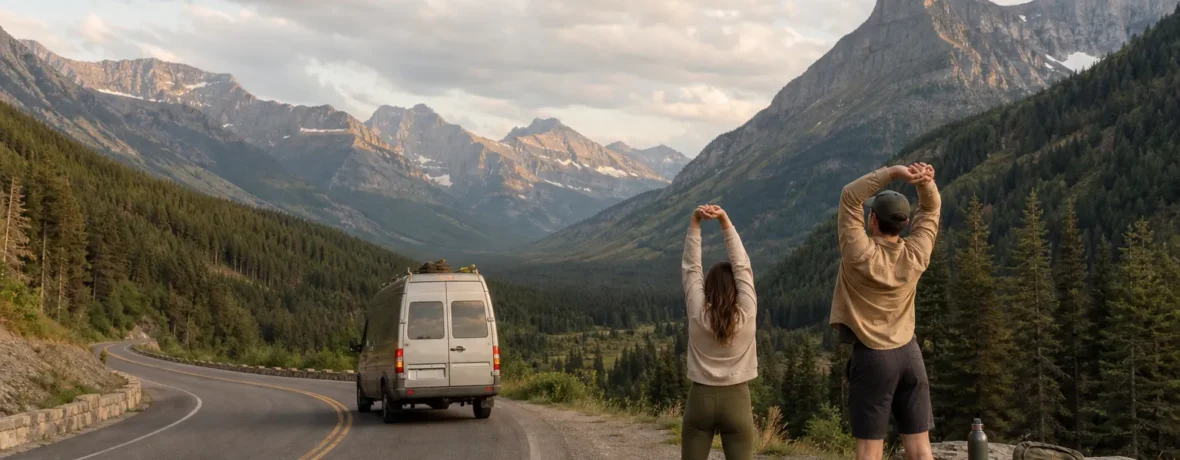
How far is Glacier National Park from Yellowstone? The practical drive is 400 to 475 miles [644 to 764 km], depending on which entrances you use. West Glacier to West Yellowstone is commonly planned as 457 miles [735 km] and 8 hours 15 minutes without long stops, via western Montana’s lake-and-mountain route.
How far is Glacier National Park from Yellowstone?
The Glacier-to-Yellowstone drive is usually a full-day haul, not a quick park hop.
Your exact mileage depends on the gates. “Glacier National Park” and “Yellowstone National Park” are huge targets, not single points on a map. West Glacier to West Yellowstone is the cleanest visitor-to-visitor comparison, and Montana’s official tourism route lists it at 457 miles [735 km] and 8 hours 15 minutes on the Ghost Town Route through western and southwest Montana.
If you start on Glacier’s east side, such as St. Mary or Many Glacier, the drive can feel very different. You may angle down toward Great Falls, Helena, Livingston, Gardiner, or Cooke City instead of dropping through Flathead Lake, Missoula, Butte, and West Yellowstone. That can make the trip more scenic, more remote, or more weather-sensitive.
Use the number below as your planning anchor, then adjust for your campsite, lodge, trailhead, entrance gate, and season.
| Route | Best for | Planning distance |
|---|---|---|
| West Glacier to West Yellowstone | First-time visitors, easy routing, fuel and food options | 457 miles [735 km] |
| West Glacier to Gardiner/North Entrance | Yellowstone wildlife access and Mammoth Hot Springs | Long full-day drive |
| St. Mary or Many Glacier to Gardiner | East-side Glacier travelers heading to north Yellowstone | Long full-day drive |
| Glacier to Cooke City/Northeast Entrance | Big scenery, Beartooth Highway trips, summer only planning | Longest and most seasonal option |
For Glacier access and current park road notes, check the National Park Service page for Glacier directions and road conditions. For the West Glacier to West Yellowstone route distance cited above, see Montana’s official Between the Parks Ghost Town Route.
How long does it take to drive from Glacier to Yellowstone?
Plan on 8 to 10 hours of driving, then add time for meals, fuel, photos, road work, and animal jams.
On paper, West Glacier to West Yellowstone can be done in one long day. In real life, this is Montana. Roads pass lakes, river valleys, ranch country, mountain grades, small towns, construction zones, and weather that can shift fast. If you leave after a slow breakfast, stop for a trail, and roll into a busy Yellowstone entrance near sunset, the day can stretch hard.
For hikers, the better move is usually simple: do not schedule a major hike in both parks on the same day as the transfer. Hit a short leg-stretcher, eat real food, refill water, and get to camp with enough daylight to sort gear.
A strong one-day plan looks like this:
- Leave West Glacier early, ideally after packing the night before.
- Top off fuel before leaving the Flathead Valley.
- Choose one main break, not five half-planned detours.
- Reach your Yellowstone gateway town before dark.
- Save your first big Yellowstone hike for the next morning.
What is the best route from Glacier National Park to Yellowstone?
The best all-around route is West Glacier to West Yellowstone through Flathead Lake, Missoula, Butte, and southwest Montana.
This route works because it is direct without being dull. From West Glacier, you can head south along the Flathead Valley, pass Flathead Lake, connect toward Missoula, continue on I-90, then bend south toward West Yellowstone. It gives you regular services, a logical lunch stop, and a simple entrance into Yellowstone’s west side.
West Yellowstone is a useful landing pad if you want quick access to Madison, Norris, Old Faithful, Grand Prismatic Spring, and the geyser basins. It also makes sense if this is your first Yellowstone trip and you want the classic thermal features early in your itinerary.
Pick this route if you want:
- A straightforward drive with fewer remote stretches.
- Good odds of finding fuel, groceries, and lodging along the way.
- Access to Yellowstone’s West Entrance.
- A route that still feels scenic without turning into a backroad puzzle.
What is the most scenic route from Glacier to Yellowstone?
The most scenic route depends on the season, but the Beartooth Highway and Northeast Entrance combo is the showstopper when roads are open.
If you are leaving Glacier’s east side and visiting in the heart of summer, you can build a dramatic route toward Yellowstone’s Northeast Entrance near Cooke City and Silver Gate. This can put you near Lamar Valley, one of Yellowstone’s best wildlife areas, and it pairs well with high-country driving over the Beartooth Highway if your trip direction and road status line up.
The catch is seasonality. High roads in this part of the Rockies are not guaranteed shoulder-season drives. Snow, ice, rockfall, construction, and early storms can change the day fast. Before you commit, check current Montana highway conditions through Montana Department of Transportation travel information and Yellowstone’s official park roads page.
If you want beauty with less stress, the western route through Flathead Lake and the big valleys is the safer scenic choice. You still get water, mountains, historic towns, and wide-open Montana views, but you keep more services close at hand.
Can you drive from Glacier to Yellowstone in one day?
Yes, you can drive from Glacier to Yellowstone in one day, but it is a long transfer day.
Do it if your schedule is tight. Do not do it if you are trying to squeeze in Highline Trail at Glacier and Old Faithful at Yellowstone before bedtime. That kind of day turns a great trip into a steering-wheel marathon.
If one day is your only option, choose the simple route and keep your expectations clean. Start early. Pack lunch. Treat viewpoints as short breaks, not side quests. Book lodging or camping near the entrance you plan to use. Then stop driving before you are exhausted.
A one-day drive works best for travelers who:
- Are already staying on Glacier’s west side.
- Plan to enter Yellowstone through West Yellowstone.
- Have a second driver.
- Are not towing a large trailer over unfamiliar mountain roads.
- Can handle a full day without needing a major hike midway.
How many days do you need for a Glacier to Yellowstone road trip?
You need at least 2 travel days between parks if you want the drive to feel like part of the trip instead of dead time.
With one day, you are transferring. With two days, you can breathe. With three or more, you can turn the space between the parks into a real Montana road trip.
Here is a practical breakdown:
| Time between parks | Trip style | Best plan |
|---|---|---|
| 1 day | Efficient | Drive West Glacier to West Yellowstone with limited stops |
| 2 days | Balanced | Overnight around Missoula, Butte, Bozeman, or Ennis |
| 3 days | Scenic | Add a lake stop, hot springs, ghost town, or short hike |
| 5 days | Slow road trip | Follow Montana’s between-the-parks itinerary with historic towns |
If you are hiking hard in Glacier, the 2-day version is the sweet spot. Your legs get a break, your laundry dries, and your Yellowstone days start sharper.
Where should you stop between Glacier and Yellowstone?
The best stops are Flathead Lake, Missoula, Butte, Bozeman, Ennis, and West Yellowstone, depending on your route.
Flathead Lake is the natural first scenic pause when you leave Glacier’s west side. It is big, blue, and easy to admire without derailing the whole day. Missoula works well for lunch, groceries, outdoor gear, and a real reset. Butte gives you history and a solid overnight position. Bozeman has the most city-style services before Yellowstone. Ennis is a strong choice if you are cutting south through the Madison Valley toward West Yellowstone.
For hikers, choose stops that solve problems. Need fuel? Stop before the gauge gets cute. Need bear spray? Buy or rent it before you reach the trailhead. Need groceries? Do that in a bigger town, not at 9 p.m. outside a park gate.
Good road-trip stops can include:
- Flathead Lake: easy scenery south of Glacier.
- Missoula: food, groceries, lodging, and outdoor shops.
- Butte: historic architecture and a useful overnight break.
- Bozeman: major services before Yellowstone’s north or west approaches.
- Ennis: Madison Valley views and a quieter approach to West Yellowstone.
- West Yellowstone: the most direct gateway for geyser basin days.
Which Yellowstone entrance should you use after Glacier?
Use the West Entrance for the easiest first-time route, or the North Entrance if you want Mammoth and Lamar Valley access.
Yellowstone has five entrance stations, and the park is much larger than many first-time visitors expect. The National Park Service says it takes many hours to drive between entrances, so your arrival gate shapes your first day inside the park. See the official Yellowstone directions and transportation page before locking in lodging.
The West Entrance is the simplest match for the West Glacier route. It puts you near Madison Junction and the road toward Old Faithful. The North Entrance at Gardiner is better if you are aiming for Mammoth Hot Springs, Tower-Roosevelt, or Lamar Valley. The Northeast Entrance is spectacular in summer, but it demands more careful road planning.
As of November 2026, Yellowstone’s NPS road page says the only road generally open year-round to regular vehicles is the route from the North Entrance at Gardiner through the park to Cooke City, via Tower Junction. Most other park roads are closed to regular vehicles from early November to late April, with limited oversnow travel in winter. Check the official road page before you drive.
When is the best time to drive from Glacier to Yellowstone?
Late June through September is the best window for most Glacier-to-Yellowstone road trips.
That timing gives you the best odds for high-elevation roads, full park access, and a hiking-focused itinerary. Earlier in June, Glacier’s alpine routes may still be limited by snow. In October, fall color can be gorgeous, but services shrink and winter weather starts throwing elbows.
Glacier’s NPS road page says most park roads are seasonal, and the full Going-to-the-Sun Road usually does not open until late June at the earliest. Yellowstone’s road system also runs on a seasonal rhythm, with many roads closing to regular vehicles around the start of November. Those two facts matter more than any perfect-looking map app estimate.
If you are planning a hiking trip, build around trail access rather than just hotel prices. Snowfields, swollen creek crossings, burned-area closures, bear activity, and construction can all affect your day. Keep one flexible day if you can. You will use it.
What should hikers pack for the Glacier to Yellowstone drive?
Pack like you are moving between two wild mountain parks, not just driving between tourist towns.
You need road gear, hiking gear, and patience. Both parks sit in bear country. Weather can swing from hot valley sun to cold rain and sleet. Cell service can vanish right when you want it most.
Use this checklist before leaving Glacier:
- Full fuel tank before long rural stretches.
- Printed or offline maps for Montana and both parks.
- Water for the drive and the next trail day.
- Lunch, snacks, and a backup dinner plan.
- Rain shell, warm layer, hat, and gloves.
- Headlamp, even for “short” hikes.
- Bear spray carried where you can reach it, not buried in a pack.
- Binoculars for wildlife watching from safe distances.
- Cooler or food bin that can be secured properly.
- Camp reservation details, lodging address, and entrance plan.
As of November 2026, Glacier’s NPS bear safety guidance says visitors must stay at least 100 yards [91 m] from bears and wolves and 25 yards [23 m] from other wildlife. Read the official Glacier bear safety guidance before hiking, and follow posted rules in whichever park or forest you enter.
What is the best Glacier to Yellowstone itinerary?
The best itinerary gives Glacier and Yellowstone separate hiking days, with one or two transfer days between them.
If you have 7 days total, split it like this: 3 days in Glacier, 1 drive day, and 3 days in Yellowstone. If you have 10 days, make it 4 days in Glacier, 2 days between parks, and 4 days in Yellowstone. That extra buffer changes the whole trip.
Here is a clean 8-day hiking-focused version:
- Day 1: Arrive near Glacier and sleep close to your first trailhead.
- Day 2: Hike the west side of Glacier and explore Lake McDonald.
- Day 3: Drive Going-to-the-Sun Road if open and hike from Logan Pass or another accessible area.
- Day 4: Visit Many Glacier, Two Medicine, or another Glacier zone that fits current road access.
- Day 5: Drive toward Yellowstone and overnight in Missoula, Butte, Bozeman, Ennis, or West Yellowstone.
- Day 6: Enter Yellowstone and focus on geyser basins or Mammoth, depending on your gate.
- Day 7: Hike canyon, lake, or waterfall areas with an early start.
- Day 8: Watch wildlife at dawn, take a shorter walk, and leave with time for road delays.
Do not cram every famous boardwalk and trail into the first Yellowstone day. The park rewards early starts and calm pacing. So do your knees.
Related reading
- Las Vegas to Zion: Distance, Drive and Day-Trip Plan
- Seattle to Olympic National Park: Routes and Ferries
- Where to Stay in Glacier National Park
- What to Do in Yellowstone: Best Hikes and Sights
FAQ
Is Glacier close to Yellowstone?
No, Glacier is not close to Yellowstone by normal road-trip standards. The most useful planning distance is West Glacier to West Yellowstone at 457 miles [735 km], which makes it a long full-day drive.
What is the fastest route from Glacier to Yellowstone?
The fastest common route is usually from West Glacier toward Missoula, I-90, and then south to West Yellowstone. Conditions, construction, and your exact entrance can change the best choice on the day you drive.
Is it better to visit Glacier or Yellowstone first?
Either order works, but many hikers prefer Glacier first if they want the biggest mountain hikes early while legs are fresh. Yellowstone first can make sense if flights, lodging, or seasonal road openings line up better from the south.
Can you visit Glacier, Yellowstone, and Grand Teton on one trip?
Yes, but give the trip enough days. A rushed version needs at least 10 days, while 12 to 14 days gives you a much better mix of hiking, wildlife, geysers, and recovery time.
Do you need reservations to drive from Glacier to Yellowstone?
You do not need a reservation for the highway drive between the parks. Park entry systems, campground bookings, lodging, road access, and timed-entry rules can change by season, so check the official NPS pages before your dates.
Which park is better for hiking, Glacier or Yellowstone?
Glacier is usually better for big alpine hiking, while Yellowstone is better for thermal features, wildlife, waterfalls, and varied shorter walks. The strongest trip uses Glacier for mountain miles and Yellowstone for geology, wildlife, and classic park scenery.