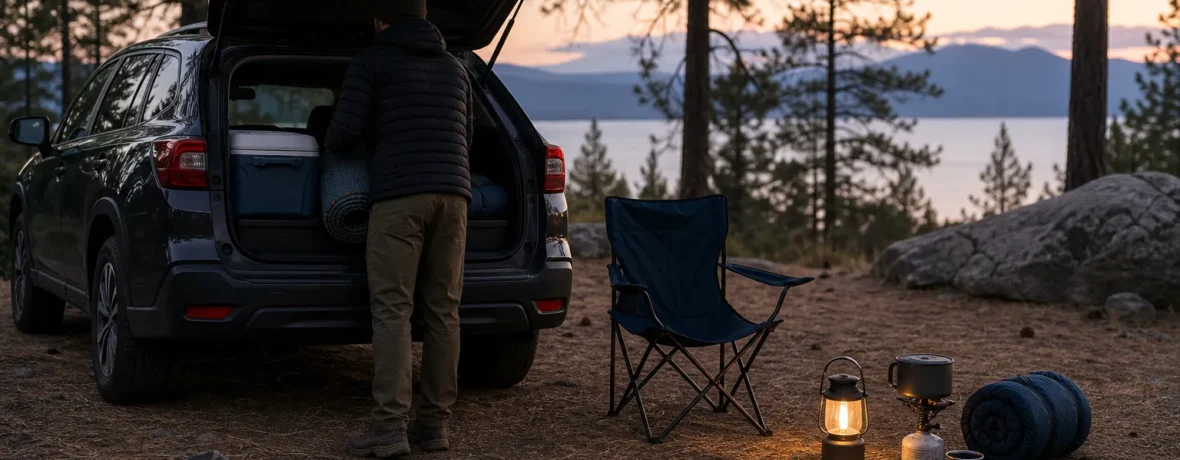
What is car camping? Car camping means you drive to your campsite and sleep either in a tent beside your vehicle or inside the vehicle itself. Your car stays at or near camp, usually within a few steps, so you can bring heavier comfort gear, more food, extra water, and a thicker sleep setup.
What is car camping?
Car camping is camping with your vehicle as your base camp.
That vehicle might be a sedan, SUV, truck, hatchback, or van. You might sleep in a tent, fold down the rear seats and sleep inside, or use a truck bed setup. The point is simple: you are not carrying your entire home on your back for miles. You drive in, unload, set up, cook, sleep, and use the car for storage.
In National Park Service language, this often falls under frontcountry camping, meaning you camp in a place accessible by road, often in a developed campground with marked sites, toilets, picnic tables, fire rings, and sometimes potable water.
Car camping is not the same as RV camping, though the two overlap. You do not need a camper, trailer, generator, or built-in kitchen. You need a legal place to stay, a sleep system, water, food storage, and a plan for trash. That’s the whole machine.
Is car camping the same as dispersed camping?
No, car camping describes how you camp; dispersed camping describes where you camp.
You can car camp in a developed campground with numbered sites. You can also car camp on some public lands outside developed campgrounds, where allowed. That second version is often called dispersed camping.
| Type | What it means | Best for |
|---|---|---|
| Developed car camping | You drive to a marked campsite with facilities nearby. | First trips, families, rainy weekends, late arrivals. |
| Dispersed car camping | You camp outside a developed campground where local rules allow it. | More space, fewer neighbors, self-sufficient campers. |
| Backpacking | You hike in with your shelter, food, and gear on your back. | Remote trails and lighter, simpler camps. |
Rules change by forest, district, season, fire danger, road status, and land manager. Some Forest Service areas use stay limits such as 14 days, and some require moving a set distance after that; as of November 2026, the Kaibab National Forest dispersed camping guide lists a 14-day limit for that forest. Do not treat that as a nationwide permission slip. Check the specific ranger district before you roll in.
Where are you allowed to car camp?
You are allowed to car camp only where overnight camping or overnight parking is permitted.
Good legal options include national park campgrounds, state park campgrounds, national forest campgrounds, Bureau of Land Management camp areas, private campgrounds, and designated dispersed camping zones on some public lands. A dirt pullout is not automatically a campsite. A pretty roadside view is not automatically legal. A trailhead parking lot is not automatically open for sleeping.
For reservable public campsites, Recreation.gov reservation policies state that recreation-use fees vary by location and activity; as of November 2026, its listed online reservation service fee for campsites is $8 when that fee applies. Individual campground pages override general policies, so read the page for your exact site.
Before you leave home, check these items:
- Is overnight camping allowed at that exact location?
- Do you need a reservation, permit, pass, or timed entry?
- Are fires allowed, restricted, or banned?
- Are food lockers required because of bears or other wildlife?
- Can your vehicle handle the access road in current conditions?
- Is the campground open for the season?
How do you set up a car camping site?
Set up your car camping site by separating sleep, food, fire, water, and trash.
That sounds fussy until a raccoon works your cooler latch at 2 a.m. or smoke blows straight into your tent. Build camp with a layout, not a yard sale.
- Park first. Keep all tires on the durable parking pad or allowed surface. Do not widen a site by driving onto grass, cryptobiotic soil, meadows, or creek banks.
- Choose the tent spot. Use the flat tent pad if there is one. Avoid low pockets where cold air and rainwater settle.
- Point the door smartly. Face the tent door away from prevailing wind when you can, and leave a clear path for nighttime bathroom runs.
- Build the kitchen zone. Cook on the picnic table, camp table, or bare durable ground. Keep stoves away from tent walls, dry grass, and loose gear.
- Store food immediately. Put food, trash, toothpaste, sunscreen, pet food, and scented items in the required storage spot when not in use.
- Set up water. Keep drinking water easy to reach. A 1-gallon [3.8 L] jug per person per day is a practical starting point in mild weather, with more for heat, dogs, and dry camps.
- Control trash from the start. Hang a trash bag only while you are actively in camp, then lock it away or place it in a wildlife-resistant bin.
- Finish with light discipline. Put a headlamp in the tent, one in the car door, and one near the kitchen. Darkness gets clumsy fast.
What gear do you need for car camping?
You need shelter, sleep gear, water, food storage, cooking basics, light, clothing layers, and a way to clean up.
Car camping lets you bring comfort, but comfort can turn into clutter. Pack in systems: sleep box, kitchen box, food box, clothing bag, safety kit. When everything has a home, camp feels calm.
- Shelter: tent, footprint or groundsheet, stakes, guylines, small mallet.
- Sleep: sleeping bag rated below the expected low, sleeping pad, pillow, sleep clothes.
- Kitchen: stove, fuel, lighter, pot, pan, utensils, mug, cutting board, knife, sponge, biodegradable soap.
- Food storage: cooler, dry bin, odor-resistant bags, bear canister or locker if required.
- Water: jugs, bottles, filter or treatment if you will use natural water.
- Light: headlamp, lantern, spare batteries or power bank.
- Camp comfort: chairs, small table, tarp, warm hat, camp shoes.
- Safety: first-aid kit, map, backup directions, tire inflator, jumper cables, fire extinguisher.
- Cleanup: trash bags, paper towels or rags, hand sanitizer, trowel, toilet kit.
Pack for the coldest part of the night, not the nicest part of the afternoon. If the forecast low is 40°F [4°C], a thin summer blanket will feel heroic at sunset and useless at 4 a.m.
Can you sleep in your car while car camping?
Yes, you can sleep in your car if the location allows overnight camping or sleeping in vehicles.
The setup matters. Fold seats flat if possible, use a sleeping pad or mattress that does not curl your spine, and crack windows slightly for ventilation if conditions allow. Use mesh screens or bug nets in warm weather. Keep your keys, headlamp, shoes, and glasses in the same place every night.
Never run the engine for heat while you sleep. Never cook inside a closed vehicle. The U.S. Consumer Product Safety Commission warns that portable fuel-burning camping equipment can produce deadly carbon monoxide in enclosed spaces such as tents, campers, and vehicles; read its portable heaters and camping equipment safety guidance before using any heater or stove near your sleep area.
If you expect temperatures near freezing, bring a sleep system built for it: insulated pad, warm bag, dry base layers, hat, and a venting plan to reduce condensation. A car can block wind. It does not magically become a cabin.
How do you store food while car camping?
Store food exactly the way the land manager requires.
In many developed campgrounds, your closed vehicle may be acceptable. In bear country, a campground may require a metal food locker, bear canister, or other approved storage method. The National Park Service says food storage rules vary by park and that in some places food may be stored in a vehicle only under specific conditions, such as windows fully closed and food out of sight; see the NPS guide to storing food around bears.
Treat these as scented items:
- Coolers and dry food
- Trash and recycling
- Toothpaste and toiletries
- Sunscreen, lip balm, and bug spray
- Pet food and bowls
- Cooking oil, pots, pans, and utensils with food residue
Do not leave a cooler on the picnic table while you hike. Do not stash snacks in the tent. Do not burn trash in the fire ring. Wildlife learns fast, and a messy camp can get animals killed.
How do you keep a car camping trip clean and low-impact?
Keep your footprint small and leave the site ready for the next person.
Use established tent pads, existing fire rings, and durable surfaces. Wash dishes away from streams and lakes. Strain food scraps from dishwater and pack them out with trash. If there is no toilet and catholes are allowed, follow local rules; the National Park Service’s Leave No Trace guidance says to dig catholes 6 to 8 inches [15 to 20 cm] deep and at least 200 feet [61 m] from water, camp, and trails.
Before you leave, do a slow sweep:
- Pick up micro-trash: twist ties, bread tabs, foil bits, fruit peels, dental floss.
- Check under the picnic table.
- Check the fire ring for cans, glass, and melted plastic.
- Scatter unused, cold ashes only if local rules allow it.
- Return moved rocks or logs to where you found them.
- Leave no food scraps for birds, squirrels, bears, or the next camper’s dog.
What are the best car camping tips for beginners?
Start with one night close to home.
A short first trip teaches you more than a giant shopping list. Pick a legal campground, arrive before dark, and keep dinner simple. Soup, tortillas, pasta, chili, sandwiches, or breakfast-for-dinner beat a complicated camp recipe when wind is shaking the stove.
- Arrive with daylight left. Give yourself 60 to 90 minutes to park, pitch, cook, and sort gear before dark.
- Pack bins, not loose bags. Clear plastic bins make it easier to find the stove, socks, and coffee.
- Bring more insulation than you think. The ground steals heat through thin pads.
- Test your stove at home. Learn the fuel connection before your hands are cold.
- Pre-load offline maps. Campgrounds and forest roads often have weak service.
- Use a simple meal plan. One pot, one cutting board, one cleanup routine.
- Keep rain gear accessible. Not buried under the cooler. Accessible.
- Respect quiet hours. Your car doors, music, dog, and lantern all carry farther than you think.
Related reading
- How to Plan a Camping Trip
- How to Start Camping: A Beginner's Guide
- Dispersed Camping in Colorado: Best Areas and Rules
- Camping Checklist: What to Bring
FAQ
Do you need a special car for car camping?
No, you do not need a special car. A regular sedan works for tent camping at developed sites, while an SUV, wagon, hatchback, or truck gives you more room if you want to sleep inside.
Is car camping safe?
Yes, car camping is generally safe when you stay in legal sites, store food properly, manage fire carefully, and avoid enclosed-space carbon monoxide risks. Tell someone where you are going, especially if you choose dispersed public land with weak cell service.
What is the difference between car camping and tent camping?
Car camping means your vehicle stays with you at camp. Tent camping simply means you sleep in a tent, which can happen beside your car, at a walk-in site, or deep in the backcountry.
Can you car camp for free?
Yes, free car camping exists on some public lands where dispersed camping is allowed. You still need to follow local rules for stay limits, fire restrictions, waste, roads, and closed areas.
What should you not do while car camping?
Do not sleep with the engine running, cook inside a closed tent or vehicle, leave food out, ignore fire restrictions, or assume every pullout is legal. Also skip the loud music; camp sound travels fast after dark.
How much water should you bring car camping?
Bring at least 1 gallon [3.8 L] per person per day for drinking and basic cooking in mild conditions. Add more for hot weather, dry camps, dogs, dishwashing, and any hike longer than a short stroll.