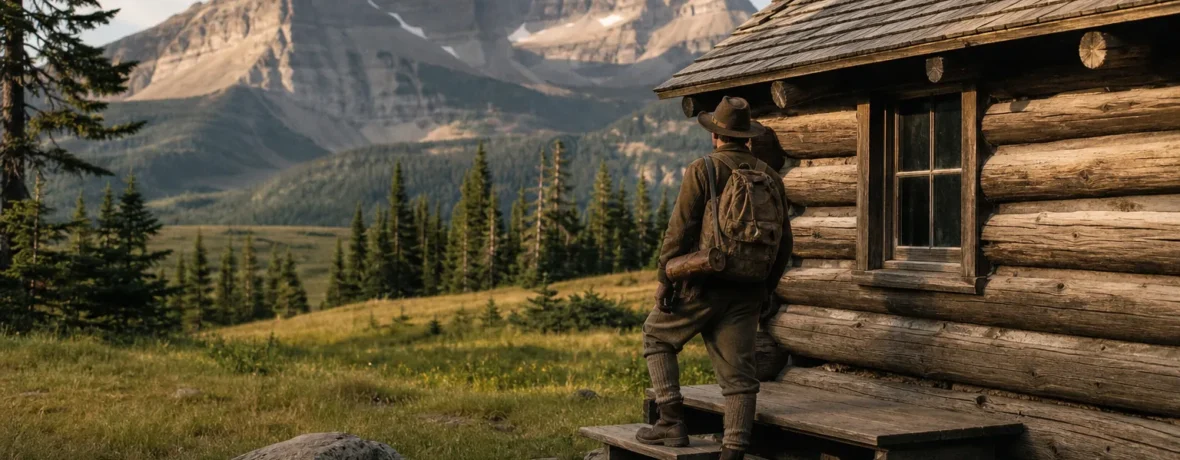
Glacier National Park was established on May 11, 1910, when President William Howard Taft signed the bill creating the park in northwestern Montana. That date made Glacier one of the early U.S. national parks and protected more than 1 million acres [404,686 hectares] of mountains, lakes, forests, wildlife habitat, and cultural landscapes.
When was Glacier National Park established?
Glacier National Park was established on May 11, 1910.
The National Park Service lists Glacier’s park establishment date as May 11, 1910, in its official Glacier National Park fact sheet. The park sits in the northern Rocky Mountains of Montana, hard against the Canadian border, with Waterton Lakes National Park across the line in Alberta.
That 1910 date matters because it places Glacier before the National Park Service itself. The NPS was not created until August 25, 1916, so Glacier existed as a national park for more than six years before the agency that now manages it came along.
Who established Glacier National Park?
President William Howard Taft established Glacier National Park by signing the bill on May 11, 1910.
The official NPS account of Glacier’s rededication states that Taft signed the bill creating Glacier as the nation’s 10th national park. That number reflects the park system as it was understood at the time, when the country was still figuring out what large-scale landscape protection should look like in practice.
Congress passed the legislation, Taft signed it, and the federal government took on the job of protecting a rugged mountain landscape that was already well known to Indigenous communities, railroad promoters, hunters, climbers, scientists, and early tourists.
Why was Glacier National Park created?
Glacier National Park was created to protect an exceptional Northern Rocky Mountain landscape for public use and long-term preservation.
The park’s official purpose traces back to its 1910 establishing legislation. In NPS planning documents, that purpose is described as preserving an outstanding mountain area with Northern Rocky Mountain topography, active glaciers, and distinctive plant and animal communities for public benefit and enjoyment.
That is the short legal version. On the ground, it means sharp ridgelines, cold lakes, grizzly and black bear habitat, alpine meadows, old forests, and headwater streams received national park protection instead of being treated only as land for extraction, settlement, or private development.
Glacier’s name can sound like the whole story is ice. It is not. The glaciers are part of the park’s identity, but the place is also a cultural landscape, a wildlife corridor, a mountain watershed, and a living homeland with a far deeper history than the 1910 law.
What was there before Glacier became a national park?
People lived in, traveled through, hunted in, and knew this landscape long before 1910.
The National Park Service says archaeological evidence shows human use of the area now called Glacier National Park going back more than 10,000 years. The same NPS history page identifies the Blackfeet, Salish, Pend d’Oreille, and Kootenai among the Native peoples connected to the region.
By the time Euro-American explorers and trappers entered the northern Rockies, the Blackfeet controlled the plains east of the mountains, while Salish and Pend d’Oreille people lived and hunted in western valleys and traveled east for buffalo. The NPS summary also states that, as westward expansion increased, the Kootenai, Blackfeet, Salish, and Pend d’Oreille were forced onto reservations.
So if you are asking when the park was established, the legal answer is May 11, 1910. If you are asking when the place became meaningful to people, the answer reaches thousands of years deeper.
Was Glacier a national park before the National Park Service?
Yes. Glacier became a national park in 1910, and the National Park Service was created in 1916.
That six-year gap surprises a lot of hikers. Early national parks were managed before there was one unified agency in charge of the whole system. The NPS later became the steward for Glacier and other national parks, bringing them under a shared mission of conservation and public enjoyment.
| Milestone | Date | Why it matters |
|---|---|---|
| Glacier National Park established | May 11, 1910 | Protected the Montana mountain landscape as a national park |
| National Park Service created | August 25, 1916 | Created the federal agency that now manages Glacier |
| Waterton-Glacier International Peace Park established | 1932 | Linked Glacier with Canada’s Waterton Lakes National Park |
| Waterton-Glacier World Heritage Site established | 1995 | Recognized the international significance of the shared landscape |
How old is Glacier National Park today?
Glacier National Park is 116 years old as of November 2026.
Count from May 11, 1910, to May 11, 2026, and Glacier reaches its 116th birthday. Its next birthday will be May 11, 2027, when the park turns 117.
That age puts Glacier in the older tier of U.S. national parks. It came after Yellowstone, Sequoia, Yosemite, Mount Rainier, and several other early parks, but before many famous places that later joined the system as national parks.
What changed after Glacier became a national park?
Federal protection shifted Glacier toward conservation, public access, and park-style tourism.
After 1910, Glacier’s identity as a protected public landscape grew fast. Trails, roads, lodges, chalets, ranger operations, and visitor services developed around the idea that people should be able to see the park while the land itself remained protected.
One of the biggest symbols of that era is Going-to-the-Sun Road. The NPS fact sheet lists the road as completed in 1932, the same year Glacier and Waterton Lakes were joined as the world’s first International Peace Park. That road still shapes how many visitors experience Glacier: big views, steep terrain, crowded pullouts, and weather that can change the plan in a hurry.
Glacier also gained broader recognition after establishment. The park is part of the Waterton-Glacier International Peace Park, was designated a Biosphere Reserve, and became part of a World Heritage Site with Waterton Lakes. Those titles do not change the 1910 establishment date, but they show how far Glacier’s significance reaches beyond Montana.
What should you know before visiting Glacier now?
You should check the current NPS pages before you go, because access rules, fees, shuttles, parking, roads, and trail openings can change by season.
As of November 2026, the official Glacier National Park fees page says an entrance pass is required, the park does not accept cash, and standard entrance passes range from $20 to $35 depending on season and entry type. That same page says no vehicle reservations are required in any area of the park in 2026.
As of November 2026, the NPS vehicle reservations page for 2026 says vehicle reservations are not required, while Glacier is piloting a ticketed-only shuttle system and three-hour limited timed parking at Logan Pass. If your dream day depends on Logan Pass, do not wing it from old blog posts or last year’s trip report.
For a smoother visit, run through this quick checklist before you drive toward the gate:
- Check the official Glacier road status page before committing to a route.
- Confirm current entrance fees and payment rules on the NPS fees page.
- Look for current shuttle, parking, and Logan Pass access rules.
- Read current trail conditions, especially for high routes that hold snow.
- Carry bear spray where allowed and know how to use it.
- Build a backup plan for smoke, storms, road work, full parking areas, or snow closures.
How to remember Glacier’s establishment date
Use May 11, 1910, as the anchor date.
If you like a clean memory hook, think: Glacier came first, then the National Park Service. The park was protected in 1910; the agency arrived in 1916. That order helps keep the timeline straight.
- Start with the legal date: May 11, 1910.
- Attach the signer: President William Howard Taft.
- Add the agency context: the NPS was created later, in 1916.
- Connect the bigger story: Waterton-Glacier became an International Peace Park in 1932.
That gives you the answer without flattening the place into one date. Glacier is a national park established in 1910, but it is also a much older human landscape and a current, living public land with rules that change from season to season.
Related reading
- When Was Great Smoky Mountains National Park Established?
- Best Time to Visit Glacier National Park
- Logan Pass and Going-to-the-Sun Road: Opening and Access
- Is Glacier National Park Open?
FAQ
When was Glacier National Park established?
Glacier National Park was established on May 11, 1910. The date is listed by the National Park Service on its official Glacier fact sheet.
Who signed Glacier National Park into law?
President William Howard Taft signed the bill establishing Glacier National Park. The signing took place on May 11, 1910.
Was Glacier National Park created before the National Park Service?
Yes. Glacier was established in 1910, while the National Park Service was created in 1916. That means Glacier was already a national park before the modern NPS existed.
How old is Glacier National Park?
Glacier National Park is 116 years old as of November 2026. It turned 116 on May 11, 2026, and will turn 117 on May 11, 2027.
Why is Glacier National Park historically significant?
Glacier protects a major Northern Rocky Mountain landscape with glaciers, lakes, wildlife habitat, and long Indigenous history. It is also paired with Waterton Lakes National Park as part of Waterton-Glacier International Peace Park.
Do you need a reservation to enter Glacier National Park?
As of November 2026, the NPS says vehicle reservations are not required in any area of Glacier National Park for 2026. Entrance fees, shuttle rules, parking limits, road status, and trail openings can still apply, so check the official NPS site before your trip.