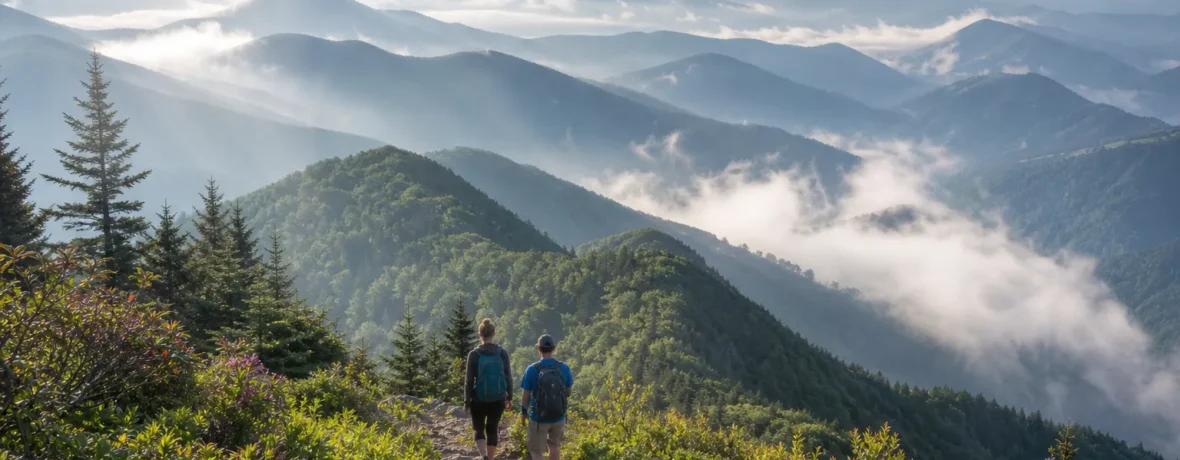
It was established on June 15, 1934. Congress authorized the park earlier, on May 22, 1926, and National Park Service administration began on February 6, 1930, but June 15, 1934 is the standard establishment date.
When was the Great Smoky Mountains National Park established?
Great Smoky Mountains National Park was established as a completed park on June 15, 1934. The National Park Service’s own timeline lists 1934 as the year the park was established, while the NPS Index gives the fuller legal sequence: authorized May 22, 1926; established for administration and protection February 6, 1930; established for full development June 15, 1934.
That split is why you’ll see more than one date in park history. The 1926 date matters because Congress and President Calvin Coolidge opened the door for the park. The 1930 date matters because the federal government could begin administering and protecting the land. But June 15, 1934 is the date that answers the usual hiker’s question: when did Great Smoky Mountains National Park become a functioning national park?
You can see the simple version on the official NPS Smoky Mountain Timeline, and the detailed version in the official National Park Service Index.
Why do some sources say the Smokies were authorized in 1926?
The park was authorized in 1926, but not fully established until 1934. That gap came from land.
Unlike many western parks carved from federal land, the Smokies had to be assembled from private holdings, timber company lands, farms, homes, coves, and mountain communities. Tennessee and North Carolina bought land. Local residents, civic groups, schoolchildren, private donors, and the Laura Spelman Rockefeller Memorial helped fund the effort. Then the land was transferred to the federal government.
That process took years. The park idea was on paper in 1926, but paper does not build a park. Land had to be purchased, boundaries had to be settled, and enough acreage had to come under federal care before the National Park Service could protect, manage, and develop it.
| Date | What happened | Why it matters |
|---|---|---|
| May 22, 1926 | Congress authorized Great Smoky Mountains National Park. | The park became legally possible. |
| February 6, 1930 | The park was established for administration and protection. | NPS management could begin before full development. |
| June 15, 1934 | The park was established for full development. | This is the standard establishment date. |
| 1940 | President Franklin D. Roosevelt dedicated the park. | The public celebration came after the legal establishment. |
Who helped create Great Smoky Mountains National Park?
Many people helped create the park. The Smokies were not saved by one signature or one donor.
Local boosters pushed the idea. Horace Kephart, a writer who lived in the region, promoted the mountains as a national park landscape. Knoxville businessman David C. Chapman helped lead fundraising and political support. Tennessee and North Carolina played central roles in buying land. The Rockefeller family’s Laura Spelman Rockefeller Memorial contributed major funding. Families and landowners, willingly or not, became part of the park’s difficult human story.
That last part deserves straight talk. The creation of the park protected forests, ridges, streams, and wildlife, but it also displaced mountain communities. More than 1,200 landowners had to leave land inside the new park, according to the National Park Service’s history of the people who lived here. Cabins, churches, mills, cemeteries, orchards, and old roadbeds are not scenery props. They are the remains of real lives.
How big is Great Smoky Mountains National Park today?
The park covers 522,427 acres [211,419 hectares]. That’s 800 square miles [2,072 square kilometers] split almost evenly between Tennessee and North Carolina.
For hikers, the more useful number is 848 miles [1,365 kilometers] of trail. That includes 74 miles [119 kilometers] of the Appalachian Trail inside the park. The official NPS park statistics page also lists elevations from 875 feet [267 meters] at the mouth of Abrams Creek to 6,643 feet [2,025 meters] at Clingmans Dome.
That elevation swing is why the Smokies can feel like three seasons stacked on one mountain. A warm morning at a low trailhead can turn cool, windy, and wet on a high ridge. Pack like you know that. Cotton hoodies and wishful thinking have ruined many Smokies hikes.
What makes the Smokies different from many western national parks?
The Smokies were built from purchased land, not broad federal holdings. That difference shaped the park from day one.
The West has huge parks born from public land. The Smokies came out of a crowded, lived-in Appalachian landscape. Timber companies had cut large sections of forest. Families had farmed coves and valleys for generations. The park’s creation meant buying thousands of parcels, ending logging inside the boundary, and shifting the land from private use to public preservation.
That history is still visible when you hike. Cades Cove, Cataloochee, Oconaluftee, Elkmont, and Roaring Fork all carry traces of settlement, work, worship, and loss. You’re walking through a protected ecosystem and a cultural landscape at the same time.
What should hikers know before visiting the Smokies now?
You need to plan for parking, crowds, reservations, and pet rules. The Smokies are beautiful, but they are not a free-for-all.
As of November 2026, Great Smoky Mountains National Park does not charge an entrance fee, but vehicles parked longer than 15 minutes need a parking tag. Current NPS-listed parking tag prices are $5 daily, $15 weekly, and $40 annual, and parking tags do not guarantee a parking space. Check the official NPS Fees and Passes page before you go.
As of November 2026, the park’s official FAQ says there is no timed-entry reservation system. It also says all frontcountry campgrounds require reservations, backcountry overnight stays require permits, and pets are allowed only in campgrounds, picnic areas, parking areas, along roads, and on two walking paths: Gatlinburg Trail and Oconaluftee River Trail. Confirm details on the official NPS Great Smoky Mountains FAQ.
- Buy a parking tag before you leave the trailhead for longer than 15 minutes.
- Reserve campsites before you arrive; don’t count on walk-up space.
- Leave dogs off most trails unless you’re using Gatlinburg Trail or Oconaluftee River Trail.
- Carry rain gear, a warm layer, water, food, and a paper or offline map.
- Start popular hikes early, especially during leaf season and summer weekends.
How do you plan a first Smokies hike?
Start with distance, parking, weather, and daylight. Then pick the trail.
The Smokies can punish casual planning. Roads wind slowly. Trailheads fill. Cell service disappears. Rain can turn roots and rocks slick in minutes. Build your day with a margin, not a fantasy pace.
- Choose your side of the park. Gatlinburg and Townsend work well for Tennessee trailheads; Cherokee and Bryson City work well for North Carolina approaches.
- Check current NPS alerts. Road work, storm damage, bear activity, and seasonal closures can change your route.
- Match the hike to your group. A steep 5-mile [8-kilometer] Smokies hike can feel tougher than a flat 8-mile [13-kilometer] walk elsewhere.
- Handle parking before hiking. Buy the right tag, display it correctly, and have a backup trailhead if the lot is full.
- Turn around on time. Forested trails get dark early in coves and drainages, especially outside summer.
Related reading
- When Was Glacier National Park Established?
- Is Great Falls a National Park? Park Units Explained
- Best Time to Visit Glacier National Park
- Best Time to Visit Zion National Park for Hiking
FAQ
What year was Great Smoky Mountains National Park founded?
Great Smoky Mountains National Park was founded in 1934. The more precise establishment date is June 15, 1934, though the park was authorized earlier on May 22, 1926.
Was Great Smoky Mountains National Park established in 1926 or 1934?
Both dates matter, but they mean different things. The park was authorized in 1926 and established for full development in 1934.
Who was president when Great Smoky Mountains National Park was established?
Franklin D. Roosevelt was president on June 15, 1934, when the park was established for full development. Calvin Coolidge was president when the park was authorized in 1926.
Does Great Smoky Mountains National Park charge an entrance fee?
No, the park does not charge an entrance fee as of November 2026. Vehicles parked inside the park for longer than 15 minutes do need a valid parking tag.
Can you hike with a dog in Great Smoky Mountains National Park?
Only on two trails as of November 2026. Leashed pets are allowed on Gatlinburg Trail and Oconaluftee River Trail, plus roads, campgrounds, picnic areas, and parking areas; most park trails are closed to pets.
Why is Great Smoky Mountains National Park so historically important?
It protects one of the largest wild landscapes in the eastern United States and preserves Southern Appalachian cultural history. Its creation also tells a harder story of logging, land purchases, displaced communities, and the long work of turning private mountain land into a national park.