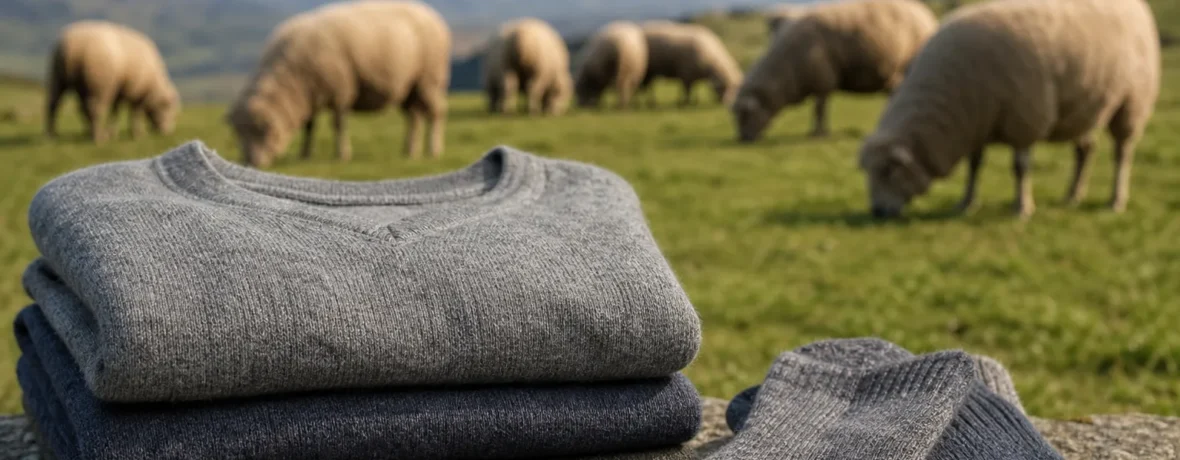
What is merino wool? It’s a fine, soft wool from Merino sheep, usually used in hiking socks, base layers, underwear, and beanies. Yes, it’s worth wearing on trail when you want odor control, moisture management, and comfort across shifting temperatures, but it dries slower than polyester and costs more.
What is merino wool, exactly?
Merino wool is a natural performance fiber grown by Merino sheep. Unlike old-school scratchy wool, Merino fibers are much finer, so they bend more easily against your skin instead of poking it.
Fiber thickness is measured in microns. Woolmark says Merino wool fiber diameter typically ranges from less than 17.5 microns to roughly 22–24 microns, which is one reason it feels soft enough for next-to-skin hiking layers. You can read the fiber basics from Woolmark’s guide to wool fiber.
On trail, that softness matters. Your shirt is rubbing under pack straps. Your socks are taking thousands of steps inside hot shoes. Your base layer is sitting under a rain shell while you sweat up a climb. A fabric that feels good at mile 1 still has to feel good at mile 12 [19 km]. That’s the Merino appeal.
Where does merino wool come from?
Merino wool comes from Merino sheep, a breed historically developed in Spain and now raised in major wool-producing regions such as Australia, New Zealand, South Africa, South America, and the western United States.
The breed’s fine-wool reputation started centuries ago in Spain; Woolmark’s history page describes how Merino sheep became prized for their fine fleece. For modern hiking gear, the fiber is shorn from sheep, cleaned, spun into yarn, knitted or woven into fabric, then sewn into socks, shirts, leggings, hoodies, and hats. See Woolmark’s history of Merino wool for the breed background.
If animal welfare and sourcing matter to you, look for clear brand sourcing pages and certifications. The Responsible Wool Standard from Textile Exchange is a voluntary standard covering animal welfare, land management, and chain-of-custody tracking. A label alone doesn’t make a garment perfect, but transparent sourcing beats mystery wool every time.
Why is merino wool good for hiking?
Merino wool works because it handles sweat, stink, and temperature swings better than many trail fabrics. That combination is why hikers pack one Merino shirt for a weekend instead of three cotton tees.
Here’s what you feel on the trail:
- Less stink: Merino tends to hold odor far better than polyester after repeated wear. That’s gold on multi-day trips.
- Comfort in mixed weather: It can feel warm in cool air, yet not clammy when you start sweating.
- Soft next-to-skin feel: Fine fibers help reduce that classic wool itch.
- Moisture buffering: Wool can absorb moisture vapor into the fiber instead of leaving all sweat on your skin.
- Quiet performance: No plastic swish, no shiny gym-shirt vibe, no campsite funk cloud.
The moisture part is the magic trick. The International Wool Textile Organization says wool can absorb up to 35% of its own weight in moisture before releasing it as vapor into the air. That does not mean your shirt becomes waterproof. It means Merino can smooth out the sweaty-then-chilly cycle that happens when you climb hard, stop for lunch, and get hit by wind. Read more from the IWTO’s overview of wool breathability.
Is merino wool better than synthetic for hiking?
Merino is better for odor control and comfort; synthetic is better for fast drying and durability. The best choice depends on your trip, weather, sweat rate, and budget.
| Fabric | Best trail use | Watch-out |
|---|---|---|
| Merino wool | Base layers, socks, underwear, sleep layers, cool-weather shirts | Higher price; slower drying than polyester |
| Polyester or nylon | Hot-weather shirts, rain-day layers, hard efforts, high-abrasion use | Can build odor faster |
| Cotton | Casual camp wear in dry, warm conditions | Stays wet and chills you fast in cool weather |
For backpacking, many hikers land on blends. A sock might use Merino for comfort and odor resistance, then add nylon for toughness and elastane for stretch. A shirt might blend Merino with synthetic fibers so it dries faster and survives pack abrasion longer. Pure Merino feels fantastic, but blends often make more sense for rough trail use.
How do you choose merino wool hiking clothes?
Choose by garment weight, fiber blend, and where it sits in your layering system. Don’t buy Merino just because the tag says “Merino.” Match it to the job.
- Pick the right layer. Start with socks or a base layer if you’re new to Merino. Those are the places you’ll notice the biggest comfort gain.
- Check the fabric weight. Lightweight Merino is better for active hiking and shoulder-season use. Midweight Merino is warmer for cold starts, camp, and sleep layers.
- Look at the blend. For socks, a Merino-nylon blend usually lasts longer than 100% Merino. For shirts, blends can improve drying time and shape retention.
- Feel the inside face. If it feels scratchy in the store, it won’t become dreamy under a loaded pack.
- Read the care label. Some pieces handle machine washing. Others want gentler treatment.
For three-season hiking, a light Merino tee or long-sleeve in the 4–6 oz [113–170 g] range can be a practical all-day layer. For colder trips, a heavier crew or hoodie works well under a fleece or puffy. For socks, don’t focus only on wool percentage. Cushion, fit, seam placement, and shoe volume matter just as much.
What are the downsides of merino wool?
Merino wool is not perfect. It earns its spot, but it has limits.
- It costs more. Fine wool production, processing, and sewing usually raise the price.
- It can wear faster. Thin 100% Merino shirts may develop holes where hip belts, sternum straps, or rough pack panels rub.
- It dries slower than polyester. That matters in humid weather, heavy rain, and high-output hikes.
- It needs smarter washing. Hot water, harsh agitation, and high dryer heat can shrink or damage some wool garments.
- It can smell like wet wool. In rain or heavy sweat, that sheepy scent can show up until the fabric dries.
The fix is simple: use Merino where its strengths matter. Socks? Yes. Sleep base layer? Great. One shirt for travel plus trail? Strong choice. Bushwhacking through thorny desert brush in a paper-thin Merino tee? Bad plan.
How do you wash merino wool hiking gear?
Wash Merino gently and follow the garment label. Care labels win over trail folklore.
Woolmark recommends checking the care claim before washing; many Woolmark-approved machine-washable garments can be washed safely, while some items should be dried flat unless the label says tumble drying is allowed. Their wool washing guide is a useful reference.
- Zip zippers and turn garments inside out.
- Use cool or lukewarm water and a gentle cycle when machine washing is allowed.
- Use mild detergent; skip bleach.
- Avoid high heat in the dryer unless the label allows it.
- Dry flat for sweaters and heavier knit layers that may stretch when hung wet.
On a backpacking trip, don’t over-wash it. Air it out at camp. Hang socks where they can breathe. Rotate pairs. Merino’s odor resistance works best when you give the fabric time to dry between wears.
Related reading
- Is Merino Wool Itchy? Micron Counts Explained
- How to Wash Merino Wool Without Shrinking It
- Is Merino Wool Warm When Wet?
- Is Merino Wool Good for Summer Hiking?
FAQ
Is merino wool itchy?
Good Merino wool is usually not itchy for most hikers because the fibers are fine and flexible. If you have very sensitive skin, try a shirt or sock at home before taking it on a long trip.
Can you wear merino wool in summer?
Yes, you can wear lightweight Merino in summer. It works best in dry heat, cool mornings, alpine weather, and trips where odor control matters more than the fastest possible drying time.
Does merino wool keep you warm when wet?
Merino can still feel insulating when damp, but wet clothing always reduces warmth. In cold rain, pair Merino with a proper shell and carry a dry layer for camp or sleeping.
Is 100% merino wool better than a blend?
Not always. 100% Merino feels soft and natural, while blends with nylon or polyester usually add durability, stretch, and faster drying.
What merino wool item should hikers buy first?
Start with socks. Merino hiking socks give you the easiest win: better moisture comfort, less odor, and softer cushioning inside your shoes or boots.