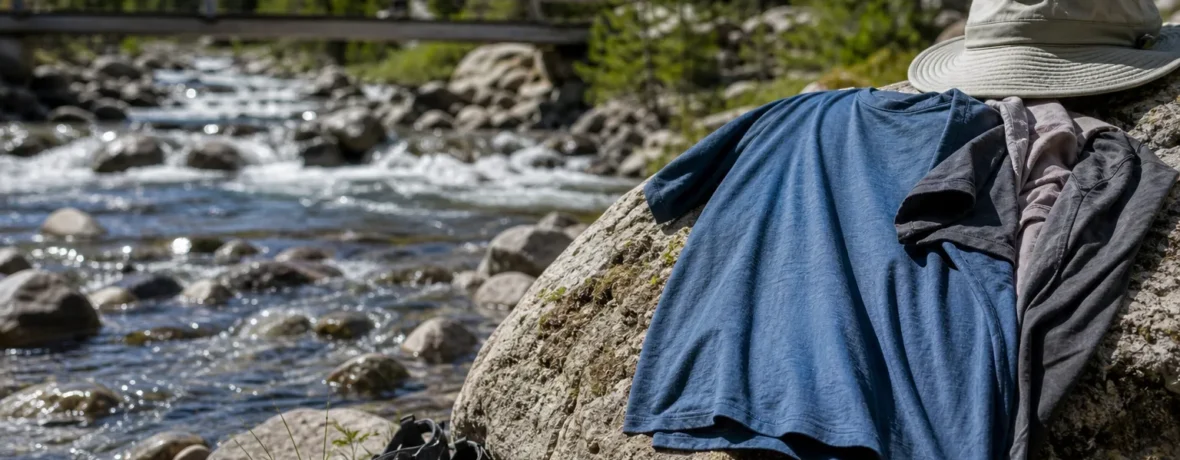
Yes. Light merino works well for most warm hikes if you choose 120–170 gsm fabric, a loose fit, and good ventilation. Skip heavy 200+ gsm layers in hot, humid weather. For socks, thin merino blends are usually the sweet spot.
Is merino wool good for summer hiking?
Yes, if the fabric is light enough.
Merino wool is not just “winter wool.” Fine merino fibers can manage sweat, cut odor, and feel softer against skin than old-school scratchy wool. That makes it useful on summer trails, especially for long days, backpacking trips, and hikes where you do not want your shirt smelling like a wet gym bag by lunch.
The trick is weight. A summer merino hiking shirt should usually sit in the 120–170 gsm range. That means grams per square meter, a standard fabric-weight measurement. Lower numbers feel lighter and airier. Once you climb into 200 gsm and above, you are moving into cooler-weather base layer territory.
Merino shines when the pace changes. You climb hard, sweat, stop at a windy overlook, then drop into shade. Cotton gets swampy. Some synthetics dry fast but hold stink. Light merino sits in the middle: not the fastest-drying option, but far better at staying comfortable across changing conditions.
Is merino wool breathable?
Yes, merino wool is breathable because the fiber can absorb and release moisture vapor.
That matters when you are hiking in heat. Sweat sitting on your skin feels clammy. Merino can pull moisture vapor into the fiber, then release it as conditions change. The Woolmark Company describes wool as naturally breathable because it absorbs water vapor and lets it evaporate, which can make garments feel less clingy during activity.
Breathability still depends on the shirt. A thick, tight merino tee with a dark color will feel hotter than a loose, pale, ultralight one. Mesh panels, a quarter-zip neck, and a relaxed cut all help. So does wearing your pack properly, because a sweaty back panel can overwhelm any fabric.
Woolmark’s wool breathability factsheet gives a useful breakdown of how wool handles moisture vapor.
How does merino compare with synthetic and cotton shirts in summer?
Merino is the comfort-and-odor pick, not the fastest-drying pick.
| Fabric | Best summer use | Main drawback |
|---|---|---|
| Light merino wool | Long hikes, backpacking, travel, mixed temps | Dries slower than many synthetics |
| Synthetic polyester or nylon | Hot, sweaty, high-output hikes | Can hold odor after repeated wear |
| Cotton | Short, dry, low-risk walks near town | Stays wet and can chafe |
If your hike is short, dry, and easy, almost any comfortable shirt works. If you are climbing for hours in 90°F [32°C] heat, a lightweight synthetic sun hoodie may feel cooler because it dumps moisture quickly. If you are hiking all day, camping overnight, then wearing the same shirt again, merino earns its place.
Are merino wool socks good for summer?
Yes, thin merino wool socks are good for summer hiking.
The best summer hiking socks are usually merino blends, not 100% wool. Nylon adds durability. Elastane or spandex helps the sock hold shape. The merino handles moisture and odor. That combo is why so many hiking socks use a wool blend.
For hot weather, look for thin or lightweight cushioning. Full-cushion socks can feel plush, but they trap more heat. A light crew sock protects your ankle from grit and boot rub without turning your feet into saunas.
Use this quick sock checklist:
- Choose lightweight or no-cushion socks for hot trails.
- Pick crew height if your shoes or boots rub your ankles.
- Avoid loose socks; wrinkles can lead to hot spots.
- Carry a dry spare pair for long hikes or creek crossings.
- Change socks during lunch if your feet are soaked.
What merino wool weight is best for hot weather?
Choose 120–170 gsm for summer hiking shirts.
A 120–150 gsm merino tee feels airy and works best in warm weather. A 150–170 gsm shirt gives a little more durability and coverage while still staying summer-friendly. Around 180–200 gsm, the shirt starts to feel more like a three-season base layer. Above 200 gsm, save it for cool mornings, shoulder season, or sleepwear in camp.
For socks, thickness matters more than gsm because sock brands usually label cushion level instead of fabric weight. Pick ultralight, lightweight, or light cushion for summer. Medium cushion can work in roomy boots, but it is overkill for many hot day hikes.
When should you not wear merino in summer?
Skip merino when you need maximum drying speed.
Merino can absorb moisture into the fiber, which helps it feel less clammy at first. The tradeoff: once it gets soaked, it can take longer to dry than a thin synthetic shirt. That matters in sticky humidity, desert heat with heavy sweat, or exposed routes where evaporative cooling is your main relief.
You may want synthetic instead when:
- The forecast is very hot and humid.
- You sweat heavily from the first mile.
- You are trail running or moving fast with few breaks.
- You need a shirt to dry quickly after washing in a sink.
- You want maximum UPF sun protection from a dedicated sun hoodie.
Merino also costs more and can wear faster under pack straps than burlier synthetic knits. If you bushwhack, scramble on rough rock, or hike with a heavy backpack, choose a merino blend or save pure merino for cleaner trails.
How do you choose a summer merino hiking shirt?
Buy the lightest shirt that still feels durable enough for your trail.
- Check the fabric weight. Aim for 120–170 gsm for summer.
- Look for a blend. Merino mixed with nylon often lasts longer under pack straps.
- Pick a relaxed fit. Airflow beats skin-tight styling in heat.
- Choose lighter colors. Pale gray, tan, and light blue feel cooler in sun than black or navy.
- Think about sun coverage. A long-sleeve merino layer can protect skin, but a synthetic sun hoodie may run cooler in blazing exposure.
- Test it before a big trip. Wear it on a local sweaty hike and see how it feels once wet.
Does merino wool smell less on summer hikes?
Yes, merino usually holds odor better than synthetic hiking shirts.
This is one of its strongest summer advantages. On a day hike, odor may not matter. On a three-day backpacking trip, it does. Woolmark explains that merino can absorb odor molecules before they become noticeable, which helps garments stay fresher between washes. You still sweat. The shirt still needs washing. It just buys you more wearable time.
Read more from Woolmark’s wool fiber overview on merino moisture and odor management.
When to see a doctor
Get medical help fast if heat symptoms are severe, worsening, or not improving after rest and cooling.
Clothing helps comfort, but it does not prevent heat illness by itself. In hot conditions, watch for dizziness, nausea, headache, weakness, muscle cramps, confusion, fainting, or stopped sweating with hot skin. Move to shade, cool the person, and treat serious symptoms as urgent.
The CDC’s heat-related illness guidance says heat stroke is a medical emergency. The Mayo Clinic’s heat exhaustion guide also warns that heat exhaustion can progress to heatstroke without prompt care. Do not try to diagnose yourself on trail. If symptoms are scary, call for help.
Related reading
- What Is Merino Wool and Why Hikers Swear By It
- Is Merino Wool Itchy? Micron Counts Explained
- How to Wash Merino Wool Without Shrinking It
- Is Merino Wool Warm When Wet?
FAQ
Is merino wool too hot for summer?
No, not if it is lightweight. Choose 120–170 gsm merino for shirts and thin merino-blend socks for warm hikes.
Does merino dry fast enough for hot hikes?
Sometimes. Merino dries slower than many synthetic fabrics, so it is better for odor control and comfort than for maximum drying speed.
Can you wear merino wool in 90°F [32°C] weather?
Yes, but only in a very light, loose shirt. In humid 90°F [32°C] weather, many hikers will feel cooler in a thin synthetic sun hoodie or ventilated synthetic tee.
Is 100% merino better than a merino blend?
Not always. A merino-nylon blend usually lasts longer for hiking, especially under backpack straps and inside shoes.
Should summer merino be tight or loose?
Loose is better for heat. A relaxed fit lets air move, helps sweat evaporate, and feels less clingy under a pack.
What is the best merino layer for summer backpacking?
A 120–170 gsm merino or merino-blend tee is the best starting point. Add thin merino socks and keep a dry sleep layer separate from your hiking clothes.