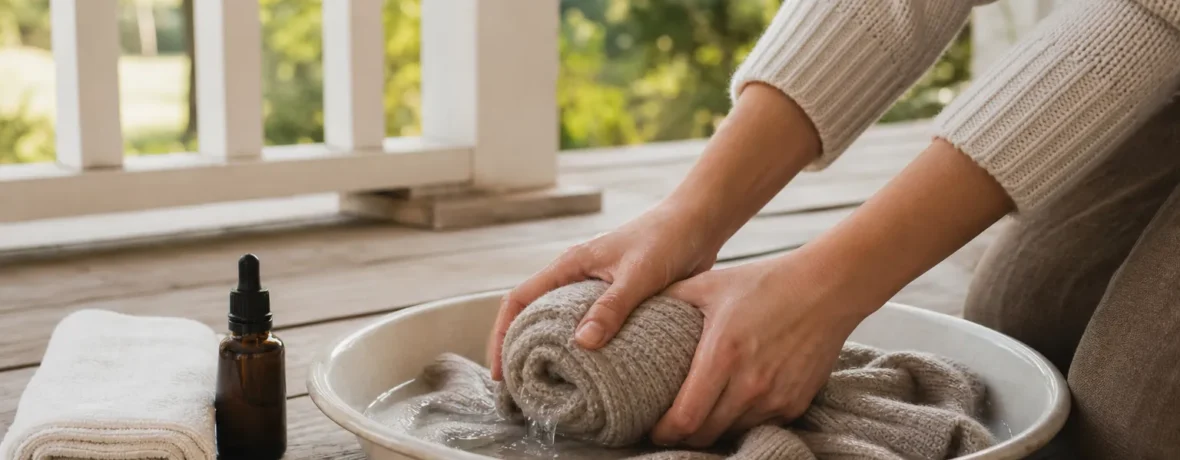
To wash merino wool without shrinking it, use cold or cool water, a gentle or wool cycle, mild detergent, and low agitation. Yes, most merino hiking layers can go in the washer if the care label allows it. Skip hot water, bleach, fabric softener, wringing, and high-heat drying.
How to wash merino wool without shrinking it?
Wash it gently, keep the temperature low, and dry it slowly.
Merino is tougher than it looks on trail, but laundry day is where people wreck it. The two big enemies are heat and friction. Add both together and the fibers can tighten, mat, and shrink. Treat your merino base layers like performance gear, not gym towels.
The safest default is cold water, gentle agitation, and air drying. Many major merino brands give similar care guidance: Woolmark’s wool washing guide says machine-washable wool can be washed when the care claim allows it, while Smartwool’s merino care guide recommends turning items inside out, using cool or warm water on gentle, and avoiding bleach and fabric softener.
What you need
- Mild liquid detergent or wool-safe detergent
- Mesh laundry bag for lightweight 150-weight shirts, underwear, and thin liners
- Clean towel for drying flat
- Drying rack or flat surface with airflow
- Cold water for spot treatment
Step-by-step merino wool wash method
- Read the care label first. If the tag says hand wash, do that. If it says dry clean only, don’t gamble with the washer.
- Turn every piece inside out. This protects the face fabric from pilling and reduces abrasion from zippers, buttons, and pack-belt wear spots.
- Close zippers and separate rough gear. Keep merino away from Velcro, hook-and-loop cuffs, heavy canvas, jeans, and anything with sharp hardware.
- Spot-treat stains with cold water. Dab mud, sweat stains, and food marks with a little mild detergent. Don’t scrub hard. Scrubbing raises fuzz and can thin the fabric.
- Use a gentle or wool cycle. Choose cold or cool water. A wool cycle at 86°F [30°C] is a common safe ceiling when the label allows machine washing; icebreaker’s care guidance recommends a gentle 86°F [30°C] wash with low spin for many of its merino garments.
- Add a small dose of detergent. More soap does not mean cleaner wool. Excess detergent can cling to fibers and make a shirt feel stiff or itchy.
- Use low spin if your washer allows it. High spin is not as risky as dryer heat, but thin merino knits do better with less twisting and pull.
- Remove items as soon as the cycle ends. Letting wet merino sit in a twisted clump encourages wrinkles and stretched seams.
- Reshape while damp. Lay the garment flat and gently nudge the sleeves, hem, collar, and side seams back into shape.
- Air dry flat or hang carefully. Flat drying is safest for sweaters and heavier pieces. Lightweight hiking tees and socks can usually hang, unless the label says flat dry only.
Can you machine wash merino wool?
Yes, if the garment label says machine washable.
Most modern merino hiking shirts, socks, underwear, and base layers are made for normal outdoor use, which includes sweat, salt, dirt, and laundry. Still, “merino” is not one single fabric. A 100% merino sweater, a nylon-blend hiking sock, and a merino sun hoodie may all have different instructions.
Use the care tag as the boss. If it allows machine washing, pick the gentlest setup your washer offers. Front-loaders are usually kinder than top-loaders with tall center agitators, but either can work when you use cold water, a gentle cycle, and a mesh bag for thin pieces.
| Method | Best for | Shrink risk | Trail-gear verdict |
|---|---|---|---|
| Machine wash cold, gentle cycle | Base layers, tees, underwear, most socks | Low when label allows it | Best everyday choice |
| Hand wash cool | Delicate knits, expensive layers, travel washing | Very low if you do not wring | Safest choice for fragile pieces |
| Warm wash, normal cycle | Durable socks and brand-approved items | Medium | Use only when the label permits it |
| Hot wash or hot dryer | Nothing you want to keep fitting | High | Skip it |
Does merino wool shrink in the wash?
Yes, merino can shrink if you use heat, heavy agitation, or the wrong drying method.
Shrinking usually happens when wool fibers are stressed while wet, then hit with heat or friction. The tiny scales on wool fibers can lock together. That is felting. Once a shirt has felted hard, it will not return to its original size and drape.
There is also mild shape loss. A damp hem can stretch. A cuff can tighten. A shirt can feel shorter after a wash, then relax slightly with wear. That is not the same as full shrinkage. You can often reshape damp merino by laying it flat and gently smoothing it back to its original outline.
Machine-washable wool has been made to handle laundering better than old-school wool sweaters. Woolmark states that if a Woolmark-approved garment’s care claim says it can be machine washed, it can be machine washed repeatedly without shrinkage taking place when the instructions are followed. That last part matters. The label still wins.
What temperature should you use for merino wool?
Use cold water, or cool water up to 86°F [30°C] when the label allows it.
Cold water is the best default for hiking clothes because it lowers shrink risk and helps protect blends, elastic waistbands, and printed labels. Cool water also handles normal sweat and trail dust well when paired with a good detergent.
Warm water can be allowed for some socks and rugged merino blends. Do not assume. If the garment tag says cold, choose cold. If it says 86°F [30°C], stay there. If your washer only has vague settings, choose “cold” or “tap cold,” not “warm.”
What detergent should you use on merino wool?
Use a mild detergent, preferably one labeled safe for wool.
A wool-specific wash is a safe pick for base layers, long underwear, and expensive tops. A mild liquid detergent can also work if it is free of bleach and fabric softener. Avoid heavy-duty detergents when the formula is built for deep stain stripping rather than delicate fibers.
Skip these:
- Chlorine bleach: It can weaken wool fibers.
- Fabric softener: It can coat fibers and interfere with moisture management.
- Heavy fragrance boosters: They can leave residue in thin knits.
- Too much detergent: It makes rinsing harder and can leave the fabric crunchy.
Merino naturally handles odor better than many synthetics. REI’s merino wool explainer notes that merino can absorb odor molecules and hold them until the garment is washed; that is one reason hikers can wear a merino layer more than once between washes on many trips. See REI’s overview of how merino wool works in outdoor clothing for more on the fabric’s trail-friendly traits.
Should you hand wash merino wool?
Hand washing is the safest method for delicate merino, but it is not required for every piece.
Hand washing makes sense for thin 100% merino tees, sweaters, beanies, glove liners, and any layer with a loose knit. It is also useful on a road trip or thru-hike town stop when the laundromat machines look rough.
Use this hand-wash method:
- Fill a clean sink or basin with cool water.
- Add a small amount of wool-safe detergent and mix it into the water.
- Submerge the garment and press it gently. Do not grind, scrub, or twist.
- Soak for 10 minutes.
- Rinse with cool water until the water runs clear.
- Press water out with your palms.
- Roll the garment in a towel and press again.
- Lay flat to dry and reshape the seams.
Never wring merino like a dish rag. That twisting can stretch seams, distort collars, and leave the shirt looking tired long before the fabric is truly worn out.
Can merino wool go in the dryer?
Sometimes, but air drying is safer.
Some merino socks and brand-approved garments can tumble dry on low. Smartwool says some wool clothes may be laid flat to dry and that low tumble drying can be used if preferred, while still telling you to review the label. Other brands tell you to line dry most garments and reserve dryer use for socks. That difference is why the tag matters.
If you use a dryer, choose low heat and remove the garment while slightly damp. Never use high heat. A hot dryer can shrink the garment, set wrinkles, weaken elastic, and make a soft base layer feel harsher.
For the longest life, dry like this:
- Lay sweaters and heavier layers flat on a towel.
- Hang lightweight tees over a wide bar, not a skinny hook.
- Keep wet merino out of direct sun during long drying sessions.
- Give cuffs, hems, and collars a gentle reshape before drying.
- Wait until the garment is fully dry before storing it.
How often should you wash merino hiking clothes?
Wash merino when it is dirty, salty, smoky, stained, or holding odor after airing out.
You do not need to wash a merino hiking shirt after every single wear unless the trip was sweaty enough to demand it. Airing it overnight often brings it back for another day. That is one reason merino is so popular for backpacking, hut trips, ski tours, and shoulder-season hiking.
Socks are different. Wash socks more often because they collect foot sweat, skin oils, grit, and trail dust inside your shoes. Underwear also deserves more frequent washing than a midlayer. A merino hoodie worn over a tee may go several wears before it needs a wash.
Use your nose and your eyes. If the pits stay sour after airing, wash it. If the collar has sunscreen, wash it. If the shirt is crusted with salt after a hot climb, wash it before that salt grinds into the fibers during the next wear.
How do you keep merino wool from pilling?
Reduce friction during washing and wearing.
Pilling happens when short fibers work loose and ball up on the surface. Pack straps, hip belts, rough shells, and washer abrasion can all speed it up. Pilling does not always mean the garment is failing, but it does make a pricey layer look older.
To cut down on pills:
- Turn garments inside out before washing.
- Use a mesh bag for lightweight pieces.
- Wash with similar soft fabrics.
- Keep merino away from Velcro and rough hardware.
- Use gentle cycles instead of normal or heavy-duty cycles.
- Remove pills with a fabric comb, not scissors.
What should you never do to merino wool?
Never combine hot water, rough agitation, and high heat drying.
That is the classic shrink-and-felt recipe. One mistake may not ruin every garment, but repeated harsh washing will shorten the life of your gear.
Here is the hard no list:
- Do not wash merino in hot water.
- Do not use chlorine bleach.
- Do not use fabric softener.
- Do not wring it dry.
- Do not dry on high heat.
- Do not wash it with Velcro, denim, towels, or abrasive gear.
- Do not hang heavy wet sweaters from the shoulders.
- Do not store it damp.
How do you fix merino wool that shrank?
You may be able to relax mild shrinkage, but you cannot fully reverse felting.
If the garment is only slightly tight, soak it in cool water for 10 minutes, press out the water, roll it in a towel, then lay it flat. Gently ease the fabric back toward its original length and width. Use light pressure. Pulling hard can distort the knit or tear seams.
If the fabric feels dense, stiff, and matted, it has probably felted. At that point, the fibers have locked together. You can try reshaping while damp, but the original fit and stretch are unlikely to return.
Related reading
- What Is Merino Wool and Why Hikers Swear By It
- Is Merino Wool Itchy? Micron Counts Explained
- Is Merino Wool Warm When Wet?
- Is Merino Wool Good for Summer Hiking?
FAQ
Can I wash merino wool with regular clothes?
Yes, but only with soft, similar fabrics. Keep merino away from jeans, towels, Velcro, heavy zippers, and anything abrasive that can cause pilling or snags.
Can I use normal laundry detergent on merino wool?
Yes, if it is mild and does not contain bleach or fabric softener. A wool-safe detergent is the better pick for thin, expensive, or 100% merino layers.
Should I wash merino wool inside out?
Yes. Turning merino inside out reduces surface abrasion, helps limit pilling, and protects the outer face of the fabric during the wash.
Can I wash merino wool socks the same way as shirts?
Usually, yes: inside out, cool water, gentle cycle, mild detergent. Some socks tolerate low dryer heat better than shirts, but follow the sock label before tossing them in the dryer.
Why did my merino shirt shrink even in cold water?
Agitation, spinning, previous heat exposure, or an overly aggressive wash cycle can still cause shape change. The garment may also have been stretched during wear and then relaxed back after washing.
What is the safest way to dry merino wool?
Lay it flat on a clean towel and reshape it while damp. Lightweight hiking tees can often hang dry, but flat drying is safest for heavier knits and anything you are worried about shrinking.