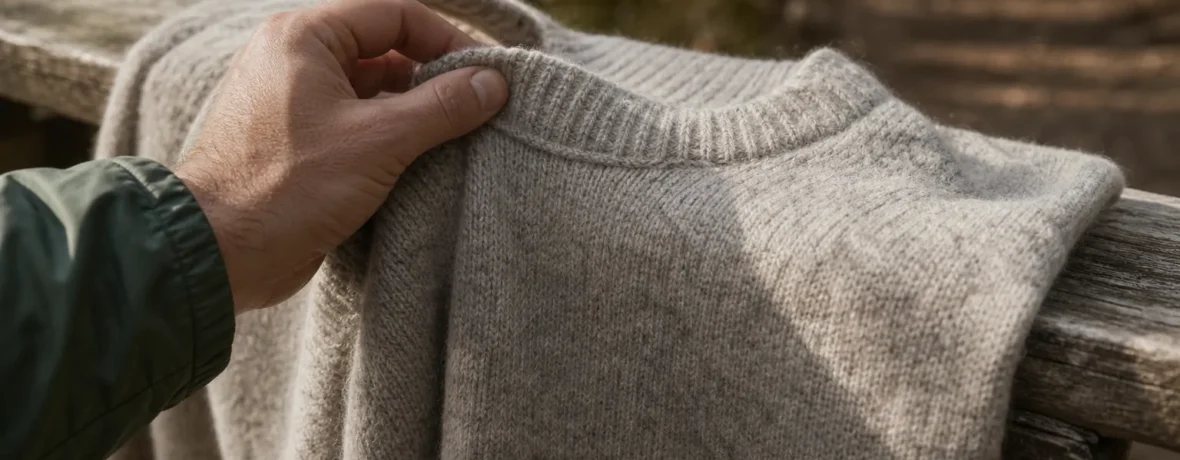
Is merino wool itchy? Usually, no—if it’s fine enough. Merino around 17.5 to 19.5 microns is typically soft for next-to-skin hiking layers, while coarse fibers at 30 to 32 microns or higher are more likely to prickle. Fit, seams, sweat, and skin sensitivity can still make a shirt feel scratchy.
Is merino wool itchy if the micron count is low?
Low-micron merino is much less likely to itch. The big number to know is fiber diameter: the width of each wool fiber, measured in microns. One micron is one millionth of a meter, which is 0.000039 inch [0.001 mm]. Smaller number, finer fiber. Finer fiber, softer feel.
The Woolmark Company lists typical merino fiber diameter from less than 17.5 microns up to 22 to 24 microns, with fibers below 19.5 microns commonly used for base layers, underwear, and fine knitwear. That tracks with what hikers feel on trail: the lightest, softest merino tees and long sleeves usually sit in that sub-20-micron range. Woolmark’s wool fiber guide
Prickle is mechanical. Coarse fiber ends press into your skin instead of bending away. A 2017 review in Acta Dermato-Venereologica found that wool-fiber irritation is linked to high fiber diameters at 30 to 32 microns and above, and that current evidence does not support wool fiber itself as a skin allergen. PubMed abstract on wool allergy evidence
Is merino wool soft?
Yes, good merino is soft because fine fibers bend against your skin instead of poking it. That’s the simple answer. But “merino” on a hang tag does not tell you everything.
A soft hiking base layer comes from the whole fabric, not just the sheep. Micron count matters most, but yarn structure, knit, fabric weight, seams, dye, finishing, and fit all change how it feels after five sweaty miles with a hip belt grinding at your waist.
Here’s the practical trail translation:
| Micron count | Common label | Best hiking use | Skin feel |
|---|---|---|---|
| 17.5 microns and under | Ultrafine or superfine merino | Next-to-skin base layers, underwear, sleep layers | Softest, best for sensitive hikers |
| 17.6 to 19.5 microns | Fine merino | Most hiking tees and long-sleeve base layers | Soft for most people |
| 19.6 to 22 microns | Medium merino | Midlayers, sweaters, heavier shirts | Can feel fine, may prickle sensitive skin |
| 22 to 24 microns | Broader merino | Outerwear and durable knits | Less ideal directly on bare skin |
What micron merino wool is best for hiking base layers?
Choose 17.5 to 19.5 microns for next-to-skin hiking layers. That range gives you the best shot at a soft shirt that still handles sweat, shoulder straps, and repeated wear.
For backpacking, softness is only half the job. A base layer also needs to move moisture, resist odor, and keep feeling decent when the weather turns. Merino is popular because the fiber structure helps manage moisture vapor and odor while insulating in cool weather. But if the shirt makes your neck itch before you leave the parking lot, none of those benefits matter.
Use this buying checklist:
- For sensitive skin: look for 17.5 microns or lower.
- For most hikers: 18 to 19.5 microns is a reliable sweet spot.
- For durability: consider a merino-nylon blend, but still check the wool micron count.
- For hot-weather hiking: pick a lighter fabric weight and a relaxed fit.
- For cold starts: a snugger long sleeve can work, but avoid tight seams under pack straps.
Why does some merino still feel scratchy?
Scratchiness can come from the fabric, not just the fiber. Even fine merino can annoy your skin if the garment is built wrong for your body or your hike.
Common culprits:
- Coarser yarn mixed in: A brand may say “merino” without giving the actual micron count.
- Raised seams: Shoulder seams under pack straps can rub fast.
- Tight fit: Stretching fabric across the shoulders or chest can press fibers into the skin.
- Sweat and salt: Dried sweat can make any fabric feel abrasive.
- Labels and stitching: Neck tags and heavy thread can be itchier than the wool itself.
- Skin barrier issues: Dry or irritated skin is more reactive to rough textures.
Also, fabric finishing changes hand feel. Woolmark notes that mercerized merino can feel smoother because processing modifies the fiber surface, making the perceived hand feel similar to using wool 2 to 3 microns finer, even though the actual diameter does not change. Woolmark on mercerized merino
How do you test merino wool before hiking in it?
Test it at home before you commit to a long day under a pack. A shirt that feels “fine” for 30 seconds in a store can feel nasty after sweat, heat, and pressure.
- Check the tag or product page. Look for the exact micron count. If it only says “premium merino,” keep digging.
- Rub the collar against your neck. The neck is a good early-warning zone for itch.
- Wear it for 30 minutes at home. Keep it against bare skin, not over another shirt.
- Add a loaded daypack. Walk around with shoulder straps and a hip belt to test seam rub.
- Get slightly sweaty. Climb stairs or take a brisk walk. Sweat changes the feel.
- Wash once, then retest. Some garments soften after washing; others shrink or change fit.
Is merino wool better than regular wool for itch?
Yes, merino is usually better for itch because the fibers are finer. Traditional wool sweaters can use broader, stiffer fibers that don’t bend as easily when they touch your skin.
That’s why your old wool sweater may have felt like a punishment, while a fine merino hiking tee can feel smooth enough to sleep in. Same broad fiber family. Very different diameter.
Still, don’t buy by fiber name alone. Buy by micron count and garment design. A 19-micron merino base layer with flat seams will usually feel better on trail than a mystery-micron “wool blend” sweater with bulky stitching.
Is merino wool good for sensitive skin?
Fine merino can work for sensitive skin, but irritated skin gets the final vote. Some people tolerate superfine merino well; others do better with a thin synthetic or silk-weight layer between wool and skin.
The American Academy of Dermatology says rough-feeling fabrics, including wool and some synthetics, can irritate sensitive skin when a rash is present. That does not mean every merino shirt is a problem. It means texture matters when skin is already angry. AAD guidance on itchy contact dermatitis
If you have eczema-prone skin, don’t assume old advice about “avoid all wool” applies to every modern merino garment. Fine fiber diameter matters. So does your own reaction.
How should you choose a non-itchy merino hiking shirt?
Buy the softest fabric that still fits your hiking style. For most hikers, that means a fine merino tee or long sleeve with flat seams, no scratchy tag, and enough room to move.
Look for these details before you spend the money:
- Micron count listed: 17.5 to 19.5 microns for next-to-skin comfort.
- Flatlock seams: Less rubbing under pack straps.
- Tagless neck: A small thing that saves your sanity.
- Blended fabric: Merino with nylon can improve durability; merino with elastane can improve stretch.
- Return policy: Skin feel is personal. Keep the tags on until you test it indoors.
- Correct layer: Use heavier merino as a midlayer if it feels too textured for bare skin.
When to see a doctor
See a doctor if itch turns into a rash that is severe, widespread, painful, or does not improve after you stop wearing the garment. Do the same if the rash affects your face, eyes, mouth, or genitals, or if itching keeps you from sleeping.
Mayo Clinic describes contact dermatitis as an itchy rash caused by direct contact with a substance or an allergic reaction, and says it can include dry, cracked, scaly skin, bumps, blisters, swelling, burning, or tenderness. Avoiding the trigger often helps, but persistent or severe symptoms need medical care. Mayo Clinic on contact dermatitis symptoms
No shirt is worth toughing out a nasty skin reaction. Swap layers, wash your skin, and get proper medical advice if symptoms stick around.
Related reading
- What Is Merino Wool and Why Hikers Swear By It
- How to Wash Merino Wool Without Shrinking It
- Is Merino Wool Warm When Wet?
- Is Merino Wool Good for Summer Hiking?
FAQ
Does merino wool get less itchy after washing?
Sometimes, yes. Washing can remove finishing residues and soften the hand feel, but it will not change the actual micron count. Follow the care label, use a gentle detergent, and skip fabric softeners unless the brand allows them.
What micron merino is not itchy?
For most people, 17.5 to 19.5 microns is the safe range for next-to-skin comfort. If you have very sensitive skin, start at 17.5 microns or lower and test it indoors first.
Is merino wool allergy real?
A true allergy to wool fiber appears unlikely based on current evidence. The more common issue is mechanical irritation from coarse fibers, dyes, finishes, seams, or a skin condition that makes texture feel worse.
Why does merino wool make me itch when others say it is soft?
Your skin, the garment, and the hike all matter. A shirt may have a higher micron count, scratchy seams, a tight fit, dried sweat, or a neck tag that irritates you even if the fabric feels fine to someone else.
Should I wear a layer under merino wool?
Wear a layer under merino if it feels scratchy but you still want warmth and odor control. A thin synthetic or silk-weight liner can keep the wool off irritated skin while letting you use the merino as a midlayer.