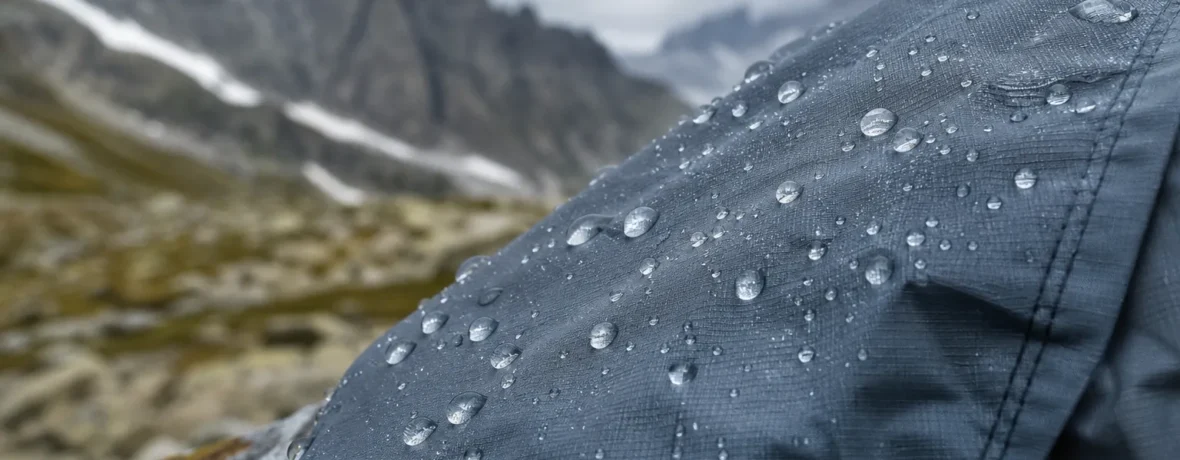
Gore-Tex is a waterproof, windproof, breathable fabric membrane used in jackets, pants, boots, and gloves. Yes, it’s worth it for wet, windy, multi-hour hiking; no, it’s usually overkill for dry climates, short walks, or low-output drizzle.
What Is Gore-Tex Made Of?
Gore-Tex is a thin waterproof-breathable membrane bonded inside a fabric laminate. The membrane sits between protective textile layers, so you usually never see it; you just wear the finished shell, boot, or glove.
Classic Gore-Tex used an expanded polytetrafluoroethylene membrane, usually shortened to ePTFE. Newer products increasingly use expanded polyethylene, or ePE. Gore describes current membranes as extremely thin layers engineered for waterproof, windproof, and breathable performance, often combined with polyurethane and laminated to face fabrics and backers. You can read Gore’s own explanation on its Gore-Tex membrane technology page.
The outer fabric also gets a durable water repellent treatment, called DWR. That treatment makes raindrops bead and roll off. The membrane does the waterproofing. The DWR keeps the face fabric from soaking up water and feeling cold, heavy, and clammy.
How Does Gore-Tex Keep You Dry?
Gore-Tex keeps liquid water out while letting some water vapor escape. That’s the promise, and it’s the reason hikers pay more for it.
Think of a rain jacket as three jobs stitched into one piece of gear:
- Block rain: the membrane stops liquid water from passing through.
- Block wind: the membrane cuts windchill when weather turns sharp.
- Dump sweat vapor: the fabric lets some moisture vapor move outward before it condenses inside.
That last job gets misunderstood. Breathable does not mean air-conditioned. If you grind uphill with a loaded pack in 55°F [13°C] rain, you can still get wet from sweat. Pit zips, loose cuffs, a front zipper, and smart layering matter as much as the logo on the sleeve.
Is Gore-Tex Actually Waterproof?
Yes, real Gore-Tex products are waterproof when the membrane and seams are intact. The weak points are usually wear, contamination, failed seam tape, or a tired DWR finish.
Many hikers think their jacket has “stopped being waterproof” when the outside fabric wets out. Wetting out means the face fabric has absorbed water instead of beading it. The membrane may still be blocking rain, but breathability drops hard because the soaked outer layer traps heat and vapor. You feel damp. Then cold. Then annoyed.
Common reasons a Gore-Tex shell feels leaky:
- Dirty face fabric from sweat, body oils, sunscreen, smoke, or trail grime
- DWR worn off at the shoulders, cuffs, hood brim, and pack-belt zones
- Seam tape peeling inside the jacket
- A puncture, abrasion patch, or delamination bubble
- Too many warm layers under the shell, causing sweat buildup
What Are the Main Types of Gore-Tex for Hiking?
The right type depends on your weather, pack weight, and how hard you hike. Don’t buy the burliest shell just because it looks serious.
| Type | Best For | Trade-Off |
|---|---|---|
| 2-layer Gore-Tex | Casual hiking, travel, around-town rain shells | Usually softer and less expensive, but bulkier than premium shells |
| 2.5-layer shells | Light backpacking, emergency rain protection | Packable, but can feel clammy against bare skin |
| 3-layer Gore-Tex | Backpacking, alpine hiking, rough weather | More durable and protective, usually higher price |
| Gore-Tex Pro | Heavy packs, winter travel, guide-level abuse | Stiffer, louder, and more shell than many hikers need |
As of November 2026, Gore is also pushing next-generation ePE membranes, which it describes as light, thin, strong, and made without intentionally added PFAS. Gore explains that transition on its next-generation Gore-Tex products page. PFAS are a broad family of synthetic chemicals; for background on the broader category, see the EPA’s PFAS information page.
Is Gore-Tex Worth It for Hiking?
Gore-Tex is worth it when failure would ruin the day or raise the risk. If you hike in the Pacific Northwest, the Northeast, Alaska, Scotland-style weather, shoulder seasons, high mountains, or exposed windy terrain, a dependable waterproof shell earns its space fast.
It makes the most sense when you need:
- Rain protection for several hours, not several minutes
- Wind protection above treeline or on open ridges
- A shell that works under a backpack
- Durability through brush, rock, snow, and repeated trips
- Footwear protection in wet grass, mud, slush, and shallow puddles
It makes less sense for hot summer hiking, desert trails, quick dog walks, umbrella-friendly routes, or people who run warm and sweat through every shell anyway. In those cases, a cheaper rain jacket, wind shell, poncho, or non-waterproof trail runner may feel better.
What Are the Downsides of Gore-Tex?
The big downsides are price, heat buildup, maintenance, and eventual wear. Gore-Tex is tough, but it is not magic armor.
Expect these trade-offs:
- Cost: Gore-Tex gear often sits near the top of a brand’s lineup.
- Sweat: Breathability has limits during steep climbs and humid storms.
- Noise: Some hard shells sound crinkly compared with soft rainwear.
- Care: You need to wash and refresh DWR to keep performance high.
- Fit sensitivity: Too tight, and it restricts layers; too loose, and it flaps in wind.
Boots bring their own debate. Gore-Tex hiking boots keep out rain and wet vegetation, but once water gets over the cuff, they dry slower than breathable non-waterproof shoes. For warm thru-hikes with frequent stream crossings, many hikers choose fast-drying trail runners instead.
How Do You Take Care of Gore-Tex Gear?
Clean Gore-Tex works better than dirty Gore-Tex. Dirt and body oils can choke the face fabric and weaken water beading.
Follow the care label first, then use this basic routine:
- Close all zippers and hook-and-loop tabs. Loosen drawcords so the garment washes evenly.
- Wash with a small amount of liquid detergent. Skip fabric softener, bleach, and heavy powdered detergent.
- Rinse well. A second rinse helps remove leftover detergent.
- Dry as directed on the label. Heat often helps reactivate DWR, but always follow the garment instructions.
- Test the beading. Sprinkle water on the shoulders and sleeves. If it beads, you’re good.
- Reapply DWR when needed. Use a spray-on or wash-in treatment made for waterproof-breathable shells.
Gore says DWR helps prevent the outer fabric from soaking and that washing, drying, and heat can help reactivate it. See Gore’s DWR care guidance and outerwear care instructions for current product-specific advice.
What Should You Look for Before Buying Gore-Tex?
Buy for your actual hiking conditions, not the harshest storm you can imagine. Features beat hype.
Use this checklist before you spend:
- Fit over layers: Try it with your fleece or puffy underneath.
- Hood design: The hood should turn with your head and seal around a hat.
- Pit zips: Valuable for steep climbs and humid rain.
- Pockets: Make sure your hip belt does not block them.
- Hem length: Longer hems protect better under a pack.
- Cuff closure: Good cuffs seal over gloves and vent when opened.
- Weight: Ultralight shells save ounces but may sacrifice durability.
- Warranty and repair: Seam tape, zippers, and delamination matter over time.
For most hikers, the sweet spot is a 3-layer shell with pit zips, a real hood, and enough room for a midlayer. Skip expedition-grade stiffness unless you regularly carry heavy loads in ugly weather.
Related reading
- How to Use a Compass for Hiking
- How to Waterproof a Tent: Seams, Rainfly and Floor
- How to Choose a Sleeping Bag: Temperature Ratings, Fill and Shape
- What Is Merino Wool and Why Hikers Swear By It
FAQ
Is Gore-Tex better than a regular rain jacket?
Yes, for sustained rain, wind, and backpacking use, Gore-Tex is usually better than a basic coated rain jacket. A cheaper jacket can still work well for short hikes, mild weather, or emergency-only use.
Does Gore-Tex lose waterproofing over time?
The membrane can stay waterproof for years if it is not damaged, but the DWR finish wears down. When the outer fabric stops beading water, wash it, dry it as directed, and reapply DWR if needed.
Is Gore-Tex too hot for summer hiking?
Often, yes. In warm rain or humid weather, any waterproof shell can trap sweat faster than it releases vapor, so venting and light layers matter more than the fabric name.
Are Gore-Tex boots good for hiking?
Yes, Gore-Tex boots are good for cold rain, wet grass, mud, and shoulder-season hiking. They are less ideal for hot trails and repeated deep stream crossings because they dry slower once water gets inside.
What is the best alternative to Gore-Tex?
The best alternative is a high-quality waterproof-breathable shell from another proven fabric maker, or a simple non-breathable poncho if you prioritize ventilation and price. For dry climates, a wind shell plus emergency rain layer may be smarter.
So, should you buy Gore-Tex?
Buy Gore-Tex if you hike in real weather and want dependable protection you can maintain for years. Skip it if your trips are short, warm, mostly dry, or budget-sensitive.