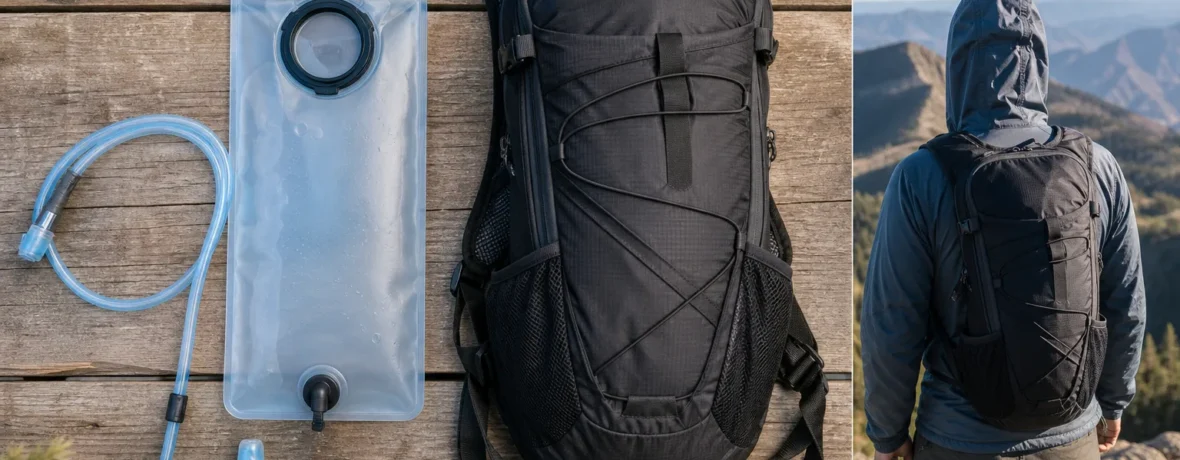
A hydration pack is a backpack or vest that carries water in a soft reservoir with a drinking hose, so you can sip while moving. Most hold 1.5 to 3 liters [51 to 101 oz] of water, plus enough storage for a run, ride, day hike, or fast summit push.
What is a hydration pack?
A hydration pack is a hands-free water-carrying system built into a pack.
The core parts are simple: a reservoir, also called a bladder, a hose, and a bite valve. You fill the reservoir, slide it into a sleeve inside the pack, route the hose over your shoulder, and drink by biting or squeezing the valve. No stopping. No digging for a bottle. No awkward one-handed pack shuffle on steep trail.
Hydration packs come in several shapes. A slim running vest hugs your ribs and carries soft flasks or a small bladder. A mountain biking pack rides higher and often includes tool pockets. A hiking hydration backpack looks more like a regular daypack, with a bladder sleeve, hose port, and room for layers, snacks, a headlamp, and the rest of your trail basics.
The National Park Service tells hikers to plan ahead for water and heat, especially in hot weather, because dehydration and heat illness can sneak up fast on exposed trails. A pack does not make you immune to bad planning, but it makes steady sipping much easier than stopping every time you want a drink. See the NPS hiking safety guidance for broader trip planning basics.
What is a hydration backpack?
A hydration backpack is a backpack designed to carry a water reservoir and drinking tube.
The phrase gets used almost interchangeably with hydration pack, but there is a small difference in how hikers use it. A “hydration pack” can mean a tiny race vest, a bike pack, or a full daypack with a bladder. A “hydration backpack” usually means the backpack-style version: shoulder straps, back panel, storage pockets, and a reservoir sleeve.
If you hike with layers, lunch, a first-aid kit, rain gear, and navigation tools, choose the backpack style. If you only need water, keys, and one gel for a short trail run, a vest or minimalist pack will feel better.
| Type | Best for | Typical water capacity | Typical storage |
|---|---|---|---|
| Minimal hydration pack | Short runs, quick rides, local loops | 1 to 1.5 L [34 to 51 oz] | Keys, phone, small snack |
| Hydration vest | Trail running, fast hiking | 1.5 to 2 L [51 to 68 oz] | Light layers, snacks, soft flasks |
| Hydration backpack | Day hiking, peak bagging, biking | 2 to 3 L [68 to 101 oz] | Layers, food, gear, repair kit |
How does a hydration pack work?
It works by feeding water from a flexible reservoir through a hose to your mouth.
The reservoir sits upright inside the pack. A screw cap, slide-top, or wide-mouth opening lets you fill it. The hose connects near the bottom, then runs through a port and clips to a shoulder strap. Most bite valves stay closed until you bite down, and many have an on/off lever to prevent drips in the car or inside your tent.
Good packs keep the reservoir stable. Bad packs let it slump, slosh, or pull backward when full. That matters because 3 liters of water weighs 6.6 lb [3 kg] before you add food or gear. The closer that weight rides to your spine, the better the pack feels.
What size hydration pack do you need for hiking?
For most day hikes, choose a 2 to 3 L [68 to 101 oz] reservoir and 10 to 25 L [610 to 1,526 cu in] of pack storage.
Water capacity and gear capacity are separate decisions. A 3 L reservoir can fit inside a tiny pack with no room for a jacket. A 20 L daypack may include only a 2 L bladder. Match both to your route, weather, pace, and refill options.
- Short hikes under 2 hours: 1 to 1.5 L [34 to 51 oz] can work if the weather is mild and the trail is close to help.
- Half-day hikes: 2 L [68 oz] is the sweet spot for many hikers.
- Hot, dry, exposed trails: 3 L [101 oz] gives you more margin, especially when water sources are unreliable.
- Long day hikes: pair a 2 to 3 L reservoir with bottles or a filter if you will refill.
Do not rely on a single number for every hike. The CDC describes heat exhaustion as a loss of water and salt through sweating and lists heavy sweating, weakness, dizziness, headache, nausea, and fainting among warning signs. Read the CDC heat illness guidance before hiking in high heat.
How do you choose the best hydration pack?
Choose by water capacity, fit, storage, hose design, and how easy it is to clean.
- Pick your reservoir size. Go smaller for cool, short efforts and larger for hot or remote trails. A 2 L [68 oz] bladder is a solid all-around choice.
- Choose pack volume. For day hiking, 10 to 20 L [610 to 1,220 cu in] handles snacks, shell, insulation, headlamp, small first-aid kit, and personal items. For shoulder-season hikes, 20 to 30 L [1,220 to 1,831 cu in] gives warmer layers room to breathe.
- Check the fit loaded. Add weight before judging it. A full reservoir changes how the shoulder straps, sternum strap, and hip belt feel.
- Look at the back panel. Mesh and air channels reduce sweat buildup. A firm framesheet helps when you carry heavier gear.
- Test the hose route. The bite valve should land near your mouth without flopping. Magnetic clips are handy, but simple strap clips work fine.
- Inspect the pockets. You want fast access to snacks, phone, map, lip balm, sunscreen, and a water filter if you carry one.
- Check cleaning access. Wide openings, quick-disconnect hoses, and removable bite valves save time after sticky drink mixes.
Is a hydration pack better than water bottles?
A hydration pack is better for steady sipping, while bottles are better for measuring and cleaning.
Bladders shine when the trail gets steep, rocky, or fast. You drink without stopping, which helps you keep a rhythm. Bottles are easier to refill from shallow streams, easier to see how much water remains, and easier to scrub clean after drink mix.
Many hikers carry both. Put plain water in the bladder and electrolytes or drink mix in a bottle. That keeps the hose cleaner and gives you backup if a bite valve leaks or freezes.
What features matter most in a hydration pack?
The best features are the ones that make water easy to carry, drink, and manage.
- Wide-mouth reservoir: easier filling, easier cleaning, easier ice cubes.
- Quick-disconnect hose: lets you remove the reservoir without unthreading the hose from the shoulder strap.
- Bite-valve shutoff: prevents drips in your trunk, tent, or pack.
- Sternum strap: keeps the load from bouncing when you move fast.
- Hip belt or waist strap: useful once the pack carries layers, food, and more than 2 L [68 oz] of water.
- External stash pocket: perfect for a rain shell or damp layer.
- Reservoir hanger: stops the bladder from sagging into a lump at the bottom of the pack.
For cold-weather hikes, look for an insulated hose sleeve or plan to blow water back into the reservoir after each sip. Hoses freeze before reservoirs do. In desert heat, a light-colored pack and insulated hose can keep the first sip from tasting like warm plastic.
How do you clean and store a hydration pack?
Clean the reservoir after every hike and dry it fully before storage.
Plain water needs less work than sugary drink mix, but it still leaves moisture inside a dark tube. Rinse the bladder, hose, and bite valve with warm water. Use mild dish soap when needed. Run water through the hose, open the bite valve, and hang everything until bone dry.
A simple drying checklist:
- Empty the reservoir completely.
- Remove the hose if the design allows it.
- Pull off the bite valve and rinse inside it.
- Prop the reservoir open with a drying rack or clean utensil.
- Store it dry, uncapped, and away from heat.
If you use drink mix, clean it the same day. Sweet residue turns into funk fast. Once odor sets into a hose, replacing the hose is often easier than rescuing it.
When to see a doctor
Get medical help right away for severe dehydration symptoms or signs of heat stroke.
A hydration pack helps you drink, but it is not medical gear. Mayo Clinic says severe dehydration needs immediate medical treatment, and adult warning signs can include extreme thirst, less frequent urination, dark-colored urine, fatigue, dizziness, or confusion. Use the Mayo Clinic dehydration guide as a reference, not as a trail diagnosis tool.
Call 911 for confusion, loss of consciousness, hot skin, or suspected heat stroke. If symptoms get worse, vomiting starts, or heat-exhaustion symptoms last longer than 1 hour, follow the CDC heat-related illness first-aid chart and get medical help.
Related reading
- How to Pack a Hiking Backpack: Weight Zones and a Simple Diagram
- Hiking Hydration and Nutrition: How to Fuel a Long Day on the Trail
- How to Use a Compass for Hiking
- How to Waterproof a Tent: Seams, Rainfly and Floor
FAQ
Can you put ice in a hydration pack?
Yes, if the reservoir opening is wide enough. Ice can keep water cooler, but do not overfill the bladder because expanding ice can stress seams and make the pack harder to load.
Can you put sports drink in a hydration bladder?
Yes, but water is cleaner and easier. Sugary mixes leave residue in the hose and bite valve, so rinse and dry the system the same day if you use anything besides water.
How long does water stay good in a hydration pack?
Drink it the same day when you can. If water has been sitting in a warm bladder, especially after mouth contact through the hose, empty it and clean the system before your next hike.
Do hydration packs leak?
Good ones should not leak when closed correctly. Most leaks come from a loose cap, poorly seated hose connector, damaged O-ring, or bite valve left open under pressure.
Are hydration packs good for backpacking?
Yes, but use them with a backup bottle or filter plan. A bladder is great while walking, while bottles are easier for camp chores, measuring water, and refilling from shallow sources.