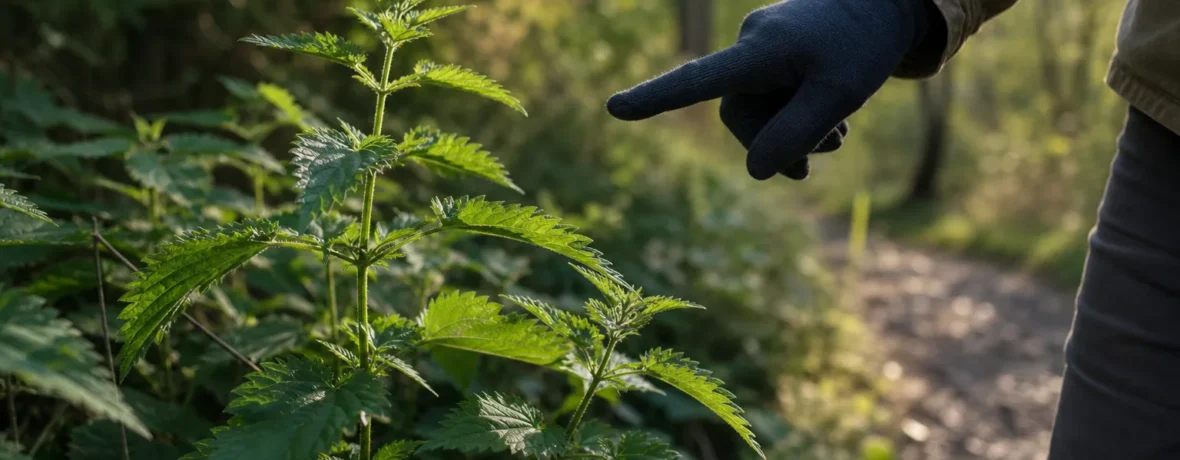
What does stinging nettle look like? It’s a tall green plant, usually 3.5 to 10 feet [1.1 to 3 m], with opposite, toothed leaves, square hairy stems, and drooping greenish-white flower clusters. It often grows in moist colonies near creeks, ditches, shaded trails, and forest edges.
What does stinging nettle look like on the trail?
Stinging nettle looks like a leafy, upright green plant with jagged leaves and tiny stinging hairs on the stems and leaf undersides.
The classic field marks are simple once you slow down and look before brushing past:
- Height: mature plants often stand 3.5 to 10 feet [1.1 to 3 m], though younger plants are much shorter.
- Leaves: opposite pairs, 2.5 to 5 inches [6 to 13 cm] long, lance-shaped to oval, with coarse teeth along the edges.
- Stems: angular or square, upright, green, and hairy.
- Hairs: fine, stiff, needle-like hairs on stems and leaves; these are the business end.
- Flowers: small, greenish-white clusters that hang from the leaf joints as the plant matures.
- Growth pattern: dense patches or colonies, not one lonely stem on bare ground.
UC Integrated Pest Management has a solid stinging nettle identification guide with the same trail-friendly markers: opposite leaves, toothed margins, angular hairy stems, and whitish-green flower clusters.
| Plant | Quick ID | Trail risk |
|---|---|---|
| Stinging nettle | Opposite serrated leaves, square hairy stems, greenish flower clusters | Immediate sting, burning, itching |
| Poison ivy | Three leaflets, vine or shrub form, no stinging hairs | Delayed itchy rash from plant oil |
| Blackberry or raspberry canes | Woody arching stems with thorns, compound leaves | Scratches and punctures |
| Mint family plants | Square stems, often aromatic leaves, no stinging hairs | Usually low unless misidentified |
Where does stinging nettle grow?
Stinging nettle grows best in damp, rich soil where hikers often reach for balance.
Scan for it along creek banks, river bottoms, wet meadows, ditch edges, shaded roadsides, fence lines, campsites, and overgrown trail margins. It likes nitrogen-rich soil, which means you may also see it near old homesteads, livestock areas, and disturbed ground.
On a narrow trail, nettle is easy to miss until your shin, wrist, or the back of your hand grazes it. That’s why it nails hikers so often. You step aside for another group, push through lush vegetation near water, or kneel to filter from a creek. Zap.
What happens if stinging nettle touches your skin?
A nettle sting usually causes fast burning, itching, redness, tingling, and small raised bumps.
The sting comes from brittle plant hairs that work like tiny needles. When they snap against your skin, they can release irritating substances. A PubMed-indexed review on stinging nettle dermatitis describes itching, dermatitis, and urticaria within moments of contact, and also states that there is no single standard treatment.
For most hikers, the first sensation is sharp and electric, then it turns hot and itchy. Visible redness may show up within minutes. The tingle can fade quickly or hang around for hours. UC IPM notes that prolonged tingling can persist beyond 12 hours after visible symptoms fade.
Nettle is different from poison ivy. Poison ivy is an allergic contact reaction to urushiol oil and often appears later. Nettle is more immediate. You usually know exactly when it happened.
How do you treat a stinging nettle sting?
Treat a nettle sting by washing the skin, removing remaining hairs, cooling the area, and watching for severe symptoms.
- Step away from the plants. Don’t keep hiking through the patch while you inspect the sting. Move to clear ground first.
- Do not rub the area. Rubbing can push hairs deeper or spread irritation across nearby skin.
- Wash with soap and water. Use clean water from your bottle if you’re still on trail. Soap helps remove plant material from the skin.
- Lift out tiny hairs. If you see fine hairs or still feel prickling, use adhesive tape to gently lift them off. Press lightly, peel, and repeat with a fresh piece.
- Use a cool compress. A wet bandana, a cold stream-soaked cloth, or a wrapped cold pack can calm burning and itch.
- Consider anti-itch care. Calamine lotion or an over-the-counter corticosteroid cream may help with irritation. Mayo Clinic lists cool compresses, calamine, oatmeal baths, and cortisone creams among common self-care options for itchy plant rashes in its plant rash self-care guidance.
- Ask a pharmacist or clinician before using medicines. This is especially smart for children, pregnancy, medical conditions, allergies, or if you already take daily medications.
Back at home, change clothes and wash exposed hiking pants, sleeves, gloves, and socks. Nettle hairs can cling to fabric. Don’t scratch the bumps open; broken skin raises the chance of infection.
What should you not do after a nettle sting?
Do not scratch, rub hard, apply random trail plants, or assume every rash is nettle.
The old “rub dock leaves on it” trick gets passed around campgrounds, but cooling and cleaning are more reliable than plant folklore. If you can’t positively identify the plant you’re about to smear on irritated skin, leave it alone.
- Don’t scrub the sting with sand or dirt.
- Don’t break blisters if they form.
- Don’t use heat if it makes the itching worse.
- Don’t keep wearing contaminated sleeves or gloves against bare skin.
- Don’t treat a widespread or worsening rash like a routine nettle sting.
How can you avoid stinging nettle while hiking?
Avoid stinging nettle by spotting wet, weedy patches early and covering the skin that brushes vegetation.
Nettle loves the places where hikers get casual: water stops, shady lunch spots, overgrown side trails, and creek crossings. Before you push through a green wall, look for opposite jagged leaves and hairy stems.
- Wear long pants in lush creek corridors.
- Use trekking poles to move vegetation aside instead of your hands.
- Keep kids from grabbing trailside plants for balance.
- Wear gloves when clearing brush around camp or a cabin.
- Step on durable surfaces rather than into tall green edges when passing other hikers.
- Teach the phrase “hairy square stem, don’t touch.” It sticks.
The Defense Health Agency’s stinging nettle fact sheet also recommends long sleeves, long pants, gloves, and closed-toe shoes in areas where nettles grow, plus knowing the plant before you work or recreate around it.
When to see a doctor
Get medical help fast for breathing trouble, facial or throat swelling, faintness, or a rash that spreads or looks infected.
Most nettle stings are short-lived and can be handled with trail first aid. Still, severe reactions can happen. MedlinePlus, from the National Library of Medicine, lists signs of anaphylaxis that include hives, swelling of the lips or tongue, throat tightness, wheezing, shortness of breath, dizziness, fainting, vomiting, or diarrhea. Call 911 for symptoms of a serious allergic reaction.
See a clinician if the rash covers a large area, reaches the eyes or genitals, keeps getting worse, shows pus or increasing pain, or does not improve with basic care. If you are unsure whether the plant was nettle, poison ivy, hogweed, or something else, get the rash checked.
Related reading
- What Does Poison Ivy Look Like? Leaves of Three and Lookalikes
- What Does a Tick Bite Look Like? Photos and Warning Signs
- What Does a Poison Ivy Rash Look Like?
- Chigger Bites: What They Look Like and How to Stop the Itch
FAQ
Does stinging nettle sting right away?
Yes, stinging nettle usually stings within moments of contact. The burn, itch, or tingle often starts before you even see redness.
How long does a stinging nettle rash last?
A mild nettle sting may ease within hours. Tingling or irritation can last longer, and some rashes may persist for several days depending on skin sensitivity and exposure.
Can stinging nettle sting through pants?
Yes, thin fabric can let nettle hairs press through or transfer irritation to skin. Heavier hiking pants give better protection than shorts, leggings, or loose lightweight fabric.
Is stinging nettle poisonous?
Stinging nettle is irritating to skin, but a typical brush with the plant is not the same as ingesting poison. Raw fresh leaves can irritate skin and should not be eaten casually on trail.
Can dogs get stung by stinging nettle?
Yes, dogs can be stung on thin-haired areas such as the belly, nose, ears, and paws. Rinse the area with clean water and call a veterinarian if swelling, distress, vomiting, or breathing problems appear.
What is the fastest trail fix for nettle stings?
The fastest trail fix is to wash the area with soap and water, avoid rubbing, remove visible hairs with tape, and cool the skin with a wet cloth. Keep walking only after the sting calms and you’re out of the nettle patch.