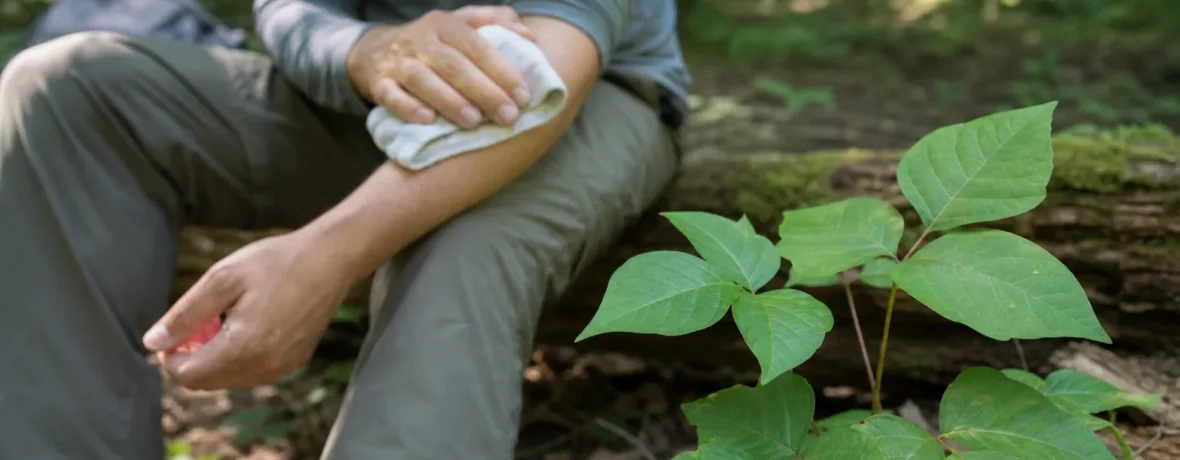
What does poison ivy rash look like? Usually, it’s an intensely itchy rash with red bumps, patches, or straight-line streaks where urushiol oil touched your skin. Blisters can ooze clear fluid, and swelling may show up. It often appears within hours to several days after contact and typically clears in 2 to 3 weeks.
What does poison ivy rash look like day by day?
It usually starts with itching, then redness or discoloration, then bumps and blisters. The rash follows the path of the plant oil, which is why hikers often see lines across ankles, shins, wrists, forearms, or the side of the neck where leaves brushed exposed skin. The CDC describes poison plant contact symptoms as a red rash within a few days, bumps, patches or streaking, weeping blisters, swelling, and itching.
| Stage | What you may see | What it means |
|---|---|---|
| First hours to several days | Itching, warmth, redness or darker discoloration | Your skin is reacting to urushiol, the plant oil in poison ivy, oak, and sumac. |
| Next phase | Raised bumps, streaks, patches, swelling | The rash often maps where the oil touched you. |
| Blister phase | Small or larger fluid-filled blisters, sometimes weeping | Blister fluid does not spread the rash; leftover oil can. |
| Healing phase | Drying, crusting, peeling, less itching | Mayo Clinic says poison ivy rash typically clears on its own in 2 to 3 weeks. |
What does poison ivy look like on skin?
It looks like an allergic contact rash, often in streaks. On lighter skin, poison ivy often appears red or pink. On darker skin, it may look purple, gray-brown, darker than your usual skin tone, or shiny and swollen rather than bright red. Texture matters: raised bumps, tight swelling, and blisters are big clues.
The pattern is the giveaway. A mosquito bite lands as a dot. Chafing follows a strap or waistband. Poison ivy often looks like a plant dragged a tiny paintbrush across your skin. Think ankle-to-calf streaks after walking through brush, forearm lines after pushing branches aside, or a patch under the sock cuff where contaminated fingers pulled fabric down.
- Common look: itchy streaks, patches, bumps, and blisters.
- Common locations for hikers: ankles, lower legs, hands, wrists, forearms, neck, and waistline.
- Common timing: symptoms can emerge from a few hours to several days after contact, according to the FDA’s poison plant guidance.
- Common mistake: assuming new blisters mean the rash is spreading from blister fluid. The FDA says blister fluid is not plant oil and does not spread the rash.
Why does poison ivy make straight lines or streaks?
The lines come from contact. When poison ivy leaves, stems, roots, or vines brush your skin, urushiol oil transfers in the same direction as that contact. That is why the rash can look almost scratched on, even if you never scratched.
You can also get odd-shaped patches from gear. Trekking poles, gloves, dog fur, shoelaces, gaiters, pack straps, and pant cuffs can carry oil after brushing the plant. The NIH MedlinePlus page on poison ivy, oak, and sumac notes that urushiol is found in bruised roots, stems, flowers, leaves, and fruit, and the oil can stick to animal fur.
Can poison ivy rash spread after it appears?
No, the rash itself does not spread from blister fluid. It can look like it’s spreading because different skin areas react at different speeds, or because urushiol is still on your hands, clothes, tools, boots, or dog.
This is the campfire argument that never dies. Someone sees blisters on Tuesday, new bumps on Wednesday, and decides the rash is contagious. Not quite. The FDA says the rash appears only where plant oil touched the skin, and broken blisters do not spread it. The problem is leftover oil. If your shoelaces, trekking pole grips, or rain pants still have urushiol on them, they can re-expose you.
What should you do after touching poison ivy on trail?
Wash the oil off fast, then clean anything that may have touched the plant. Speed helps. Scrubbing hard enough to damage skin does not help, so think thorough, not brutal.
- Move away from the plant. Don’t keep standing in the patch while checking your leg.
- Rinse exposed skin. Use cool water if that’s what you have. The goal is to remove oil, not open your pores with heat.
- Use soap when available. Dish soap, camp soap, or a poison plant wash can help lift oil.
- Clean under fingernails. Urushiol trapped there can get moved to your face, neck, or waistline.
- Bag contaminated clothing. Keep socks, pants, gloves, or sleeves away from clean gear until washed.
- Wash gear and tools. Pay attention to trekking pole handles, boot uppers, gaiters, gloves, dog leashes, and pack hip belts.
The CDC advises rinsing skin immediately and using rubbing alcohol, poison plant washes, dishwashing soap, and plenty of water, while rinsing often so the wash solution doesn’t dry on the skin and move urushiol around. Follow product labels and avoid using harsh chemicals on your skin.
How can you tell poison ivy from bug bites, heat rash, or shingles?
Look at the pattern, timing, and symptoms. Poison ivy usually tells a trail story: you brushed vegetation, handled gear, or touched a pet, then an itchy streaky rash showed up later.
| Skin problem | Typical look | Clue |
|---|---|---|
| Poison ivy rash | Itchy streaks, patches, bumps, blisters | Often follows where leaves, gear, or oily hands touched skin. |
| Bug bites | Separate raised spots or clusters | Often has a central puncture mark and appears on exposed skin. |
| Heat rash | Tiny prickly bumps | Shows up under sweaty clothing, straps, or skin folds. |
| Shingles | Painful blistering band, usually one side | Often burns or hurts more than it itches; call a clinician promptly. |
You can’t confirm poison ivy from appearance alone in every case. If the rash is painful, severe, near the eyes, infected-looking, or paired with fever or breathing trouble, treat it as a medical issue, not a trail mystery.
How do you calm a poison ivy rash at home?
Cool, gentle care can reduce itching while the rash runs its course. Mayo Clinic says most poison ivy rashes do not need medical treatment unless they spread widely, last more than a few weeks, or become infected.
- Use cool, wet compresses.
- Try calamine lotion or an over-the-counter hydrocortisone product, following the label.
- Use an oatmeal bath or cool-water soak for itching.
- Keep nails short so scratching is less likely to break skin.
- Do not pop blisters.
- Wash contaminated clothing separately from clean trail clothes.
Skip the camp “remedies” that burn, scrape, or irritate skin. Bleach, gasoline, abrasive scrubs, and knife-edge blister popping are bad backcountry medicine. Broken skin raises the chance of infection and makes the hike out nastier than it needs to be.
When to see a doctor
See a doctor if the rash is severe, widespread, infected-looking, on sensitive areas, or affecting breathing. For emergency symptoms, don’t wait it out at camp.
- Get urgent help for trouble breathing, swelling of the face or throat, or a severe allergic reaction.
- See a clinician if the rash is on your face, eyes, mouth, or genitals.
- Get checked if you have pus, soft yellow scabs, increasing tenderness, or fever.
- Call a clinician if itching keeps you from sleeping or the rash covers a large area.
- Get medical advice if the rash is not improving after several weeks.
- Seek care if smoke from burning poison ivy may have been inhaled.
The FDA lists doctor-worthy signs including temperature over 100 degrees Fahrenheit [37.8 degrees Celsius], pus, tenderness, worsening itch, rash near the eyes, mouth, or genitals, widespread severe rash, poor improvement after several weeks, or difficulty breathing. The CDC also warns not to burn poison ivy, oak, or sumac because inhaled particles can cause serious respiratory problems.
Related reading
- What Does Poison Ivy Look Like? Leaves of Three and Lookalikes
- How to Get Rid of a Poison Ivy Rash Fast
- What Does Poison Sumac Look Like?
- What Does a Tick Bite Look Like? Photos and Warning Signs
FAQ
How long does it take for poison ivy rash to show up?
It can show up within hours to several days after contact. The timing varies because skin areas absorb urushiol at different rates and people react differently.
Is poison ivy rash contagious?
No, the rash and blister fluid are not contagious. You can, however, get a new rash from urushiol oil still sitting on clothing, boots, tools, pet fur, or under fingernails.
Can poison ivy rash have blisters?
Yes, blisters are common. They may ooze clear fluid, but that fluid does not contain the plant oil that causes the rash.
What part of poison ivy causes the rash?
Urushiol oil causes the rash. NIH MedlinePlus says the oil can be found in bruised roots, stems, flowers, leaves, fruit, pollen, oil, and resin of poison ivy, poison oak, and poison sumac.
Can you get poison ivy in winter?
Yes, you can react to poison ivy outside the leafy green season. Bare vines, stems, and roots can still carry urushiol, so don’t grab unknown vines for balance on winter hikes.
Should you keep hiking with poison ivy rash?
You can keep hiking if symptoms are mild, contained, and not near your eyes, mouth, genitals, or airway. Stop and seek care if swelling is severe, breathing feels difficult, infection signs appear, or the rash is spreading widely after repeated gear exposure.