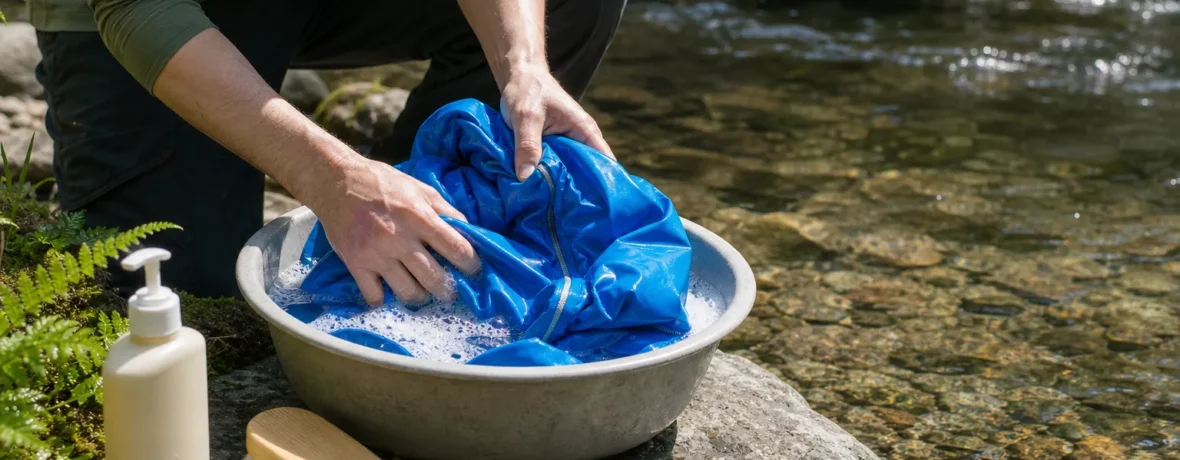
To wash a rain jacket, check the care label, zip every zipper, wash it alone or with one shell using technical cleaner on a warm gentle cycle, rinse twice, then dry on low or medium heat for 20 minutes if the label allows. Reapply DWR only when water stops beading.
Can you wash a rain jacket in a washing machine?
Yes, you can machine-wash most rain jackets if the care label allows it. The catch is that you need the right cleaner, a gentle cycle, and a clean washer free of fabric softener residue.
Your rain jacket is not a cotton hoodie. It has a face fabric, a waterproof membrane or coating, taped seams, and a durable water repellent finish called DWR. The DWR is what makes rain bead up and roll away. The membrane is what keeps liquid water from passing through. When grime, sunscreen, campfire smoke, body oil, detergent residue, and trail dust build up, the face fabric can “wet out.” That means the outside layer soaks up water even though the inner membrane may still be blocking rain.
Washing fixes more jackets than hikers expect. GORE-TEX says to machine-wash waterproof outerwear in warm water at 105°F [40°C], rinse twice, minimize spinning, and tumble dry for 20 minutes after the garment is dry to reactivate DWR; always follow your own jacket’s care label first. See the official GORE-TEX outerwear care instructions for the brand’s current guidance.
Skip the regular laundry cocktail. Do not use fabric softener, bleach, stain-removing boosters, dryer sheets, or heavy detergent. Those can leave residues that mess with beading and breathability.
How often should you wash a rain jacket?
Wash it when it looks dirty, smells funky, feels clammy, or stops beading water. For steady hikers, that can mean once every few wet trips, not once every few years.
Dirt is not harmless patina. It clogs the face fabric and holds moisture against the shell. Oils from your neck and wrists are even worse because they collect right where the jacket gets the most abrasion: collar, cuffs, hem, pack straps, and zipper flap.
Use this trail-to-laundry checklist:
- Water beads and rolls off: hang it to dry and store it clean.
- Water beads in some spots but darkens the shoulders or cuffs: wash and dry it.
- Water soaks into the face fabric after washing and drying: reapply DWR.
- The inside coating is peeling, flaking, or sticky: washing will not rebuild the laminate.
- Seam tape is lifting: clean it gently, then repair or send it to the brand if covered.
If your search was “how to wash rain jacket” because your shell suddenly feels cold and wet, start with a wash before buying a new jacket. Wet-out can make a waterproof shell feel useless even when the membrane is still intact.
What do you need before washing a waterproof jacket?
You need a clean washer, a technical cleaner, your care label, and enough drying time. That’s it.
A technical cleaner is made to rinse clean from waterproof-breathable fabrics. Nikwax recommends cleaning rainwear with Tech Wash and re-waterproofing only after cleaning; the brand’s rain jacket cleaning guide explains the clean-first sequence. Other brands make similar cleaners, so you do not need to be married to one bottle. Just avoid products with softeners, fragrances, brighteners, or heavy residue.
| Item | Use it? | Why it matters |
|---|---|---|
| Technical wash | Yes | Cleans grime while preserving DWR performance. |
| Regular liquid detergent | Only if the care label allows | Can leave residue that hurts water beading. |
| Powder detergent | No | Can leave particles in seams, zippers, and fabric texture. |
| Fabric softener or dryer sheets | No | Coats fibers and can reduce repellency and breathability. |
| Bleach | No | Can damage fabric, seam tape, and trims. |
Front-loading washers are gentler than top-loaders with a center agitator. If you only have an agitator machine, use the gentlest cycle and wash the jacket by itself. Close every zipper. Loosen drawcords. Open pocket flaps. Shake out pine needles, sand, snack crumbs, and trail grit before the shell goes in.
How to wash a rain jacket step by step?
Use a warm gentle cycle, technical wash, extra rinse, and low-to-medium heat dry if the care label permits. Keep the process simple and controlled.
- Read the care label. The label beats every blog post, every gear forum, and every hiker’s campfire advice. Look for wash temperature, tumble-dry setting, ironing symbols, and dry-cleaning warnings.
- Clean the washer dispenser. Rinse out leftover detergent, bleach, and softener. If the dispenser is grimy, remove it and wash it in the sink.
- Prep the jacket. Empty pockets, close main zippers, close pit zips, fasten hook-and-loop cuffs, and loosen elastic drawcords so they do not cinch tight in the wash.
- Spot-clean the ugly zones. Dab technical cleaner on the collar, cuffs, hem, and pack-strap areas. Use a soft cloth or your fingers. Do not scrub with a stiff brush.
- Load lightly. Wash one jacket, or two lightweight shells if your machine has enough room. Do not cram it in with towels, jeans, fleece, or muddy socks.
- Add technical wash. Follow the cleaner bottle’s dosage for your machine and water hardness. More cleaner is not better; it just takes longer to rinse.
- Choose warm and gentle. Use a gentle or delicate cycle. For GORE-TEX outerwear, the brand lists warm water at 105°F [40°C], but your specific label still rules.
- Rinse twice. An extra rinse removes cleaner residue. This step matters because leftover soap can make the fabric attract water.
- Spin gently. Use low spin when possible. High spin can twist a light shell into a tight rope and stress seam tape.
- Dry it correctly. Tumble dry on low or medium heat if the label allows. GORE-TEX recommends an extra 20 minutes of tumble drying after the garment is dry to reactivate DWR. If the label says no tumble dry, air dry it.
- Test the beading. Sprinkle water across the shoulders and sleeves. If droplets bead and roll, you are done. If the fabric darkens and drinks water, add DWR.
Should you use spray-on DWR or wash-in waterproofing?
Use spray-on DWR for most rain jackets, especially waterproof-breathable shells with liners or wicking backers. Wash-in treatments can work, but they coat everything they touch.
Spray-on DWR targets the outside face fabric, which is where repellency belongs. That makes it the cleaner choice for 2.5-layer and 3-layer hiking shells. Wash-in DWR is convenient, but it can also treat the inside of the garment. On some jackets, that can reduce moisture movement from sweat.
Arc’teryx tells users to wash and rinse first, spray DWR evenly on the face fabric, rub it in with a clean sponge or cloth, then dry; its DWR care guide also points out that low heat helps reactivate the finish. Patagonia gives similar big-picture care advice for waterproof-breathable fabrics, including drying on a warm setting to renew DWR and using spray-on treatment when water no longer beads; see Patagonia’s product care instructions.
Here is the quick call:
- Choose spray-on DWR for most backpacking rain jackets, shells with mesh or knit backers, and jackets with mixed fabrics.
- Choose wash-in DWR for simple unlined shells when the product label and jacket label both allow it.
- Do not reproof a dirty jacket. DWR sticks poorly to oil, mud, sunscreen, and smoke residue.
- Wipe off excess. Pools of DWR can leave shiny patches or streaks.
Why is my rain jacket still wet after washing?
Most likely, the outer fabric is wetting out because the DWR is worn, dirty, or not heat-reactivated. The jacket may still be waterproof, but it will feel colder and less breathable.
Do the sink test. Lay the clean, dry jacket flat and sprinkle water over the shoulders, hood, and sleeves. If droplets form tight beads and roll away, the DWR is alive. If water spreads, darkens the fabric, or clings in flat patches, the DWR needs help.
Try this order:
- Dry with heat if allowed. A low or medium tumble dry can wake up existing DWR.
- Test again. Use a light spray of water, not a faucet blast.
- Apply spray-on DWR if beading fails. Focus on shoulders, hood brim, cuffs, forearms, and chest.
- Dry again according to the DWR label. Some treatments need heat; others can air dry.
If water comes through seams or pinholes, that is a different problem. Look for lifted seam tape, cuts from brush, burn holes from sparks, delamination, or a worn coating inside the jacket. DWR will not seal torn fabric or rebuild a failing membrane.
Can you wash a rain jacket with down or insulation?
Yes, but insulated rain jackets need the gentler care plan of the insulation. Down, synthetic fill, and waterproof shells all have different needs, so follow the most delicate part of the garment.
A plain 3-layer shell is the easiest piece to clean. An insulated ski shell, belay parka, or waterproof down jacket is fussier. Down needs room to loft and careful drying. Synthetic insulation can clump or flatten if abused. Waterproof face fabric still needs clean DWR, but the insulation decides the wash and dry routine.
Use these rules:
- For waterproof down jackets, use a down-specific cleaner if the label calls for it.
- For synthetic insulated rainwear, use a technical cleaner approved for synthetic insulation.
- Dry fully before storage; damp insulation can clump and smell.
- Do not hang a soaked insulated jacket by the hood. Support its weight while moving it.
- Use clean dryer balls only if the care label allows them.
If the jacket cost serious money and the label is confusing, contact the brand before washing. Five minutes with customer service is better than turning a $400 shell into a crinkly garage jacket.
What mistakes ruin a rain jacket in the wash?
The fastest mistakes are using fabric softener, washing with grimy laundry, blasting high heat, and ignoring the care label. Rain shells are tough on trail and picky in laundry rooms.
Watch for these common wreckers:
- Too much cleaner: Leaves residue that attracts water and dirt.
- No extra rinse: Lets cleaner stay in the face fabric.
- High heat: Can damage trims, seam tape, coatings, and elastic parts.
- Dryer sheets: Add a coating that fights DWR.
- Washing with towels: Adds lint and abrasion.
- Storing wet: Encourages odor, mildew, and coating breakdown.
- Ironing directly: Can scorch fabric; if a brand allows ironing, use low heat, no steam, and a towel barrier.
Also avoid dry cleaning unless the garment label specifically allows it. Some waterproof jackets can be professionally cleaned under narrow instructions, but most hikers are better off with a home wash and a proper rinse.
How do you store a rain jacket after washing?
Store it completely dry, uncompressed, and away from heat. A clean closet beats the bottom of a damp pack every time.
After drying, leave the jacket hanging overnight before storage. Then hang it or fold it loosely. Do not mash it into its own pocket for months. Stuffing is fine on a trip; long-term compression is rough on coatings, seam tape, zipper garages, and hood brims.
Before the next hike, do a 30-second check:
- Spray the shoulders with water.
- Check that zippers move cleanly.
- Look for peeling seam tape inside the shoulders and hood.
- Check cuffs and hem for grime.
- Pack it dry, not “mostly dry.”
A clean shell breathes better, beads better, and feels less like wearing a cold trash bag when the trail turns into a creek.
Related reading
- How to Wash a Down Jacket in a Washing Machine
- How to Re-Waterproof a Rain Jacket (DWR Refresh)
- How to Wash Merino Wool Without Shrinking It
- What Is a Down Jacket? Fill Power, Baffles and Warmth
FAQ
Can I wash a GORE-TEX rain jacket?
Yes, most GORE-TEX rain jackets are machine washable. Use warm water, technical cleaner or an approved detergent, rinse twice, and tumble dry if the care label allows.
Can I use regular detergent on a rain jacket?
Usually, you should use a technical cleaner instead. Regular detergent can leave residue, and products with softeners, fragrances, or brighteners are poor choices for waterproof-breathable shells.
Does washing remove waterproofing?
No, proper washing does not remove the waterproof membrane. It can actually restore performance by removing dirt and oils, but you may need to reactivate or reapply the DWR finish after washing.
Why does my jacket leak after I washed it?
It may not be leaking; the face fabric may be wetting out. If water truly passes through, inspect seam tape, punctures, worn coatings, and zipper areas because DWR treatment will not fix structural damage.
Should I zip my rain jacket before washing?
Yes, zip the main zipper, pockets, and pit zips before washing. Fasten hook-and-loop cuffs too, so they do not snag the face fabric or mesh lining.
Can I put my rain jacket in the dryer?
Yes, if the care label allows tumble drying. Low or medium heat can reactivate DWR on many waterproof-breathable shells, but high heat is a bad move.