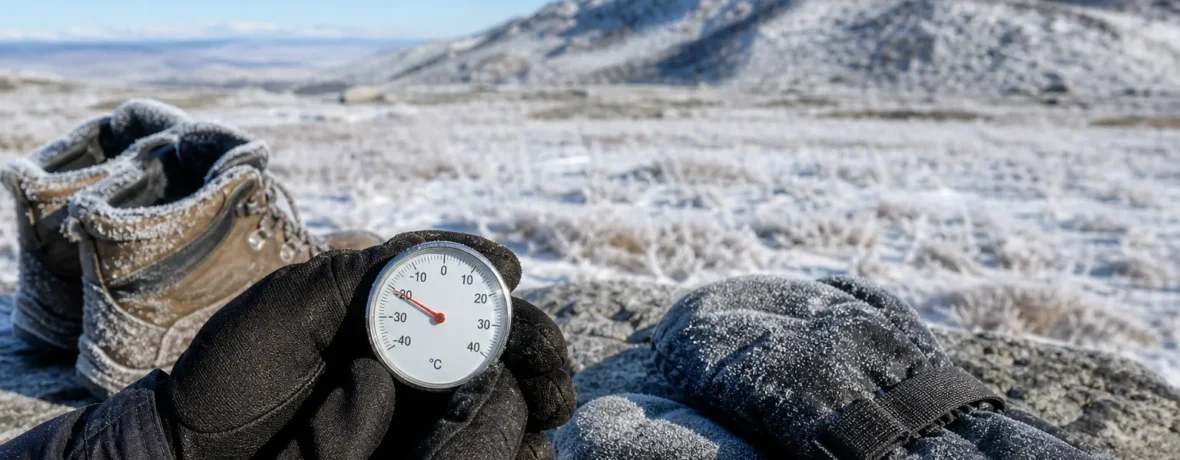
How long does it take to get frostbite? Exposed skin can start freezing in 30 minutes when wind chill reaches -19°F [-28°C], in 10 minutes near -33°F [-36°C], and in 5 minutes near -48°F [-44°C]. Wet clothing, metal contact, high wind, altitude, and poor circulation can shorten the clock.
How long does it take to get frostbite in real trail conditions?
Frostbite can happen in 5 to 30 minutes once wind chill drops into the danger zone. The National Weather Service wind chill chart uses three main frostbite-time bands for exposed skin: 30 minutes, 10 minutes, and 5 minutes.
That clock applies to bare skin. Think cheeks, nose, ears, fingers during a glove change, or wrists exposed between cuffs and mitts. Covered skin has more protection, but not a free pass. Thin gloves, tight boots, wet socks, and sweaty base layers can still let tissue get dangerously cold.
| Wind chill | Estimated frostbite time | Trail meaning |
|---|---|---|
| -19°F [-28°C] | 30 minutes | Cover all skin before a long break or exposed ridge walk. |
| -33°F [-36°C] | 10 minutes | Glove-off tasks need to be short and planned. |
| -48°F [-44°C] | 5 minutes | Exposed skin can freeze fast. Turnaround decisions get serious. |
Use the National Weather Service wind chill chart before winter hikes, snowshoe days, ski tours, and cold-weather trail work. The Wilderness Medical Society also says frostbite risk starts below 32°F [0°C], with some risk from 32°F to 5°F [0°C to -15°C] and increasing risk below 5°F [-15°C], especially with wind and moisture.
What temperature causes frostbite?
Frostbite happens when skin and deeper tissue freeze, usually in freezing cold, windy, or wet conditions. Mayo Clinic describes frostbite as an injury caused by freezing of the skin and underlying tissues.
Temperature alone does not tell the whole story. A calm 15°F [-9°C] day in dry gloves is very different from 15°F [-9°C] with 35 mph [56 km/h] gusts, wet liners, and a slow snack stop above treeline. Wind strips heat. Water conducts heat away from your body much faster than dry air. Tight boots reduce warm blood flow to toes.
Cold injuries also stack up when you are tired, hungry, dehydrated, or moving slowly. That last mile back to the trailhead can be the risky one because your pace drops and your layers may be damp from the climb.
Can you get frostbite above freezing?
Wind chill cannot give you frostbite when the actual air temperature is above 32°F [0°C]. The National Weather Service explains that wind chill does not lower skin temperature below the actual air temperature when the thermometer is above freezing.
You can still get dangerously cold above freezing. Hypothermia is possible in cold rain, wet snow, wind, and soaked clothing. That is why 36°F [2°C] and rain can feel nastier than a dry 20°F [-7°C] day. Your skin may not freeze, but your body can lose heat faster than it can make it.
There are exceptions outside normal hiking weather, such as contact with extremely cold objects or chemicals. For trail decisions, use this rule: frostbite needs freezing conditions, but hypothermia can hit well above freezing.
What does frostbite feel like at first?
The first warning is often redness or pain, followed by numbness. The CDC says redness or pain in any skin area may be the first sign of frostbite, and exposed areas need protection right away.
Do not wait for dramatic symptoms. Early frostbite can be sneaky because numb skin stops complaining. Your hiking partner may spot it before you feel it.
- Skin that feels cold, prickly, painful, or numb
- White, grayish, yellowish, bluish, purple, or waxy-looking patches
- Hard or firm skin
- Clumsy fingers that struggle with zippers, buckles, or trekking pole straps
- Toes that feel like blocks of wood inside your boots
The early stage is often called frostnip. Mayo Clinic notes that frostnip causes cold feeling and numbness but does not cause permanent skin damage when rewarmed promptly. Once skin becomes hard, waxy, blistered, or deeply numb, treat it as more than a simple trail annoyance.
What body parts get frostbite fastest?
Fingers, toes, ears, nose, cheeks, and chin usually get hit first. They are small, exposed, or far from your body’s warm core.
Hands are at risk because hikers constantly uncover them. Checking a map. Taking photos. Opening a bar. Adjusting snowshoes. Handling metal trekking poles or an ice axe. Each small task steals heat.
Toes are different. They may be covered, but they suffer from tight footwear, damp socks, and long stops. If your boots are snug in the garage, they may become circulation traps once you add thicker socks or foot warmers.
Face frostbite can move fast on ridges. A thin balaclava gap under sunglasses can leave a patch of cheek exposed for 20 minutes without you noticing. Ask partners to check your face, and return the favor.
What should you do if frostbite starts on a hike?
Get out of the cold and protect the area from refreezing. Field care depends on one big question: can you keep the tissue warm after you rewarm it?
- Stop the exposure. Add insulation, cover skin, block wind, and move to shelter, trees, a tent, a hut, or the car.
- Remove wet layers. Swap wet gloves, socks, and liners for dry ones if you have them.
- Loosen tight gear. Boots, gaiters, watch bands, and rings can reduce circulation or become problems if swelling starts.
- Warm gently with body heat for mild numbness. Put cold fingers in armpits or against a warm belly. Cover a cold nose or cheek with a dry mitten.
- Do not rub the area. Rubbing can damage frozen tissue.
- Do not use fire, stoves, heating pads, or very hot water. Numb skin burns easily.
- Do not thaw if refreezing is likely. Refreezing thawed tissue can cause worse injury. Prioritize evacuation and protection.
- Seek medical care when symptoms go beyond mild frostnip. Hard skin, waxy skin, blisters, deep numbness, or color changes need a clinician.
The CDC frostbite guidance tells you to get into a warm room as soon as possible and avoid walking on frostbitten feet or toes unless necessary. The Wilderness Medical Society frostbite guidelines recommend rapid rewarming when refreezing can be prevented, typically using warm water at 98.6°F to 102.2°F [37°C to 39°C] in a medical or controlled setting.
How do you prevent frostbite while hiking?
Keep skin covered, dry, fueled, and checked. Prevention is mostly small choices made before your fingers go numb.
- Check air temperature, wind speed, and wind chill before you leave.
- Pack mittens for real cold; they beat gloves for warmth.
- Carry dry backup socks and liner gloves in a waterproof bag.
- Use a hat, hood, neck gaiter, face covering, and goggles in wind.
- Keep snacks handy so you do not skip calories in bad weather.
- Vent before you sweat, then add insulation before you stop.
- Avoid tight boots and tight sock systems.
- Check cheeks, noses, ears, fingers, and toes at every break.
- Use hand warmers carefully; do not place them directly against bare skin.
- Turn around early when wind chill, wet gear, or slow pace starts stacking risk.
Cold safety is not about being tough. Tough hikers lose fingers too. Smart hikers keep enough margin to fix a problem before it becomes an evacuation.
When to see a doctor
See a doctor for anything more than mild frostnip. Mayo Clinic says frostbite injuries other than frostnip should be checked by a healthcare professional to determine severity.
Get urgent help if skin is hard, waxy, white, gray, blue, purple, blistered, or still numb after gentle warming. Also get emergency care for intense shivering, slurred speech, drowsiness, confusion, or trouble walking because frostbite and hypothermia can happen together.
Do not try to diagnose the depth of frostbite on the tailgate. Deep injury can look unclear at first, and blisters or tissue changes may show up later. When in doubt, protect the area, keep the person warm, and get medical help.
Related reading
- How Long Does a Sprained Ankle Take to Heal?
- Can Dogs Get Poison Ivy?
- How to Get Rid of a Poison Ivy Rash Fast
- What Does Frostbite Look Like? Stages and First Aid
FAQ
How fast can frostbite happen?
Frostbite can happen in 5 minutes when wind chill is near -48°F [-44°C]. At less extreme but still dangerous wind chills, exposed skin may freeze in 10 or 30 minutes.
Can frostbite happen through gloves?
Yes, frostbite can happen through gloves if they are thin, wet, compressed, or too tight. Mittens, dry liners, and hand warmers used safely give better protection in severe cold.
Is frostnip the same as frostbite?
No. Frostnip is the early, milder cold injury stage and does not cause permanent skin damage when treated promptly. Frostbite involves freezing of skin and sometimes deeper tissue.
Should you rub frostbitten skin?
No. Do not rub frostbitten skin or massage it with snow. Friction can damage frozen tissue and make the injury worse.
Can you keep hiking with frostbite?
Do not keep hiking as if nothing is wrong. Cover the area, warm it only if it will not refreeze, and head for shelter or medical care depending on severity.
What forecast number matters most for frostbite?
Wind chill is the number to watch for exposed skin. Air temperature matters too, but wind chill shows how fast wind and cold can pull heat from your body.