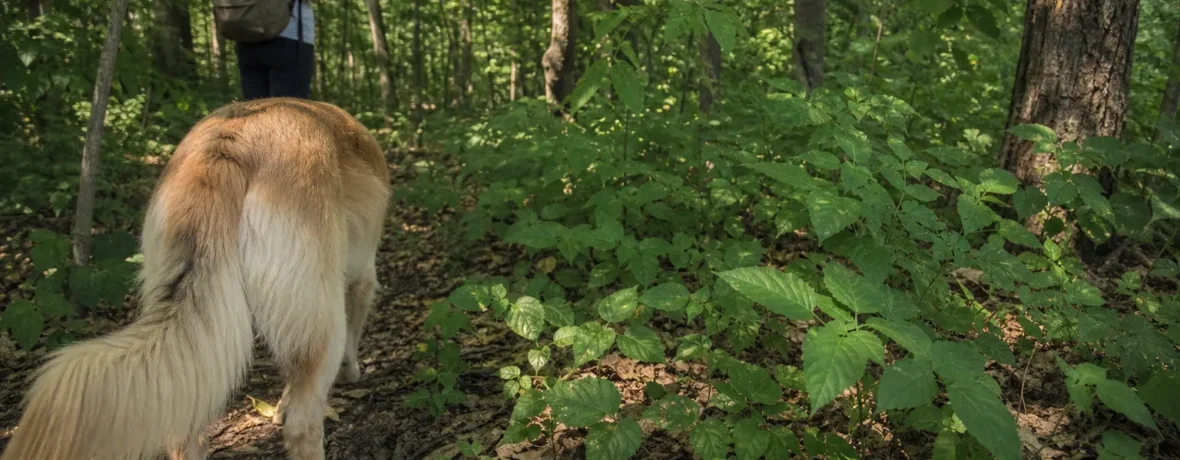
Yes, dogs can get poison ivy, but it’s uncommon because fur blocks much of the urushiol oil from reaching skin. The bigger trail problem is transfer: your dog can carry the oil on their coat, leash, collar, or pack and give you a rash after one muddy post-hike cuddle.
Can dogs get poison ivy?
Yes, but most dogs do not react the way humans do.
Poison ivy, poison oak, and poison sumac contain urushiol, the oily plant resin that triggers the classic itchy, blistering rash in sensitive people. The ASPCA lists poison ivy as non-toxic to dogs, cats, and horses, while still warning that pets can carry the oil on their coats and expose humans.
Your dog’s fur is the main shield. A husky, golden retriever, shepherd, or trail mutt with a thick coat has a better barrier than a short-haired dog with a bare belly. The spots most likely to react are thinly furred areas where plant oil can touch skin directly:
- Belly
- Groin
- Inner thighs
- Armpits
- Muzzle
- Ear edges
- Paws and between toes
Dogs that crash through brush, roll in leaves, or nap in trail-edge vegetation have the highest exposure. So do dogs that wear harnesses or packs through dense growth, because straps can press contaminated fur and plant oils against the skin.
Can dogs carry poison ivy oil to humans?
Yes, dogs can carry urushiol oil on fur and gear.
This is the usual hiking headache. Your dog may look perfectly fine, then transfer plant oil to your hands, forearms, legs, car seat, sleeping bag, couch, or pillow. The NIH’s MedlinePlus notes that urushiol can stick to animal fur, which is one reason people get dermatitis from outdoor pets.
The rash itself is not spread by blister fluid. The oil is the problem. Once the oil is washed off skin, the rash does not keep spreading by magic. But oil left on fur, clothing, boots, trekking poles, collars, leashes, or dog packs can keep causing fresh exposure.
Think of urushiol like invisible pine sap with bad manners. It clings. It rides home. It waits.
What does poison ivy look like on a dog?
On dogs, poison ivy may look like red, itchy, irritated skin.
You may see scratching, licking, chewing, rubbing against the carpet, or sudden irritation after a brushy hike. The skin may look red, bumpy, swollen, or blistered, especially on the belly or inside the legs. Some dogs act restless because the itch keeps firing.
But do not assume every post-hike rash is poison ivy. Dogs get irritation from grass awns, insect bites, hot spots, ticks, fleas, mites, wet harness rubbing, food allergies, trail dust, and plant scratches. If your dog has facial swelling, repeated vomiting, trouble breathing, open wounds, pus, eye irritation, or severe distress, call a veterinarian right away.
| Issue | Common clues | What to do next |
|---|---|---|
| Urushiol on fur | No dog rash, but humans itch after petting | Bathe dog and wash gear |
| Dog skin reaction | Red, itchy belly, groin, paws, or muzzle | Rinse, prevent licking, call vet if worsening |
| Gear contamination | Rash returns after using same leash, pack, or boots | Clean all trail gear thoroughly |
How do you wash poison ivy off a dog?
Wash your dog as soon as you can after exposure.
Fast cleaning matters because urushiol can transfer before you see any rash. MedlinePlus says washing human skin quickly can help prevent a reaction, while washing after more than 1 hour often helps less; on a dog, the goal is also to remove oil before it spreads around your home.
- Put on gloves first. Use disposable gloves if you have them. Long sleeves help if your dog is wiggly.
- Keep your dog contained. Use a tub, outdoor wash station, or hose area where runoff will not splash back onto you.
- Remove the collar, harness, leash, and pack. Treat every item as contaminated until washed.
- Rinse from head to tail. Avoid blasting water into the ears, eyes, or nose.
- Lather with a pet-safe shampoo. Work it through the coat, especially the chest, belly, legs, paws, and tail.
- Rinse thoroughly. Leftover shampoo can irritate skin, so keep rinsing until the coat feels clean.
- Repeat if exposure was heavy. A second gentle wash can help remove stubborn oil from thick fur.
- Wash your hands, arms, and clothes. Do this before touching your face, phone, steering wheel, or snacks.
- Clean gear separately. Wash the collar, leash, harness, dog pack, towels, and your trail clothes.
Do not use harsh solvents, bleach, gasoline, alcohol-heavy cleaners, or human poison ivy scrubs on your dog. Those can irritate skin and turn a simple cleanup into a vet visit.
What should you pack for hikes with dogs in poison ivy country?
Pack cleanup gear before you need it.
A tiny kit can save your car, tent, and skin after a leafy trail. Keep it in a side pocket where you can grab it without digging through food and layers.
- Nitrile gloves
- Small bottle of pet-safe shampoo
- Old towel or pack towel
- Plastic bag for contaminated gear
- Clean bandana or spare leash
- Tick key or tweezers for the rest of the post-hike check
- Fresh water for rinsing paws and belly
If the trailhead has no water, wipe your dog down with a damp towel, bag the towel, and do a full bath at home. Not perfect. Still better than letting oily fur rub all over the back seat for an hour.
How can you prevent poison ivy exposure on dog hikes?
Keep your dog out of brushy edges and learn the plant.
Poison ivy often grows as a vine or low plant with three leaflets. Poison oak also commonly has three leaflets. Poison sumac is different, with multiple leaflets on each stem and a preference for wet areas. The NIH poison ivy, oak, and sumac guide explains that the sap is found in roots, stems, leaves, and fruit, so dead-looking vines can still be a problem.
Trail prevention is simple, not fancy:
- Keep your dog on the center of the trail when vegetation crowds in.
- Use a short leash through overgrown sections.
- Do not let your dog roll in leaf litter near vines or shrubs.
- Skip off-trail shortcuts through green walls.
- Check the belly, paws, muzzle, and ears after hiking.
- Wash harnesses and leashes after brushy hikes.
Be extra careful around campsites. Dogs love to bed down in the exact shady patch you did not inspect.
Can poison ivy make dogs sick if they eat it?
Eating poison ivy is not usually a major toxin issue for dogs, but it can still cause trouble.
The ASPCA classifies poison ivy as non-toxic to dogs, but chewing any rough plant can irritate the mouth or stomach. If your dog eats plant material and then vomits repeatedly, drools, refuses food, develops diarrhea, seems weak, or acts painful, call your veterinarian or a pet poison hotline.
Do not try to make your dog vomit unless a veterinary professional tells you to. The wrong move can cause more harm than the plant.
When should you call a veterinarian?
Call a veterinarian if your dog’s symptoms are severe, spreading, or not improving.
A mild itchy patch after a brushy hike may settle with washing and preventing licking. But some cases need professional care, especially when the rash is near the eyes, mouth, genitals, or paws. Dogs can scratch and chew themselves raw fast.
Call your vet if you see:
- Swelling of the face, lips, eyelids, or muzzle
- Repeated vomiting or diarrhea after eating plants
- Trouble breathing
- Intense scratching, chewing, or licking
- Open sores, bleeding, pus, or a bad smell
- Eye redness or squinting
- A rash that spreads after bathing
- Lethargy or behavior that feels off for your dog
Your vet can check whether this is poison ivy, another plant reaction, parasites, infection, or a harness rub that got ugly.
When to see a doctor
See a doctor if your own rash is severe, widespread, infected, or near sensitive areas.
For humans, poison ivy rash usually clears on its own in 2 to 3 weeks, according to Mayo Clinic’s poison ivy treatment guidance. Home care often means cool compresses, calamine, oatmeal baths, and over-the-counter itch relief, but a clinician may treat severe swelling, extensive blistering, or infection.
The American Academy of Dermatology recommends emergency care for trouble breathing or swallowing, rash around the eyes, mouth, or genitals, major facial swelling, fever, rash over much of the body, or itching that makes sleep impossible.
Do not burn poison ivy, poison oak, or poison sumac. Smoke can carry plant compounds into the eyes, nose, throat, and lungs, and that is not a trail problem you want to tough out.
Related reading
- How to Get Rid of a Poison Ivy Rash Fast
- What Does Poison Ivy Look Like? Leaves of Three and Lookalikes
- How Long Does Poison Ivy Last?
- Is Poison Ivy Contagious?
FAQ
Can dogs spread poison ivy to people?
Yes, dogs can spread urushiol oil to people from their fur, collar, leash, or pack. The rash is not spread by dog hair itself; the plant oil riding on the hair is the issue.
How long does poison ivy oil stay on dog fur?
Urushiol can remain on surfaces until it is washed off. Treat fur and gear as contaminated after a known exposure, then bathe your dog and clean trail equipment before normal cuddling resumes.
Can I pet my dog after walking through poison ivy?
Not with bare hands if you know your dog brushed the plant. Put on gloves, wash your dog first, and clean the leash, harness, and collar before relaxing at home or in camp.
What areas of a dog get poison ivy most often?
The belly, groin, inner legs, paws, muzzle, and ear edges are the most likely spots. These areas have thinner fur or more direct contact with low plants and trail-edge brush.
Is poison oak the same problem for dogs?
Yes, poison oak can create the same urushiol transfer problem. Your dog may not react, but the oil can cling to fur and gear and later cause a rash on your skin.
Should I cancel a hike if the trail has poison ivy?
No, not automatically. Use a leash, stay on the trail, avoid brushy shortcuts, keep your dog from rolling in vegetation, and wash your dog and gear after exposure.