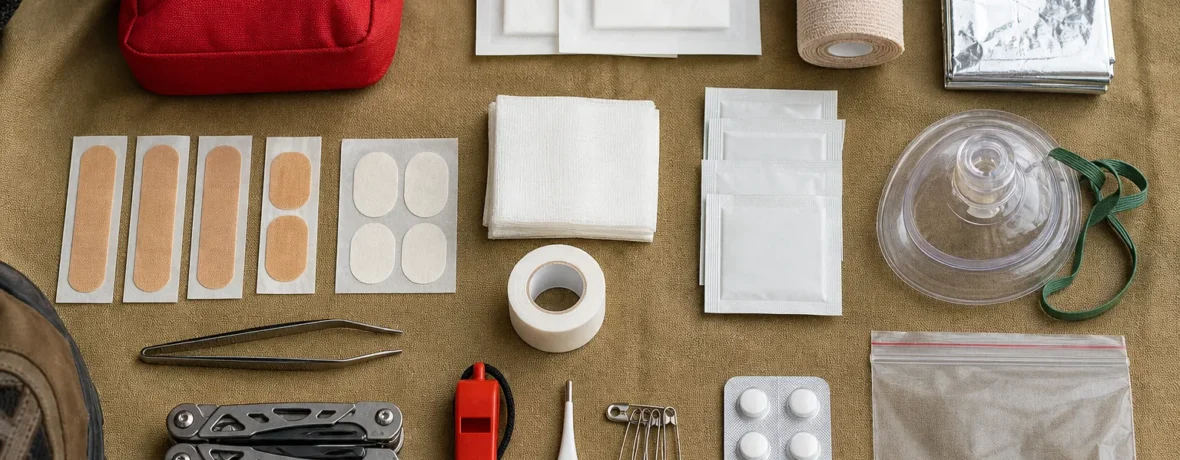
A hiking first aid kit should carry wound supplies, blister care, an elastic wrap, tweezers, gloves, medicines you personally use, emergency gear, and a compact guide. For day hikes, pack 20–30 items in a waterproof pouch; for remote trips, add trauma, splinting, and communication backup. Yes, customize it for your route and group.
Your kit does not need to look like a tiny hospital. It needs to solve the problems hikers actually get: hot spots, scraped knees, rolled ankles, splinters, ticks, stomach trouble, sunburn, and the rare bad bleed. Pack for the trail you are walking, the people you are with, and the time it would take to get help.
What should be in a hiking first aid kit?
Pack the items that control bleeding, protect skin, manage pain, support joints, and help you get out safely.
Start with this core first aid kit checklist, then scale it up or down. A solo 3-mile [4.8 km] local trail needs less than a three-day backcountry route with river crossings and no cell signal.
- Adhesive bandages in several sizes
- Sterile gauze pads
- Roll gauze
- Medical tape
- Antiseptic wipes
- Antibiotic ointment packets, if you can use them safely
- Blister bandages or hydrocolloid dressings
- Moleskin or other friction-control padding
- Small trauma pad or absorbent dressing
- Nitrile gloves, 2 pairs
- Fine-tipped tweezers
- Small scissors or trauma shears
- Elastic wrap
- Triangular bandage
- Safety pins
- Hand sanitizer
- Personal medications
- Oral antihistamine, if safe for you
- Pain reliever you already know you can take
- Anti-diarrheal tablets, if safe for you
- Electrolyte packets
- Emergency blanket
- CPR face shield
- Waterproof notepad and pencil
- Mini first aid reference card
Keep the kit in a bright, waterproof pouch. Red, orange, or yellow is better than black because your hiking partner can find it fast. Put the most used items—blister care, bandages, tweezers, and pain relief—near the top.
What first aid supplies do hikers use most often?
Blister gear, bandages, tape, tweezers, and an elastic wrap usually earn their space first.
Feet take the most abuse. Skin rubs. Socks wrinkle. Shoes that felt fine at the trailhead can turn mean after 6 miles [9.7 km]. Build your kit around friction control before you build it around dramatic emergencies.
| Trail problem | Best kit items | Why they matter |
|---|---|---|
| Hot spots and blisters | Blister bandages, moleskin, tape, small scissors | Stops rubbing before the skin tears |
| Scrapes and cuts | Gauze, antiseptic wipes, bandages, gloves | Cleans and covers broken skin |
| Rolled ankle or sore knee | Elastic wrap, triangular bandage, tape | Adds support for a slow walk out |
| Splinter, thorn, or tick | Fine-tipped tweezers, antiseptic wipe | Removes small offenders cleanly |
For blisters, the goal is simple: reduce friction and keep the area clean. Mayo Clinic’s blister first aid guidance recommends seeking medical care if a blister shows signs of infection such as increasing redness, warmth, swelling, pus, worsening pain, or red streaks.
How do you build a lightweight hiking first aid kit?
Choose flat, multipurpose items and skip bulky packaging.
Prebuilt kits are convenient, but many come stuffed with items you will never touch and short on blister care. A custom kit can be lighter and better. Pull supplies out of cardboard boxes, keep labels for medications, and seal small items in zip-top bags.
- Pick a pouch. Use a water-resistant pouch between the size of your hand and a paperback book for day hikes.
- Pack wound care first. Add gauze, bandages, tape, antiseptic wipes, gloves, and a small absorbent dressing.
- Add foot care. Carry blister bandages, moleskin, and tape you trust on sweaty skin.
- Add tools. Tweezers, small scissors, safety pins, and a pencil weigh little and fix many problems.
- Add medications last. Bring only medicines you know you can take safely, in labeled packaging.
- Waterproof it. Use a zip-top bag inside the pouch if rain, snow, or creek crossings are possible.
- Review it after every trip. Replace used, wet, expired, or mystery items.
A good day-hike kit often lands between 8 and 16 ounces [227–454 g]. Remote, winter, desert, or group kits weigh more because they need more backup. That is not overpacking. That is matching the risk.
What should you pack for cuts, scrapes, and bleeding?
Pack gloves, gauze, tape, antiseptic wipes, bandages, and one dressing that can handle heavier bleeding.
Small cuts are common on rocky trails and brushy routes. Clean hands first if you can. Put on gloves when helping someone else. Rinse dirt out with clean water, wipe around the wound, and cover it with a sterile dressing. MedlinePlus gives clear warning signs for cuts and puncture wounds, including warmth, redness, swelling, fever, red streaking, and pus-like drainage in its cuts and puncture wounds guide.
For serious bleeding, direct pressure is the move. The American Heart Association and American Red Cross first aid guidelines list direct pressure as the mainstay for bleeding control and support tourniquet use for life-threatening extremity bleeding that direct pressure does not control. If you carry a tourniquet, learn how to use it before you need it.
- Nitrile gloves
- Sterile gauze pads
- Roll gauze
- Medical tape
- Absorbent trauma dressing
- Antiseptic wipes
- Adhesive bandages
- Tourniquet for remote trips, hunting trips, trail work, or high-risk routes
Do not bury bleeding-control gear at the bottom of your pack. If something is truly bleeding hard, you want gauze and gloves in your hand in seconds.
What should you pack for blisters and foot problems?
Pack blister bandages, moleskin, tape, clean socks, and a small pair of scissors.
Blister care works best before the blister forms. Stop when you feel a hot spot. Dry the area. Add a friction barrier. Change socks if they are wet or gritty. Five minutes on the side of the trail beats limping for the next 5 miles [8 km].
- Hydrocolloid blister bandages
- Moleskin or foam padding
- Leukotape-style athletic tape or medical tape
- Small scissors
- Alcohol wipe for cleaning nearby skin before taping
- Spare socks in your main pack
Cut padding into a donut shape when pressure needs to go around a blister instead of directly over it. If a blister is intact and not stopping you from walking, protect it and leave the roof alone. Torn skin needs cleaning, coverage, and a plan to keep grit out.
What should you pack for sprains and strains?
Pack an elastic wrap, triangular bandage, tape, and a plan to slow down.
Most hikers think of first aid as blood and bandages. Ankles disagree. A bad step on loose rock can turn a fun trail into a long, quiet hobble. Your kit will not make a damaged joint magically strong, but it can add support while you decide whether to turn around.
- Elastic wrap, 2–3 inches [5–8 cm] wide
- Triangular bandage
- Medical tape
- Safety pins
- Trekking poles, carried outside the kit
- Cold pack for short hikes, if weight and space allow
For sprains, use rest, ice or cold when available, compression, and elevation when practical. Do not wrap so tight that toes or fingers tingle, turn pale, or feel cold. Trekking poles can take stress off a sore ankle or knee during a careful walk back to the trailhead.
What medicines should go in a hiking first aid kit?
Carry only medicines you know you can use safely, clearly labeled and protected from moisture.
This is not the place to experiment. Trail nausea, sleepiness, allergic reactions, and stomach problems can get messy fast when you are miles from the car. If a medicine is new to you, test it at home under normal conditions and ask a clinician or pharmacist if it fits your health history.
- Your prescription medications
- Backup doses of critical personal medications
- Allergy medication you already tolerate
- Pain reliever you already tolerate
- Anti-diarrheal medicine, if safe for you
- Antacid tablets, if you use them
- Motion sickness medicine, if needed for the drive or boat access
- Epinephrine auto-injector if prescribed to you
Keep medication in original blister packs or labeled mini bags with the name and expiration date. Do not share prescription medicine. Do not guess with drug combinations. If someone has a known severe allergy and carries epinephrine, know where it is before the hike starts.
What should you carry for ticks, bites, and stings?
Carry fine-tipped tweezers, antiseptic wipes, antihistamine if safe for you, and any prescribed allergy medicine.
Ticks are small, stubborn, and easy to miss. Fine-tipped tweezers are the key item. The CDC’s tick bite guidance recommends using tweezers to grasp the tick close to the skin and pulling upward with steady pressure. After removal, clean the bite area and your hands.
- Fine-tipped tweezers
- Antiseptic wipes
- Small magnifier, optional
- Oral antihistamine you can take safely
- Hydrocortisone cream packet, if safe for you
- Prescribed epinephrine auto-injector for severe allergies
Do not burn a tick off. Do not smother it with petroleum jelly. Do not twist hard enough to tear the body apart. Remove it cleanly, save a note with the date and location, and watch how you feel over the next days and weeks.
What should you pack for heat, sun, and dehydration?
Pack sun protection, electrolytes, and enough water capacity for the route.
Heat problems build faster than many hikers expect. A hot climb, full sun, little wind, and a dark shirt can drain you before lunch. Your first aid kit should help, but your real defense is planning: start early, carry water, use shade, and adjust the route before someone is cooked.
- Electrolyte packets
- Oral rehydration salts for remote or hot routes
- Sunscreen packet or small tube
- Lip balm with SPF
- Emergency blanket for shade or warmth
- Bandana or cooling cloth
The Wilderness Medical Society’s heat illness practice guidelines emphasize rapid cooling and medical care for heat stroke. On trail, confusion, collapse, or altered behavior in the heat is an emergency. Stop moving, get shade, cool the person aggressively with available water and airflow, and call for help.
Sunscreen belongs with first aid because burns can wreck a trip and make dehydration worse. Bring it even when clouds are out. UV exposure still reaches you through thin cloud cover, at altitude, on snow, and across open slickrock.
What extra first aid items should you bring for backpacking?
For overnight and remote trips, add repair, splinting, sanitation, and communication backup.
Backpacking changes the math. You are farther from the trailhead, carrying more weight, and dealing with fatigue on day two or three. Small problems also have more time to grow. A blister on a day hike is annoying. A blister 18 miles [29 km] from the exit can change the route.
- More gauze and tape
- Second elastic wrap
- Lightweight splint, such as a foldable foam splint
- Irrigation syringe for wound cleaning
- Extra blister supplies
- Backup water treatment tablets
- Small mirror for checking eyes, face, and hard-to-see skin
- Satellite messenger or personal locator beacon for areas without cell service
- Written medical notes for group members who choose to share them
For group trips, do not assume “someone else has the first aid kit.” Say it out loud at the trailhead. One shared group kit plus small personal kits works well. Each hiker should still carry personal medications, blister care, and emergency essentials.
How do you organize a hiking first aid kit?
Group supplies by problem so you can find them under stress.
A messy kit is slow. Slow feels even slower when rain is falling, fingers are cold, or your hiking partner is bleeding on a rock. Use small inner bags and label them with a marker.
- Wounds: gloves, gauze, tape, antiseptic wipes, bandages
- Blisters: blister bandages, moleskin, tape, scissors
- Joints: elastic wrap, triangular bandage, safety pins
- Tools: tweezers, scissors, CPR shield, pencil
- Meds: personal medications and labeled over-the-counter items
- Emergency: trauma dressing, emergency blanket, whistle, note card
Add a small card with emergency contacts, allergies, medical conditions, and medications if you are comfortable carrying that information. For group leaders, a paper incident note helps track what happened, when symptoms started, and what care was given.
When to see a doctor
Get medical help for heavy bleeding, suspected broken bones, infection signs, severe allergic reactions, heat stroke symptoms, or any injury that stops normal walking.
Trail first aid buys time. It does not replace medical care. Call emergency services or use a satellite messenger when someone has trouble breathing, chest pain, fainting, confusion, uncontrolled bleeding, a head injury with worsening symptoms, or a severe allergic reaction.
See a clinician after the hike if a wound becomes warmer, redder, more swollen, more painful, drains pus, or develops red streaks. Get care for animal bites, deep punctures, dirty wounds, eye injuries, burns that blister widely, or pain that does not improve with rest. If a tick bite is followed by fever, rash, flu-like symptoms, or joint pain, contact a healthcare professional and mention the tick exposure.
How often should you replace first aid kit supplies?
Check your kit before every trip and do a full refresh at least twice a year.
Heat, moisture, and time ruin trail supplies. Tape loses stick. Wrappers split. Ointments expire. Pills crumble. Scissors rust. A kit that lived in a hot car all summer deserves a hard look before fall hiking season.
- Replace wet or opened sterile items
- Replace expired medications
- Check that gloves are not brittle
- Restock blister supplies after every hike
- Test scissors and tweezers
- Refresh sunscreen before high-UV trips
- Keep medication labels readable
After each hike, open the pouch at home. Restock what you used right then, not the night before your next trip. That one habit keeps your kit ready.
Related reading
- What Is a Wilderness First Responder?
- Tenzing Norgay and Edmund Hillary: The First Everest Summit
- Junko Tabei: The First Woman to Climb Everest
- The First National Park in the World
FAQ
Can I buy a premade hiking first aid kit?
Yes, but customize it before you trust it. Add blister care, your personal medications, better tape, extra gloves, and route-specific items such as a tick tool or emergency blanket.
How big should a hiking first aid kit be?
For day hikes, aim for a compact pouch that weighs 8–16 ounces [227–454 g]. For backpacking, winter hiking, desert routes, or group trips, carry a larger kit with more wound care, splinting supplies, and backup communication.
Do I need a tourniquet in my hiking first aid kit?
You need one if your trip has higher bleeding risk or slow rescue access. Carrying a tourniquet only makes sense if you learn how to use it and keep it easy to reach.
Should every hiker carry their own first aid kit?
Yes, every hiker should carry basic personal first aid. On group hikes, one larger shared kit is useful, but each person still needs personal medications, blister care, and emergency basics.
What is the most forgotten first aid item for hiking?
Blister prevention is the one hikers skip and then regret. Pack blister bandages, moleskin or padding, tape, and dry socks so you can treat hot spots before they become trip-ending pain.