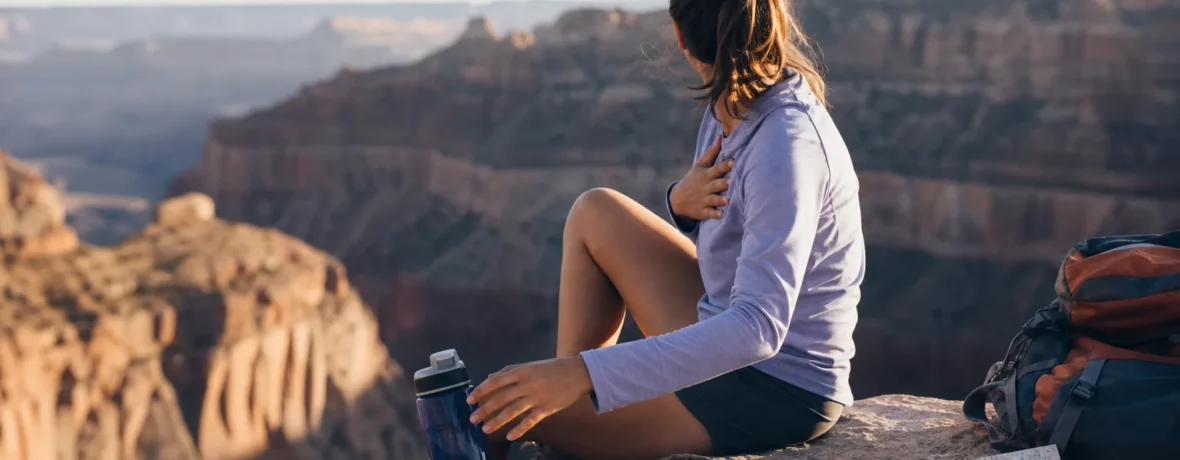
It can. Dehydration can contribute to chest discomfort, especially when fluid loss pushes your heart rate up, drops blood volume, or worsens heat illness. But chest pain is never something to walk off. If pain is severe, crushing, lasts more than 5 minutes, or comes with shortness of breath, fainting, or sweating, call 911.
Can dehydration cause chest pain?
Yes, dehydration can contribute to chest pain or chest discomfort.
On trail, dehydration means your body has less fluid available for normal circulation, sweating, cooling, and muscle function. Your heart may beat faster to keep blood moving. Your blood pressure can dip, especially when you stand up after sitting on a rock or crouching over a water filter. Electrolytes can also get out of balance, which can make your body feel off in strange ways.
The Mayo Clinic notes that worsening dehydration can include chest discomfort. NIH MedlinePlus lists rapid heartbeat, rapid breathing, dizziness, fainting, confusion, and shock among serious dehydration signs.
That does not mean dehydration is the cause of your chest pain. Chest pain can come from heart problems, lung problems, reflux, panic, muscle strain, asthma, altitude, heat illness, or something else entirely. Treat it with respect. A stubborn hiker is not tougher than a blocked artery.
What does dehydration chest pain feel like?
It may feel like tightness, pressure, fluttering, burning, or vague discomfort.
Some hikers describe it as a heavy chest paired with a racing pulse. Others feel lightheaded, weak, nauseated, chilled, or strangely anxious. You may notice the symptoms after a long climb, during a hot exposed section, or when you pop up too fast after a snack break.
Dehydration-related discomfort often travels with other clues:
- Thirst that feels hard to satisfy
- Dry mouth or sticky saliva
- Dark yellow urine or no urine for several hours
- Dizziness when standing
- Headache
- Unusual fatigue
- Fast heartbeat
- Muscle cramps
- Hot skin, heavy sweating, or no longer sweating in heat
Chest pain that is crushing, spreading, or paired with shortness of breath is a different beast. Do not try to label that as “just dehydration” from the side of the trail.
Why would dehydration make your chest hurt during a hike?
Dehydration stresses your cardiovascular system.
When you sweat hard, breathe hard, or hike in dry air, you lose water. You also lose sodium and other electrolytes. If you do not replace enough fluid, your blood volume can drop. Your heart has to work harder to deliver oxygen to your legs, brain, and vital organs.
The Wilderness Medical Society heat illness guideline says dehydration increases physiologic strain, decreases sweat rate, increases perceived effort, and raises core temperature risk. That is exactly the ugly mix you get on a steep, sunny climb with a warm bottle and no shade.
Common trail triggers include:
- Heat: Direct sun and high humidity make sweating less effective.
- Altitude: You lose more water through breathing in cold, dry mountain air.
- Long climbs: Sustained effort drives sweat loss and heart rate higher.
- Alcohol the night before: A rough start often gets rougher by mile 3.
- Illness: Vomiting or diarrhea can drain fluids fast.
- Some medications: Diuretics and certain heart, blood pressure, allergy, or psychiatric medications can affect heat tolerance or fluid balance. Ask your clinician before big hot-weather trips.
How can you tell dehydration from something more serious?
You cannot reliably tell in the field.
That is the straight answer. You can look for patterns, but you cannot rule out a heart attack, blood clot, serious arrhythmia, heat stroke, or severe asthma by guessing beside the trail.
| Symptom pattern | Could fit dehydration or heat strain | More concerning signs |
|---|---|---|
| Chest discomfort | Mild tightness with thirst, dizziness, dry mouth, dark urine | Crushing pressure, pain spreading to arm, jaw, back, or shoulder |
| Heart rate | Fast after climbing, improves with rest, shade, and fluids | Irregular, pounding at rest, or paired with fainting |
| Breathing | Hard breathing during exertion that settles after stopping | Shortness of breath at rest, blue lips, wheezing, or confusion |
| Heat signs | Sweating, cramps, headache, weakness | Confusion, collapse, seizure, or body temperature near 103°F [39.4°C] or higher |
The CDC describes heat stroke as a medical emergency, with warning signs that can include confusion, loss of consciousness, fast strong pulse, and high body temperature. If someone is confused or collapses in the heat, cool them aggressively and call 911.
What should you do if chest pain starts on trail?
Stop moving and treat it as serious until proven otherwise.
- Stop hiking. Sit or lie down in shade. Drop the pack. Loosen tight straps and clothing.
- Check the scene. Heat, altitude, lightning, distance from help, and cell service all matter.
- Assess red flags. Call 911 if pain is severe, crushing, spreading, lasts more than 5 minutes, or comes with shortness of breath, fainting, confusion, weakness, cold sweat, or nausea.
- Cool the body if heat is involved. Move to shade, wet clothing, fan the person, and use cold water on the neck, armpits, and groin if available.
- Sip fluids if the person is alert. Use water plus salty snacks or an electrolyte drink. Do not force fluids on someone confused, vomiting repeatedly, or drifting in and out of consciousness.
- Do not hike deeper into the problem. If symptoms improve, turn around with a partner. If symptoms do not improve quickly, get help.
Keep the plan simple. Rest. Shade. Cooling. Small sips. Emergency help when red flags show up.
How much water should you drink to prevent dehydration while hiking?
Drink to thirst, then adjust for heat, effort, and your own body.
Rigid water rules can backfire. The Wilderness Medical Society recommends drinking to thirst during activity while preventing more than 2% body weight loss. For a 180 lb [82 kg] hiker, 2% is 3.6 lb [1.6 kg]. That kind of loss can happen faster than you think in hot, dry, windy conditions.
A practical trail target for many hikers is 16-32 oz [0.5-1 L] of fluid per hour in warm conditions, but your needs change with temperature, pace, pack weight, altitude, sun, and sweat rate. A slow shaded stroll in 55°F [13°C] weather is not the same as a 2,000 ft [610 m] climb under a 95°F [35°C] sun.
Use these field checks:
- Start the hike already hydrated, not slamming water at the trailhead.
- Carry enough fluid capacity for the driest section, not just the first mile.
- Pair water with salty food on longer or hotter hikes.
- Watch urine color: pale yellow is generally better than dark amber.
- Do not chug plain water for hours without electrolytes or food.
- Refill before you are empty. Empty bottles make bad safety gear.
Can drinking too much water cause chest symptoms too?
Yes, overhydration can also be dangerous.
Drinking far beyond thirst, especially during long hikes or endurance events, can dilute blood sodium. This is called exercise-associated hyponatremia. It can look like dehydration at first: headache, nausea, weakness, dizziness, and confusion. That overlap is one reason field diagnosis is tricky.
Do not treat every bad feeling with endless water. If you have been drinking constantly, your hands are puffy, your stomach is sloshing, or you feel worse after more water, stop and get medical help. A salty snack may help with normal sweat loss, but severe symptoms need urgent care, not trail math.
When to see a doctor
Get medical care right away for chest pain that could be heart-related.
Call 911 now if chest pain is severe, crushing, new, or lasts more than 5 minutes, or if it comes with shortness of breath, fainting, confusion, sweating, nausea, weakness, or pain spreading to the arm, jaw, shoulder, back, or neck.
See a clinician soon if you repeatedly get chest discomfort during hikes, even if it fades with rest. Also get checked if dehydration symptoms keep returning, you have heart or kidney disease, you take diuretics or blood pressure medication, or you recently had vomiting, diarrhea, fever, or heat illness.
If a hiking partner has signs of heat stroke, follow CDC guidance: call 911, move them to a cooler place, and cool them fast. Do not give fluids to someone who is confused, unconscious, or unable to swallow safely.
Related reading
- Can Dehydration Cause High Blood Pressure?
- Can Dehydration Cause Dizziness?
- Can Dehydration Cause a Fever?
- Can Dehydration Cause Headaches?
FAQ
Can dehydration cause chest tightness?
Yes, dehydration can contribute to chest tightness by increasing heart strain, lowering blood volume, and worsening heat stress. But chest tightness can also signal a heart or lung emergency, so treat new or severe tightness as urgent.
Can dehydration cause a fast heartbeat while hiking?
Yes, a fast heartbeat is a common dehydration sign. Your heart may beat faster to move a smaller fluid volume through your body, especially during heat, climbing, or altitude exposure.
Should I keep hiking if chest pain improves after water?
No, not deeper into the hike. If chest pain improves with rest and fluids, turn around with a partner and keep the pace easy; if it returns or comes with red flags, call for help.
Can electrolytes help with dehydration chest discomfort?
Electrolytes can help replace salts lost through sweat on longer or hotter hikes. They are not a treatment for unexplained chest pain, and they do not rule out a heart problem.
What is the safest way to prevent dehydration on a hot hike?
Start hydrated, drink to thirst, carry extra capacity, eat salty snacks, and take shade breaks before you feel cooked. In serious heat, shorten the route or start early; no summit is worth heat illness plus chest pain.