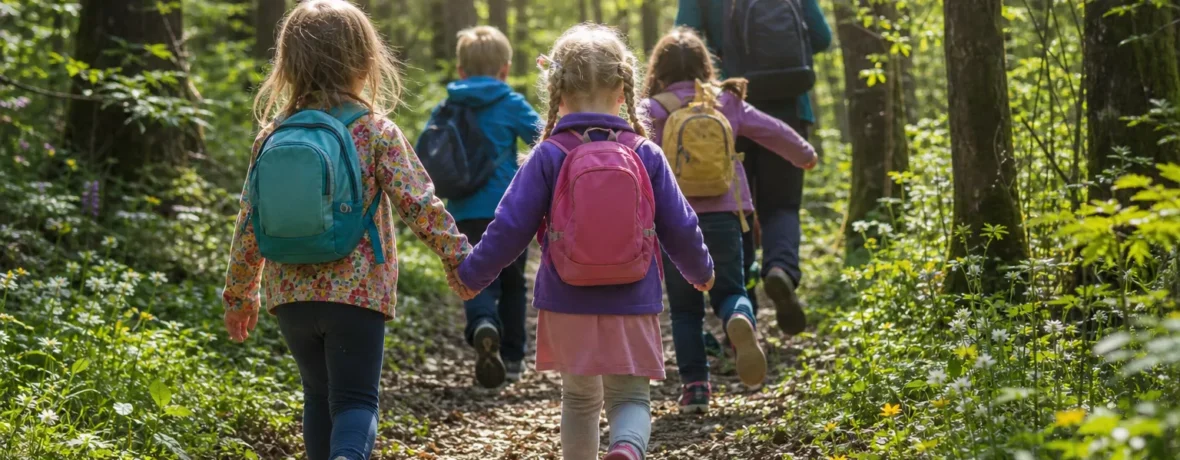
Hiking with kids works best when the route is short, flexible, and fun: plan 0.5-1 mile [0.8-1.6 km] for toddlers, 1-3 miles [1.6-4.8 km] for early grade-schoolers, and 3-6 miles [4.8-9.7 km] for older kids, with snacks, games, layers, and a no-shame turnaround plan.
How far can kids hike by age?
Most kids can hike farther than adults expect, but not at adult speed.
Distance depends on sleep, weather, terrain, mood, pack weight, snacks, and how interesting the trail is. A flat forest path with creek crossings may feel easy at 3 miles [4.8 km]. A hot, exposed trail with loose rock can feel rough at 1 mile [1.6 km]. Start shorter than your ego wants. Let the kid win.
| Age | Good starter distance | What usually works |
|---|---|---|
| 1-3 | 0.25-1 mile [0.4-1.6 km] | Short loops, creek stops, carrier backup |
| 4-5 | 0.5-2 miles [0.8-3.2 km] | Frequent breaks, games, simple goals |
| 6-8 | 1-3 miles [1.6-4.8 km] | Loops, nature challenges, snack checkpoints |
| 9-12 | 3-6 miles [4.8-9.7 km] | Viewpoints, light packs, map jobs |
| Teens | 4-10 miles [6.4-16.1 km] | Clear objective, real food, some independence |
Those ranges are starter numbers, not limits. A motivated 7-year-old on a cool day may cruise 5 miles [8 km]. A tired 11-year-old in full sun may hate every step after 2 miles [3.2 km]. Watch the kid in front of you, not the mileage on the app.
A simple rule: add distance slowly. If last weekend’s hike was 2 miles [3.2 km] and everyone finished happy, try 2.5 or 3 miles [4 or 4.8 km] next time. Do not jump from a paved nature loop to a steep 8-mile [12.9 km] summit and act surprised when morale collapses.
What is the best age to start hiking with kids?
You can start as soon as you can keep the child safe, warm, fed, and carried when needed.
Babies can join mellow walks in a front carrier or child backpack when the carrier fits correctly and the adult is steady on uneven ground. Toddlers can walk tiny sections, throw pebbles in creeks where allowed, inspect pinecones, and ride when they melt down. Preschoolers want discovery. School-age kids want jobs. Teens want a reason.
For kids ages 6-17, the CDC recommends 60 minutes or more of moderate-to-vigorous physical activity each day, and hiking can count when it gets them moving, breathing harder, and using their muscles on hills and uneven ground. See the CDC’s children’s physical activity guidance.
Do not frame hiking as punishment, training, or a forced march. Frame it as a mission: find the waterfall, reach the bridge, spot five lizards, eat lunch on the big rock, or follow the blue blazes to the overlook.
How do you plan your first family hike step by step?
Pick an easy trail, cut the distance in half, and build the day around comfort.
- Choose a short loop or out-and-back. For the first hike, aim for 1-2 miles [1.6-3.2 km] unless your child already walks longer distances happily.
- Check the surface. Dirt, boardwalk, and packed gravel are easier than loose rock, deep sand, mud, or endless stairs.
- Look for a feature. Kids do better with a bridge, pond, waterfall, old cabin, big boulder, beach, or viewpoint than with “let’s walk through trees for two hours.”
- Start early. Morning usually means cooler temperatures, better parking, and fewer tired-kid negotiations.
- Set the turnaround rule before you start. If weather shifts, feet hurt, water runs low, or the group gets cranky, turn around. No drama.
- Pack more food than seems reasonable. Hunger can turn a cheerful kid into a trail lawyer in minutes.
- End before they are wrecked. Leave them wanting more. That is how you get a second hike.
Read the official trail or park page before leaving home for closures, weather alerts, parking changes, pet rules, and seasonal hazards. If a route has river crossings, cliff edges, snow, hunting seasons, or desert heat, save it for later unless you know exactly what you are doing.
What should kids carry in their own hiking pack?
Kids should carry light, useful items, not a miniature expedition load.
A child’s pack is partly practical and partly psychological. Give them real responsibility, but keep the weight low. For younger kids, that may mean a small water bottle, snack, whistle, and fleece. Older kids can carry more of their own layers, lunch, and personal items.
- Water bottle or hydration reservoir
- Snack they can open without help
- Light fleece or rain shell
- Whistle attached to the shoulder strap
- Hat or beanie, depending on weather
- Small sit pad or bandana
- Personal medication if prescribed, managed according to your family’s plan
Keep heavy shared gear with adults: first-aid kit, navigation tools, extra water, repair items, headlamp, emergency shelter, and the real lunch. A kid carrying too much will slow down, complain, trip more often, and decide hiking is terrible. Fair enough. Nobody likes being overloaded.
What should you pack for hiking with kids?
Pack for slower miles, surprise weather, messy hands, and sudden hunger.
Family hiking gear does not need to be fancy. It needs to work. The best kit prevents the common trip-enders: cold kids, hot kids, blisters, low blood sugar, boredom, and wet socks.
- Water: Bring enough for the full route, plus extra in the car.
- Food: Pack salty snacks, sweet snacks, and something with protein. Use snack breaks before moods crash.
- Layers: A light fleece and rain shell can save the day when wind or drizzle shows up.
- Sun protection: Hats, sunglasses, sunscreen, and shade breaks.
- Foot care: Comfortable shoes, moisture-wicking socks, blister pads, and spare socks.
- First aid: Bandages, blister care, tweezers, antiseptic wipes, and any family-specific medical items.
- Navigation: Downloaded map, paper map when useful, and a charged phone. Do not rely on cell service.
- Emergency basics: Headlamp, whistle, small repair kit, fire starter where appropriate, and an emergency blanket.
- Kid comfort: Wipes, hand sanitizer, small trash bag, and a dry shirt for the ride home.
For blister prevention and care, Mayo Clinic recommends well-fitting shoes, moisture-wicking socks, treating hot spots early, and covering blisters to reduce friction. Their blister first-aid advice is a useful reference before longer hikes.
What are the best hiking games for kids?
The best hiking games are simple, repeatable, and require no gear.
Games turn distance into small missions. Use them before boredom gets loud, not after everyone is already grumpy.
- Color hunt: Find something red, orange, yellow, green, blue, and purple.
- Trail bingo: Look for a bird, mushroom, bridge, animal track, feather, cairn, acorn, and running water.
- Twenty steps: Let the child lead for 20 steps, then pick the next leader.
- Snack math: “We eat the next gummy at the Big Bend, then the next one at the bridge.” Tiny goals work.
- Silent minute: Everyone stops talking for 60 seconds and then reports what they heard.
- Ranger job: One kid watches for trail markers, one checks the map, one announces water breaks.
- Animal walks: Bear walk to the next tree, fox steps over roots, heron balance on flat rocks where safe.
- Story chain: Each person adds one sentence to a ridiculous trail story.
Use games lightly. Some kids want constant play. Others want to poke moss with a stick for ten minutes. That counts. Curiosity is not wasted time.
How do you keep kids safe and happy on the trail?
Keep kids close, fed, hydrated, layered, and involved.
Safety starts with pacing. Kids often sprint, stop, squat, sprint, snack, complain, and sprint again. That pattern can work on short hikes, but on longer trails you need rhythm. Try a steady “all-day pace” where nobody is gasping and everyone can talk.
- Use the sandwich method: Adult in front, kids in the middle, adult in back when possible.
- Stop at trail junctions: Make it a hard rule. Nobody passes an intersection alone.
- Teach the hug-a-tree rule: If separated, stop moving, stay visible, blow the whistle, and wait.
- Check clothing early: Fix cold fingers, sweaty backs, and rubbing shoes before they become problems.
- Take real breaks: Sit down, drink, eat, and reset. Standing around while adults check phones is not a kid break.
- Respect fear: If a child is scared of ledges, bridges, dogs, thunder, or bugs, slow down and handle it. Do not mock it.
Ticks deserve attention in many parts of the U.S. The CDC recommends using EPA-registered repellents, checking clothing and bodies after being outdoors, and showering soon after coming inside when possible. Review the CDC’s tick bite prevention guidance before hiking in brushy or grassy areas.
How do you handle heat, cold, rain, and altitude with kids?
Change the plan before weather turns a normal hike into a rough one.
Kids are not always great at explaining what is wrong. “I hate this” may mean they are too hot, cold, thirsty, hungry, tired, or developing a blister. Ask specific questions: Are your feet rubbing? Is your shirt wet? Are you dizzy? Do you feel sick? When did you last pee?
For hot hikes, choose shade, start early, shorten the route, and build in water breaks. Watch for headache, nausea, weakness, dizziness, confusion, or unusual behavior. The CDC lists confusion and altered mental status among serious heat illness warning signs in its heat-related illness guidance.
For cold or wet hikes, cotton is the enemy. Use synthetic or wool layers when you can. Pack a dry layer for the child who jumps in a puddle at mile 0.2 [0.3 km], because that child exists in every family.
At higher elevations, slow down. Headache, appetite loss, unusual tiredness, nausea, dizziness, or irritability after gaining altitude should be taken seriously. The CDC Yellow Book notes that preverbal children with acute mountain sickness can show loss of appetite, irritability, and pallor; read its high-altitude travel and altitude illness guidance if your trip goes high.
When to see a doctor
Get medical help when symptoms are severe, worsening, unusual, or do not improve with rest, cooling, food, and fluids.
This is hiking guidance, not a diagnosis. Trust your instincts. If a child looks wrong, acts confused, cannot keep fluids down, has trouble breathing, faints, has a serious fall, or develops a spreading rash or signs of infection, stop the hike and seek medical care.
For dehydration, MedlinePlus lists warning signs in young children such as dry mouth and tongue, no tears when crying, no wet diapers for 3 hours or more, unusual sleepiness, irritability, and sunken eyes. Severe symptoms need urgent help; review MedlinePlus dehydration information before summer hikes.
Also get help after a tick bite if fever, rash, severe headache, joint pain, facial droop, or flu-like symptoms appear in the days or weeks afterward. For blisters, seek care if there is spreading redness, warmth, pus, worsening pain, red streaks, or the child has a medical condition that raises infection risk.
Related reading
- Kids' Hiking Boots: How to Size and When to Buy
- Teaching Leave No Trace to Kids
- Hiking Games for Kids
- Hiking as a Family: Kids’ Boots, Realistic Distances and Keeping It Fun
FAQ
What is a good first hike for kids?
A good first hike is 1-2 miles [1.6-3.2 km] on an easy trail with a clear payoff. Pick a loop, pond, bridge, beach, waterfall, or viewpoint, and save steep climbs for later.
How often should kids take breaks while hiking?
Plan a short break every 20-30 minutes for younger kids, and sooner in heat or on climbs. Break before they fall apart, not after.
Should kids use trekking poles?
Older kids can use trekking poles if they fit and know how to carry them safely. For toddlers and young kids, sticks often become swords, trip hazards, or tools for poking siblings, so use judgment.
What shoes are best for kids on hikes?
The best hiking shoes for kids are comfortable, broken in, grippy, and matched to the trail. Sneakers work for many dry, easy paths; hiking shoes or boots help on rocky, muddy, or uneven terrain.
How do you motivate a child who says they hate hiking?
Shorten the hike and give them control. Let them choose the snack spot, lead between trail markers, carry the map, pick a game, or invite a friend next time.
When should you turn around on a family hike?
Turn around when water is running low, weather worsens, daylight is slipping, someone is hurt, or the child stops recovering after breaks. The summit, lake, or overlook will still be there another day.