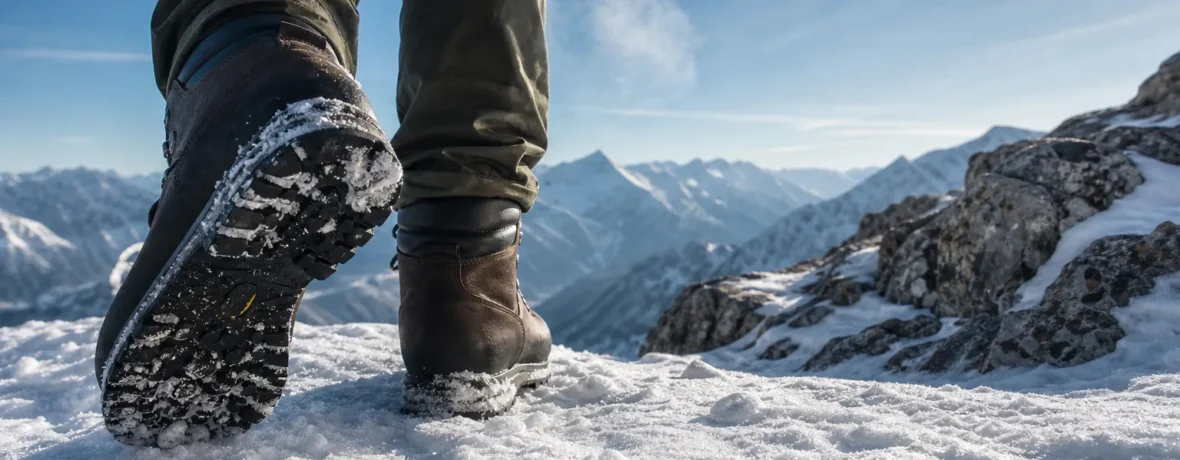
Yes, hiking boots are good for snow when they are waterproof, ankle-high, paired with warm socks, and used on packed snow above roughly 10°F [-12°C]. They are not enough for deep powder, long exposure, steep ice, glacier travel, or extreme cold unless they are insulated winter hiking boots with proper traction.
Are hiking boots good for snow?
Yes, but only in the right kind of snow.
Regular three-season hiking boots can handle short snowy walks, packed winter trails, and slushy shoulder-season hikes if they keep water out and fit well with thicker socks. The problem is that “snow” can mean five different things under your feet: soft powder, crust, wet slush, wind-packed trail, or polished ice. One boot will not master all of it.
A stiff leather or synthetic hiking boot gives you ankle support, a protective upper, and more warmth than a trail runner. That helps when snow is only a few inches deep. But most standard hiking boots have three weak spots in winter: limited insulation, shallow tread on ice, and uppers that eventually wet out after hours of snow contact.
Here is the straight read:
- Good: packed snow, cold dry trails, short winter hikes, snow-dusted forest paths.
- Risky: wet slush, stream crossings, all-day snowshoeing, long stops in freezing weather.
- Wrong tool: steep ice, mountaineering routes, deep powder without gaiters or snowshoes, glacier travel.
Do hiking boots keep your feet warm in snow?
Sometimes, but warmth depends on insulation, fit, socks, and how long you stand still.
Many hiking boots are waterproof but not insulated. Waterproofing keeps liquid water out, but it does not create much warmth by itself. A boot can be dry and still feel painfully cold if the midsole, toe box, and upper leak heat into snow.
Insulated boots usually use synthetic insulation measured in grams. Common winter hiking options fall in the 200-gram to 400-gram range. A 200-gram boot works for active hiking in mild winter conditions. A 400-gram boot is warmer for colder days, slower hiking, and longer breaks. Heavier insulation can feel bulky and sweaty if you move fast.
Fit matters more than many hikers think. If your winter sock jams your toes into the front or top of the boot, circulation drops and your feet get colder. You want enough room to wiggle your toes without heel lift. Tight boots are cold boots.
Use this simple sock setup:
- A thin liner sock if you blister easily.
- A midweight or heavyweight wool hiking sock.
- No cotton. Cotton holds moisture and chills fast.
- A dry backup pair in a waterproof bag for longer hikes.
Are winter hiking boots better than regular hiking boots?
Yes, for sustained snow, cold, and icy trail conditions.
Winter hiking boots are built for a different job. They usually add insulation, taller cuffs, waterproof materials, more protective rands, and outsoles designed to stay grippy in cold temperatures. Some also work better with snowshoes and traction devices.
| Boot type | Best use | Main limit |
|---|---|---|
| Regular hiking boots | Light snow, packed trails, mild winter days | Not very warm during long exposure |
| Insulated hiking boots | Cold trail hiking, snowshoeing, mixed snow | Can feel hot and heavy above freezing |
| Pac boots | Deep snow, camp chores, very cold slow travel | Less precise on steep or rocky trails |
| Mountaineering boots | Alpine snow, crampons, steep frozen terrain | Expensive and stiff for normal trails |
If your hikes are mostly groomed paths, packed forest trails, and rolling terrain, insulated hiking boots make sense. If your route includes front-pointing, glacier travel, or technical crampons, look at mountaineering boots instead. REI’s guide to choosing mountaineering boots explains how stiffer boots pair with more technical crampons.
Do hiking boots have enough traction for snow and ice?
For snow, often yes; for ice, no.
Rubber lugs bite into packed snow better than flat street soles. That is why a hiking boot feels decent on a snowy trail. Ice is different. On ice, rubber slides. Deep lugs do not magically create grip on a frozen, glassy surface.
Match your traction to the surface:
- Soft snow: Use boots with deep lugs and add gaiters if snow reaches your cuffs.
- Packed snow: Add microspikes or winter traction devices when the trail gets slick.
- Rolling icy trails: Use aggressive spikes designed for hiking, not smooth city cleats.
- Steep hard snow: Consider crampons only if your boots are compatible and you know how to use them.
- Deep unconsolidated snow: Use snowshoes to stay on top instead of postholing.
For non-technical winter trails, microspikes are usually the sweet spot: light, packable, and easy to put on before the trail turns into a luge run. For steeper terrain, read a trusted primer such as REI’s guide to choosing crampons before assuming your hiking boots can take them.
Are waterproof hiking boots enough for snow?
Waterproof boots help, but they are not the whole answer.
Snow melts from body heat, sun, friction, and warm ground. Once it melts, it tries to enter your boot through seams, tongues, cuffs, and soaked fabric panels. A waterproof membrane can block water, but the outer material can still absorb moisture and get heavy.
For snowy hikes, look for:
- Waterproof membrane or full-grain leather upper.
- Gusseted tongue to block slush.
- Rubber rand around the toe and sides.
- Tall enough cuff to work with gaiters.
- Roomy toe box for warm socks.
Gaiters are the cheap upgrade that can save your day. They stop snow from pouring over the boot collar, keep laces from freezing into a mess, and reduce how much moisture hits the upper. If snow is deeper than your boot cuff, wear gaiters or expect wet socks.
When should you not wear hiking boots in snow?
Do not rely on regular hiking boots when the terrain or temperature asks for real winter gear.
Skip standard hiking boots when you expect deep powder, subzero wind chills, long periods standing around, technical ice, or routes where a fall has serious consequences. Also skip low-cut hiking shoes unless the snow is shallow and the trail is short. Snow sneaks into low collars fast.
Wind matters too. The National Weather Service explains that wind chill increases frostbite and hypothermia risk by pulling heat from exposed skin faster; check its cold weather safety guidance before heading out on bitter days. Cold feet are not just uncomfortable. They can become a safety problem when you still have miles to walk.
How do you make hiking boots work better in snow?
Build a winter system around the boot.
A boot is only one piece. Your socks, gaiters, traction, pace, and backup plan matter just as much.
- Start dry. Put on dry socks at the trailhead, not socks you wore in the car for two sweaty hours.
- Loosen slightly. Lace snug at the heel, but leave enough toe room for circulation.
- Add gaiters early. Do it before snow gets inside, not after.
- Carry traction. Pack microspikes when freeze-thaw conditions are possible.
- Manage sweat. Vent layers before your socks get damp from overheating.
- Bring dry socks. One spare pair can turn a miserable hike into a manageable one.
At home, dry boots slowly at room temperature. Pull the insoles out. Open the tongues wide. Do not cook leather boots next to a heater; high heat can damage materials and adhesives.
When to see a doctor
Get medical help fast if numbness, hard skin, confusion, or uncontrolled shivering shows up.
Cold injuries can move from annoying to serious quickly. The CDC lists shivering, exhaustion, confusion, fumbling hands, memory loss, slurred speech, and drowsiness as signs of hypothermia, and it advises watching closely for frostbite symptoms such as redness, pain, numbness, or waxy-looking skin. Read the CDC’s pages on recognizing hypothermia and preventing frostbite before winter trips.
Seek urgent care if skin stays numb after rewarming, turns gray or white, blisters, feels hard, or if the person seems confused or unusually sleepy. Do not rub suspected frostbite. The Wilderness Medical Society’s frostbite guidance stresses avoiding refreezing after thawing, which is one reason evacuation and medical care matter in the backcountry; see the Wilderness Medical Society frostbite guidelines for clinical detail.
So, what should you wear for snowy hikes?
Wear the lightest boot that keeps you warm, dry, and stable for the worst conditions you expect.
For a one-hour packed trail near town, waterproof hiking boots, wool socks, and microspikes in your pack may be enough. For a half-day hike in consistent snow, choose insulated waterproof boots, gaiters, and traction. For deep snow, add snowshoes. For steep frozen terrain, step up to boots and crampons made for that job.
Here is the quick checklist:
- Waterproof boots with ankle coverage.
- Insulation matched to temperature and pace.
- Wool socks with toe room.
- Gaiters for snow deeper than the boot cuff.
- Microspikes for packed snow and ice.
- Snowshoes for deep, soft snow.
- Dry socks and a conservative turnaround time.
The best winter setup is not the biggest boot on the shelf. It is the setup that lets you move naturally, stay warm without sweating through your socks, and keep traction when the trail turns mean.
Related reading
- Are Columbia Hiking Boots Good? Durability and Value Review
- Are Combat Boots Good for Hiking?
- Are Duck Boots Good for Hiking?
- How to Clean Hiking Boots Without Ruining Leather or Membranes
FAQ
Can I wear regular hiking boots in snow?
Yes, you can wear regular hiking boots in light or packed snow. They should be waterproof, ankle-high, and roomy enough for warm socks, but they are not the best choice for deep snow or long cold exposure.
Are hiking boots good on ice?
No, hiking boots alone are poor on ice. Add microspikes or another winter traction device when trails are frozen, especially on descents.
Do I need insulated boots for winter hiking?
Yes, if you hike in sustained freezing temperatures, deep snow, or slow conditions. If you hike fast on mild packed trails, waterproof non-insulated boots with warm socks may work.
Should hiking boots fit bigger for winter?
They should fit slightly roomier, not sloppy. You need enough space for thicker socks and toe movement without heel lift or foot sliding.
Are snow boots better than hiking boots?
Snow boots are better for deep snow, standing around, and very cold casual use. Hiking boots are better for longer trail miles when you need support, flex, and precise footing.