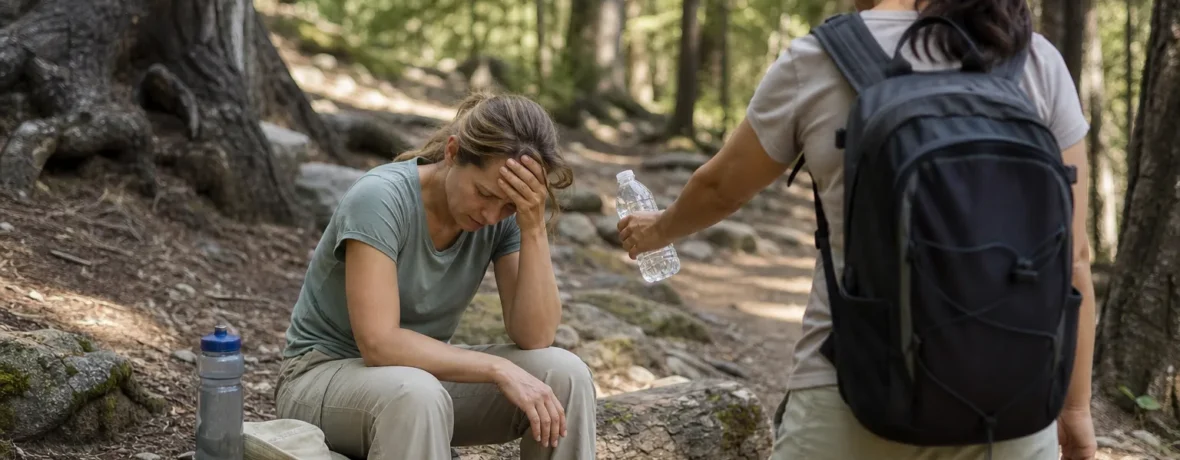
A headache after hiking is usually caused by dehydration, heat, altitude, skipped food, sun glare, neck tension, or hard exertion. Rest, cool down, drink fluids, and eat something salty or carbohydrate-rich. Get medical help fast if the headache is sudden, severe, worsening, tied to confusion, fainting, fever, weakness, chest pain, or trouble breathing.
Why do I get a headache after hiking?
Your trail headache usually comes from stress stacked on stress. Hiking asks your body to climb, sweat, breathe harder, manage sun, carry weight, and sometimes sleep at a higher elevation than usual. One factor may be enough. Two or three together can hit like a hammer.
The most common triggers are simple:
- Not replacing fluid lost through sweat and breathing
- Not eating enough before or during the hike
- Heat buildup, especially with humidity and direct sun
- High altitude, especially above 8,000 ft [2,438 m]
- Hard uphill effort without a warm-up
- Sun glare, wind, dry air, smoke, or strong odors
- Neck and shoulder tension from a heavy pack or tight straps
- Caffeine changes, alcohol the night before, or poor sleep
That does not mean every post-hike headache is harmless. A new, violent, or strange headache deserves respect. The trail is not the place to “walk it off” when your brain is waving a red flag.
Can dehydration cause a headache after hiking?
Yes, dehydration can cause headache, dizziness, dark urine, fatigue, and muscle cramps. MedlinePlus lists headache among signs of mild to moderate dehydration and flags confusion, fainting, rapid heartbeat, and rapid breathing as reasons to get medical help right away on its dehydration medical encyclopedia page.
Hikers lose fluid in sneaky ways. Sweat is obvious. Breathing hard on a dry ridge is not. Cold weather can fool you too, because you may sweat into layers without noticing it. Add salty snacks, coffee, alcohol from the night before, or a long drive to the trailhead, and you can start the hike already behind.
Use your body’s signals, not just thirst. Thirst can lag. Better field clues include:
- Urine that is darker than pale yellow
- Dry mouth or sticky saliva
- Dizziness when standing up
- Headache that improves with rest, shade, food, and fluids
- Unusual fatigue for the grade and pace
Water helps, but plain water is not always the whole answer. On a sweaty hike, you also lose electrolytes. Food usually covers this on moderate outings: salted nuts, jerky, pretzels, cheese, tortillas, soup, or a sports drink can help you replace salt along with fluid. If you have heart, kidney, blood pressure, or fluid-balance issues, ask your clinician for personal advice before leaning heavily on electrolyte products.
Can altitude give you a headache on a hike?
Yes, altitude can trigger a headache, especially after rapid ascent or sleeping high. The CDC says headache is the cardinal symptom of acute mountain sickness, usually with at least one other symptom such as nausea, dizziness, fatigue, appetite loss, or vomiting on its High-Altitude Travel and Altitude Illness guidance.
Altitude trouble is not limited to big expedition peaks. Many trailheads in the Rockies, Sierra Nevada, Cascades, and desert Southwest sit high enough to bother hikers who live near sea level. The CDC notes that acute mountain sickness symptoms often start 2 to 12 hours after arrival at high altitude or after climbing higher, often during or after the first night.
Use this quick comparison on the trail:
| Likely cause | Common clues | Trail response |
|---|---|---|
| Dehydration | Thirst, dark urine, dry mouth, fatigue, cramps | Rest, drink, eat salty food, watch for improvement |
| Heat illness | Heavy sweating, weakness, dizziness, nausea, headache | Stop, cool down, shade, sip fluids; seek help if worsening |
| Altitude illness | Headache plus nausea, dizziness, fatigue, poor appetite, poor sleep | Stop ascending; descend if symptoms worsen or don’t improve |
| Exertion headache | Starts during or after hard effort; pounding on climbs | Back off pace, cool down, avoid straining, get checked if new |
The Wilderness Medical Society’s 2024 altitude illness guidelines say further ascent should be avoided when symptoms are ongoing, and descent should be started for suspected high-altitude cerebral edema in remote areas. You can read the clinical guidance in the Wilderness Medical Society altitude illness update.
Could heat exhaustion cause a hiking headache?
Yes, headache can be part of heat exhaustion and heat stroke. The CDC lists headache among symptoms of heat exhaustion, along with heavy sweating, weakness, dizziness, nausea or vomiting, muscle cramps, and fainting on its heat-related illnesses page.
Heat gets dangerous fast because hiking generates internal heat while the day adds external heat. Shade may be thin. Rock reflects sun. Humidity slows sweat evaporation. A black pack, dark shirt, and windless canyon can turn a normal climb into a cooker.
Heat stroke is an emergency. The CDC lists confusion, altered mental status, slurred speech, loss of consciousness, seizures, hot dry or damp skin, and very high body temperature among heat stroke warning signs. If those show up, call 911 or activate emergency help, move the person to a cooler place, and cool them while help is coming.
Is it an exertion headache or a migraine after hiking?
It might be, especially if the headache starts during a hard climb or soon after big effort. Mayo Clinic says primary exercise headaches can last from 5 minutes to 48 hours, and risk is higher when exercising in hot weather or at high altitude; Mayo also says to contact a provider for a headache during or after exercise, and to call right away if it begins abruptly or is your first headache of that type on its exercise headaches page.
Exertion headaches often feel like pounding or throbbing. They may show up during steep climbs, fast summit pushes, trail running, heavy pack carries, scrambling, or straining. A slow warm-up can help some hikers, especially before sustained uphill work.
Migraine can overlap with hiking triggers too. Bright light, glare off snow or water, skipped meals, dehydration, heat, sleep disruption, and hard effort can all set the stage for people prone to migraine. If your headache comes with nausea, light sensitivity, sound sensitivity, visual changes, or one-sided throbbing, talk with a clinician instead of guessing.
How do you prevent a headache while hiking?
Prevention works best when you start before the trailhead. Pack your body the same way you pack your gear: early, deliberately, and for the conditions.
- Start hydrated. Drink normally the day before and the morning of the hike. Do not try to “tank up” at the parking lot.
- Eat before you climb. A real snack or breakfast beats an empty-stomach sufferfest.
- Carry easy calories. Eat small amounts every 60 to 90 minutes on longer hikes.
- Replace salt on sweaty days. Bring salty food or an electrolyte option if heat, humidity, or long climbs are in the plan.
- Warm up. Start slower than you want for the first 10 to 15 minutes, then build.
- Control heat. Use shade breaks, light layers, a brimmed hat, and earlier start times.
- Protect your eyes. Wear sunglasses when hiking on snow, granite, desert sand, water, or exposed ridges.
- Fit your pack. Loosen shoulder death-grip straps, use the hip belt, and avoid clenching your jaw on climbs.
- Respect altitude. If you are coming from low elevation, avoid aggressive first-day summit plans and do not keep climbing with symptoms.
What should you do if a headache starts on the trail?
Stop early and deal with it. A small headache is easier to fix than a blown-up one three miles from the car.
- Step off the trail safely and rest in shade or shelter.
- Loosen your hat, pack straps, collar, and anything pressing on your neck.
- Drink steadily; do not chug until your stomach sloshes.
- Eat a snack with carbohydrate and some salt.
- Cool your head, neck, and torso if you feel hot.
- Check your hiking partner for confusion, stumbling, slurred speech, or unusual behavior.
- Turn around if symptoms build, if altitude is involved, or if your pace and judgment are slipping.
If the headache fades with rest, cooling, food, and fluids, keep the rest of the day conservative. Skip the bonus peak. Take the shaded route. The mountain will not care. Your brain might.
When to see a doctor
Get medical help right away for a sudden, severe, or unusual headache. Also seek urgent care for headache with confusion, fainting, seizure, fever, stiff neck, weakness, numbness, vision changes, chest pain, shortness of breath, repeated vomiting, head injury, or symptoms of heat stroke.
Talk with a healthcare professional if hiking headaches are new, recurring, getting worse, or happening during exertion. You should also get personal advice before high-altitude trips if you have heart disease, lung disease, sleep apnea, sickle cell trait, kidney disease, diabetes, pregnancy, or a history of serious altitude illness.
Do not self-diagnose a pattern just because it seems trail-related. Dehydration, heat illness, altitude illness, migraine, infection, blood pressure problems, medication effects, and rare but serious neurologic issues can look similar from inside your own skull.
Related reading
- What to Do After a Tick Bite: Removal and Aftercare
- Knee Pain After Hiking: Causes and Fixes
- Hip Pain After Hiking: Causes and Fixes
- Sore Legs After Hiking: DOMS and Recovery
FAQ
Why do I get a headache after hiking in the sun?
Sun headaches often come from heat, dehydration, glare, and hard exertion working together. Shade breaks, sunglasses, a brimmed hat, steady fluids, salty snacks, and an earlier start can reduce the odds.
How long should a hiking headache last?
A mild headache from dehydration, missed food, or heat strain may improve within a few hours after rest, cooling, fluids, and food. If it lasts into the next day, keeps worsening, or feels different from your usual headaches, contact a healthcare professional.
Can hiking at 8,000 ft cause a headache?
Yes, especially if you came from low elevation or climbed quickly. Above 8,000 ft [2,438 m], headache with nausea, dizziness, fatigue, poor appetite, or vomiting should make you think about altitude illness and stop ascending.
Should I keep hiking if I have a headache?
Not until you know what is happening. Stop, rest, drink, eat, cool down, and reassess; turn around if symptoms worsen, if altitude is involved, or if you have dizziness, nausea, confusion, weakness, or trouble breathing.
What should I pack to prevent hiking headaches?
Pack enough water, salty snacks, quick carbohydrates, sunglasses, a brimmed hat, sun protection, and layers that let you dump heat. For higher elevations, pack a conservative route plan too; turning around is real prevention, not failure.