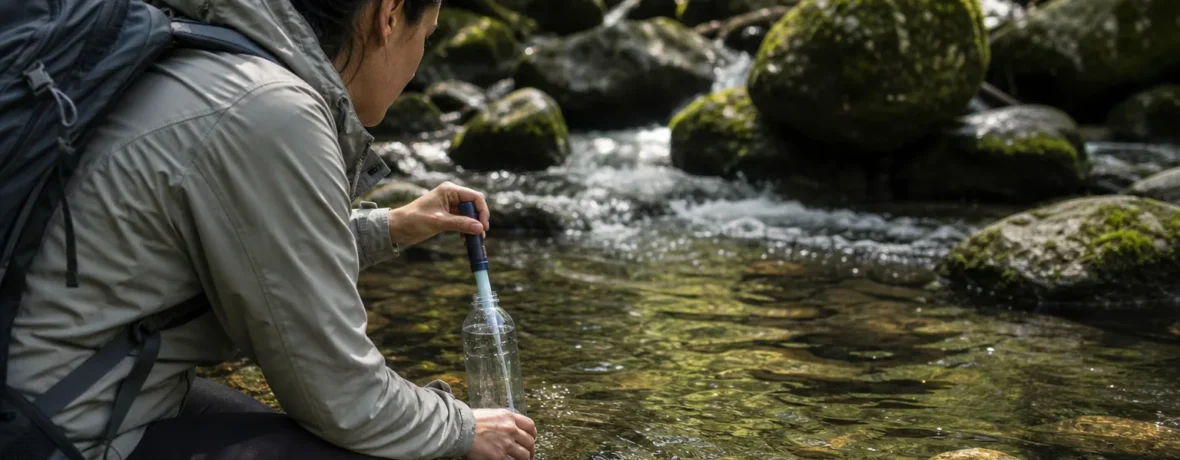
No, not unless you treat it first. Clear, cold, fast water can still carry Giardia, Cryptosporidium, bacteria, and sometimes viruses. For trail use, boil for 1 minute, or 3 minutes above 6,500 ft [1,980 m], or use a filter plus disinfection.
Is creek water safe to drink if it looks clear?
No. Looks tell you almost nothing.
A creek can sparkle like glass and still run past animal scat, a dead rodent, a busy campsite, a leaking septic system, or a herd of cattle upstream. You may never see the source. That is the problem.
The CDC’s backcountry water treatment guidance says drinking straight from a clear mountain stream is generally not safe. The main trail concerns are parasites, bacteria, and viruses. Parasites get the most attention because Giardia and Cryptosporidium can survive in untreated surface water and make a trip ugly fast.
Cold does not make creek water safe. Movement does not make it safe. High elevation does not make it safe. A spring bubbling from the ground may be safer than a muddy stream below a horse camp, but “safer” is not the same as safe.
What can be in untreated creek water?
Untreated creek water can carry germs, sediment, and chemical contaminants.
The big three for hikers are parasites, bacteria, and viruses. Giardia can come from infected people or animals and can spread through contaminated water; the CDC’s Giardia page lists untreated water from springs, lakes, rivers, and shallow wells as a risk. Symptoms often start 1 to 2 weeks after infection, so you may be home before your gut files the complaint.
Cryptosporidium is another parasite hikers worry about because it is tough. Standard chlorine treatment is weak against it, which is why boiling or a proper filter matters. Bacteria can enter water through feces, soil, dead animals, or runoff. Viruses are often a bigger concern near heavy human use, poor sanitation, or international travel routes, but they are not magic. They can show up where people contaminate water.
- Parasites: Giardia and Cryptosporidium are the classic backcountry troublemakers.
- Bacteria: Sources include fecal contamination, runoff, and decaying organic matter.
- Viruses: More likely where human waste can reach water.
- Sediment: Grit, silt, and organic bits can clog filters and shield germs from chemicals.
- Chemicals: Possible near mines, farms, roads, burn scars, and industrial areas; normal backpacking filters may not remove them.
How to purify water while hiking?
Use boiling, filtration, chemical disinfection, UV, or a combination.
Here is the clean trail routine:
- Choose the best source. Pick clear, flowing water upstream from campsites, trails, livestock, and obvious runoff when you can.
- Pre-filter cloudy water. Let sediment settle, then pour through a bandana, coffee filter, or pre-filter. This protects your main treatment method.
- Treat it. Boil, filter, chemically disinfect, use UV, or combine methods based on the risk.
- Keep clean and dirty gear separate. Do not let untreated water touch bottle threads, bite valves, pot lids, or the inside of your clean reservoir.
- Wait before drinking. Chemicals and UV need contact time. Follow the product directions exactly, especially in cold or cloudy water.
The Wilderness Medical Society water treatment guideline backs a layered approach when conditions call for it. Filter first when water is silty or when parasites are a concern. Add disinfection when you also want better coverage for bacteria and viruses.
Is boiling creek water enough?
Yes, boiling is the most reliable field method for germs.
Bring water to a rolling boil for 1 minute. Above 6,500 ft [1,980 m], boil for 3 minutes. That kills bacteria, viruses, and parasites, including Giardia and Cryptosporidium, according to CDC guidance.
Boiling has trail drawbacks. It burns fuel, takes time, leaves you waiting for water to cool, and does not remove grit or chemical contamination. For one emergency bottle, boiling is simple. For a long, hot day when you need several quarts [liters], a filter is usually faster.
What is the best way to treat creek water on trail?
The best method is the one that matches the water source and the trip.
| Method | Works well against | Watch for |
|---|---|---|
| Boiling | Bacteria, viruses, Giardia, Cryptosporidium | Fuel use, cooling time, no chemical removal |
| Backcountry filter | Parasites and many bacteria, if rated properly | May not remove viruses; can clog or freeze |
| Chemical tablets or drops | Many bacteria and viruses; some products work better on parasites | Contact time, taste, cold water, cloudy water |
| UV purifier | Bacteria, viruses, and parasites in clear water | Batteries, dirty water, bottle size, technique |
For typical US backpacking, a hollow-fiber or pump filter rated for cyst reduction is common because it handles Giardia and Cryptosporidium well. If you are near heavy human impact, questionable sanitation, or floodwater, filter and then disinfect. The CDC Yellow Book water disinfection guidance also points out that cloudy water should be clarified before chemical treatment so disinfectants can work better.
Can you drink from a creek with a LifeStraw, Sawyer, Katadyn, or similar filter?
Usually yes, if the filter is rated for the germs you are trying to remove and you use it correctly.
Read the label, not the marketing splash. Look for language such as cyst reduction, oocyst reduction, or NSF Standards 53 or 58 for cyst removal. Many backpacking filters do a strong job on Giardia and Cryptosporidium. Many do not remove viruses because viruses are smaller than the pores in standard backpacking filters.
Filter care matters as much as the filter itself:
- Do not let a wet hollow-fiber filter freeze; ice can damage the fibers.
- Backflush or clean it as the maker directs.
- Keep dirty bags, hoses, and bottle threads away from clean water.
- Carry backup tablets or drops in case the filter breaks or clogs.
- At home, dry and store it according to the instructions.
Does running water make creek water safer than lake water?
Running water is often a better choice, but it is not automatically safe.
A small creek draining a clean, high basin may be a better source than warm, stagnant pond water. Still, one bend upstream can change everything. A creek below a busy trail junction, campground, farm, beaver pond, road crossing, or pack animal route has more chances for contamination.
Use your eyes and your map. Avoid water with oily sheen, chemical smell, algae mats, dead fish, heavy silt after storms, or obvious animal waste nearby. If the only available source is ugly, treat it with extra care: settle, pre-filter, filter, and disinfect.
What if you accidentally drank untreated creek water?
Do not panic, but pay attention.
One sip does not guarantee illness. Risk depends on what was in the water, how much you drank, and your health. Switch to treated water right away. Clean bottle threads or replace the bottle if untreated water touched the drinking surface.
For the next days and weeks, watch for diarrhea, stomach cramps, nausea, vomiting, fever, bloating, or greasy, foul-smelling stool. Giardia symptoms can be delayed, so do not dismiss stomach trouble just because the hike was last week.
When to see a doctor
Get medical help fast if symptoms are severe or dehydration shows up.
Diarrhea and vomiting can drain water and electrolytes quickly, especially in children, older adults, pregnant hikers, and people with weakened immune systems. MedlinePlus guidance on diarrhea says adults should contact a health care provider for signs of dehydration, diarrhea lasting more than 2 days, severe abdominal or rectal pain, fever of 102°F [39°C] or higher, blood or pus in stool, or black and tarry stool.
Seek urgent care if you cannot keep fluids down, feel confused, faint, pass very little urine, have bloody diarrhea, or symptoms hit hard after drinking untreated water. This article cannot diagnose an infection or tell you which medicine to take. A clinician may ask for a stool test or other testing based on your symptoms and exposure.
Related reading
- How to Filter Rainwater to Drink Safely
- Can You Drink Snow?
- How to Filter Water in the Wild: Filters, Tablets and Boiling
- How to Make an Emergency Water Filter in the Wild
FAQ
Can you drink creek water if you are high in the mountains?
No, not without treatment. High elevation reduces some human impact, but wildlife, other hikers, livestock, and dead animals can still contaminate water.
How long should you boil creek water before drinking?
Boil creek water for 1 minute at a rolling boil. If you are above 6,500 ft [1,980 m], boil it for 3 minutes.
Do water purification tablets kill Giardia?
Some do, if used exactly as directed. Chlorine dioxide is a better trail choice than iodine for broader coverage, but contact time can be long in cold water.
Is filtered creek water safe for brushing teeth?
Yes, if it has been treated to the same standard as drinking water. Do not brush with untreated creek water and then spit near your water source.
Can dogs drink creek water safely?
Dogs can get sick from untreated natural water too. Carry water for your dog when you can, or ask your veterinarian which field treatment setup makes sense for your trips.