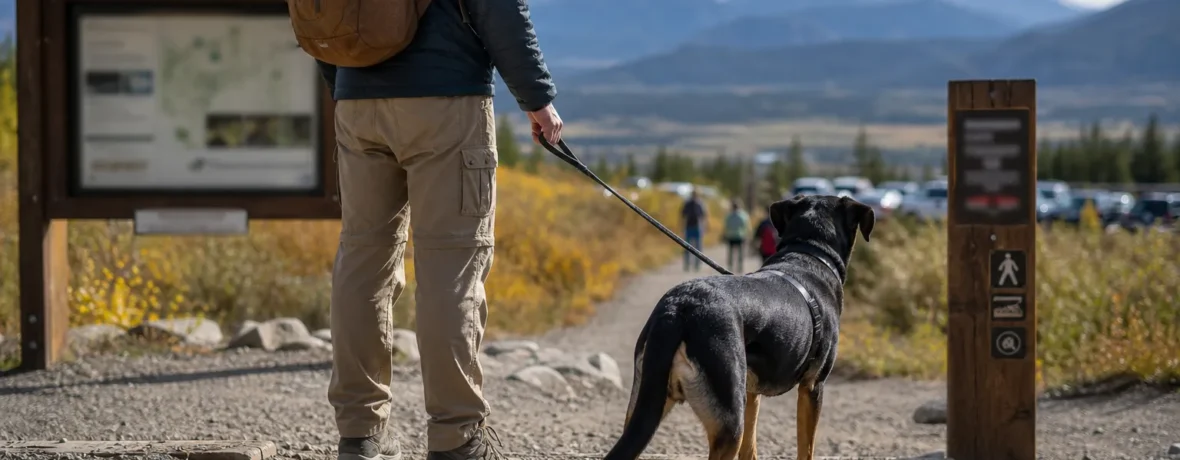
Yes, dogs are allowed in national parks, but usually only in designated areas: roads, parking areas, campgrounds, picnic areas, some lodging, and select trails. As of November 2026, federal rules require pets to be restrained on a leash no longer than 6 ft [1.8 m] or physically confined.
Are dogs allowed in national parks?
Yes, but “allowed” does not mean “allowed everywhere.” The National Park Service says many parks welcome pets in developed areas, on many trails and campgrounds, and in some lodging, but each park sets its own pet map and closures. Check the official NPS pets in parks guide before you load the cooler and clip on the leash.
Here’s the practical version: your dog may be fine at the campground, along a paved road, or on a short front-country path. That same dog may be banned from dirt trails, boardwalks, shuttle buses, visitor centers, beaches, wilderness areas, or ranger programs. The rule flips from park to park.
That can feel fussy. It is also how parks protect wildlife, fragile soil, archaeological sites, water supplies, and other hikers who did not sign up for a nose-to-knee greeting from a wet Labrador.
Where can dogs go in national parks?
Dogs can usually go where a specific park says pets are permitted.
Common dog-friendly places include:
- Parking lots and paved pullouts
- Campgrounds that allow pets
- Picnic areas
- Paved roads open to vehicles
- Some paved paths and multi-use trails
- Some park lodging, if the concessioner allows pets
- Some beaches outside seasonal closures
Common no-dog places include:
- Visitor centers and public buildings
- Most shuttle buses and public transportation vehicles
- Many hiking trails and boardwalks
- Designated swimming beaches
- Wilderness and backcountry areas in many parks
- Ranger-led programs
- Food-service areas, unless service-animal rules apply
Are dogs allowed on hiking trails in national parks?
Sometimes, but many national park hiking trails do not allow pets.
This is where dog owners get tripped up. A park can welcome dogs in campgrounds and still ban them from nearly every trail. Great Smoky Mountains National Park, for example, allows leashed pets on only two trails, while Shenandoah allows leashed pets on most trails. Same agency. Very different trip.
The National Park Service’s hiking guidance says many parks do not allow pets on hiking trails or boardwalks, and it tells visitors to check the specific park before bringing a pet. As of November 2026, the NPS also tells hikers to keep dogs on a 6 ft [1.8 m] leash, pack extra water, clean up waste, and keep pets away from wildlife in its official hiking with pets guidance.
What national parks allow dogs on trails?
Several national parks are unusually good for leashed dogs.
Rules can change after fires, storms, wildlife activity, construction, or seasonal beach closures, so treat this table as a starting point, not a permission slip. These details were verified from official park pages as of November 2026.
| Park | Dog access | Best for | Official source |
|---|---|---|---|
| Shenandoah National Park | Leashed pets are allowed on most trails; the park lists fewer than 20 miles [32 km] of closed trails out of 500+ miles [805+ km]. | Long trail days with a fit dog | Shenandoah pet rules |
| Acadia National Park | Pets are permitted on 100 miles [161 km] of hiking trails and 45 miles [72 km] of carriage roads, with closures on certain beaches, trails, buildings, and gardens. | Carriage-road walks and coastal scenery | Acadia visiting with pets |
| Cuyahoga Valley National Park | Leashed pets are allowed on over 100 miles [161 km] of hiking trails plus the multi-use Towpath Trail, with some exceptions. | Easy day hikes near towns | Cuyahoga Valley pets |
| Petrified Forest National Park | Pets are allowed on paved roads and trails and in designated wilderness areas, but not inside buildings. | Desert walks and big-sky road trips | Petrified Forest pets |
What rules do dog owners have to follow in national parks?
Keep your dog leashed, controlled, quiet, and cleaned up after.
As of November 2026, the federal pet regulation for national parks, 36 CFR § 2.15, prohibits failing to restrain a pet on a leash longer than 6 ft [1.8 m] or otherwise physically confine it. It also prohibits pets in public buildings, public transportation vehicles, designated swimming beaches, and other areas closed by the superintendent. You can read the regulation in the official federal code text.
The trail version is simple:
- Check the park’s pet page. Search the park name plus “pets NPS.” Use the nps.gov result, not a random blog post.
- Read the trail list. Do not assume paved means allowed or dirt means banned. The park decides.
- Use a real leash. Keep it 6 ft [1.8 m] or shorter where required. Retractable leashes are a mess in crowds.
- Bag the poop and carry it to a trash can. Leaving a bag beside a trail is still littering.
- Skip wildlife encounters. Give deer, elk, bears, bison, coyotes, snakes, and birds space. Your dog is not part of the ecosystem.
- Plan shade and water. Dogs overheat faster than many hikers expect, especially on asphalt, slickrock, sand, and desert trails.
Can dogs go into visitor centers, shuttles, and campgrounds?
Campgrounds often allow dogs; buildings and shuttles usually do not.
Most national park visitor centers allow only service animals inside. Pets are commonly barred from park shuttles, historic buildings, theaters, museums, restaurants, and ranger-led indoor programs. Campgrounds are more dog-friendly, but you still need to follow leash, waste, noise, and unattended-pet rules.
Do not build a day around “we’ll leave the dog in the car.” Heat can turn that into an emergency fast, and some parks specifically prohibit unattended pets in vehicles or tied outside. If your plan includes a long no-dogs trail, book a kennel, use a local pet sitter, split the hike with your group, or choose a dog-friendly national forest trail nearby.
Are service dogs allowed in national parks?
Yes, service dogs are legally allowed anywhere visitors can go.
Under NPS policy, service animals are dogs trained to perform a specific task for a person with a disability. Emotional support, therapy, comfort, and companion animals are not service animals under that policy and can be treated as pets. As of November 2026, the NPS explains this on its service animals in national parks page.
Service dog handlers still need to keep the dog under control. Wildlife, cliffs, thermal features, cactus, ice, crowds, and shuttle logistics can make some park routes tough even when access is legally allowed.
How do you plan a national park trip with a dog?
Plan the dog’s day first, then plan yours.
Use this quick system before you go:
- Pick the park. Go to the official nps.gov pet page.
- Pick three dog-legal activities. A campground loop, a paved path, and a scenic drive beat one banned bucket-list hike.
- Check seasonal closures. Beaches, wildlife areas, and restoration zones may close at certain times of year.
- Confirm lodging rules. “Pets allowed in the park” does not mean “pets allowed in every room.”
- Find backup land. Nearby national forests, BLM land, county parks, and rail trails may offer better dog hikes.
- Know your turnaround point. If the dog is limping, hot, anxious, or overexcited, turn back. No summit is owed to you.
What should you pack for hiking with your dog in a national park?
Pack like your dog cannot borrow anything.
- 6 ft [1.8 m] leash, plus a backup leash
- Collar or harness with ID tag
- Water for you and your dog
- Collapsible bowl
- Poop bags, plus a sealable carry-out bag
- Food or trail snacks for longer walks
- Paw protection for hot pavement, sharp rock, snow, or sand
- Towel for mud, rain, and car cleanup
- Tick remover or fine-tipped tweezers
- Current vaccination records, especially for road trips
When to see a doctor
See a doctor after a bite, suspicious tick symptoms, or heat-related warning signs.
If you are bitten or scratched by wildlife, wash the wound and seek medical care, especially if the animal acted sick, the wound is serious, or the area becomes red, painful, warm, or swollen. The CDC also says to talk with a healthcare provider about rabies risk after wildlife bites or scratches.
After a tick bite, the CDC says to see a doctor if you develop a rash or fever within several weeks. Tell the doctor when the bite happened and where you likely picked up the tick. Do not guess your way through a post-hike fever. Use the CDC’s tick bite guidance for current steps.
Related reading
- Are Drones Allowed in National Parks?
- Who Is the Father of National Parks?
- How Many National Parks Are There in the US?
- What Happens to National Parks During a Government Shutdown
FAQ
Are dogs allowed in Yellowstone National Park?
Yes, dogs are allowed in limited developed areas at Yellowstone, but they are not allowed on most trails, boardwalks, or in the backcountry. Check Yellowstone’s official pet page before going because thermal areas and wildlife make dog access especially restricted.
Are dogs allowed in Yosemite National Park?
Yes, dogs are allowed in some developed areas at Yosemite, including certain paved roads, sidewalks, bicycle paths, and campgrounds. They are not allowed on most trails, in wilderness, or on shuttle buses, except service dogs where visitor access is allowed.
Can I take my dog on national park boardwalks?
Usually no, unless that specific park says pets are allowed there. Boardwalks often cross fragile wetlands, dunes, thermal features, or sensitive habitat, so many parks ban pets from them.
Do dogs need to be on leash in national parks?
Yes. As of November 2026, national park pet rules require pets to be restrained on a leash no longer than 6 ft [1.8 m] or otherwise physically confined, unless a specific posted rule says otherwise.
What happens if I bring my dog on a closed trail?
You can be cited, fined, or told to leave the area. Worse, you put your dog, wildlife, and future dog access at risk, because repeated rule-breaking is one reason parks tighten pet restrictions.
Are national forests better than national parks for dogs?
Often, yes. National forests usually offer more dog-friendly trail options than national parks, though leash rules and seasonal closures still apply. Check the specific forest or ranger district before you go.