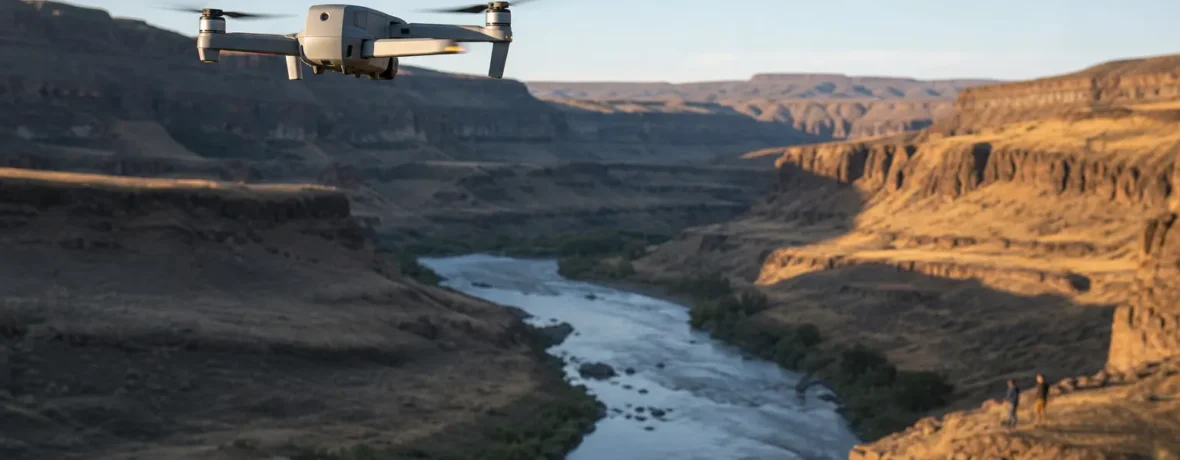
No, drones are generally not allowed in national parks. As of November 2026, the National Park Service restricts launching, landing, or operating drones from NPS-managed lands and waters unless you have written approval. FAA rules still apply everywhere, including the 400-foot [122 m] limit in uncontrolled airspace for recreational flyers.
Are drones allowed in national parks if you are just flying for fun?
No. Recreational drone flights are usually off-limits inside national parks.
The National Park Service says each park superintendent may close NPS-managed lands and waters to launching, landing, or operating uncrewed aircraft systems, also called UAS or drones. That closure covers quadcopters, model aircraft, and similar devices used for recreation, business, research, or other purposes, as of November 2026. See the NPS Uncrewed Aircraft Systems page for the current agency language.
Translation for hikers: do not unpack the drone at a trailhead, overlook, campsite, river beach, shuttle stop, parking lot, or backcountry route managed by the NPS unless the park has given you written approval. “I only need one quick shot” will not help when a ranger walks over.
What exactly does the National Park Service ban?
The NPS restriction targets takeoff, landing, and operation from NPS lands and waters.
As of November 2026, the NPS says the closure language restricts takeoffs and landings in national park units across the country, and any UAS use must be approved in writing and comply with NPS aviation requirements. The agency also points out that some places have FAA “No Drone Zone” airspace restrictions on top of park rules.
That means the park rule is not only a “don’t crash here” rule. It reaches the normal parts of flying: setting up, launching, controlling the aircraft, landing, and retrieving it from lands or waters managed by the park.
| Place or situation | Can you launch or land? | Who controls the rule? |
|---|---|---|
| NPS trail, overlook, campground, road pullout, lake, or river | No, unless approved in writing | National Park Service |
| Airspace near airports or controlled airspace | Only with FAA authorization when required | Federal Aviation Administration |
| National forest outside a park boundary | May be different; check the managing agency | USFS, BLM, state, tribal, local, and FAA rules may apply |
Can you fly a drone over a national park from outside the boundary?
Do not assume that a launch outside the boundary makes the flight legal or smart.
The NPS states that its jurisdiction ends at the park boundary, while the FAA regulates the National Airspace System. That split matters. If you stand outside the park, you still must follow FAA rules, local land-manager rules where you launch and land, wildlife protections, temporary flight restrictions, and any special airspace limits. If your flight disturbs wildlife, creates a public safety problem, or interferes with emergency aircraft, you are asking for trouble.
The clean move is simple: check the park’s official website and call the park if your route, launch point, or flight path comes anywhere close to NPS land. If rangers say no, take the tripod instead.
Can you get a permit to fly a drone in a national park?
Sometimes, but a casual hiker should expect the answer to be no.
As of November 2026, NPS guidance allows certain approved UAS operations for agency work, emergencies, scientific study, and some special park uses. Research proposals may require early coordination with park aviation staff and research coordinators; the NPS science guidance for UAS says NPS approval is required for UAS that take off, land, or are operated from NPS-managed lands or waters.
Commercial use is not a shortcut. NPS Special Park Uses guidance for uncrewed aircraft says the NPS cannot issue a permit for a commercial uncrewed aircraft activity unless the FAA has sanctioned the flight. In plain English: you need the park and the FAA lined up, and the park can still say no.
What FAA rules apply if you fly near a national park?
FAA rules still apply, even when park rules are stricter.
For recreational flyers, the FAA requires you to fly only for recreation, follow recognized safety guidelines, keep the drone within visual line of sight, give way to crewed aircraft, take TRUST and carry proof, register when required, and fly at or below 400 feet [122 m] in Class G uncontrolled airspace, as of November 2026. Controlled airspace requires prior FAA authorization through LAANC or DroneZone. Check the FAA’s recreational flyer rules before you fly anywhere near a park.
If you need controlled-airspace approval, the FAA explains that LAANC can provide near-real-time authorizations at approved altitudes in participating areas. See the FAA LAANC page for current access details.
Why are drones restricted in national parks?
Drones clash hard with the reasons many people hike in parks.
The NPS cites visitor safety, wildlife disturbance, noise, nuisance complaints, and protection of natural, cultural, historic, and scenic resources. A buzzing aircraft above a quiet canyon rim changes the place for everyone under it. For wildlife, a drone can look or sound like a threat. For rangers, it can become a hazard during search and rescue, fire, medical response, or helicopter operations.
Grand Canyon National Park gives a blunt example in its 2025 superintendent’s compendium: launching, landing, or operating an uncrewed or remotely piloted aircraft from or on NPS lands and waters inside the park is prohibited except as approved in writing by the superintendent. The park ties that rule to human safety, viewsheds, wildlife, visitor crowds, roads, and emergency helicopter work, as of November 2026.
What happens if you fly a drone in a national park anyway?
You can be cited, fined, and ordered to stop.
As of November 2026, NPS public guidance says violation of the drone prohibition is a misdemeanor with a maximum penalty of six months in jail and a $5,000 fine. Rangers handle potential violations case by case, but “case by case” does not mean “probably fine.” It means the ranger decides how to respond based on the facts in front of them.
You may also face FAA enforcement if the flight breaks airspace rules, endangers aircraft, exceeds allowed altitude, or ignores authorization requirements. One bad launch can bring two sets of problems: park enforcement and aviation enforcement.
How do you check drone rules before a hike?
Use official sources before you pack the controller.
- Find the land manager. Confirm whether your trail, lake, road, or overlook is inside an NPS unit, national forest, BLM land, state park, tribal land, city land, or private land.
- Open the park’s official NPS page. Search the park name plus “drone,” “uncrewed aircraft,” “UAS,” or “superintendent’s compendium.”
- Check FAA airspace. Use FAA-approved tools, LAANC where available, and current charts or apps before launch.
- Look for temporary flight restrictions. Wildfires, rescue operations, VIP movement, and public events can shut down airspace.
- Call the park if anything is unclear. Ask for the visitor information office or special park uses office.
- Get written approval if approval is required. A phone conversation is not the same thing as a written permit or written superintendent approval.
What should hikers do instead of flying a drone?
Bring lighter, quieter tools and keep the wild soundscape intact.
- Use a phone or compact camera for quick trail shots.
- Pack a small tripod for sunrise, sunset, and night-sky photos where allowed.
- Use overlooks, switchbacks, and ridgelines for legal wide-angle views.
- Download official NPS media or public-domain images when you need aerial context for trip planning.
- If you create content for work, contact the park before the trip and ask what permits apply.
The best hiking footage often comes from patience, clean light, and good feet. No propellers needed.
Related reading
- Are Dogs Allowed in National Parks?
- How Many National Parks Are There in the US?
- What Happens to National Parks During a Government Shutdown
- Who Is the Father of National Parks?
FAQ
Are drones allowed in national parks for photography?
No, not for ordinary visitor photography. As of November 2026, launching, landing, or operating drones from NPS-managed lands and waters is generally restricted unless you have written approval.
Can I keep a drone in my backpack in a national park?
Yes, carrying a powered-off drone is not the same as flying it. Keep it packed away, and do not launch, land, or operate it unless the park has approved that use in writing.
Do FAA rules override National Park Service drone rules?
No. FAA authorization does not give you permission to launch, land, or operate from NPS-managed land. You need to satisfy both the FAA and the land manager.
Are drones allowed in national monuments and national recreation areas?
Usually, the same NPS drone restrictions apply if the site is managed by the National Park Service. National monuments managed by BLM, USFS, FWS, state, tribal, or local agencies may have different rules, so check the official managing agency page.
Can researchers use drones in national parks?
Sometimes, with approval. As of November 2026, NPS research guidance says UAS use for scientific study may be allowed in some cases, but it requires early coordination and NPS approval for flights tied to NPS-managed lands or waters.
What is the safest rule for hikers?
Leave the drone at home for national park trips. If your route touches NPS land, assume you cannot fly unless an official park source gives you written permission.