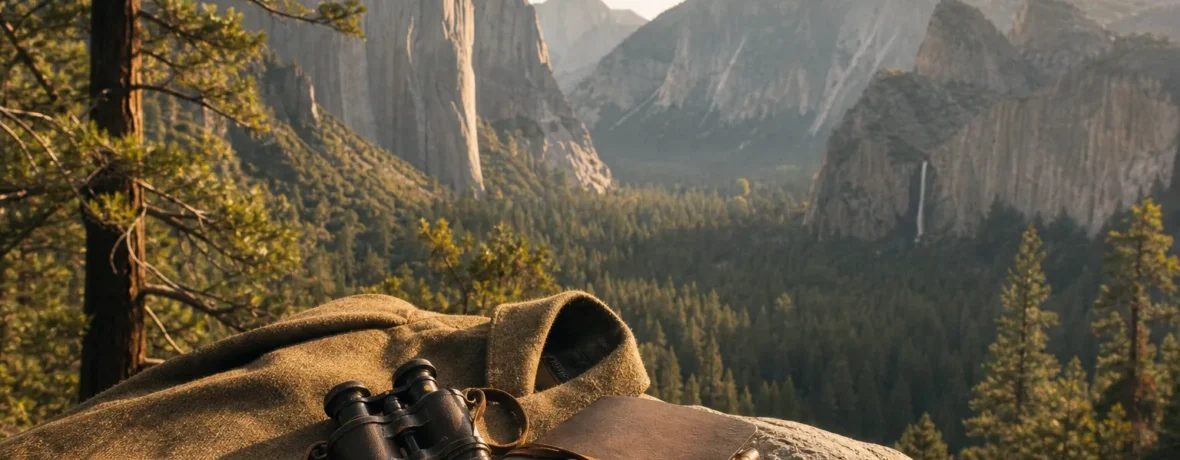
In the United States, the father of national parks is John Muir. Muir lived from 1838 to 1914, helped push Yosemite into national park status in 1890, co-founded the Sierra Club in 1892, and influenced the conservation movement that led to the National Park Service in 1916.
Who is called the father of national parks?
John Muir is most commonly called the father of national parks.
That title sticks because Muir did three things that still shape every dusty trailhead, granite overlook, and bear box you use today: he explored wild places, wrote about them in a way people could feel, and fought to keep them protected by the federal government.
The National Park Service credits John Muir with helping establish the National Park System and the Sierra Club. The National Archives also describes Muir as often being called the “Father of Our National Park System” and names him as a major force behind several early parks.
Still, this title can confuse people. Muir was not the first National Park Service director. He did not sign the law that created the agency. He did not single-handedly invent public lands. But as a public voice for wilderness preservation, he became the face of the idea that some places should be protected simply because they are wild, beautiful, and irreplaceable.
Why is John Muir called the father of national parks?
John Muir earned the nickname because his writing and activism helped turn scenic wilderness into protected national parks.
Muir had a rare gift: he could walk into the Sierra Nevada, study glaciers and trees, sleep rough, then come back with words that made city readers care. His essays and books did not read like dry policy memos. They carried weather, rock, light, and urgency.
His most famous battleground was Yosemite. Muir arrived in California in 1868 and soon made Yosemite his spiritual and scientific home. He studied the valley’s glacial origins, wandered the high country, and argued that the surrounding mountains needed stronger protection. Yosemite became a national park in 1890, and Muir’s advocacy helped build public support for that move.
The title also comes from his larger philosophy. Muir believed wild places had value beyond timber, grazing, mining, or water storage. That sounds normal now if you carry a park pass and plan vacations around trail maps. In the late 1800s, it was a hard sell. The West was being cut, mined, fenced, dammed, and sold fast.
Muir pushed back. Hard.
What did John Muir do for Yosemite?
John Muir helped make Yosemite a national symbol of wilderness protection.
Before Yosemite became a full national park, the Yosemite Valley and Mariposa Grove had already been protected through the 1864 Yosemite Grant. That was a major step, but the surrounding high country remained vulnerable. Muir argued that Yosemite was more than the famous valley walls and waterfalls. The whole mountain system mattered.
According to the National Park Service’s Yosemite history, Muir’s time in the Sierra Nevada included herding sheep to Tuolumne Meadows, studying plants and animals, sketching mountain scenery, and later helping spark public support for Yosemite National Park’s creation in 1890.
His influence reached the White House, too. In 1903, President Theodore Roosevelt camped with Muir in Yosemite. That trip gave Muir a rare chance: several days with a sitting president, away from Washington noise, standing inside the very landscape he wanted protected. Roosevelt later expanded federal conservation efforts across the country.
For hikers, this is the part that matters on the ground. When you climb toward Glacier Point, stare across Tuolumne Meadows, or shoulder a pack near the Merced River, you are walking through a place that survived partly because Muir made people see it as more than scenery. He made it a cause.
Was John Muir the founder of the National Park Service?
No, John Muir was not the founder of the National Park Service.
Muir died on December 24, 1914. The National Park Service was created later, on August 25, 1916, when President Woodrow Wilson signed the Organic Act. So Muir never worked for the agency and never served as its director.
That job went first to Stephen Tyng Mather. Mather was a businessman, conservationist, and skilled promoter who became the first director of the National Park Service. The National Park Service biography of Stephen Mather identifies him as the agency’s first director.
Here’s the clean way to keep the titles straight:
| Person | Best-known title | Why it fits |
|---|---|---|
| John Muir | Father of national parks | Built public passion for wilderness preservation and helped protect Yosemite. |
| Stephen Mather | Father of the National Park Service | Helped organize and lead the federal agency after its creation in 1916. |
| Theodore Roosevelt | Conservation president | Used presidential power to protect forests, monuments, wildlife refuges, and parks. |
What national parks did John Muir help create?
John Muir is most closely tied to Yosemite, Sequoia, Mount Rainier, and the larger early national park movement.
Muir’s strongest and most direct connection is Yosemite. His writing and organizing helped support the 1890 act that made Yosemite a national park. He also championed the Sierra Nevada’s giant sequoias and wild mountain landscapes, which placed him in the public fight for places like Sequoia National Park.
He was not a one-man park factory. Congress created parks. Presidents signed laws or used executive authority. Local advocates, scientists, Indigenous communities, journalists, mountaineers, and civic groups all shaped the story. But Muir’s voice carried far. When he described wild country, readers listened. When he warned that a place could be lost, people moved.
A simple timeline helps:
- 1838: John Muir was born in Dunbar, Scotland.
- 1849: His family moved to Wisconsin.
- 1868: Muir reached California and soon became closely tied to Yosemite.
- 1890: Yosemite became a national park.
- 1892: Muir co-founded the Sierra Club and served as its first president.
- 1903: Muir camped in Yosemite with President Theodore Roosevelt.
- 1914: Muir died in Los Angeles.
- 1916: The National Park Service was created after Muir’s death.
Did John Muir have flaws?
Yes, John Muir had flaws, and his legacy should be read with clear eyes.
Muir helped protect extraordinary landscapes, but the early national park movement also carried deep blind spots. Many parks were created on Indigenous homelands, and the “empty wilderness” story often erased the people who had lived with, burned, hunted, gathered, farmed, traveled, and held ceremony on those lands for generations.
Muir’s own writings included racist views, especially toward Native people and Black people. That does not erase his role in conservation history, but it does make the full story sharper and more honest. The parks were not born from one heroic man striding through pure wilderness. They came from conflict, displacement, politics, science, money, wonder, and pressure.
If you hike national parks now, carry both truths. Muir helped save places you can still walk through. The creation of those parks also caused harm that many tribes and communities still live with.
What can hikers learn from John Muir today?
Hikers can learn to pay closer attention and speak up for the places they love.
Muir was not just wandering for pretty views. He watched water, ice, trees, birds, storms, and rock. He asked how landscapes worked. Then he used what he saw to argue for protection. That is still a strong model for anyone who spends weekends on trails.
Here’s a practical trailhead checklist inspired by Muir’s better habits:
- Learn the land name: Know the park, forest, wilderness area, and Native homelands you are entering.
- Read before you go: A short park history can change how you see every mile.
- Look longer: Notice tree line, water flow, fire scars, animal tracks, and rock layers.
- Leave less trace: Stay on durable surfaces, pack out trash, and give wildlife room.
- Support protection: Comment on land-use plans, volunteer, donate, vote, and defend public access.
Muir’s best lesson is not that you need to grow a beard and quote poetry under a pine tree. It is this: affection is not enough. If a place matters, it needs witnesses. It needs defenders. Sometimes it needs loud ones.
Related reading
- Are Dogs Allowed in National Parks?
- How Many National Parks Are There in the US?
- Are Drones Allowed in National Parks?
- What Happens to National Parks During a Government Shutdown
FAQ
Who is the father of national parks?
John Muir is the person most often called the father of national parks. He helped popularize wilderness preservation and played a major role in the movement that protected Yosemite and other early national park landscapes.
Is John Muir the father of the National Park Service?
No, that title usually belongs to Stephen Mather. Muir influenced the conservation movement, but Mather became the first director of the National Park Service after the agency was created in 1916.
Why is John Muir famous?
John Muir is famous for his nature writing, Sierra Nevada explorations, Yosemite advocacy, and role in co-founding the Sierra Club. His words helped Americans see wild landscapes as places worth protecting, not just resources to use.
Did John Muir create Yosemite National Park?
No, Congress created Yosemite National Park in 1890. Muir helped build the public and political support that made that protection possible.
What is John Muir’s connection to the Sierra Club?
John Muir co-founded the Sierra Club in 1892. He served as its first president and used the organization as a platform to defend the Sierra Nevada and other wild places.
Where can you visit a John Muir historic site?
You can visit John Muir National Historic Site in Martinez, California. It preserves the home and ranch where Muir lived during many of his later conservation campaigns.