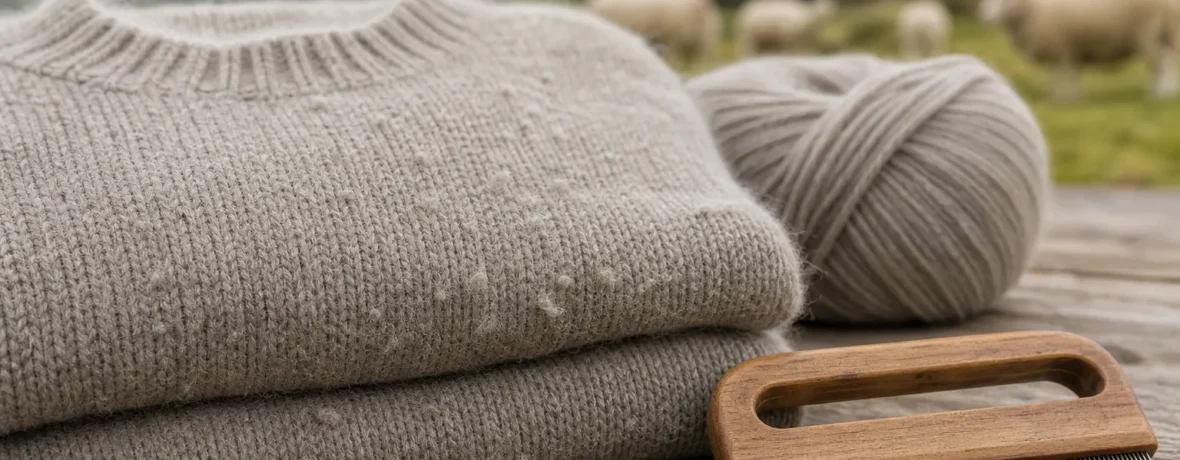
Yes, merino can pill, especially during the first 2–3 wears and in high-friction spots like shoulders, hips, cuffs, and inner thighs. Fine, soft merino pills more easily than heavier blends, but smart washing and pack management can cut it way down.
Does merino wool pill?
Yes, merino wool pills when loose fibers rub together and form tiny fuzz balls.
Pilling is not automatically a sign that your base layer is junk. Woolmark describes pilling as fuzzy balls that form on the surface of wool clothing, often from wear and abrasion. You see it most where fabric gets worked hard: under backpack straps, beneath a hip belt, between thighs, under arms, and around cuffs. A soft 150 gsm shirt [4.4 oz/yd²] worn under a loaded pack will usually look rougher sooner than a denser 250 gsm quarter-zip [7.4 oz/yd²].
Merino is prized because it feels softer than traditional wool, manages odor well, and works across changing trail temperatures. That softness comes from fine fibers. Fine fibers feel good against skin, but they can also work loose at the surface when rubbed.
So, no panic. A few pills are normal. Heavy pilling after one gentle wash is a red flag. Heavy pilling under a sternum strap after three hard hikes is less shocking.
What causes merino wool pilling?
Friction is the main cause.
The biggest trail culprit is abrasion. Your pack moves every step. Shoulder straps grind. Hip belts press fabric against your shorts or pants. Salt from sweat dries in the knit. Then you wash the shirt with zippers, hook-and-loop closures, or rough pants, and the surface takes another beating.
Common causes include:
- Backpack straps: shoulder, sternum, and hip-belt zones pill first.
- Rough laundry loads: zippers, buckles, hook-and-loop tabs, and denim chew up soft knits.
- High washer agitation: a harsh cycle can pull short fibers to the surface.
- Heat: hot drying can stress wool fibers and shrink some garments.
- Loose knits: airy, ultralight shirts breathe well but abrade faster.
- Wrong layer pairing: a rough shell or fleece can sandpaper a merino shirt all day.
Icebreaker recommends turning merino garments inside out before washing to help protect fibers from snagging, stretching, and pilling; that one habit does real work for hikers who wear merino weekly. Icebreaker’s merino care guide
Is pilling bad, or is it just cosmetic?
Light pilling is mostly cosmetic.
A few pills do not mean your merino shirt has lost its warmth, odor control, or comfort. The trouble starts when pilling comes with thinning, holes, laddering, or fuzzy weak spots. That means abrasion is eating into the fabric, not just roughing up the surface.
Use this quick read:
| What you see | What it means | What to do |
|---|---|---|
| Small pills on shoulders | Normal pack abrasion | Shave gently and adjust straps |
| Pills after first few wears | Short loose fibers releasing | Wash inside out, then reassess |
| Fuzz plus thinning | Fabric is wearing down | Use as sleepwear or light-duty layer |
| Holes near seams or beltline | Abrasion or fit issue | Repair early or contact the brand |
If the garment still feels good and the knit is intact, keep using it. Trail clothing does not need to look boutique-clean to work.
How do you prevent merino wool from pilling?
Reduce friction before, during, and after the hike.
Here is the simple system:
- Buy the right weight. For pack-heavy hiking, midweight merino around 200–250 gsm [5.9–7.4 oz/yd²] usually tolerates abrasion better than ultralight 120–150 gsm [3.5–4.4 oz/yd²].
- Check the blend. Merino blended with nylon can be tougher for socks and base layers. Pure merino feels great, but it is not always the most durable pick under a pack.
- Turn it inside out. Do this before every wash. It protects the face fabric.
- Close zippers and hook-and-loop tabs. Better yet, wash merino away from rough gear.
- Use a mesh laundry bag. This cuts rubbing inside the washer.
- Choose a gentle or wool cycle. Cold water is the safe default unless the care label says otherwise.
- Skip fabric softener. It can coat performance fibers and reduce how well the garment manages moisture.
- Air dry flat or hang carefully. Heat and tumbling add stress. Some garments allow low tumble drying, but the care label wins.
- Dial in your pack fit. A bouncing pack pills clothing faster than a stable one.
Smartwool also points readers back to the garment care label and says proper care can help manage and minimize pilling. That is boring advice, sure. It is also the advice that keeps a $90 shirt from looking tired by spring. Smartwool’s wool washing and care guide
How should you wash merino wool to prevent pilling?
Wash it gently, inside out, with similar soft fabrics.
Merino does not need the same wash schedule as a cotton tee. If it smells fine and is not muddy or salt-crusted, air it out. Fewer washes mean less abrasion. When it is time to clean it, keep the load calm.
Use this checklist:
- Turn the garment inside out.
- Zip all zippers and close snaps.
- Wash with soft knits, not jeans, towels, shells, or anything with hook-and-loop closures.
- Use cold water unless the label gives another setting.
- Pick gentle, delicate, or wool cycle.
- Use mild detergent; follow the garment label if it calls for wool-specific detergent.
- Do not use bleach.
- Air dry away from direct high heat.
Woolmark’s wool care guidance also tells you to follow the garment’s care claim and use a Woolmark-approved detergent when called for. Woolmark wool care guide
Can you remove pills from merino wool?
Yes, you can remove pills, but go slowly.
The safest tools are a sweater comb, a fabric stone made for knits, or a battery fabric shaver set lightly. Do not attack the shirt like you are scraping mud off a boot. Merino fibers are fine. If you press hard, you can thin the fabric or nick a hole.
How to de-pill merino:
- Lay the garment flat on a table.
- Pull the fabric smooth, but do not stretch it tight.
- Work in short strokes with a sweater comb or shaver.
- Use the lightest pressure that removes the pills.
- Stop once the surface looks cleaner; chasing every tiny fuzz can damage the knit.
- Brush off loose fibers before storing.
Never use scissors unless you are cutting one obvious snag and can hold it away from the knit. One slip and your expensive base layer becomes ventilation.
Does 100% merino pill more than merino blends?
Often, yes, 100% merino can pill faster than a durable merino blend.
Pure merino is soft, warm for its weight, and excellent for sleep layers, cool-weather base layers, and low-abrasion use. Blends add fibers like nylon or polyester to boost durability, stretch, dry time, or shape retention. For hiking socks, a merino-nylon-spandex blend is usually smarter than 100% merino because socks live a brutal life inside damp shoes.
| Fabric type | Best use | Pilling risk |
|---|---|---|
| 100% merino, ultralight | Sleep tops, warm-weather layers | Higher under pack straps |
| 100% merino, midweight | Cold hikes, base layers | Moderate |
| Merino-nylon blend | Socks, hiking shirts, daily trail wear | Lower |
| Merino-synthetic blend with stretch | Active layers, tights, fitted tops | Lower to moderate |
If you are buying one merino piece for backpacking, pick comfort plus durability over featherweight bragging rights.
Why does my merino wool shirt pill after one hike?
One hard hike can be enough if the shirt sits under a moving pack.
A brand-new merino shirt may shed short surface fibers during early use. Add sweat, grit, a hip belt, and 6 hours of motion, and pills can show up fast. That does not always mean the shirt is defective.
Look at the pattern. Pilling only under straps means abrasion. Pilling everywhere after one gentle wear and one careful wash points more toward loose yarn, a delicate knit, or a quality issue. If the garment is thinning, unraveling, or developing holes right away, take clear photos and contact the brand before shaving it. Once you shave or alter it, warranty help may be harder.
What should hikers look for when buying merino that won’t pill fast?
Choose dense knits, trail-ready blends, and realistic fabric weights.
For shoulder-season hiking with a daypack, a 150–200 gsm shirt [4.4–5.9 oz/yd²] can work well. For backpacking, cold starts, bushy trails, or heavy pack use, a tougher midweight layer or merino blend is the safer buy. For socks, look for reinforced heels and toes, plus nylon in the blend.
Before you buy, check:
- Fabric weight: ultralight feels great but wears faster under friction.
- Blend: nylon boosts durability in socks and high-wear layers.
- Weave or knit density: tighter fabric usually resists abrasion better.
- Seam placement: shoulder seams under pack straps can rub.
- Care label: if the care looks fussy, ask yourself if you will really follow it.
- Return policy: helpful if pilling appears everywhere after minimal use.
A soft merino tee is not armor. Treat it like premium trail gear, not a shop rag, and it will look better longer.
Related reading
- What Is Merino Wool and Why Hikers Swear By It
- Is Merino Wool Itchy? Micron Counts Explained
- How to Wash Merino Wool Without Shrinking It
- Is Merino Wool Warm When Wet?
FAQ
Is merino wool supposed to pill?
Yes, some pilling is normal with merino wool. It happens most in high-friction areas, especially during the first few wears or washes.
Does washing merino wool cause pilling?
Yes, washing can cause pilling if the cycle is rough or the load includes abrasive items. Turn merino inside out, use a gentle cycle, and wash it with soft fabrics.
Can I use a fabric shaver on merino wool?
Yes, a fabric shaver can work if you use light pressure. Lay the garment flat and stop once the main pills are gone so you do not thin the knit.
Does merino wool stop pilling over time?
Often, pilling slows after loose surface fibers are removed. If abrasion continues from pack straps or rough layers, pills can keep forming in those spots.
Is pilling covered by warranty?
Sometimes, but normal wear is often treated differently from a defect. If pilling is severe after minimal use, photograph it before shaving and contact the brand.
Are merino blends better for hiking?
Yes, blends are often better for hard trail use. Merino mixed with nylon or other performance fibers usually resists abrasion better than 100% merino.