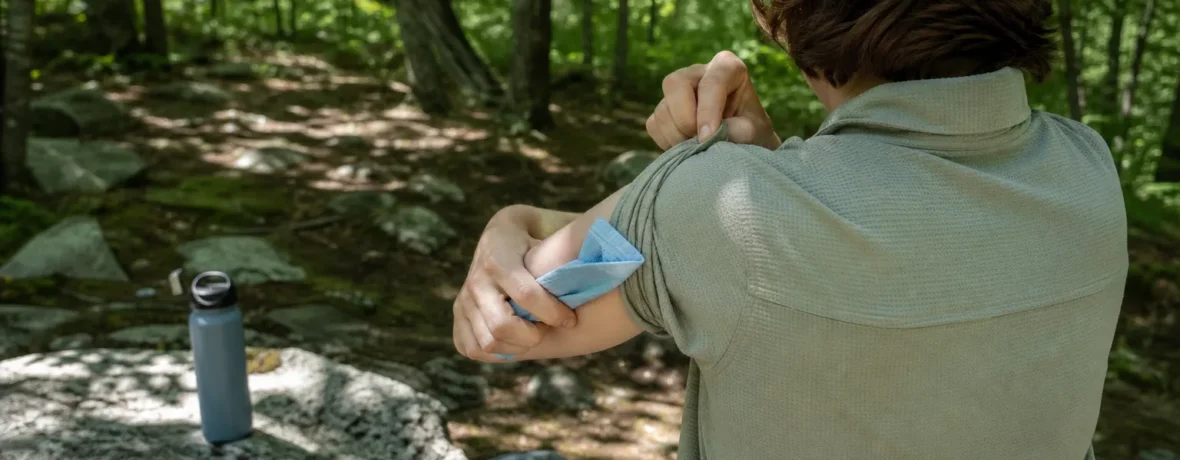
What is heat rash? It’s a sweat-trapped skin irritation that shows up as red or clear bumps, tiny blisters, itching, or a prickly sting. It is common on hot, humid hikes under tight clothing, waistbands, sports bras, pack straps, and sock cuffs. Mild cases usually calm down after cooling and drying the skin.
What is heat rash while hiking?
Heat rash is your skin reacting when sweat cannot escape cleanly. The medical name is miliaria, and the basic problem is blocked sweat ducts. Sweat backs up under the skin, which can create little bumps, clear blisters, redness, itching, or that “pins and needles” burn hikers call prickly heat.
The CDC describes heat rash as skin irritation caused by excessive sweating during hot, humid weather. Hiking loads the deck: you are sweating, your pack traps heat, your shirt sticks, and dirt plus sunscreen can sit on the skin for hours.
Heat rash is not the same thing as heat exhaustion or heat stroke. But it is a sign that your cooling system is working hard. Pay attention to the rash, then check the rest of your body too: thirst, dizziness, nausea, headache, weakness, cramps, or confusion are different problems and need faster action.
What does heat rash look like on hikers?
Heat rash usually looks like clusters of small bumps or tiny blisters. On lighter skin, it may look red or pink. On darker skin, redness can be harder to see, so the first clue may be texture, itching, stinging, or a rough patch that feels hot and irritated.
The most common hiking zones are places where sweat, pressure, and friction pile up:
- Under backpack shoulder straps and hip belts
- Across the lower back where a pack blocks airflow
- Under a sports bra or chest strap
- Along waistbands and underwear lines
- Inside elbows, behind knees, and in skin folds
- At sock cuffs or under gaiters
According to Mayo Clinic’s heat rash guidance, heat rash often heals by cooling the skin and avoiding the heat that triggered it. That is the plain trail truth too: get the area cooler, drier, and less smothered.
Is a hiking rash on ankles heat rash or something else?
A hiking rash on ankles can be heat rash, but sock pressure, boot friction, plants, bug bites, and sun exposure can look similar. Location matters. If the rash forms right where socks, gaiters, or boot collars trap sweat, heat rash is possible.
Use this quick comparison, not as a diagnosis, but as a way to decide your next move.
| Rash clue | More likely cause | Trail response |
|---|---|---|
| Tiny itchy bumps under sock cuffs after hot, humid hiking | Heat rash or friction irritation | Remove tight socks, cool skin, dry the area |
| Raw, tender line where boot or sock rubs | Chafing or early blistering | Reduce friction, change socks, protect the spot |
| Blotchy rash after brushing plants | Contact dermatitis | Wash skin and clothing when possible |
| Raised bites in exposed areas | Insect bites | Clean the area, stop scratching, monitor swelling |
If the rash is only on the ankles and follows a sharp sock line, think sweat plus pressure first. If it spreads beyond clothing contact points, oozes, crusts, or comes with fever, it is time to get medical help.
Why do hikers get heat rash?
Hikers get heat rash because sweat, heat, pressure, and blocked airflow gang up on the skin. A breezy cotton shirt in town is one thing. A soaked synthetic layer under a loaded pack during a 90°F [32°C] climb is another.
Common triggers include:
- Humidity: sweat evaporates poorly, so skin stays wet.
- Tight clothing: compression shorts, bras, waistbands, and sock cuffs can trap sweat.
- Pack pressure: shoulder straps and hip belts create warm, wet zones.
- Heavy sunscreen or greasy products: Mayo Clinic advises avoiding oily or greasy products that may block pores further during heat rash.
- Poor heat acclimatization: your first hot hike of the season often feels harsher than the fifth.
- Long climbs with no shade: more effort means more sweat and more trapped heat.
How do you treat heat rash on the trail?
Treat heat rash by cooling and drying the irritated skin. You do not need to turn a minor rash into a full emergency, but you do need to stop feeding the conditions that caused it.
- Step into shade. Stop hiking hard for a few minutes. If you can sit where air moves, even better.
- Loosen the pressure points. Unclip your hip belt, loosen shoulder straps, roll down tight sock cuffs, or swap into a looser layer.
- Dry the skin. Use a clean bandana or spare shirt. Pat, do not scrub.
- Cool the area. Apply a cool wet cloth or rinse with clean water if you have enough. Let the skin air-dry when practical.
- Skip greasy ointments. The CDC heat-rash first aid advice says to keep the area dry and avoid ointments and creams.
- Change the conditions. Put on a dry shirt, change socks, remove gaiters, or slow your pace until the skin calms down.
Do not scratch. Scratching breaks skin, and broken skin plus sweat plus dirt is a bad combo. If the rash keeps burning, spreading, or getting more painful, end the hike rather than trying to “push through” skin that is already irritated.
How can you prevent heat rash while hiking?
Prevent heat rash by keeping sweat moving off your skin and pressure off hot spots. That means picking the right layers, managing your pace, and making small adjustments before your skin gets angry.
- Wear loose, breathable layers in hot weather.
- Choose moisture-wicking socks that do not bite into your ankles.
- Take short shade breaks before you feel cooked.
- Loosen pack straps during breaks so trapped areas can dry.
- Change out of soaked socks or shirts on long, hot days.
- Rinse sweat and grit from irritated areas when water is available.
- Avoid greasy skin products under straps, waistbands, and sock cuffs.
- Build heat exposure gradually instead of making your first hot hike a crusher.
The Wilderness Medical Society heat illness guidelines emphasize removing people from heat and cooling them when heat illness develops. For simple heat rash, you are doing a smaller version of the same idea: reduce heat load early.
When to see a doctor
See a doctor if the rash lasts more than a few days, gets worse, looks infected, or comes with signs of heat illness. Heat rash itself is usually mild, but trail skin problems can be sneaky.
Get medical care promptly if you notice:
- Increasing pain, swelling, warmth, pus, or red streaking
- Fever or chills
- Blisters that are large, spreading, or very painful
- A rash near the eyes, genitals, or a large body area
- Rash plus dizziness, fainting, nausea, vomiting, weakness, or confusion
- Symptoms that do not improve after cooling, drying, and resting
Call 911 for confusion, loss of consciousness, seizures, or signs of heat stroke. The CDC notes that heat stroke can drive body temperature to 106°F [41°C] or higher within 10 to 15 minutes and can be fatal if treatment is delayed.
Related reading
- What Does a Poison Ivy Rash Look Like?
- Heat Exhaustion vs Heat Stroke: How to Tell
- How to Get Rid of a Poison Ivy Rash Fast
- Heat Stroke Symptoms on the Trail
FAQ
Can you keep hiking with heat rash?
Yes, but only if it is mild and improves after cooling and drying the skin. If it spreads, becomes painful, or appears with dizziness, nausea, cramps, weakness, or confusion, stop hiking and treat it as a bigger heat problem.
How long does heat rash last?
Mild heat rash often improves quickly once the skin is cool and dry. If it lasts more than a few days or keeps getting worse, Mayo Clinic recommends seeing a health care provider.
Is heat rash contagious?
No, heat rash is not contagious. It comes from blocked sweat ducts and trapped sweat, not from catching something from another hiker.
Should you put cream on heat rash?
Usually, no greasy cream or ointment. The CDC advises keeping the rash area dry and avoiding ointments and creams; Mayo Clinic also warns that oily products can block pores further.
Can heat rash be a sign of heat exhaustion?
Heat rash is a skin irritation, not heat exhaustion by itself. But if you also have headache, nausea, dizziness, weakness, heavy sweating, thirst, or decreased urine output, follow CDC heat-illness guidance: get to a cooler place, cool the body, sip fluids if alert, and seek medical care when symptoms worsen or do not improve.